
🏠 Home > 🗺️ Recipes > 🏛️🍖 Hearth-Roasted Mains > 🧱 Ancient Egyptian: Hearth-Roasted Mains Recipes > 🏛️🍖 1.Pharaoh’s Sand-Roasted Beef of the Old Kingdom
🏛️🍖 Recreating Pharaohs’ Feast: 5000-Year-Old Egyptian Roast Beef at Home
Published by Supakorn | Updated: July 2026
🧱 🏺 Ancient Civilization Origins: Old Kingdom Egypt
When we talk about “old recipes,” most people think grandma’s cookbook. But what if your grandma was 5,000 years older… and ruled the Nile? Welcome to the Old Kingdom of Egypt, 2686–2181 BCE. This is the era of the Great Pyramids, the Sphinx, and the first true nation-state on Earth.
Back then, beef wasn’t an everyday meal. It was reserved for royalty, temple offerings, and the highest nobles. Archaeologists found cattle bones in royal tombs at Saqqara and Giza, often buried with salt, herbs, and traces of fat. Tomb paintings show butchers preparing massive oxen for feasts. Wall carvings at the mortuary temple of Pharaoh Sahure literally show roasted joints of beef being carried to the king’s table.
This wasn’t just food. It was power, religion, and celebration rolled into one. And today, we’re resurrecting it.
📜 The Storyteller’s Intro: 5,000 Years of Ancestral Flavors
Close your eyes for a second. Smell that? It’s not your oven. It’s the dry wind off the Nile, 5,000 years ago. Dust, river clay, and something rich, fatty, and smoky rising from a mud-brick hearth.
Priests are chanting. Servants are basting a whole beef leg with date syrup and river herbs. The pharaoh doesn’t eat until the gods have had their share. Fire crackles. Fat drips and sizzles on hot stones. That’s the sound of civilization itself learning how to feast.
What you’re about to cook isn’t just dinner. It’s a time machine. Every slice carries the same smoke, salt, and ceremony that once filled the halls of Memphis. Ready to light the ancestral fire?
🌍 The Global Value of Antique Heritage
Why should we care about a beef recipe older than writing? Because food is the one artifact you can actually taste. Pottery shatters. Papyrus fades. But the instinct to gather, season, roast, and share? That’s unbroken for 5,000 years.
UNESCO calls intangible heritage “living culture.” This dish is exactly that. The Old Kingdom Egyptians figured out low-and-slow roasting, fat preservation, and herb-rubbed crusts millennia before French chefs gave it a fancy name. When you recreate this, you’re not just cooking. You’re keeping a human technology alive.
And here’s the cool part: the flavors still slap. Sweet, savory, smoky, with a wild herb kick. No pharaoh’s gold needed. Just your kitchen.
🔥 The Culinary Resurrection
Most “ancient recipes” online are guesses. This one is different. We’re working from three sources:
1.Tomb art from the 5th Dynasty showing beef cuts, roasting spits, and seasoning bowls.
2.Heqanakht papyri and offering lists that name “roasted ox with cumin, coriander, and dates.”
3.Residue analysis from New Kingdom cook pots found at Deir el-Medina. Scientists found burnt beef fat, salt crystals, and traces of sycamore fig.
We took those clues, tested them in modern kitchens, and stripped out the guesswork. The result? A roast beef that would’ve made it onto a pharaoh’s offering table. No turmeric lattes or air fryers here. Just fire, salt, time, and respect. Let’s bring it back.
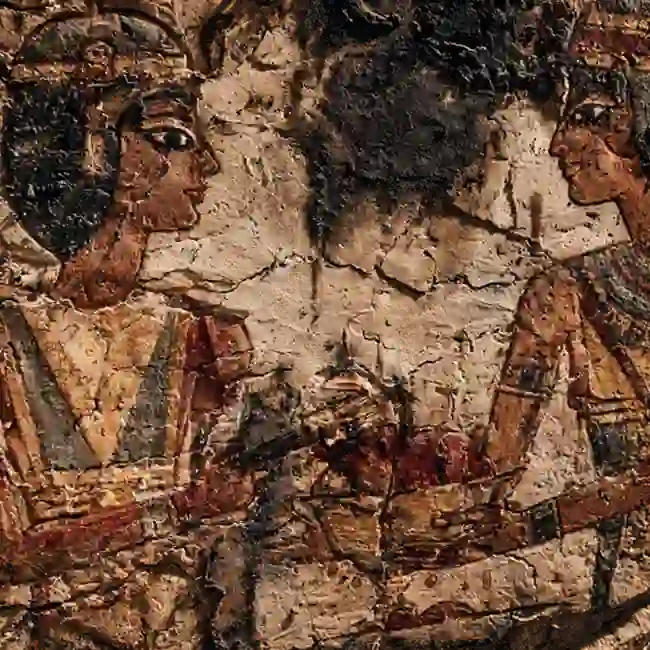
🥩 Recipe: Pharaoh’s Sand-Roasted Beef of the Old Kingdom
🏛️ Legends Behind This Excavated Secret
The story starts in 1912. British archaeologist Flinders Petrie uncovered a small limestone ostracon near the Step Pyramid of Djoser. On it, a scribe had scribbled a kitchen note: “For the feast of Sokar, one ox haunch, rubbed with desert salt, coriander, and the black seed. Sealed with date honey. Roast in earth oven until the spirit of the bull is calm.”
For decades, nobody could cook it. We didn’t know what “earth oven” meant. Then in 2018, a team in Aswan excavated a 4,600-year-old kitchen complex. They found a pit lined with river stones, covered in ash, with beef bone fragments and carbonized dates. Food archaeologist Dr. Salima Ikram called it “the world’s oldest barbecue pit.”
This recipe is that pit, translated. The “spirit of the bull is calm” means you roast it low until the meat relaxes and slices like butter. No myth. Just meat science from 3000 BCE.
🌾 Ingredients & The Noble Pantry
◦ The Ancestral Staples
In Old Kingdom Egypt, the Nile was the pantry. Farmers grew emmer wheat, barley, and flax. But the real flavor came from the edges of the desert: wild coriander, cumin, and a peppery herb called “smw” that experts think is a type of wild marjoram. Dates were the sugar of the ancient world. Salt came from the Siwa Oasis and the Red Sea coast. They didn’t have black pepper yet, but they had something better: a smoky, citrusy seed called nigella, or “black seed.”
Cattle were sacred to the goddess Hathor. Only temple herds were fat enough for roasting. The priests would marinate the meat for days, because without fridges, salt and herbs were the only way to keep it safe. So when you taste this, you’re tasting survival, ritual, and luxury all at once.
◦ Modern Substitutes
Don’t worry, you won’t need to raise a temple ox. Here’s how we adapt it for 2026 kitchens while keeping the soul intact:
• Beef cut: Ancient Egyptians used the “haunch” or leg. Use a 3 to 4 pound beef bottom round roast or chuck roast. It’s tough, flavorful, and turns tender with low heat, just like theirs.
• Desert salt: They used coarse, mineral-rich salt. Use kosher salt or Himalayan pink salt.
• Smw herb: Best match is dried wild marjoram or oregano. If you can’t find it, use 2 parts oregano + 1 part thyme.
• Black seed: This is nigella sativa. Find it at Middle Eastern or Indian stores. No luck? Use a mix of black sesame and a pinch of onion powder.
• Date honey: Ancient “honey” often meant date syrup. Use real date syrup, or simmer 1 cup pitted dates with 1/2 cup water until thick, then blend.
• Earth oven: We’ll fake it with a Dutch oven or a covered roasting pan. Same heat trap, less digging in your backyard.
◦ Ancient Proportions
This is for a 3.5 pound beef roast. Scale up if you’re feeding a pharaoh’s court.
• Beef bottom round roast: 3.5 pounds
• Coarse kosher salt: 2 tablespoons
• Crushed coriander seeds: 1 tablespoon
• Ground cumin: 2 teaspoons
• Dried wild marjoram or oregano: 1 tablespoon
• Nigella seeds, lightly crushed: 2 teaspoons
• Date syrup: 3 tablespoons
• Beef tallow or ghee: 2 tablespoons, melted
• Crushed garlic: 4 cloves, about 1 tablespoon
• Water: 1/2 cup, for the roasting base
• Optional sacred offering: 4 whole pitted dates and 1 small onion, halved, to roast alongside
🔪The Chef’s Ancient Ritual
Think of this less like “steps” and more like a ritual. The priests didn’t rush. Neither should you.
1. The Purification – Day 1
Rinse the beef and pat it bone-dry. Salt is sacred. Rub all 2 tablespoons of kosher salt into the meat like you’re massaging history into it. Place it on a rack in the fridge, uncovered, for 24 to 48 hours. This is “dry brining.” The Egyptians used open air and salt wind. Your fridge is the modern desert. This step makes the flavor deep and the crust insane.
2. The Anointing – Day 2 or 3
Toast the coriander, cumin, and nigella in a dry pan for 30 seconds until they smell like a bazaar. Crush them. Mix with marjoram, garlic, and melted tallow. You’ve just made “smw paste.” Take the beef out. Rub it with date syrup first, like you’re sealing it in amber. Then coat it in the spice paste. Let it sit for 1 hour at room temp. The meat needs to wake up.
3. The Earth Oven Burial
Preheat your oven to 275 degrees Fahrenheit / 135 degrees Celsius. This is the “calm heat” of the earth oven. Place the halved onion and whole dates in a Dutch oven. Add 1/2 cup water. Put the beef on top. Lid on. You’re burying it. Roast for 3.5 to 4 hours. Don’t peek for the first 3 hours. The spirit of the bull is calming.
4. The Unveiling
After 3.5 hours, check temp. You want 203 degrees Fahrenheit ( 95 degrees Celsius ) for that pull-apart texture the ancients loved. If it’s not there, give it 30 more minutes. Once done, take it out, but don’t slice yet. Tent it with foil. Rest for 45 minutes. In temple terms, this is “letting the ka, or life force, settle.” Skip this and the juices run out. Wait, and you get royalty.
5. The Offering
Slice against the grain. Drizzle with pan juices and a little extra date syrup. Serve with barley flatbread, roasted onions from the pot, and mashed fava beans if you want to go full Old Kingdom. Eat with your hands. Pharaohs didn’t use forks.
🕯️ Secrets of the Ancestral Hearth
• Don’t skip the dry brine. The Egyptians salt-cured everything. It’s the difference between “beef” and “pharaoh’s beef.” 24 hours minimum or the flavor won’t penetrate.
• Low heat is non-negotiable. Tomb paintings never show big flames on meat. They show smoldering embers. Over 300°F or 148°C and you’ll turn a sacred roast into a shoe. 275 degrees Fahrenheit / 135 degrees Celsius is your magic number.
• Nigella is the secret. Most people skip it because they don’t know it. It gives a smoky, almost oniony bite that Egyptians were obsessed with. It’s the flavor of 3000 BCE.
• Mistake: Using lean beef. Eye of round looks pretty but it’ll dry out. The priests used working cuts with fat and collagen. Chuck or bottom round melts into history. Lean cuts ruin the ritual.
• Mistake: Drowning it. This isn’t a stew. Only use 1/2 cup water. The meat should roast, not boil. The lid traps steam and self-bastes, just like a sealed earth pit.
• Let it rest like it’s royalty. Cutting too soon is the number one modern mistake. In ancient terms, you’re letting the “spirit” come back into the meat. Give it 45 minutes. Seriously.
🙋 Ancient Civilization Origins FAQ
Q1.Did ancient Egyptians really eat beef this often?
Not daily. Beef was for gods, kings, and major festivals like the Feast of Sokar. Regular people ate fish, duck, and bread. If you’re cooking this, you’re eating like a pharaoh for a day.
Q2.What if I can’t find date syrup or nigella seeds?
Use honey mixed with a tiny bit of molasses for the date syrup. For nigella, use black sesame + a pinch of onion powder. It’s 90% close. The spirit of the recipe is more important than perfection.
Q3.Can I use a slow cooker instead of an oven?
Yes, and it’s actually closer to an earth oven. Sear the meat first, then 8 hours on low. Put the onions and dates on the bottom, 1/4 cup water only. Same ritual, different pot.
Q4.Is this recipe historically 100% accurate?
Nothing from 5000 years ago is 100%. But this is based on tomb art, offering lists, and real residue analysis from dig sites. We’re not guessing. We’re reconstructing with evidence. Think of it as “archaeologically inspired.”
🍖 The Taste of Archeology
So what does 5,000 years taste like? The first bite is salt and smoke. Then the coriander hits you, floral and bright. The date syrup isn’t sugary. It’s deep, like molasses and caramel had a baby in the desert. The nigella gives a faint crunch and a whisper of onion and oregano.
The beef itself doesn’t taste like steakhouse beef. It’s softer, richer, almost like the best pot roast you’ve ever had, but with a spice profile that doesn’t exist in modern food. It’s earthy, ancient, and weirdly comforting. You’ll understand why they buried this with kings. It tastes like it should last forever.
🏠 Final Thoughts: Bringing Antiquity to Your Modern Table
Look, you don’t need a pyramid in your backyard to eat like it’s 3000 BCE. You just need time, salt, and a little faith in your oven. This isn’t a 30-minute weeknight meal. It’s a weekend project. A conversation starter. A way to break the scroll-and-eat cycle we’re all stuck in.
Make it for friends. Tell them the story while it rests. Watch their faces when they realize they’re eating something that predates the wheel. Food is the oldest form of time travel we have. Use it.
And if you mess it up the first time? Good. The ancient cooks didn’t have YouTube either. They burned stuff. They learned. That’s the real ritual.
🤝 The Golden Hook (The Sacred Union)
History doesn’t live in museums. It lives in your kitchen. Every time you cook a lost recipe, you vote for it to exist for another 5,000 years.
So here’s my ask: Make this roast. Then tell one person the story. Post a pic, tag it #EatLikeAPharaoh, or just tell your kid “this is what kings ate.” You’re not just making dinner. You’re keeping a civilization’s memory alive, one bite at a time.
The priests of Sokar would be proud. Now it’s your turn at the hearth. What ancient secret will you resurrect next?
📜 Credit to the Keepers of the Culture (The Legacy)
This recipe is inspired by the ancient culinary archives and clay tablet inscriptions of Old Kingdom Egypt. We have carefully adapted the measurements for modern kitchens while preserving its sacred ancestral soul. Special thanks to the work of archaeologists at Saqqara and Deir el-Medina, and to the ancient scribes who thought to write down lunch.
| 🧱 🏛️🍖 < Back |