
🏠 Home > 🗺️ Recipes > 🔥🍗 First Flame Hearth (Primitive Roasted Meats) > 🦴 Turkana Basin & Koobi Fora: First Flame Hearth (Primitive Roasted Meats) Recipes > 🔥🍗 1.West Turkana Stone-Seared Antelope Ribs with Fire-Roasted Marrow & Ash-Baked Savannah Roots
🔥🍗 West Turkana Stone-Seared Antelope Ribs: A Journey Into the First Human Feast
Published by Supakorn | Updated: August 2026
🔥 🦴 Prehistoric Ancestral Palate: Lower Paleolithic (Approximately 2.5 Million–300,000 Years Ago)
Long before kingdoms, cities, or even written language, humanity survived in a world ruled entirely by instinct, endurance, and the rhythms of nature. The Lower Paleolithic was not merely an era of primitive stone tools—it was the foundation upon which every future culinary tradition would eventually stand. During this immense stretch of time, early hominids such as Homo habilis and Homo erectus gradually transformed from opportunistic scavengers into increasingly skilled hunters, foragers, and masters of controlled fire.
Among the landscapes that shaped this remarkable journey, few places carry as much archaeological significance as West Turkana in present-day Kenya. Here, vast open savannahs stretched toward distant volcanic ridges while seasonal rivers carved through ancient sediments rich with fossils. Herds of antelope, wild equids, giant bovids, and other grazing animals migrated across these fertile grasslands, creating an abundant yet fiercely contested source of nourishment.
Every successful hunt represented far more than a meal. It was a triumph of cooperation, patience, observation, and innovation. Stone handaxes crafted from volcanic rock sliced through thick hides, cracked dense bones, and separated precious fat from lean muscle. These simple tools became silent witnesses to humanity's earliest culinary experiments.
Although seasoning as we know it today did not yet exist, flavor emerged naturally from fresh game, roasted marrow, smoke from hardwood fires, mineral-rich earth, and edible wild plants gathered from the surrounding landscape. Every bite reflected the untouched character of the environment itself.
The story of Lower Paleolithic food is therefore not simply about survival. It is the beginning of gastronomy in its purest form—a celebration of nature's raw ingredients transformed through curiosity, fire, and human ingenuity.
🔥 The Dawn of Fire & Stone: 300,000–2,500,000 Years of Early Hominid Survival
Imagine standing upon the sweeping plains surrounding ancient Lake Turkana nearly two million years ago. The air carries the scent of dry grasses warmed beneath the African sun. Dust drifts across the horizon as massive herds move together in search of seasonal grazing grounds. Towering acacia trees cast scattered islands of shade while distant volcanic hills overlook one of humanity's greatest evolutionary stages.
This was no peaceful paradise.
Predators and early humans competed constantly for access to the same precious food resources. Saber-toothed cats, giant hyenas, crocodiles, and enormous birds of prey shared the landscape with our determined ancestors. Every day demanded vigilance, adaptability, and courage.
The development of Acheulean stone technology transformed this dangerous existence. Carefully shaped handaxes provided sharper edges, stronger cutting power, and greater efficiency than earlier stone flakes. These innovations allowed early humans to process large animal carcasses more effectively, extracting nutritious meat, tendons, organs, and marrow that would otherwise remain inaccessible.
Controlled fire gradually became another revolutionary achievement.
Rather than consuming everything raw, early hominids increasingly learned to preserve glowing embers, transport burning branches, and maintain protected hearths sheltered by natural rock formations. Archaeological discoveries suggest that repeated use of fire dramatically altered both diet and social behavior.
Evening gatherings around glowing embers became more than opportunities to eat.
Families could finally remain active after sunset. Elders passed on survival knowledge. Young hunters observed experienced adults preparing stone tools. Cooperative bonds strengthened as food was shared among the group.
Smoke drifting upward beneath the African night sky represented something profound.
It symbolized the emergence of community.
It marked the beginning of shared meals.
Most importantly, it ignited one of humanity's longest culinary traditions—a tradition still alive every time we gather around a fire to prepare food today.
🌿 The Primordial Genesis of Human Sustenance
Modern supermarkets offer thousands of choices, yet the earliest humans relied upon only what nature willingly provided. Every meal reflected seasonal opportunity rather than personal preference.
When antelope migrations arrived, protein became abundant.
When roots ripened beneath loose soil, carbohydrate-rich plants supplemented valuable calories.
When birds nested nearby, eggs offered concentrated nutrition.
When nuts, seeds, berries, or edible leaves appeared, foragers quickly gathered them before competing wildlife could claim the harvest.
Nothing was wasted.
Lean muscle supplied strength.
Bones concealed nourishing marrow rich in natural fats.
Connective tissues softened through slow exposure to gentle heat.
Organs delivered dense concentrations of essential nutrients that supported growing bodies and increasingly complex brains.
Scientists continue exploring how these nutrient-rich foods may have contributed to human evolution. While no single dietary theory explains every stage of development, archaeological evidence consistently demonstrates the importance of animal foods alongside diverse wild plants throughout many Lower Paleolithic environments.
West Turkana's remarkable ecosystem offered exceptional diversity.
Seasonal wetlands attracted grazing animals.
Riverbanks nurtured edible tubers.
Savannah shrubs produced seeds and fruits.
Woodlands sheltered small game.
Volcanic soils enriched vegetation that sustained countless species across the food chain.
This ecological abundance rewarded patience rather than excess.
Early humans harvested what they needed, adapted to changing conditions, and accepted nature's cycles without attempting to dominate them.
Their kitchen possessed no walls.
Its pantry stretched from rocky escarpments to winding rivers.
Its ceiling was the endless African sky.
Every sunrise introduced new possibilities.
Every successful meal strengthened another generation of explorers destined to carry humanity far beyond East Africa.
Today, recreating these ancestral dishes allows us to appreciate not only ancient flavors but also the extraordinary resilience, cooperation, and ingenuity that enabled our earliest ancestors to thrive against overwhelming odds.
🔥 The Lower Paleolithic Culinary Awakening
Cooking did not suddenly appear as a finished skill. Instead, it evolved gradually through countless generations of careful observation, experimentation, and necessity.
At first, fire may have simply protected camps from predators.
Soon afterward, curious hominids likely noticed that meat left near glowing embers became softer, warmer, and easier to chew. Bones exposed to prolonged heat cracked more readily, revealing rich marrow hidden inside. Tough roots buried beneath warm ashes transformed into surprisingly tender nourishment.
These simple discoveries quietly changed human history.
Around ancient hearths scattered across East Africa, culinary innovation unfolded without recipes, written instructions, or specialized equipment.
Flat stones served as preparation surfaces.
Heavy hammerstones fractured bones.
Handaxes trimmed meat into manageable portions.
Glowing hardwood coals provided steady cooking heat.
Natural wooden branches became primitive roasting spits.
Each technique developed because experience rewarded those willing to observe the results.
Food preparation also encouraged cooperation.
Hunters returned with valuable game.
Gatherers contributed edible plants.
Experienced elders recognized poisonous vegetation from safe alternatives.
Children learned by watching rather than reading.
Knowledge spread through demonstration, repetition, and shared success.
Over thousands of generations, these seemingly modest practices laid the foundations for every cooking tradition that followed.
Modern kitchens may contain stainless steel appliances, digital thermometers, and precisely measured ingredients, yet the essential principles remain astonishingly familiar.
Respect quality ingredients.
Control heat carefully.
Cook patiently.
Share generously.
The spirit of the Lower Paleolithic survives every time fresh food meets open flame, reminding us that the earliest chapters of culinary history were written not with ink, but with stone, fire, smoke, and the enduring determination of humanity itself.
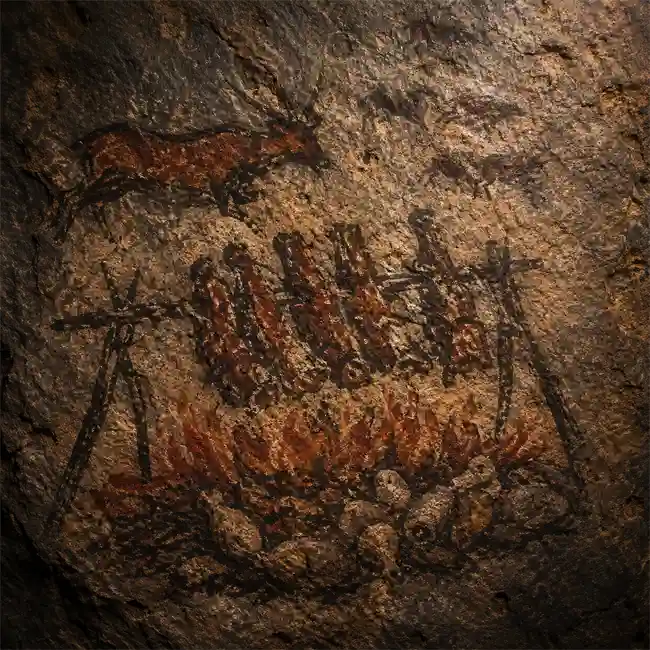
🍖 Recipe: West Turkana Stone-Seared Antelope Ribs with Fire-Roasted Marrow & Ash-Baked Savannah Roots
This Stone Age-inspired recipe draws inspiration from archaeological discoveries across the Lower Paleolithic landscapes of West Turkana. While no written recipes survive from nearly two million years ago, fossilized animal bones, fractured marrow remains, ancient hearth deposits, and Acheulean stone tools reveal remarkable clues about how early hominids processed and prepared food.
Rather than attempting to recreate an impossible historical dish, this recipe respectfully interprets the evidence using modern ingredients while preserving the spirit of humanity's earliest communal meals. Every element reflects simplicity, natural flavor, and techniques that rely on heat, stone, smoke, patience, and the remarkable ingenuity of our ancient ancestors.
Unlike modern barbecue, there are no sugary glazes, artificial marinades, or complex spice blends. The rich flavor comes directly from quality meat, roasted marrow, aromatic wild herbs, and slow exposure to glowing hardwood embers.
Every bite is meant to remind us that before culinary schools, before written recipes, and before agriculture itself, there was simply fire, stone, and survival.
📢 Whispers from the Ancient Cave Wall
Archaeological excavations throughout the Turkana Basin have uncovered one of the world's richest collections of Lower Paleolithic evidence. Layers of volcanic ash preserve traces of repeated occupation by early hominids, while fossilized animal remains reveal fascinating details about ancient food preparation.
Many bones discovered at these sites display unmistakable cut marks produced by sharp stone tools. Others bear deliberate impact fractures created while extracting nutrient-rich marrow hidden deep inside large limb bones. Together, these discoveries paint a vivid picture of communities that understood the extraordinary nutritional value contained within every successful hunt.
Scattered charcoal fragments and ancient hearth deposits suggest that fire became far more than protection from predators. Carefully maintained embers likely served as gathering places where families prepared food, repaired stone tools, and strengthened social bonds through shared meals.
Imagine dusk settling across the savannah.
The day's hunters return carrying sections of freshly harvested antelope.
Children collect dry hardwood branches scattered beneath acacia trees.
Experienced elders arrange heavy stones into a protective circle around glowing coals preserved from the previous evening.
Fresh ribs rest upon naturally heated rocks while marrow bones slowly warm beside the fire until their nourishing contents soften into a rich, buttery treasure.
Nearby, edible wild roots disappear beneath warm ash, slowly transforming into tender, earthy nourishment.
Conversation requires no written language.
Knowledge passes through observation.
Young hands imitate older ones.
Stone strikes stone.
Smoke drifts upward toward countless stars.
These simple rituals, repeated over hundreds of thousands of years, gradually transformed survival into tradition. They became the earliest expressions of hospitality, cooperation, and culinary culture long before permanent villages or organized societies ever existed.
Today, every carefully prepared Stone Age-inspired meal pays tribute not only to ancient ingredients but also to the remarkable human instinct to gather, share, and learn together around a welcoming fire.
🌾 Wild Savannah Treasures & The Hominid Larder
The Lower Paleolithic pantry looked dramatically different from today's supermarkets, yet it offered remarkable nutritional diversity. Every ingredient depended upon seasonal migrations, regional ecosystems, and careful ecological knowledge accumulated across generations.
Instead of cultivated crops, early humans relied upon wild abundance. Their meals reflected the landscape itself, changing naturally with rainfall, animal movements, and the rhythms of East Africa's savannah.
🌿 The Primitive Staples
The heart of this recipe celebrates ingredients inspired by archaeological evidence and the ecosystems surrounding ancient West Turkana.
• Large wild antelope or similarly lean grazing animals provided abundant protein and nourishing animal fat.
• Marrow extracted from long bones supplied concentrated natural lipids that supported energy-intensive lifestyles.
• Wild edible tubers roasted beneath hot ash offered slowly digesting carbohydrates and earthy sweetness.
• Ancient edible seeds and native grasses added texture whenever seasonal harvests allowed.
• Wild leafy greens gathered near seasonal waterways contributed minerals and fiber.
• Aromatic savannah herbs such as wild thyme relatives, native sage species, and fragrant shrubs enhanced natural flavor.
• Coarse mineral-rich stone salt did not define Lower Paleolithic cooking, but modern cooks may use a light pinch to complement the dish without overwhelming its natural character.
• Hardwood from acacia or similar dense trees produced long-lasting embers that created gentle, even cooking heat.
Every ingredient reflects a philosophy rather than strict historical certainty.
Nature remained the true pantry.
The landscape determined the menu.
Seasonality guided every meal.
🔥 Modern Kitchen Substitutes
Authentic prehistoric animals no longer roam today's landscapes, yet modern ingredients can closely capture the texture, nutrition, and flavor profile inspired by archaeological discoveries.
• Beef short ribs — approximately 1.5 kilograms
• Venison ribs — approximately 1.5 kilograms
• Elk ribs — approximately 1.5 kilograms
• Grass-fed beef marrow bones — 4 to 6 large bones
• Sweet potatoes or baking yams — 3 medium roots
• Parsnips — 2 large roots
• Jerusalem artichokes — 300 grams
• Fresh rosemary — 3 sprigs
• Fresh thyme — 4 sprigs
• Fresh sage leaves — 8 to 10 leaves
• Crushed juniper berries — 1 teaspoon
• Coarsely ground black pepper — 1 teaspoon
• Natural sea salt — 1½ teaspoons
• Rendered beef tallow or animal fat — 2 tablespoons
These substitutions maintain the rugged character of the original inspiration while remaining practical for today's home kitchens.
Grass-fed meats are especially suitable because their flavor and nutritional profile more closely resemble the naturally active grazing animals hunted by early humans.
🦴 Paleolithic Proportions
Use these balanced proportions to recreate a hearty communal feast inspired by Lower Paleolithic traditions.
• Beef or venison ribs — 1.5 kilograms
• Marrow bones — 4 to 6 pieces
• Sweet potatoes — 600 grams
• Parsnips — 300 grams
• Jerusalem artichokes — 300 grams
• Fresh rosemary — 3 sprigs
• Fresh thyme — 4 sprigs
• Fresh sage — 8 to 10 leaves
• Crushed juniper berries — 1 teaspoon
• Sea salt — 1½ teaspoons
• Freshly ground black pepper — 1 teaspoon
• Beef tallow — 2 tablespoons
• Hardwood charcoal or hardwood logs — enough to maintain medium, steady heat for approximately 2½ to 3 hours
These proportions comfortably serve 4–6 people, echoing the communal spirit of an early hominid gathering where food was meant to be shared rather than individually portioned.
🔥 The Handaxe Culinary Ritual
Imagine replacing polished stainless steel with carefully shaped stone handaxes. Instead of gas burners or electric ovens, glowing hardwood embers become the heart of the kitchen. Cooking slows to the rhythm of fire, patience, and observation—just as it likely did hundreds of thousands of years ago.
◦ Step 1 — Prepare the Hearth
Build a broad bed of glowing hardwood embers rather than tall flames.
Allow the fire to burn steadily for about 45–60 minutes until bright orange coals develop beneath a light coating of white ash. Stable radiant heat is far more valuable than aggressive flames.
◦ Step 2 — Prepare the Ribs
Pat the ribs dry.
Lightly coat them with rendered beef tallow.
Scatter the sea salt, crushed juniper berries, black pepper, rosemary, thyme, and sage evenly over every surface.
Let the meat rest for 20–30 minutes, allowing the herbs to release their natural aroma.
◦ Step 3 — Roast the Marrow Bones
Place the marrow bones around the outer edge of the embers rather than directly over intense heat.
Roast gently for 20–30 minutes, turning occasionally.
The marrow should become soft, silky, and easy to scoop while remaining rich and creamy.
◦ Step 4 — Stone-Sear the Ribs
Heat several large flat cooking stones beside the fire until thoroughly warmed.
Lay the ribs across the hot stones near the glowing embers.
Turn every 15–20 minutes, allowing gentle radiant heat and aromatic wood smoke to slowly caramelize the surface without burning.
Cook for approximately 2½–3 hours, or until the meat becomes tender and easily separates from the bone.
◦ Step 5 — Ash-Bake the Savannah Roots
Wrap the sweet potatoes, parsnips, and Jerusalem artichokes in parchment or foil for modern convenience, or place them directly beneath a layer of warm cooking ash if using a traditional outdoor fire pit.
Bake for 60–90 minutes until soft throughout.
The slow roasting develops natural sweetness without relying on added sugars.
◦ Step 6 — Gather Around the Fire
Arrange the ribs on a large wooden serving board.
Split the marrow bones lengthwise.
Serve the roasted roots alongside the meat.
Allow everyone to spread warm marrow onto pieces of rib or roasted vegetables before eating.
There are no elaborate garnishes.
No artificial sauces.
Only fire, stone, smoke, nourishing ingredients, and the timeless pleasure of sharing a meal around glowing embers—just as our Lower Paleolithic ancestors may once have done beneath the vast skies of ancient West Turkana.
🔥 Secrets of the Primordial Hearth
The earliest cooks had no thermometers, timers, cast-iron skillets, or modern ovens. Their greatest tools were observation, patience, and an intimate understanding of fire. Every successful meal depended on reading glowing embers, listening to crackling wood, and knowing exactly when nature had transformed raw ingredients into nourishing food.
Although today's kitchens offer incredible convenience, many timeless lessons from the Lower Paleolithic remain surprisingly useful.
📈 Build Heat Slowly, Not Aggressively
• Begin with dense hardwoods such as oak, acacia, or hickory for long-lasting embers.
• Allow the fire to settle into glowing coals before cooking.
• Avoid placing meat directly over large flames, which can char the exterior before the interior cooks evenly.
• Steady radiant heat produces better tenderness than intense bursts of flame.
🦴 Respect Every Part of the Animal
Lower Paleolithic hunters depended on complete utilization of every successful hunt.
• Roast marrow bones gently instead of exposing them to excessive heat.
• Save rendered fat to baste the ribs naturally during cooking.
• Trim connective tissue only after cooking, as it contributes moisture and flavor.
• Slice meat only when serving to preserve natural juices.
🌿 Let Nature Provide the Flavor
Primitive cooking celebrated ingredients rather than overpowering them.
• Use only a light touch of seasoning.
• Fresh herbs should complement the meat instead of masking it.
• Smoke should remain subtle and fragrant rather than heavy or bitter.
• Natural sweetness develops through slow roasting rather than added sugar.
🔥 Master the Ancient Fire Rhythm
Fire is never completely predictable.
• Rotate the ribs regularly to cook evenly.
• Move meat farther from the hottest coals whenever flare-ups appear.
• Add small hardwood pieces gradually instead of feeding the fire all at once.
• Rest cooked meat for at least 15 minutes before serving.
🌾 Roast Underground-Inspired Vegetables Carefully
Ash-roasted roots become remarkably tender when cooked patiently.
• Wrap vegetables loosely if using modern equipment.
• Turn them halfway through cooking.
• Test doneness with a wooden skewer.
• Allow them to cool slightly before peeling to preserve their texture.
🛡️ Modern Food Safety While Honoring Ancient Traditions
Our ancestors possessed remarkable resilience, but today's cooks should combine prehistoric inspiration with modern food safety.
• Cook ribs until fully tender and safely cooked.
• Roast marrow thoroughly before eating.
• Wash fresh herbs and vegetables carefully.
• Store leftovers promptly after serving.
• Always prepare wild edible plants only when positively identified as safe.
The greatest secret of the primordial hearth was never complicated seasoning.
It was patience.
When fire is respected instead of rushed, simple ingredients become unforgettable.
⛔❓ Lower Paleolithic Wisdom & Secrets FAQ
Q1.Did Lower Paleolithic people really cook over controlled fire?
Archaeological evidence from several Lower Paleolithic sites suggests that controlled fire was increasingly used by later populations of Homo erectus and related hominids. Ancient hearth deposits, burned sediments, and heat-altered bones indicate that fire gradually became an important part of daily life, although its exact use likely varied across regions and time periods.
Q2.Why was bone marrow so valuable?
Bone marrow provided concentrated energy through natural fats, along with vitamins and minerals that were especially valuable for highly active hunter-gatherer communities. Because large game required enormous effort to obtain, extracting marrow ensured that no nutritious resource went to waste.
Even today, roasted marrow remains appreciated by chefs around the world for its rich, buttery texture and deep savory flavor.
Q3.Were wild roots an important food source?
Absolutely.
Archaeological research suggests that edible tubers, roots, bulbs, and other underground plant foods were dependable seasonal resources throughout many prehistoric landscapes. Slow roasting softened tough fibers while enhancing their natural sweetness, making them easier to digest and enjoy.
These foods complemented meat by providing valuable carbohydrates, fiber, and plant nutrients.
Q4.Would Lower Paleolithic food have tasted bland?
Not at all.
Without modern sauces or processed seasonings, flavor came directly from nature itself.
Fresh meat offered deep richness.
Roasted marrow delivered creamy intensity.
Wood smoke contributed subtle complexity.
Wild herbs added fragrant aromas.
Slow-roasted roots developed gentle sweetness through caramelization.
The resulting meal was bold, earthy, smoky, and deeply satisfying without relying on artificial ingredients.
🦁 The Untamed Soul of Primeval Flavor
Every modern recipe tells a story.
Some celebrate family traditions.
Others preserve regional customs.
This one reaches much farther back—into a chapter of human history that predates agriculture, pottery, written language, and permanent settlements.
West Turkana Stone-Seared Antelope Ribs are more than an interpretation of prehistoric cuisine.
They represent humanity's first culinary awakening.
The gentle aroma of hardwood smoke recalls evenings beneath vast African skies.
The rich marrow honors the wisdom of using every valuable resource nature provided.
The slow-roasted roots remind us that nourishment often came from careful observation rather than cultivation.
Most importantly, the meal reflects cooperation.
No single individual built the fire, hunted the game, gathered edible plants, crafted the stone tools, and protected the camp alone.
Every successful feast depended upon shared knowledge accumulated across countless generations.
That spirit still resonates today.
When friends and family gather around an outdoor fire, patiently turning ribs over glowing embers while conversation flows naturally, they unknowingly echo traditions established hundreds of thousands of years ago.
Modern kitchens may be filled with advanced technology, yet the deepest pleasures remain surprisingly unchanged.
Fresh ingredients.
Patient cooking.
Open flames.
Shared meals.
Gratitude for nature.
These timeless principles connect us with the remarkable resilience of our earliest ancestors.
Every bite becomes more than food.
It becomes a quiet reminder that long before civilization transformed the world, humanity discovered something extraordinary around its very first hearth:
That cooking could nourish not only the body—but also community, memory, and the enduring human spirit.
🌍 Final Thoughts: Unleashing the Lower Paleolithic Heritage in Your Modern Kitchen
The modern kitchen is often filled with conveniences that our earliest ancestors could never have imagined. Precision ovens, refrigeration, sharpened steel knives, and endless shelves of ingredients have transformed cooking into something remarkably efficient. Yet beneath all that innovation, the heart of great food has remained unchanged since the Lower Paleolithic.
It still begins with respect.
Respect for quality ingredients.
Respect for patient craftsmanship.
Respect for the fire that first illuminated the darkness of prehistoric Africa.
Preparing West Turkana Stone-Seared Antelope Ribs is not about perfectly recreating a meal from two million years ago. No one can know every detail of what Homo erectus placed upon glowing embers or which wild plants accompanied each successful hunt. Instead, this recipe celebrates the enduring principles revealed through archaeology, anthropology, and the remarkable story of human evolution.
Every slow-roasted rib reminds us that the earliest cooks relied on observation instead of written recipes.
Every roasted marrow bone recalls an age when nutrition meant survival.
Every ash-baked root reflects thousands of generations who understood the value hidden beneath the earth's surface.
In many ways, Lower Paleolithic cooking encourages us to rediscover something modern life often forgets.
Simple food can be extraordinary.
Fresh ingredients rarely need excessive manipulation.
Fire remains one of the world's greatest cooking tools.
Sharing a meal creates stronger memories than simply consuming one.
Whether prepared over an outdoor fire pit, a charcoal grill, or a backyard hearth, this prehistoric-inspired feast invites us to slow down. Listen to the crackling wood. Watch glowing embers gradually transform raw ingredients into nourishing food. Gather friends and family around the fire, tell stories, laugh together, and appreciate the timeless ritual that connects every generation of humanity.
The Lower Paleolithic may seem unimaginably distant, but its culinary legacy still lives whenever simple ingredients meet open flame with patience and purpose.
Sometimes the oldest traditions are also the most meaningful.
🦏 The Sacred Tribe: Claim Your Lower Paleolithic Heritage
Every generation inherits more than history.
We inherit instinct.
Curiosity.
Resilience.
The desire to gather around a welcoming fire.
The spirit of the Sacred Tribe is not defined by ancestry or geography. It is a community of people who appreciate authentic ingredients, ancestral nutrition, and the remarkable journey that transformed early hominids into modern humanity.
If you enjoy Paleo cooking, ancestral eating, outdoor fire craft, or exploring forgotten culinary traditions, you are already walking a path first opened hundreds of thousands of years ago across the ancient landscapes of West Turkana.
Join fellow explorers who believe that food is more than fuel.
Celebrate recipes inspired by archaeology rather than trends.
Rediscover cooking methods shaped by nature instead of convenience.
Honor the wisdom of using wholesome ingredients with minimal waste.
Cook patiently.
Share generously.
Learn continuously.
Every fire you build becomes another link in humanity's oldest culinary chain.
Every shared meal strengthens a tradition that began long before written history.
Welcome to the Sacred Tribe.
The first hearth is still burning.
🏛️ Credit to the Keepers of the Lower Paleolithic Legacy
This prehistoric-inspired recipe has been thoughtfully developed from current archaeological interpretations, paleoanthropological research, fossil evidence, ancient hearth discoveries, and Acheulean stone tool assemblages associated with the Lower Paleolithic, spanning approximately 2.5 million to 300,000 years ago.
Rather than claiming to reproduce an exact historical meal, this modern adaptation respectfully transforms scientific understanding into an accessible culinary experience that reflects the resourcefulness, simplicity, and nutritional wisdom of our earliest ancestors.
It honors the pioneering communities of Homo habilis, Homo erectus, and other early hominids whose innovations in stone technology, cooperative hunting, foraging, and controlled fire forever changed the course of human history.
Every carefully prepared rib, every roasted marrow bone, and every ash-baked root serves as a tribute to the countless generations who gathered around the world's earliest hearths beneath the vast African sky.
May their ingenuity continue to inspire modern kitchens, encourage curiosity about our shared origins, and remind us that the oldest recipes are often the ones that connect us most deeply with the enduring story of humanity.
Honor the past. Cook with purpose. Share the fire. Preserve the legacy.
| 🦴 🔥🍗 < Back |