
🏠 Home > 🗺️ Recipes > 🏛️🧪 Sacred Infusions & Botanical Tonics > 🏯 Sanxingdui: Sacred Infusions & Botanical Tonics Recipes
🏯 🏛️🧪 Sanxingdui: Sacred Infusions & Botanical Tonics Recipes
Published by Supakorn | Updated: September 2026
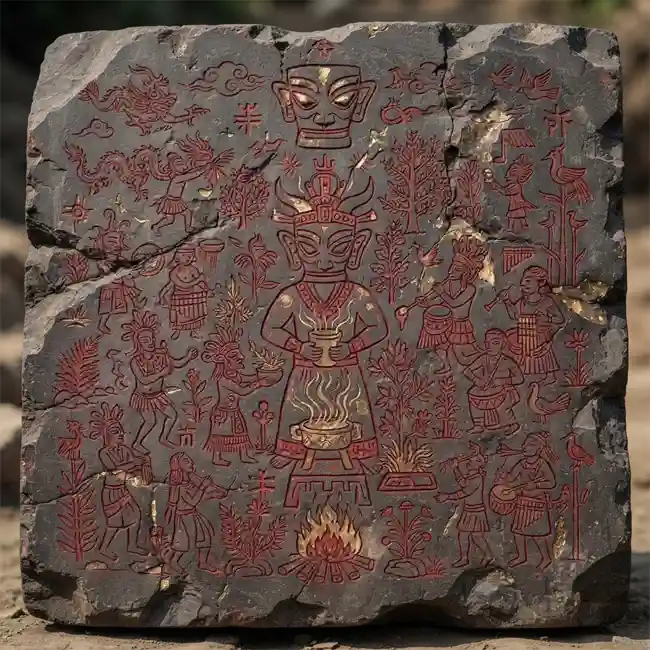
A note on historical accuracy: Sanxingdui is best understood as a Bronze Age civilization, not a civilization continuously existing for exactly 5,000 years. The archaeological site at Sanxingdui is generally dated to approximately 2700–1000 BCE, while its most spectacular ritual remains belong to the later Bronze Age, particularly around the second millennium BCE. Archaeology provides strong evidence for agriculture, plants, ritual vessels, and foodways in the wider region, but it does not preserve a verified ancient recipe book for named “botanical tonics.” The names below therefore distinguish archaeological evidence from modern descriptive reconstructions.
📜🐉 The Storyteller’s Intro: 5,000 Years of Ancestral Flavors
Imagine standing on the Chengdu Plain thousands of years ago.
The landscape would have looked very different from modern Sichuan. There were waterways, fertile agricultural land, wetlands, forests, settlements, and communities developing increasingly sophisticated systems of farming, craft production, ritual, and exchange.
Somewhere within this landscape grew the cultural world that we now call Sanxingdui.
And this is where the story becomes fascinating.
Sanxingdui was not simply a collection of mysterious bronze masks and enormous ritual sculptures. Archaeology reveals a complex urban society with walls, craft production, ritual spaces, agricultural connections, and long-distance cultural contacts.
The site lies in present-day Guanghan, around 40 kilometres northeast of Chengdu. Archaeological research places the broader Sanxingdui occupation roughly between 2700 and 1000 BCE.
That means when we talk about “5,000-year-old Sanxingdui food traditions,” it is more accurate to think of them as part of a long prehistoric-to-Bronze-Age development in the Chengdu Plain, rather than claiming that one unchanged Sanxingdui recipe has survived for 5,000 years.
🏺 From Early Farming Communities to the Sanxingdui World
The food story begins before the spectacular bronze civilization.
The Baodun culture, which developed in the Chengdu Plain during the third millennium BCE, provides important background for understanding the agricultural landscape that preceded mature Sanxingdui society.
Archaeobotanical evidence from Baodun indicates the cultivation of rice and millet, showing that farmers adapted different crops to the local environment. Rice could be cultivated in wetter areas, while millet was grown in neighbouring uplands.
This is an important clue.
Ancient food culture was never just about recipes.
It was about land, water, seasons, crops, storage, cooking technology, and community organisation.
By the time Sanxingdui became a major centre, these agricultural traditions existed within a much more complex social environment.
🏛️ The Sanxingdui Period: A Bronze Age Culinary Landscape
The Sanxingdui site flourished during the Bronze Age, with the most famous ritual remains associated with the later phases of the settlement.
Archaeologists have discovered sophisticated bronze objects, jade, gold, ivory, pottery, plant remains, textiles, and other materials.
The famous sacrificial pits discovered in 1986 contained hundreds of extraordinary objects, including bronze, gold, jade, and ivory artefacts. Later excavations between 2019 and 2020 expanded this picture with additional ritual pits and organic evidence.
For anyone interested in ancient food culture, the organic evidence is particularly exciting.
Plants rarely survive thousands of years in recognisable form. But scientific techniques can sometimes identify microscopic traces such as phytoliths or preserved plant remains.
At Sanxingdui, phytolith analysis has revealed that plant textile remains from Pit 4 predominantly consisted of bamboo.
That discovery does not prove that bamboo was brewed as a tonic.
But it does remind us how deeply plants were integrated into the material world of Sanxingdui.
Plants could provide food, fibres, containers, construction materials, tools, and potentially many other resources.
🌿 Where Do “Sacred Infusions” Fit?
This is where we need to separate archaeological evidence from imaginative storytelling.
There is currently no securely identified Sanxingdui manuscript saying:
“Take these five plants, boil them for twenty minutes, and serve them in this ritual vessel.”
Nothing like that has been recovered.
Instead, archaeologists reconstruct ancient foodways from physical evidence: plant remains, animal remains, pottery, tools, vessels, settlement structures, residue analysis, and comparisons with related archaeological contexts.
So the phrase “Sacred Infusions & Botanical Tonics” works best as an evocative category for exploring how plants, water, vessels, cooking, ritual, and ancient ideas of nourishment might have intersected—not as the name of a documented Sanxingdui beverage recipe.
That distinction actually makes the subject more interesting.
We are not pretending to possess a lost recipe book.
We are following archaeological clues.
📜 Iconic Excavated Menus: Archaeological Names Behind the Ancient Table
Sanxingdui is unusual because the archaeological record is visually dominated by ritual objects rather than preserved menus.
There are no surviving restaurant-style menus from the Bronze Age.
There is also no securely authenticated list of Sanxingdui “tonic recipes.”
So instead of inventing false ancient names, we can create a scholarly-inspired menu vocabulary based on documented archaeological categories and regional food traditions.
🧪 Rice-Based Grain Infusion
Archaeological foundation: Rice agriculture is securely documented in the Chengdu Plain before and during the development of Sanxingdui-related societies.
Rice was an important agricultural resource in the region, and evidence from Baodun demonstrates the significance of rice cultivation in the wider prehistoric landscape.
Modern descriptive name: Chengdu Plain Rice Infusion
This name should be treated as a descriptive reconstruction rather than an excavated ancient menu item.
The idea reflects a simple question:
How might an agricultural society have transformed familiar grains into different forms of nourishment?
🌾 Ancient Millet Grain Brew-Style Preparation
Millet was another important crop in prehistoric southwest China.
The Baodun evidence demonstrates that millet agriculture complemented rice cultivation, especially in different ecological zones around the Chengdu Plain.
Modern descriptive name: Ancient Millet Botanical Infusion
Again, the archaeological evidence supports the crop tradition—not a surviving recipe with this exact name.
The fascinating part is that ancient grains were more versatile than modern readers sometimes imagine. They could be processed, cooked, stored, ground, fermented in some cultural contexts, or incorporated into different forms of food.
For Sanxingdui, however, we should avoid assigning a specific preparation unless archaeological evidence supports it.
🎋 Bamboo-Scented Botanical Concept
Bamboo is particularly interesting because it appears directly in the scientific analysis of Sanxingdui plant remains.
Phytolith research identified bamboo as the predominant plant material in textile remains recovered from an ash layer in Pit 4.
Modern descriptive name: Bamboo Grove Botanical Infusion
This should not be interpreted as proof that Sanxingdui people drank bamboo tea.
Instead, it represents a broader botanical theme inspired by securely documented plant evidence.
🌱 Wild Plant & Seasonal Botanical Collection
Ancient food systems rarely depended exclusively on domesticated crops.
Across prehistoric China, archaeobotanical studies show that wild plants, fruits, nuts, weeds, and other gathered resources could contribute to human diets.
That makes a hypothetical Seasonal Wild Botanical Infusion an interesting research category—but not a confirmed Sanxingdui recipe.
This is precisely why archaeological food writing should be careful.
A plant found near an ancient settlement does not automatically mean it was consumed.
A seed might represent food waste, environmental contamination, fuel, storage debris, or another activity.
That is why modern archaeobotany relies on context, frequency, preservation, microscopic analysis, and multiple lines of evidence.
🏺 Ritual Vessel Botanical Offering
The most compelling “menu” category may actually be the vessel itself.
Sanxingdui produced remarkable bronze ritual vessels, including zun-type vessels, alongside numerous other ritual objects. A kneeling bronze figure carrying a zun on its head was among the discoveries from Pit 3.
Modern descriptive name: Ceremonial Botanical Offering
This title refers to the archaeological relationship between ritual vessels and ceremonial practice rather than claiming that a specific herbal drink was found inside.
And that distinction matters.
The vessel tells us something about ceremony.
It does not automatically tell us its exact contents.
🗺️ From Hearth to Settlement: Eating, Living & Following the Sanxingdui Landscape
To understand ancient Sanxingdui food culture, it helps to step away from the spectacular bronze masks for a moment.
Think about everyday life.
People needed food every single day.
They needed fields.
They needed water.
They needed storage.
They needed cooking equipment.
They needed fuel.
They needed containers.
They needed knowledge of seasonal cycles.
And they needed people who understood how to transform raw agricultural products into meals.
🌾 The Chengdu Plain as a Food Landscape
The geography of the Chengdu Plain played a major role in shaping ancient agriculture.
The combination of lowland environments and surrounding uplands created opportunities for different crops and subsistence strategies.
Research at Baodun demonstrates how rice and millet were used in complementary ecological settings.
This makes the region especially important for understanding early southwest Chinese food history.
🏘️ From Household Meals to Public Ritual
Sanxingdui was more than a collection of farming villages.
Archaeological research indicates a substantial urban centre with walls and specialised activities.
The discovery of large ritual deposits also demonstrates that food-related behaviour existed within a wider social and ceremonial world.
The sacrificial pits contain evidence of deliberate ritual actions involving valuable objects, including the breaking and burning of ritual artefacts.
For food historians, this raises a fascinating possibility:
Meals and ceremonies did not necessarily belong to separate worlds.
Food preparation, vessels, plants, offerings, social status, and ritual could all be connected.
🍲 What Might Everyday Eating Have Looked Like?
We should be cautious here.
No complete Sanxingdui daily menu survives.
But the agricultural evidence provides a reasonable framework for understanding the food environment.
A typical food system could have revolved around:
• Rice and other cultivated grains
• Millet cultivated in suitable areas
• Seasonal vegetables and gathered plants
• Fruits and nuts where locally available
• Animal resources
• Freshwater resources associated with the region's waterways
• Plant-based materials used for processing, storage, and cooking
The exact combination would have varied according to season, household, status, availability, and historical period.
That uncertainty is not a weakness.
It is part of what makes archaeological food history so fascinating.
🚣 Ancient Shu, the Jian River & the Waterways of the Chengdu Plain
Water is one of the most important hidden characters in the Sanxingdui story.
The ancient settlement developed within the Chengdu Plain, an environment shaped by rivers and agricultural water management.
Modern archaeological research places Sanxingdui along the Jian River, while broader research into southwest China's ancient cultures highlights the importance of connections between river valleys and regional exchange networks.
🌊 Why Rivers Matter to Ancient Food Culture
A river was not simply scenery.
It could provide:
• Irrigation
• Freshwater resources
• Transport
• Wetland plants
• Fish and aquatic foods
• Communication routes
• Access to neighbouring communities
In other words, waterways helped shape what people could grow, gather, cook, store, and exchange.
This is why the phrase “Sanxingdui food culture” should never be separated from geography.
The landscape was part of the kitchen.
🛶 Food, Exchange & Regional Connections
Sanxingdui was not isolated from the wider Bronze Age world.
Archaeological evidence points to connections between the Chengdu Plain and other regions, including the Central Plains and areas along the Yangtze River system.
These contacts matter because culinary traditions can travel with people.
Crops travel.
Cooking technologies travel.
Vessel styles travel.
Ideas travel.
And sometimes, the evidence of those connections appears not in a recipe but in an object, plant, tool, or manufacturing technique.
🏜️ Sanxingdui Without the Desert: The Green Ancient Landscape of Southwest China
Unlike civilizations famous for desert oases, Sanxingdui should not be framed as an oasis civilization.
Its environmental story is very different.
The Chengdu Plain is associated with fertile lowlands, rivers, agriculture, and a humid subtropical environment rather than an arid desert setting.
That means desert-tourism keywords are not appropriate historical descriptors for Sanxingdui.
🌿 A Different Kind of Ancient Journey
If you are following Sanxingdui through modern tourism, think:
• Archaeological sites
• Museum collections
• Bronze ritual objects
• Ancient city remains
• Chengdu Plain landscapes
• Guanghan
• Ancient Shu cultural heritage
• River landscapes
• Archaeological science
The experience is less about finding an ancient oasis and more about discovering how an agricultural civilisation developed within a remarkably productive river plain.
🏺 The Sanxingdui Museum Experience
Modern visitors can encounter the civilisation through its extraordinary archaeological collections, especially the bronze sculptures, masks, ritual vessels, gold objects, jade artefacts, and other discoveries.
The famous archaeological discoveries have transformed how scholars and the public understand Bronze Age southwest China.
And for food-history enthusiasts, the museum experience offers something slightly different from a cookbook.
It teaches us to read objects as clues.
A vessel can tell us about technology.
A plant remain can tell us about ecology.
A crop can tell us about agriculture.
A settlement can tell us about society.
Together, they begin to reconstruct an ancient way of life.
🐲❓ Ancient Civilization FAQ: Unlocking Sanxingdui’s Botanical Mysteries
Q1.Did archaeologists discover an actual Sanxingdui herbal tonic recipe?
No verified recipe book or written formula for a Sanxingdui botanical tonic has been identified.
The archaeological evidence instead includes plant-related remains, vessels, ritual objects, agricultural evidence, and other material clues. Scientific analysis has also identified bamboo phytoliths in plant textile remains from Pit 4.
Therefore, modern descriptions such as “Sacred Botanical Infusion” should be treated as interpretive labels, not authenticated ancient recipe names.
Q2.What crops are associated with the ancient Chengdu Plain?
Rice is particularly important.
Archaeological research at Baodun provides evidence for rice cultivation as well as millet agriculture, demonstrating that early farmers adapted different crops to the environments of southwest China.
This agricultural foundation provides valuable context for understanding later Sanxingdui society.
Q3.Why are ritual vessels important when studying ancient food?
Because vessels can reveal how ancient societies handled liquids, grains, food, offerings, storage, and ceremonies.
However, the shape or category of a vessel alone cannot prove exactly what it contained.
At Sanxingdui, some spectacular bronze vessels were clearly part of a ritual material culture, but their precise contents must be established through archaeological evidence rather than modern assumptions.
Q4.Why is botanical archaeology important for Sanxingdui?
Because organic materials are often much harder to preserve than bronze, gold, stone, or ceramics.
Modern methods such as phytolith analysis can recover microscopic botanical clues that help researchers understand ancient environments and plant use.
The identification of bamboo remains at Sanxingdui demonstrates how scientific archaeology can uncover information that would otherwise be almost invisible.
🧠 Final Thoughts: The Timeless Allure of Antique Gastronomy
There is something wonderfully mysterious about reconstructing food from a civilisation that left behind spectacular bronze faces but no surviving cookbook.
Sanxingdui reminds us that ancient cuisine is bigger than recipes.
It is agriculture.
It is water.
It is plants.
It is pottery.
It is bronze technology.
It is household life.
It is ritual.
It is trade.
It is landscape.
And above all, it is people.
The phrase “Sacred Infusions & Botanical Tonics” therefore works as an invitation to explore this hidden side of Sanxingdui—but the most responsible approach is to keep archaeological evidence and imaginative reconstruction clearly separated.
We know that agriculture shaped the Chengdu Plain.
We know rice and millet were important in the region's earlier agricultural development.
We know Sanxingdui developed into a sophisticated Bronze Age centre.
We know ritual activity involved extraordinary vessels and objects.
We know scientific analysis is revealing increasingly subtle traces of ancient plant use.
And we know there is still much more to discover.
That is where the real magic lies.
Not in pretending that every mystery has already been solved—but in following the evidence one botanical fragment, one vessel, and one ancient landscape at a time.
The next chapter can go deeper into the individual ancient food and botanical preparations that can be responsibly reconstructed from archaeological evidence, while clearly marking which elements are documented and which are culinary interpretation.
🏛️ Credit to the Keepers of the Culture: The Legacy
The story of Sanxingdui belongs first to the archaeological heritage of Sichuan and the wider Ancient Shu cultural world.
Modern researchers, archaeologists, conservators, museums, local communities, universities, and cultural institutions continue the enormous task of protecting, documenting, studying, and interpreting this heritage.
The discoveries from Sanxingdui have also changed the broader understanding of Bronze Age China.
Rather than viewing ancient Chinese civilisation through a single geographic centre, archaeological discoveries in southwest China reveal a more interconnected and diverse cultural landscape. Research on Sanxingdui has highlighted interaction between the Chengdu Plain, the Central Plains, and other regions connected through wider exchange networks.
For that reason, exploring Sanxingdui ancient food culture should always come with respect for the people who created the original traditions and for the archaeologists and cultural institutions preserving their material legacy.
The bronze masks may capture the imagination.
But beneath them lies an even deeper story:
fields, rivers, plants, kitchens, communities, ceremonies, and thousands of years of human ingenuity.
And that is the story worth continuing to uncover.
🏛️🧪 Ritual Tea Elixirs Inspired by the Mysteries of Sanxingdui
👉 Sip Sanxingdui: Sacred Infusions & Botanical Tonics
| 🌐 🏛️🧪 < Back | 🏯 🍯 < Previous |