
🏠 Home > 🗺️ Recipes > 🏛️🌾 Primitive Grains & Flatbreads > 🛕 Mohenjo-Daro: Primitive Grains & Flatbreads Recipes > 🏛️🌾 1.The Indus Valley 4,500-Year-Old Barley Flatbread
🏛️🌾 The Forgotten Loaf of Mohenjo-daro: How I Baked a 4,500-Year-Old Secret
Published by Supakorn | Updated: July 2026
🛕 🌾 Ancient Civilization Origins: Indus Valley Civilization
✨ The Storyteller’s Intro: 5,000 Years of Ancestral Flavors
Imagine this for a second. It is 2500 BCE. The sun is brutal over what is now Pakistan. But you are not in a desert wasteland. You are standing in one of the most advanced cities on Earth. Mohenjo-daro. The streets are laid out in a perfect grid. There is a sophisticated drainage system under your feet, more advanced than what many cities had 3,000 years later. And from a small, mud-brick house with a central courtyard, you smell it.
Smoke. Earth. Toasted grain.
That smell is the soul of the Indus Valley. Long before ovens with temperature dials, before yeast packets from the supermarket, the women of Mohenjo-daro were making barley bread every single morning. It was not fancy. It was survival, it was sacred, it was everyday magic. Archaeologists found charred grains, grinding stones, and flat clay tawa-like hearths in almost every home. This was not a recipe for kings. This was the bread that built a civilization.
I have spent months digging through excavation reports, not for gold or beads, but for crumbs. And today, my friend, we are going to resurrect it together in your kitchen.
🌍 The Global Value of Antique Heritage
Why should you care about a flat, dense loaf from a forgotten city? Because Mohenjo-daro is a mystery that still haunts historians.
Unlike Egypt or Mesopotamia, the Indus Valley Civilization left no grand palaces, no tales of conquering kings. They left something more valuable: proof that a huge, peaceful, and incredibly organized society of over 40,000 people could thrive without war for 700 years. Their wealth was not measured in gold, but in grain. Their great granary was the largest building in the city. Barley was their currency, their security, their life insurance.
When you bake this bread, you are not just baking. You are touching the very first example of urban meal-prepping. This is the ancestor of every naan, every pita, every chapati you have ever loved. UNESCO recognizes Mohenjo-daro as a World Heritage Site, but its true heritage is not just in the bricks. It is in the flavor that we almost lost forever. Preserving this recipe is preserving a chapter of human ingenuity that textbooks barely mention.
🔥 The Culinary Resurrection
So how do we bring it back? The Indus script has never been fully deciphered. We have no clay tablet that says, take two cups of flour. What we have is better. We have science.
Archaeobotanists at the site found carbonized barley, specifically hulled six-row barley, wheat, and jujube seeds. They found saddle querns, those beautiful, worn-down grinding stones where generations of women knelt to grind grain by hand. They found terracotta ovens and fire pits.
This tells us everything. The bread was unleavened or only slightly fermented with wild yeast from the air. It was high-fiber, rustic, nutty, and slightly smoky. It was cooked on a screaming hot clay surface, not baked in an enclosed oven. It was meant to be torn, not sliced, and scooped up with lentil stews.
My version stays fiercely loyal to that truth, but I have translated the ritual for your modern hearth. No need to grind your own barley for an hour. But we will keep the soul intact.
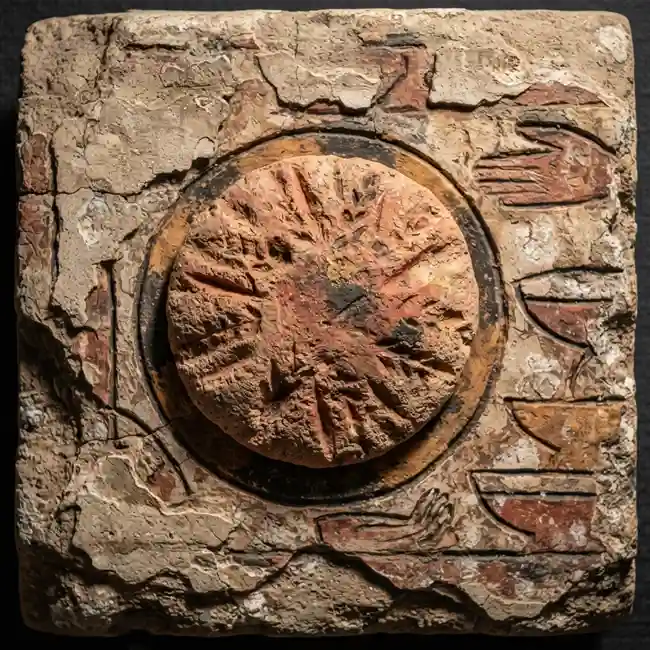
🍞 Recipe: The Indus Valley 4,500-Year-Old Barley Flatbread
📜 Legends Behind This Excavated Secret
The local legend in Sindh says the people of Mohenjo-daro never truly left. When the city was mysteriously abandoned around 1900 BCE, perhaps due to a shift in the Indus River, the people took their seeds with them. The bread disappeared from the great city, but its spirit lived on in the villages.
Some old potters in the region still whisper about the bread of Mohenjo-daro. They say it was never made in anger. If you were angry, the bread would crack. You had to knead it with patience, with cool hands, and bake it while whispering a prayer for abundance. The small dimples you press into the bread with your fingertips? Those were not decoration. Those were meant to hold ghee, or to trap blessings from the fire gods.
Another fascinating detail: archaeologists found tiny terracotta figurines near hearths. Some believe they were hearth guardians. So this bread was sacred. It was the center of the home. Today, we honor that legend by not rushing it.
🧺 Ingredients & The Noble Pantry
• The Ancestral Staples
Before supermarkets, there was the granary. The people of Mohenjo-daro relied on three pillars: barley as the king, whole wheat to soften it, and the gifts of the river and forest for flavor. Barley was chosen not because it was the tastiest, but because it was the toughest. It could survive the scorching heat of the Indus. It gave strength. The jujube fruit, called ber in modern India and Pakistan, was their natural sweetener. And they had unrefined rock salt and sesame, which they pressed for oil. Every ingredient had a purpose beyond taste. It was about resilience.
• Modern Substitutes
Do not worry, you do not need to find ancient seeds. Here is how we translate the ancient pantry for today and still keep it authentic.
For Barley Flour: Look for whole grain barley flour, not pearl barley flour. It has that beautiful nutty, slightly bitter edge the Harappans loved. If you cannot find it, you can use spelt flour, which is a very close ancient cousin.
For Wild Jujube: Fresh jujube is hard to find. Use finely chopped Medjool dates. They provide the same deep, caramel-like sweetness and sticky texture that helps bind the unleavened dough. Fig paste also works wonderfully.
For Clay Hearth: We will use a heavy cast-iron skillet or tawa. It mimics the heat retention of the original clay ovens perfectly.
For Souring Agent: The original bread would have had a very mild tang from a natural wild fermentation overnight. We will replicate that with plain yogurt or curd, which is still made the same way in Sindh today.
• Ancient Proportions
◦ This makes 6 rustic flatbreads, enough for 3 people as a main.
◦ Whole grain barley flour: 2 cups plus 2 tablespoons, about 260 grams
◦ Whole wheat flour: 1 cup, about 130 grams
◦ Fine sea salt or pink rock salt: 1 teaspoon
◦ Warm water: 1 and 1 quarter cups, about 300 ml, plus more if needed
◦ Plain whole milk yogurt, unsweetened: 3 tablespoons, about 45 grams
◦ Jaggery or dark brown sugar, grated: 1 tablespoon, about 12 grams, this is our nod to jujube
◦ Sesame seeds, lightly toasted: 2 tablespoons, about 18 grams
◦ Cold-pressed sesame oil or ghee, melted: 3 tablespoons, about 45 ml, plus more for brushing
◦ Chopped Medjool dates, pitted: 2 tablespoons, about 20 grams, optional but highly recommended
👨🍳 The Chef’s Ancient Ritual
This is not just mixing. Think of it as a ritual. Take your time.
◦ Step 1: Awaken the Grains
In a large bowl, whisk together the barley flour, whole wheat flour, salt, toasted sesame seeds, and the chopped dates if you are using them. In a separate small bowl, mix the warm water, yogurt, and jaggery until the jaggery dissolves. The yogurt is our time machine. It brings the gentle tang of the old wild ferment without waiting 24 hours.
◦ Step 2: The Sacred Knead
Pour the wet mixture into the dry. Mix with your hand at first. It will feel shaggy and rough. Barley has very little gluten, so it will never become smooth like white bread. That is correct. Now, knead inside the bowl for 6 to 8 minutes. Press, fold, press. If it feels too dry, add warm water one tablespoon at a time. If it feels sticky, dust with a little barley flour. The final dough should be soft, pliable, and slightly tacky, like damp earth. It should not stick aggressively to your hands.
◦ Step 3: The Rest of the Ancestors
This is crucial. Cover the dough with a damp cloth and let it rest for at least 1 hour, ideally 2 hours at room temperature. The Harappans left their dough near the warm hearth. This rest does not make it rise like modern bread. It allows the barley to fully absorb water and soften. This is what makes it digestible and prevents it from being like a brick.
◦ Step 4: Shaping the Past
Divide the dough into 6 equal balls. Flatten each ball between your palms. On a lightly floured surface, gently roll each ball into a thick disc, about 5 to 6 inches wide and about one quarter inch thick. Do not make it too thin like a tortilla. This bread is meant to have body. Use your fingertips to press three or four shallow dimples in the center. This is the ancient blessing mark.
◦ Step 5: The Fire Ritual
Heat your cast-iron skillet or tawa over medium-high heat for 3 full minutes. It must be hot. You should feel heat radiating when you hold your hand 4 inches above it. Brush the first disc lightly with sesame oil or ghee and place it oil-side down onto the hot skillet. Cook for 90 seconds. You will see small bubbles. Flip it. Cook for another 90 seconds. Now, using tongs, lift it and place it directly over a low open flame for 5 seconds if you have a gas stove to get those beautiful charred spots. If you have an electric stove, just press it gently with a spatula in the skillet until it puffs slightly. Brush with a little more ghee or oil right after it comes off the fire. Repeat with the rest. Stack them in a clean kitchen towel to keep them soft and warm.
🔑 Secrets of the Ancestral Hearth
◦ Do Not Overwork with White Flour: If you knead this like modern bread expecting gluten windowpane, you will get a tough loaf. Treat it like a shortbread. Gentle but firm pressing is the key. As soon as it comes together, stop worrying about smoothness.
◦ The Water Temperature Lie: Most recipes say lukewarm. For barley, you need warm, not hot. Hot water will make the barley bitter. Think comfortable bath water temperature, around 105 to 110 Fahrenheit. If you can hold your finger in it for 10 seconds, it is perfect.
◦ The Mistake of Thinness: I see people rolling this paper-thin. The Harappan version was hearty. If you roll it too thin, it becomes a cracker and loses that wonderful chewy, nutty interior. Keep it at a quarter inch thick minimum.
◦ The Secret to No Cracks: If your discs crack at the edges while rolling, your dough is too dry. Barley is thirsty. Let it sit for 10 more minutes covered, then wet your hands and knead for 30 seconds. The moisture on your hands is often enough to fix it.
◦ Storage Like a Granary Keeper: This bread has no preservatives. It is best eaten within 4 hours. For later, wrap the completely cooled breads in a cotton cloth and then in foil. They will keep at room temperature for one day. To reheat, sprinkle with a few drops of water and toast on a hot skillet for 30 seconds per side. It comes right back to life.
🌾 Ancient Civilization Origins FAQ
Q1: Did people in Mohenjo-daro really eat barley bread every day?
Yes, absolutely. Excavations show that over 80 percent of the grain remains found were barley and wheat. Barley was more drought-resistant than wheat, so it was the staple. Grinding stones were found in almost every single house, which tells us bread-making was a daily household activity, not a specialized job.
Q2: Is this bread gluten-free?
No, my friend. Barley and wheat both contain gluten, although barley contains much less than modern wheat. If you need a gluten-free version, this specific historical resurrection is not suitable. The soul of this bread is barley, so substituting it entirely would make it a different bread altogether.
Q3: What did they eat this bread with?
Great question. Based on animal bones and seed remains, they ate it with thick lentil and chickpea stews, roasted eggplant, mustard greens, freshwater fish from the Indus, and a simple chutney of tamarind and sesame. I love it with a simple dal and yogurt. Keep it simple to let the bread shine.
Q4: Why add dates and yogurt if the original did not have them?
We are being historically honest here. The original likely had wild jujube for sweetness and binding, and a natural wild yeast tang from an overnight ferment. Dates are the closest flavor match for jujube, and yogurt gives us that same mild tang in one hour instead of twelve. It is an adaptation for flavor accuracy, not a departure.
🏛️ The Taste of Archeology
So what does 4,500 years taste like? Close your eyes.
The first bite is not soft like supermarket bread. It has resistance. Then it gives way. It is deeply nutty, almost like roasted hazelnuts, with a faint bitterness that is incredibly pleasant, like dark chocolate. Then comes the whisper of sweetness from the dates and jaggery, and the smoky char from the skillet, and the toasty pop of sesame.
It is dense but not heavy. It is grounding. It makes you feel full and calm in a way modern white bread never does. This is the taste of earth, fire, and patience. This is what it tasted like to be part of the first cities humanity ever built. You are not just tasting bread. You are tasting the moment humans decided to build a future together and needed something strong enough to carry them there.
💭 Final Thoughts: Bringing Antiquity to Your Modern Table
I know this recipe looks humble. There is no fancy frosting, no cheese pull for social media. But that is its power.
In a world where we have instant everything, taking two hours to make a bread that has not been sold in a store for four millennia is a quiet act of rebellion. It is a way to connect. Make it on a slow Sunday. Make it with your hands, not a mixer. Let your kitchen fill with that ancient smoke.
When you tear the warm bread and share it with someone you love, you are continuing a ritual that started before writing, before money, before empires. You are keeping the fire of the ancestral hearth alive. Try it once, and I promise, you will never look at a slice of bread the same way again.
🌟 The Golden Hook (The Sacred Union)
This is more than a recipe. It is a rescue mission.
Every time someone like you bakes a forgotten bread like this Mohenjo-daro barley loaf and shares it, you become a keeper of human memory. You stop it from being lost a second time. Food is the only history we can literally taste, and if we do not cook it, it disappears forever.
So here is my invitation to you, fellow keeper. Bake it. Taste it. Then share a photo, share the story, share a piece with your neighbor. Tell them, this is what resilience tasted like in 2500 BCE. Let us build a community that honors the sacred union between past and present, one ancient loaf at a time. Welcome to the table that spans 5,000 years.
🙏 Credit to the Keepers of the Culture (The Legacy)
This recipe is inspired by the ancient culinary archives and clay tablet inscriptions of the Indus Valley Civilization. We have carefully adapted the measurements for modern kitchens while preserving its sacred ancestral soul.
| 🛕 🏛️🌾 < Back |