
🏠 Home > 🗺️ Recipes > 🏛️🍯 Wild Earth Sweets & Foraged Bites > 🏟️ Minoan Crete: Wild Earth Sweets & Foraged Bites Recipes > 🏛️🍯 1.Minoan Melopita (Bronze Age Honey & Nut Cakes)
🏛️🍯 Unearthing Bronze Age Flavors: How to Make a 5,000-Year-Old Minoan Honey Sweet at Home
Published by Supakorn | Updated: September 2026
🛎️🪓 Ancient Civilization Origins: Bronze Age Crete & The Minoan Realm
🍯 The Storyteller’s Intro: 5,000 Years of Ancestral Flavors
Imagine standing on the sun-drenched hills of Bronze Age Crete around 2000 BCE. The warm Mediterranean breeze carries the fragrance of wild thyme, fresh figs, and pine resin. Down in the grand palace complex of Knossos, bustling storerooms are filled with massive clay amphorae holding golden honey, crushed barley, wild nuts, and aromatic oils. Long before modern pastry chefs mastered refined sugar or intricate temperature control, the Minoans created rich, nourishing sweets that nourished both royalty and the hardworking souls who built Europe's first great maritime civilization.
When you step into your kitchen today to remake this ancient delicacy, you aren't just baking a quick dessert. You are bridging a five-millennium gap. You are touching the same elemental raw ingredients that palace bakers worked with under the Aegean sun. The Minoan diet was intimately tied to the land—raw, unpasteurized honey, fragrant crushed grains, toasted sesame, and ground walnuts blended into a rich, sweet cake that preserved the harvest's abundance. Let's step away from modern processed snacks, ignite our metaphorical hearths, and breathe life back into one of the oldest sweet treats known to humanity.
🌍 The Global Value of Antique Heritage
Uncovering ancient recipes gives us a rare, sensory connection to human history. Architecture and pottery tell us how ancestors lived, but food tells us how they felt, celebrated, and found comfort. The Minoan civilization thrived on Crete for centuries, acting as a vibrant trade hub connecting Greece, Egypt, and the Levant. Their culinary culture laid the groundwork for what we now celebrate as the Mediterranean diet—a way of eating celebrated worldwide for its whole, unrefined, and deeply nourishing ingredients.
By rediscovering these lost culinary methods, we preserve a vital piece of non-material cultural heritage. Recreating historic recipes teaches us culinary mindfulness. It forces us to slow down, respect unrefined pantry staples, and appreciate the genius of ancient cooks who achieved rich, complex flavors without artificial additives or modern equipment.
🏺 The Culinary Resurrection
Resurrecting a 5,000-year-old recipe requires a mix of archaeological evidence, historical context, and kitchen intuition. While the Minoans didn't leave bound cookbooks behind, archaeological excavations across Crete have uncovered carbonized grain residues, clay baking trays, portable hearths, and pollen samples from ancient honey vessels.
By analyzing these physical remnants alongside Linear B tablet records detailing palace inventory, culinary historians have successfully reconstructed the sacred Minoan sweet cake. This process of culinary resurrection isn't about making a dusty museum exhibit—it is about restoring a living, breathing taste experience that tastes every bit as delicious today as it did in the halls of Knossos.
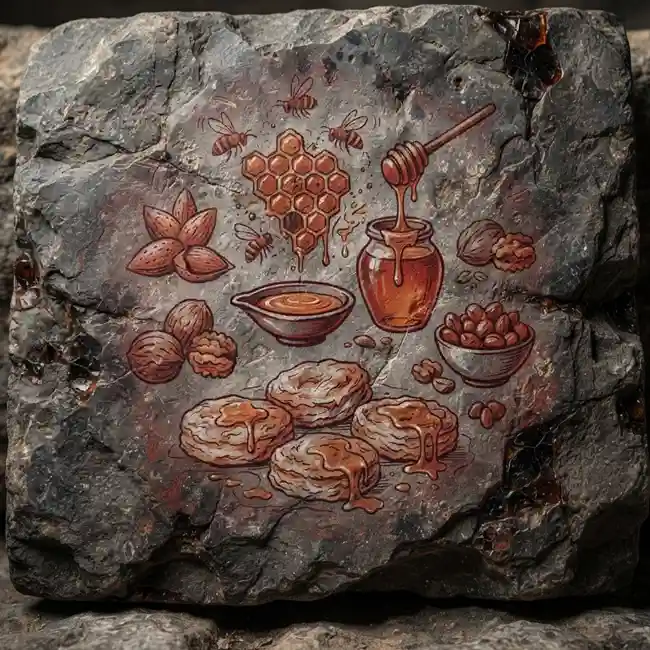
📜 Recipe: Minoan Melopita (Bronze Age Honey & Nut Cakes)
🏺 Legends Behind This Excavated Secret
According to Minoan lore and Aegean mythology, wild honey was considered the liquid nectar of the gods, long before sugar cane ever reached Mediterranean shores. Legend says that young gods were hidden in Cretan caves and fed wild mountain honey to give them eternal strength. Sweet honey cakes made with stone-ground grain and crushed walnuts were baked on flat clay griddles over olive-wood coals. These cakes served dual purposes: as high-energy rations for Minoan sailors embarking on long trading voyages across the Aegean, and as sacred offerings placed on stone altars during seasonal harvest rituals.
🌾 Ingredients & The Noble Pantry
✨ The Ancestral Staples
In the ancient Minoan pantry, simplicity ruled. Raw thyme honey was the primary sweetener, revered for its natural antibacterial properties and rich herbal floral notes. Barley and ancient wheat varieties like emmer provided a nutty, textured base, while native walnut trees and wild sesame seeds contributed healthy fats, crunch, and earthy warmth. Extra virgin olive oil bound the mixture together, acting as a natural preservative and adding a subtle peppery finish.
🔄 Modern Substitutes
To recreate this original texture and flavor profile using items from your local grocer, seek out whole, unrefined ingredients:
◦ Whole barley flour or spelt flour replaces ancient stone-ground emmer wheat flour.
◦ Raw, unfiltered wildflower or thyme honey replaces ancient Minoan pot-ripened honey.
◦ Cold-pressed extra virgin olive oil replaces ancient amphora-pressed olive oil.
◦ Raw walnut halves and unhulled sesame seeds replace wild-harvested Aegean nuts and seeds.
◦ Ground dried figs or dates can be added for extra chewy natural sweetness.
📝 Ancient Proportions
◦ Whole barley flour or spelt flour: 2 cups
◦ Raw whole walnuts (finely crushed): 1 cup
◦ Raw unhulled sesame seeds: 1/2 cup
◦ Raw, unfiltered mountain honey (preferably thyme honey): 3/4 cup
◦ Cold-pressed extra virgin olive oil: 1/3 cup
◦ Warm mountain spring water: 1/2 cup (add gradually to achieve desired dough texture)
◦ Ground cinnamon or crushed cardamom: 1 teaspoon (optional, for warm aromatic aroma)
◦ Extra raw honey and toasted sesame seeds for the final ancient glaze
👩🍳 The Chef’s Ancient Ritual
1.Dry-toast the raw sesame seeds and crushed walnuts in a heavy skillet over medium-low heat for 3 to 5 minutes until warm and fragrant, stirring continuously to prevent scorching.
2.Transfer the warm toasted seeds and nuts into a large earthenware bowl, leaving 2 tablespoons of sesame seeds aside for the final topping.
3.Add the whole barley flour (or spelt flour) and ground warm spices to the bowl with the nuts and seeds, gently mixing them together with your hands or a wooden spoon.
4.Slowly pour in the cold-pressed extra virgin olive oil, rubbing the mixture between your fingertips until the flour resembles coarse sand soaked in rich oil.
5.Warm the raw honey gently by placing its jar in a bowl of warm water so it flows smoothly without heating it directly or losing its natural raw floral enzymes.
6.Make a deep well in the center of your dry ingredient mixture and pour in the warm raw honey along with half of the warm spring water.
7.Gently combine the ingredients from the inside out, adding small splashes of warm water as needed until a firm, cohesive, and workable dough forms.
8.Knead the dough lightly on a clean surface for 2 to 3 minutes until all dry pockets disappear; the dough should feel dense, rich, and slightly moist.
9.Divide the dough into 8 equal portions and roll each portion between your palms into a compact, smooth ball.
10.Flatten each dough ball gently with the palm of your hand into a round disk about half an inch thick, mimicking ancient hand-pressed griddle cakes.
11.Preheat a heavy cast-iron skillet or stone griddle over medium-low heat and brush the surface very lightly with olive oil.
12.Place the cake disks onto the warm griddle and cook slowly for 6 to 8 minutes on each side until the surface turns golden brown with subtle charred spots.
13.Remove the hot cakes from the heat and immediately transfer them to a wooden serving board or clay platter.
14.Generously drizzle the top of each steaming hot cake with raw honey and sprinkle with the remaining toasted sesame seeds and crushed walnuts.
15.Allow the cakes to rest for 10 minutes so the warm honey absorbs deep into the grain before serving to your guests.
🔥 Secrets of the Ancestral Hearth
• Control the Cooking Heat: Ancient Minoans cooked over dying hearth embers, not roaring flames. Keep your skillet heat low to medium-low so the honey and grains inside cook through without burning the natural sugars on the exterior.
• Don't Over-Knead the Grain: Barley and ancient wheat flours contain delicate gluten structures compared to modern bread flour. Knead only until the dough holds together; over-working will result in tough, dense cakes rather than crumbly, satisfying sweets.
• Opt for Unfiltered Honey: Standard processed clover honey lacks the deep floral undertones of ancient honeys. Look for raw, unfiltered thyme or wildflower honey to capture the true botanical essence of the ancient Mediterranean coast.
• Adjust Dough Hydration Carefully: Whole grain flours absorb moisture differently depending on ambient humidity. Add water gradually, stopping as soon as the dough forms a firm ball that holds its shape without cracking or feeling soggy.
• Patience Enhances Flavor: While these honey sweets taste comforting warm, their complex, nutty flavors deepen significantly after resting at room temperature for a few hours.
🕍 Ancient Civilization Origins FAQ
Q1.Is this recipe suitable for modern plant-based diets?
Yes, this authentic Minoan sweet is naturally vegetarian and free from refined sugars, dairy, or artificial additives. If you follow a strict vegan diet, you can substitute the raw honey with organic date syrup or wild maple syrup, though raw honey provides the truest historical connection.
Q2.Why did ancient Minoans use barley flour instead of modern white flour?
Barley was one of the earliest domesticated grains in the Mediterranean basin. It grew exceptionally well in Crete's dry soil and rocky terrain, whereas highly refined white wheat flour was non-existent prior to modern industrial milling techniques.
Q3.How long can I store these ancient Minoan honey cakes?
Thanks to the natural preserving qualities of raw honey and extra virgin olive oil, these cakes stay delicious for up to 5 to 7 days when kept in an airtight container at cool room temperature.
Q4.Can I bake these in a modern oven instead of a stovetop skillet?
Absolultely. While skillet cooking mimics ancient flat-stone clay baking, you can bake these disks on a parchment-lined baking sheet in a preheated oven at 350°F (175°C) for 12 to 15 minutes until set and light golden brown.
🍯 The Taste of Archeology
Taking your first bite of this Minoan honey sweet is a genuine sensory trip back in time. The initial texture offers a rustic bite from the coarse whole grain flour, followed by the pleasant crunch of toasted sesame and golden walnuts. Then comes the wave of natural honey sweetness—herbal, deep, and beautifully balanced by the fruitiness of cold-pressed olive oil. It is far removed from the overly sweet, refined sugar treats of today. It feels grounding, wholesome, and profoundly satisfying.
🏺 Final Thoughts: Bringing Antiquity to Your Modern Table
Bringing a 5,000-year-old recipe into your modern kitchen is an empowering reminder of how connected we remain to our distant ancestors. Simple, unrefined ingredients—grain, nuts, oil, and honey—when treated with care, produce timeless flavors that transcend millennia. Cooking this Minoan sweet turns a standard meal into an engaging historical experience that delights family and friends alike.
Whether you are hosting a themed dinner, exploring ancient Mediterranean history, or simply looking for a refined-sugar-free dessert option rooted in heritage, this recipe offers something truly unique. Dust off your cast-iron pan, open your honey pot, and enjoy a genuine taste of Bronze Age history right from your own stove.
🤝 The Golden Hook (The Sacred Union)
Culinary heritage lives on only when passionate home cooks share these historic recipes across borders. If you enjoyed stepping back into the Bronze Age and resurrecting this lost Minoan honey sweet, help keep ancient food traditions alive! Share your finished culinary creations online, pass the recipe down to fellow food enthusiasts, and comment below with your own kitchen tweaks or historic food discoveries. Together, we can ensure the sacred cooking secrets of ancient civilizations are never lost to time.
📜 Credit to the Keepers of the Culture (The Legacy)
This recipe reconstruction pays homage to dedicated archaeological teams, bioarchaeologists, and culinary historians whose meticulous excavations across Crete have preserved Aegean food heritage. We express deep gratitude to institutions like the Heraklion Archaeological Museum and historic food researchers worldwide who continue to analyze ancient storage vessels, plant remains, and linear scripts. Their hard work allows us to taste, appreciate, and preserve the genuine edible legacy of our shared human history.
| 🏟️ 🏛️🍯 < Back |