
🏠 Home > 🗺️ Recipes > 🍷 Drinks > 🇰🇮 Kiribati Drinks
🇰🇮 🍷 Kiribati Drinks Recipes
Published by Supakorn | Updated: June 2026
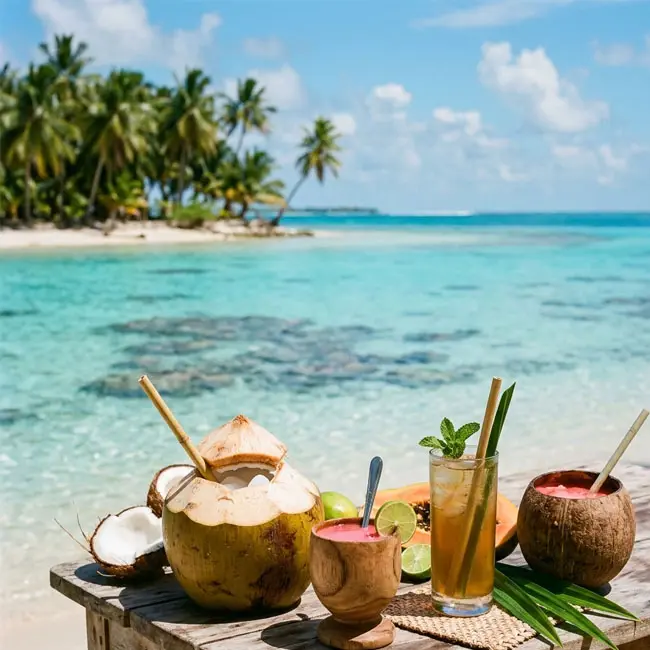
🇰🇮 🍷🌊 Why Kiribati Drinks Tell the Story of the Islands
When you think of Kiribati, you picture scattered coral atolls, endless blue lagoon water, and the sound of waves that never sleep. But if you really want to understand daily life across these 33 islands in the heart of the Pacific, look at what people drink.
In Kiribati, drinks aren’t just about quenching thirst under the equatorial sun. They’re about survival, hospitality, family, and deep respect for the land and sea. With limited freshwater and thin soil, I-Kiribati communities became masters at turning what grows here — mainly coconut, pandanus, and breadfruit — into refreshing, nourishing sips that fit island living.
No fancy cafes or bottled imports here. The most iconic Kiribati drinks come from someone’s backyard tree, prepared with hands that learned from parents and grandparents. It’s slow, it’s simple, and it’s completely tied to the rhythm of tides and seasons. If you’re traveling here, skipping the local drinks means missing half the culture.
🏝️💧 Life on Atolls: How Geography Shapes What I-Kiribati Drink
◦ Freshwater is gold. Most atolls have no rivers or lakes. Rainwater catchment and underground lenses are precious, so drinks often come from plants that store water naturally. That’s why coconut is king.
◦ Importing is expensive and rare. Cargo ships are irregular. So traditional drinks use what’s local and sustainable. You won’t find soda fountains on every corner.
◦ Heat + humidity = hydration culture. With temps around 28-32°C year-round, drinking habits are frequent, communal, and tied to cooling down after fishing, canoe building, or maneaba gatherings.
◦ Everything connects to the sea. From coconut husks used as cups to fishing breaks shared with a cold coconut, drinks mark the pause points of island work.
🌴🌞 Coconut: The Heartbeat of Kiribati Drinks
If Kiribati had a national drink, it would be from the coconut palm — te nii. This tree is life here. Food, shelter, rope, oil, and drink all come from it. But we’re skipping any mention of fermented versions. Instead, let’s talk about the fresh, everyday ways I-Kiribati enjoy it.
🥥🌱 Young Coconut Water – Moimoto
This is the go-to refreshment after returning from the lagoon or working in the sun.
◦ Harvested when the nut is still green and soft inside.
◦ Cracked open with a machete in seconds.
◦ Served straight from the shell — no straw, no ice, no fuss.
◦ Taste: Lightly sweet, clean, with a mineral hint from the sandy soil.
◦ Role: Natural rehydration. Locals swear it’s better than any sports drink.
Travel tip: If you’re invited to someone’s home, being handed a moimoto is a sign of welcome. Drink it, then scoop the soft jelly with a spoon made from the husk.
🥥🍯 Fresh Coconut Toddy Nectar – Karewe
Important: This is the fresh, non-fermented sap collected in the morning, not the alcoholic version.
◦ Men climb coconut palms at dawn to collect sap from the flower spathe.
◦ When it’s fresh — within hours of collection — it’s sweet, non-alcoholic, and served as a breakfast drink for kids and adults.
◦ Taste: Like coconut water mixed with sugarcane juice. Very energizing.
◦ Cultural note: Making karewe is a skilled job passed down through families. It connects generations.
◦ Tourists love trying it at village guesthouses because it’s truly “you can’t get this anywhere else.”
🥥🔥 Boiled Toddy Syrup Drink – Kamaimai Infusion
Fresh toddy nectar is sometimes boiled down to a syrup called kamaimai. While the syrup itself is thick, locals dilute it with water for a sweet drink.
◦ Used when fresh nectar isn’t available.
◦ Often given to kids as a treat.
◦ Carries the same smoky-caramel notes from being boiled over a coconut husk fire.
🌺🍊 Pandanus: The Island’s Secret Flavor Powerhouse
Coconut gets the fame, but pandanus fruit — te kaina — is the unsung hero of Kiribati drinks. This spiky, pineapple-looking fruit grows well in salty, sandy soil where other plants fail.
🍹🧡 Pandanus Juice – Te Tuae
◦ Made by chewing the soft, orange keys of the fruit or pounding them and straining.
◦ The juice is naturally sweet, thick, and vibrant orange.
◦ Often mixed with water or coconut water to thin it out.
◦ Taste: Like mango, sweet potato, and honey had a tropical baby.
◦ Nutrition: Packed with beta-carotene. Mothers give it to children for health.
◦ Vibe: This is the most “iconic” Kiribati drink visitors remember because the flavor is unlike anything else on earth.
🍬☀️ Sun-Dried Pandanus Paste Drink
Te tuae can be dried into a chewy fruit leather for storage. To drink it, pieces are soaked in water until soft, creating a naturally sweet beverage.
◦ Smart solution for months when fresh fruit is scarce.
◦ Popular on outer islands where trips between atolls are rare.
◦ For travelers: It’s the original Kiribati “instant drink mix” — 100% natural.
🍞🌰 Breadfruit & Other Island Sips You Should Know
🥤🍈 Breadfruit Smoothie – Te Mai Drink
When breadfruit is ripe and soft, it’s sometimes mashed with coconut water or karewe to make a filling, creamy drink.
◦ Common in morning meals during breadfruit season.
◦ Super satisfying after a long fishing night.
◦ Proves that in Kiribati, “drinks” and “food” often overlap — everything nourishes.
🍵🌿 Herbal Infusions – Te Mai ni Kai
Various leaves are used for hot drinks, especially in the evening or when someone feels unwell.
◦ Guava leaf tea: For digestion. Mild, earthy taste.
◦ Nonu leaf infusion: From the noni tree. Bitter but respected for wellness.
◦ Lemongrass grown in home gardens: Mixed with hot water for a fragrant, calming sip.
These aren’t “café culture” — they’re home remedies and social moments shared in the maneaba or around a family mat.
🤝🏡 Drinking Culture: How Beverages Shape I-Kiribati Life
🥥👨👩👧👦 Hospitality Starts With a Drink
Visit any home in Kiribati and the first thing you’ll be offered is a drink. Usually young coconut or karewe. Refusing is seen as odd. Accepting it, even just a sip, shows respect. The drink comes before any talk of business or travel plans.
🛶🌅 Drinks Mark the Day
◦ Dawn: Fresh karewe after climbing palms or before fishing.
◦ Midday: Coconut water to survive the heat.
◦ Sunset: Families gather and share whatever drink is available while kids play.
There’s no “happy hour” — just natural pauses where drinks bring people together.
🎉🎵 Community Gatherings & Botaki
During village feasts, weddings, or church events, big containers of pandanus juice or coconut water are prepared for everyone.
◦ Served in shared cups or coconut shells.
◦ No one drinks alone. It’s always communal.
◦ These are the moments travelers remember most — sitting cross-legged, sipping something sweet, listening to singing.
✈️🌴 Kiribati Drinks & Travel: What to Try and Where
If you’re lucky enough to visit Kiribati, chasing authentic drinks is one of the best ways to connect with locals.
📍🌊 South Tarawa – Urban Meets Traditional
◦ Bairiki & Betio markets: Vendors sell fresh coconuts. Point and they’ll chop one for you.
◦ Local guesthouses: Ask if they can arrange fresh morning karewe. It’s the ultimate must-try.
◦ Tip: Bring small cash. Most transactions are still very casual.
📍🏔️ Outer Islands – The Real Deal
Places like Abaiang, Marakei, or Kiritimati offer the most authentic drink experiences.
◦ Village stays: You’ll see karewe cutting firsthand.
◦ Pandanus season Oct–Mar: Best time for te tuae juice.
◦ Beach picnics: Locals will bring coconuts and you’ll drink them watching the lagoon.
🎒💡 Traveler Tips for Enjoying Kiribati Drinks Respectfully
◦ Always accept a drink when offered, unless you have a medical reason. Take at least a sip.
◦ Don’t waste it. Freshwater and plant resources are precious. Finish your coconut.
◦ Ask before taking photos of people climbing trees or preparing karewe — it’s skilled labor.
◦ Hygiene: Drink coconut water straight from a freshly opened nut. Avoid anything that’s been sitting open.
◦ Sustainability: Don’t ask for plastic straws or cups. Use the coconut shell. That’s the island way.
🌏💚 Beyond Thirst: Why These Drinks Matter Globally
Kiribati drinks aren’t just “exotic.” They’re a masterclass in resilience.
◦ Zero-waste: Husk becomes cup, shell becomes spoon, flesh becomes food.
◦ Climate adapted: These plants thrive where others can’t, in salty soil and with little rain.
◦ No supply chain: From tree to mouth in minutes. No factories, no packaging.
◦ Cultural preservation: Each sip keeps knowledge alive for the next generation, even as sea levels threaten these islands.
When you try te tuae or fresh karewe, you’re tasting 2000 years of adaptation. That’s more powerful than any branded beverage.
🌟🏆 Top 7 Must-Try Non-Alcoholic Kiribati Drinks for Visitors
1.Fresh Moimoto – Young coconut water straight from the tree. The ultimate welcome drink.
2.Morning Karewe – Sweet coconut nectar collected at dawn. Drink it within hours.
3.Te Tuae Pandanus Juice – Vibrant, thick, unforgettable. Kiribati’s signature flavor.
4.Kamaimai Water – Boiled toddy syrup diluted. Smoky-sweet and kid-approved.
5.Breadfruit-Coconut Blend – Creamy, filling, and only available in season.
6.Guava Leaf Tea – Light, herbal, and served for wellness.
7.Rehydrated Pandanus Paste Drink – Taste how islanders preserve flavor for lean months.
🧭🔍 How to Talk About Kiribati Drinks Like a Local
Want to connect faster? Learn these I-Kiribati words:
• Te nii – Coconut tree. The source of everything.
• Moimoto – Young drinking coconut.
• Karewe – Fresh coconut flower sap, non-fermented.
• Te kaina – Pandanus tree/fruit.
• Te tuae – Pandanus juice or dried pandanus paste.
• Kamaimai – Boiled toddy syrup.
• Mweengaraoi – “Drink up” / “Enjoy your drink.” Say this when someone serves you.
Dropping one of these words with a smile goes a long way.
🛑🚫 What You Won’t Find: Respecting Local Norms
Kiribati is a Christian-majority nation and many outer islands have strong community rules. While alcohol exists, this guide focuses only on traditional non-alcoholic drinks because:
• They’re what families drink daily.
• They’re offered to all ages, including kids.
• They represent the most sustainable, accessible part of I-Kiribati culture.
As a guest, enjoying these drinks shows you value the everyday culture, not just a tourist version.
🥥📚 Final Sip: Why Kiribati Drinks Are Irresistible
You don’t come to Kiribati for five-star resorts or mixology bars. You come for connection. And nothing connects you faster than sitting on a woven mat, holding a warm coconut that was on the tree 10 minutes ago, listening to stories while the lagoon laps the shore.
These drinks are simple, but they’re packed with meaning. They’re about making the most of what you have, sharing without hesitation, and living in step with the ocean and sky. That’s the authentic taste of Kiribati — and once you’ve had it, no bottled drink ever feels the same.
So if you make it to these remote atolls, skip the imported soda. Ask for moimoto. Try te tuae. Wake up for karewe. Your best souvenir will be the memory of those flavors, and the people who shared them.
⛔❓ FAQ: Kiribati Drinks
Q1.What is the most popular non-alcoholic drink in Kiribati?
Young coconut water, called moimoto, is the daily favorite. It’s fresh, hydrating, and offered as a welcome to guests. For something unique, fresh coconut nectar karewe and pandanus juice te tuae are iconic must-try drinks.
Q2.Can tourists try fresh coconut toddy nectar in Kiribati?
Yes, but only the fresh, non-alcoholic version collected in the morning. It’s called karewe and is safe for all ages when consumed within hours of collection. Ask at local guesthouses or village stays — they can arrange it if you’re there at dawn.
Q3.What does pandanus juice from Kiribati taste like?
Te tuae is thick, sweet, and bright orange. The flavor is often described as a mix of mango, sweet potato, and honey. It’s completely unique to the Pacific and a top authentic flavor visitors remember.
Q4.Are Kiribati drinks safe for travelers to drink?
Generally yes, if consumed fresh. Best practice: drink coconut water straight from a newly opened nut, and try karewe or te tuae when prepared by locals the same day. Avoid anything that’s been sitting out uncovered. Always accept drinks graciously — it’s part of the culture.
🍷 Unlocking the Flavors of the Pacific: 3 Traditional Kiribati Beverages You Can Make at Home
👉 3 Irresistible Must-Try I-Kiribati Weeknight Drinks
| 🌐 🍷 < Back | 🇰🇮 🍨 < Previous | Next > 🍲 🇰🇮 |