
🏠 Home > 🗺️ Recipes > 🍨 Desserts > 🇰🇮 Kiribati Desserts
🇰🇮 🍨 Kiribati Desserts Recipes
Published by Supakorn | Updated: June 2026
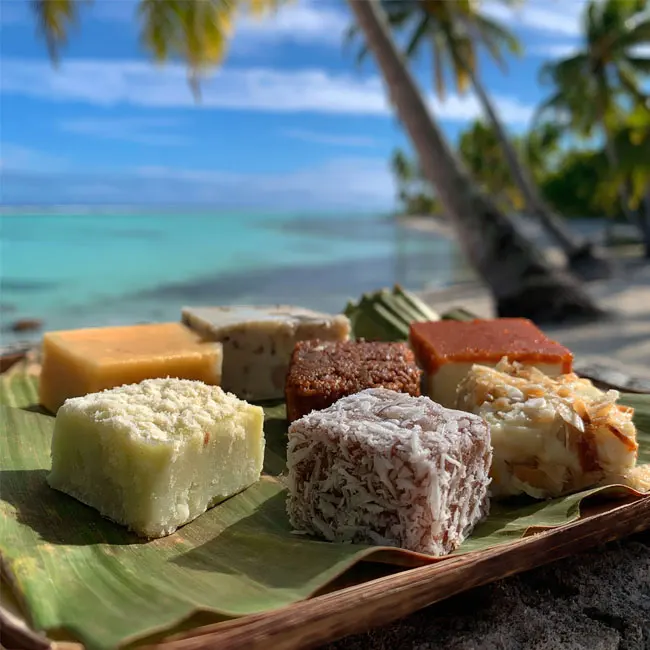
🇰🇮 🍨🏝️ Sweet Life in the Heart of the Pacific: Understanding Kiribati Dessert Culture
Let’s be real — when you think of Kiribati, your mind probably jumps to crystal-clear lagoons, outrigger canoes, and that endless Pacific blue. But here’s the secret: the sweetest part of Kiribati isn’t just the scenery. It’s what comes after the meal.
Kiribati desserts are all about simplicity, community, and making magic out of what the islands naturally provide. We’re talking about a food culture shaped by 33 atolls scattered across 3.5 million square kilometers of ocean. That isolation means imported sugar and flour weren’t always a thing. So, I-Kiribati ancestors got creative. They turned to the coconut palm, the pandanus tree, and the humble breadfruit to craft sweets that are wholesome, satisfying, and deeply tied to daily life.
In Kiribati, dessert isn’t usually a fancy plated affair. It’s more personal. It’s the treat grandma makes when the grandkids visit. It’s the sweet bite shared during a botaki, or community feast. It’s the energy boost fishermen take before heading out at dawn. So if you’re expecting layered cakes and pastry cream, think again. The iconic Kiribati dessert experience is earthy, chewy, naturally sweet, and 100% authentic to Micronesia.
🌴🥥 The Core Ingredients: What Makes Kiribati Sweets So Unique
You can’t talk about Kiribati desserts without starting with the MVP of the islands: the coconut. Every single part gets used. The water for refreshment, the young flesh for soft sweets, the mature meat grated for milk and oil, and even the sap, known as karewe, boiled down into a rich syrup. That karewe syrup is basically the I-Kiribati version of caramel. It’s smoky, deep, and becomes the base for so many must-try desserts.
Next up is te kaina, or pandanus fruit. If you’ve never seen one, it looks like a giant neon-orange pineapple. The taste? Think sweet pumpkin mixed with mango and a floral note you can’t quite place. Islanders extract the pulp and turn it into everything from chewy fruit leather to thick, sweet paste. It’s labor-intensive, which makes pandanus-based sweets extra special.
Then there’s breadfruit, babai (swamp taro), and bananas. These starches get roasted, mashed, or fermented into puddings that are hearty enough to be a meal but sweet enough to count as dessert. Imported rice and flour have made their way into modern recipes too, but the heart of Kiribati sweets is still those indigenous ingredients.
👨👩👧👦🍽️ Eating, Sharing, and Living: The Social Side of Island Sweets
In Kiribati culture, food is never just about eating. It’s about katei ni Kiribati — the Kiribati way. And desserts play a starring role in that.
Picture this: The extended family gathers under a raised thatched house called a buia. Mats are laid out, and everyone sits cross-legged. After a meal of fish and boiled babai, someone brings out a tray of te tuae. It’s a dark, sticky pandanus cake cut into small squares. No forks needed. You just pick it up, share a smile, and talk story. That’s dessert in Kiribati. It’s communal, unhurried, and always shared.
For special occasions like a child’s first birthday, a wedding, or welcoming home a loved one, families go all out. They’ll spend days preparing te kabwebwe, a coconut pudding, or te bekei, a dense, sweet treat made from pulverized pandanus. These aren’t everyday sweets. They’re edible expressions of love and respect. Making them is a group activity too. Aunties grate coconut, uncles tend the fire, and kids get to lick the spoon. It’s how recipes and stories get passed down.
Day-to-day, sweets are more practical. A fisherman might take a ball of te roro — mashed coconut mixed with karewe syrup — wrapped in a banana leaf. It’s compact, it won’t spoil fast, and it gives quick energy out on the lagoon. Kids love te katokaben, basically fresh toddy syrup candy, as an after-school treat. So whether it’s celebration or survival, dessert has a role.
✈️🍰 Desserts as a Gateway to Kiribati: Food Tourism and Island Identity
If you’re lucky enough to visit Kiribati, skip the resort buffet and find a local botaki. That’s where you’ll taste the real deal. Food tourism in Kiribati isn’t about Michelin stars. It’s about authenticity, and desserts are your sweetest entry point into the culture.
🗺️📌 Why Sweets Tell the Story of the Atolls
Every island in Kiribati has its own micro-culture, and yep, that includes desserts. On South Tarawa, where the capital is, you’ll see more modern twists because imported ingredients are easier to get. Think coconut rice pudding with a drizzle of karewe. But head to the outer islands like Abaiang or Butaritari, and you’ll find recipes that haven’t changed in generations.
On some atolls, pandanus is king because the soil is too salty for much else. So their iconic desserts revolve around te tuae and te karababa, dried pandanus paste. In the Gilbert Islands where babai pits are carefully maintained, you’ll get te bekei ni babai — a sweet, earthy taro pudding. Tasting these sweets is literally tasting the land. The flavor changes based on rainfall, soil, and how close the village is to the ocean. That’s long-tail food heritage you can’t get anywhere else.
For travelers, joining a cooking session with a local family is the ultimate experience. You’ll learn to husk a coconut with a sharpened stake, pound pandanus keys to extract pulp, and wrap puddings in te itoi leaves for cooking. It’s hands-on, it’s messy, and it’s unforgettable. Plus, you’ll understand why I-Kiribati people are so proud of their food. It’s not just sustenance. It’s resilience and creativity on a plate.
🎉🌺 Festivals, Feasts, and Sweet Traditions You’ll Want to Experience
Time your visit right and you might catch Independence Day on July 12th. The whole country celebrates with dancing, canoe races, and massive feasts. And you better believe dessert is everywhere. Tables groan under the weight of te kabwebwe steamed in huge pots, trays of roasted breadfruit with sweet coconut cream, and bowls of banana in karewe syrup.
Another big one is Christmas and New Year. Families prepare weeks in advance, preserving pandanus and stockpiling coconuts. The goal? To have enough sweets to feed anyone who stops by, because hospitality is everything. As a visitor, you’ll probably get invited in for te karauti. Don’t say no. Sitting with a family, sharing their secret recipe for coconut candy, is the kind of travel memory that sticks.
Even smaller events matter. When the maneaba, the community meeting house, hosts a gathering, desserts are served to show respect to elders and guests. So if you want to understand the spirit of Kiribati, don’t just snorkel the reefs. Sit down and share dessert. It’s the fastest way to connect.
🥇🌟 Iconic Kiribati Desserts You Have to Know About
Alright, let’s get to the good stuff. These are the must-try Kiribati desserts that define the islands. No exact recipes here — just the stories, flavors, and why they’re so irresistible.
🥥🍯 Te Kabwebwe: The Ultimate Coconut Pudding
If Kiribati had a national dessert, te kabwebwe would be it. This is comfort food at its finest. Imagine a dense, smooth pudding made from fresh coconut cream, starch from babai or sometimes cassava, and sweetened with karewe syrup. It’s steamed for hours in a big pot over an open fire, wrapped in banana leaves that give it a subtle smoky flavor.
The texture is what gets you. It’s somewhere between mochi and flan — chewy, soft, and rich without being too heavy. Families make it for big gatherings because one batch feeds a crowd. The best part? Eating it the next day when the flavors have deepened. Locals will tell you it tastes like childhood, like holidays, like home. If you only try one Kiribati sweet, make it this iconic dish.
🍊📜 Te Tuae: Pandanus Fruit Cake of the Ancestors
Te tuae is one of the oldest desserts in Kiribati, and making it is an art. First, ripe pandanus keys are boiled, then the pulp is scraped out and strained for hours to remove fibers. That pulp gets sun-dried into sheets or boiled down with karewe until it’s thick and dark like molasses. The final product is cut into chewy, toffee-like blocks.
The flavor is wild — sweet, tangy, and a little earthy with that distinct pandanus aroma. Because it keeps for months without refrigeration, te tuae was traditionally taken on long canoe voyages. Today it’s still a top gift to bring when visiting family on another island. Bite into a piece and you’re tasting centuries of survival and ingenuity. It’s truly a secret gem of Pacific Island desserts.
🍌🔥 Bananas in Karewe: Simple, Sticky, and Irresistible
This one proves that the best desserts don’t need to be complicated. Take local te banana, which are smaller and starchier than the ones you buy at the store. Slice them up, then simmer gently in fresh karewe syrup until they’re soft and the syrup reduces to a thick glaze.
The result is bananas that are caramelized, smoky-sweet, and almost jammy. It’s often served warm as an afternoon treat or alongside boiled babai to balance the meal. Kids go crazy for it, and honestly, so do adults. It’s the kind of authentic island sweet that makes you close your eyes on the first bite.
🍠🍮 Te Bekei: The Hearty Sweet of Celebration
Te bekei is Kiribati’s answer to pudding, but way more substantial. The base is usually babai swamp taro or breadfruit that’s been baked in an earth oven called a koumu. Then it’s pounded until smooth, mixed with thick coconut cream, and sweetened. Some families add a bit of grated mature coconut for texture.
It’s not super sugary. The sweetness is gentle, letting the natural flavor of the taro or breadfruit shine. That’s why it works as both dessert and a filling snack. Te bekei is a must-try at weddings and big feasts because it symbolizes abundance and hard work — babai takes years to grow in specially dug pits. So serving it is a big deal. One spoonful and you’ll understand why it’s considered an ultimate Kiribati comfort food.
🍬🌞 Te Katokaben: Fresh Toddy Candy From the Palm
Remember karewe? The sweet sap from the coconut palm? When it’s fresh, it’s called toddy. Drink it right away and it’s like a light, sweet juice. But boil it down and magic happens. Te katokaben is what you get when karewe is reduced until it’s thick and then cooled into a natural candy.
It’s golden-brown, slightly grainy, and tastes like caramel with a hint of smoke. No additives, no preservatives — just pure coconut sap. Island kids love to chip off pieces as a treat. For visitors, it’s one of the most authentic tastes of Kiribati you can find. Plus, watching it being made over a fire is an experience in itself. It’s simple, sustainable, and 100% irresistible.
🍚🥥 Coconut Rice Pudding: The Modern Island Favorite
With more rice available today, this dessert has become a household staple. It’s Kiribati’s cozy, homey sweet. Short-grain rice is simmered slowly in rich coconut milk until it’s creamy and soft. Then it’s sweetened with karewe syrup or, sometimes, a bit of sugar.
Some families add mashed banana or a pinch of salt to balance the sweetness. It’s served warm in coconut shells or enamel bowls, often as an evening treat. While not ancient like te tuae, it represents how Kiribati dessert culture evolves — taking new ingredients and making them taste like home. It’s the best introduction for anyone new to I-Kiribati sweets.
🍈🌿 Te Karababa: Sun-Dried Pandanus Perfection
Think of te karababa as Kiribati’s version of fruit leather, but with way more history. After extracting pandanus pulp, it’s spread thin on mats and left to dry under the equatorial sun for days. The result is a pliable, deep orange sheet you can tear into strips.
The flavor is concentrated and intense — sweet, tart, and fruity. Because it’s lightweight and lasts forever, te karababa was traditionally used as travel food and traded between islands. Today, it’s a nostalgic snack. Locals will roll it up with grated coconut inside for an extra treat. It’s one of those secret Kiribati desserts that surprises everyone who tries it.
🌰🍳 Roasted Breadfruit with Sweet Coconut Cream
Breadfruit, or te mai, is a starch staple in Kiribati. But roast it over hot coals until the skin is charred and the inside is fluffy, then drizzle it with sweetened coconut cream? Now it’s dessert.
The contrast is amazing — smoky, hot breadfruit against cool, sweet, rich coconut cream. Sometimes a bit of karewe is mixed into the cream for depth. It’s simple, filling, and shows how I-Kiribati cuisine blurs the line between meal and sweet treat. If you’re exploring Kiribati food culture, this dish is a must-try for understanding how locals use what’s around them.
🥧🌴 Te Roro: Coconut-Karewe Energy Balls
Need a quick sweet fix? Te roro has you covered. Grated mature coconut is toasted lightly to bring out its nutty flavor, then mixed with thick karewe syrup until it comes together. The mixture is rolled into balls and sometimes wrapped in a piece of leaf.
They’re sweet, chewy, and packed with energy — perfect for fishermen, workers, or kids playing all day. No baking, no fuss. Just two ingredients that define Kiribati. Te roro proves that authentic desserts don’t need ovens or mixers. Just good ingredients and know-how passed down through generations.
🍠💛 Te Tangana: Babai Chips with a Sweet Twist
Babai isn’t just for te bekei. Thinly sliced and sun-dried, then lightly fried or roasted, it becomes a chip. For dessert, those chips get a drizzle of karewe syrup or a sprinkle of toasted coconut.
It’s the perfect combo of crispy, earthy, and sweet. Te tangana is often made when there’s extra babai after a harvest. It’s a snack, it’s a dessert, it’s whatever you want it to be. And it’s another example of how Kiribati desserts make the most of local crops. Crispy, sweet, and totally iconic.
🥥🌀 Pandanus & Coconut Flour Dough Treats
With flour more available now, some families make simple dough treats. The dough uses coconut milk and sometimes a bit of pandanus juice for color and flavor. It’s shaped into small balls or flat rounds, then boiled or steamed. After cooking, they’re rolled in grated coconut and drizzled with karewe.
These are softer and more cake-like than traditional sweets, making them popular with kids. They’re often made for school events or church gatherings. While newer, they still celebrate core Kiribati flavors. It’s a great example of how the ultimate Kiribati dessert list keeps growing while staying rooted in tradition.
🍧🍍 Grated Young Coconut with Toddy Syrup
Sometimes the best dessert is the freshest one. Take the soft, jelly-like meat from a young green coconut, scrape it into a bowl, and pour fresh karewe or lightly reduced toddy syrup over it. That’s it.
It’s cold, sweet, hydrating, and takes 2 minutes to make. On a hot Kiribati afternoon, nothing beats it. This is the kind of irresistible treat you’ll find kids making for themselves. It’s not fancy, but it’s 100% authentic Kiribati, and it shows how dessert here is all about appreciating the island’s natural bounty.
💡🌴 Beyond the Bite: Why Kiribati Desserts Matter
So why should you care about Kiribati desserts? Because they’re more than food. They’re climate resilience in edible form. On atolls where fresh water is scarce and soil is salty, people figured out how to make sweets from trees that thrive in tough conditions. That’s powerful.
They’re also about identity. In a world of globalized desserts, te tuae and te kabwebwe are unmistakably I-Kiribati. You won’t find them anywhere else. They tell the story of a people who navigated the world’s largest ocean using stars and who built a rich culture on tiny strips of land.
And for travelers, they’re the most delicious way to practice responsible tourism. Buying te katokaben from a local maker or joining a family to cook te bekei puts money directly into the community. It keeps traditions alive. And it gives you a connection to Kiribati that’s way deeper than a postcard.
So next time you think about Pacific Island food, go beyond the fish and coconut. The desserts are where the heart is. They’re authentic, they’re top-tier in flavor, and once you try them, they’re absolutely unforgettable.
🖐️ FAQ
Q1.What makes Kiribati desserts different from other Pacific Island sweets?
Kiribati desserts stand out because they rely heavily on pandanus and karewe coconut toddy syrup, which aren’t as common in Polynesian desserts. The flavors are less about refined sugar and more about smoky, earthy, natural sweetness. Plus, preservation techniques like sun-drying te tuae were developed for long ocean voyages, giving them a unique history.
Q2.Can I find authentic Kiribati desserts outside of Kiribati?
It’s tough, but not impossible. Some I-Kiribati communities in Fiji, New Zealand, and Australia make traditional sweets for cultural events. Your best bet is connecting with Kiribati cultural groups online or visiting Kiribati itself. The ingredients and methods are so tied to the islands that the flavor is hard to replicate elsewhere.
Q3.Are Kiribati desserts very sweet compared to Western cakes?
Not usually. Traditional Kiribati desserts like te bekei or te tuae are mildly sweet and focus on the natural flavor of coconut, pandanus, or babai. Karewe syrup adds depth more than intense sugar. Modern versions with added sugar can be sweeter, but authentic recipes are balanced and not overwhelming.
Q4.What’s the best way for a tourist to try real Kiribati desserts?
Skip restaurants and aim for local experiences. Ask your guesthouse if they can arrange a meal with a local family or visit during a community botaki feast. Markets in South Tarawa sometimes sell te katokaben or te roro. Always be respectful — food is part of hospitality, so accept offers graciously and try everything you’re given.
🍨 3 Must-Try I-Kiribati Desserts You Can Make in Just 15 Minutes
👉 Enjoy 3 Authentic, 15-Minute I-Kiribati Desserts
| 🌐 🍨 < Back | 🇰🇮 🍝 < Previous | Next > 🍷 🇰🇮 |