
🏠 Home > 🗺️ Recipes > 🍞 Breads > 🇻🇳 Vietnam Breads > 🍞 Bánh Mì Rolls (Vietnamese Baguettes), Bánh Bao (Steamed Pork Buns) , Bánh Giò (Rice Flour Dumplings)
🍞 Homemade Vietnamese Breads: Bánh Mì, Bánh Bao, and Bánh Giò Recipes
Published by Supakorn | Updated: February 2026
Introduction: Vietnam’s Culinary Fusion in a Roll
Hey there, baking buddies! Ever taken a bite of a Bánh Mì sandwich and wondered why that bread roll is so magically crispy, light, and airy? That iconic crunch is the perfect example of how Vietnamese cuisine takes foreign influence—in this case, the French baguette—and transforms it into something uniquely spectacular.
Vietnamese breads (bánh) are more than just simple starch; they are the foundation for some of the world's most delicious street food. They range from the classic oven-baked roll to wonderfully soft, delicate steamed buns and dumplings. While these recipes are loved globally, many home cooks skip them, thinking they're too difficult. That's a huge mistake!
Today, we're demystifying three essential Vietnamese bread recipes that every food lover should master. We’ll cover:
1.Bánh Mì Rolls: The essential, crackly-crust sandwich bread.
2.Bánh Bao: The fluffy, savory steamed bun for a hearty snack.
3.Bánh Giò: The silky, pyramid-shaped steamed rice dumpling.
Let’s get our hands floury and bring the authentic flavors of Vietnam right into your kitchen!

🔹 Recipe 1: Bánh Mì Rolls (Vietnamese Baguettes)
About this Recipe: The Secret to the Perfect Crunch
The Bánh Mì roll is the soul of the legendary Vietnamese sandwich. Unlike its dense French cousin, this roll is known for being incredibly light, thin-crusted, and soft on the inside. This is achieved through a specific technique and, crucially, the use of a simple ingredient: rice flour. This blend of flours is key to preventing the dough from developing a tough gluten structure, ensuring that signature airy texture. We’ll guide you through the process, from kneading to creating that essential steamy crust.
Ingredients & Measurements
Ingredient - Measurement - Notes
- Bread Flour (or All-Purpose) 2 cups (240g) Standard flour base.
- Rice Flour 1/2 cup (60g) CRITICAL for the light texture!
- Instant Dry Yeast 2 teaspoons Ensure it is fresh.
- Salt 1 teaspoon For flavor and structure.
- Granulated Sugar 1 tablespoon Feeds the yeast.
- Warm Water 1 cup (240ml) Must be between 105°F and 115°F (40-46°C).
- Vegetable Oil 1 tablespoon Adds a little softness to the dough.
Step-by-Step Instructions
1.Activate the Yeast: In a large bowl or stand mixer, combine the warm water, sugar, and yeast. Let it sit for 5-10 minutes until foamy.
2.Mix the Dough: Add the bread flour, rice flour, salt, and vegetable oil to the yeast mixture. Mix on low speed (or by hand) until a shaggy dough forms.
3.Knead: Increase the speed and knead for about 8-10 minutes until the dough is smooth and elastic. It should pass the 'windowpane test' (stretching a small piece thin enough to see through).
4.First Proof (Bulk Fermentation): Form the dough into a ball, place it in a lightly oiled bowl, cover it, and let it rise in a warm place for about 60-90 minutes, or until doubled in size.
5.Shape the Rolls: Gently punch down the dough and divide it into 4-6 equal pieces. Roll each piece into a small log, flatten it, and roll it tightly into the traditional cylindrical Bánh Mì shape (about 6-8 inches long).
6.Second Proof: Place the shaped rolls on a parchment-lined baking sheet. Cover loosely and let proof for another 30-45 minutes. The rolls should look puffy but shouldn't have doubled in size.
7.The Steam Secret: Preheat your oven to 425°F (220°C). Place a shallow metal pan on the bottom rack of the oven. Just before loading the bread, carefully pour about 1 cup of boiling water into the pan to create steam.
8.Bake: Score the rolls lengthwise with a sharp razor or knife. Immediately place the rolls in the oven. Bake for 20-25 minutes, until they are deeply golden brown and sound hollow when tapped.
9.Cool: Let the rolls cool completely on a rack. They will firm up and develop that incredible crackle as they cool!
Tips & Mistakes to Avoid
- Tip: Always use fresh rice flour, not glutinous rice flour (bột nếp). The latter is too sticky!
- Mistake: Do not over-proof the dough during the second rise. Over-proofed rolls will collapse or lose their shape when baked.
- Tip: If you don't have a razor for scoring, sharp kitchen scissors can work—just be quick!
- Mistake: Don't skip the steam! The steam is absolutely essential for keeping the crust soft long enough to expand, which results in the ultra-thin, crackly shell.
FAQ
Q1: My rolls came out dense, not airy. What went wrong?
A1: The two most likely culprits are: 1) You didn't knead the dough long enough (the gluten didn't fully develop, leading to a weak structure), or 2) You skipped or reduced the rice flour. The rice flour is critical for keeping the dough light.
Q2: Can I freeze Bánh Mì rolls?
A2: Yes, but they lose some of their fresh crispness. For the best result, par-bake them (bake for 15 minutes, remove, cool, and freeze). Reheat them in the oven for 5-10 minutes before serving.
Q3: Can I make this dough in a bread machine?
A3: Absolutely! Just add the wet ingredients first, followed by the dry ingredients (including the yeast on top), and use the Dough cycle. You will take over the process after the first rise to shape and bake the rolls.
Summary
Mastering the Bánh Mì roll is a huge win for any home baker. This recipe gives you a light, crispy foundation that is perfect for filling with pâté, cold cuts, and fresh herbs. The secret lies in that crucial blend of rice and wheat flour, and the burst of steam in the oven. Enjoy the satisfying crack when you cut into your first homemade roll!
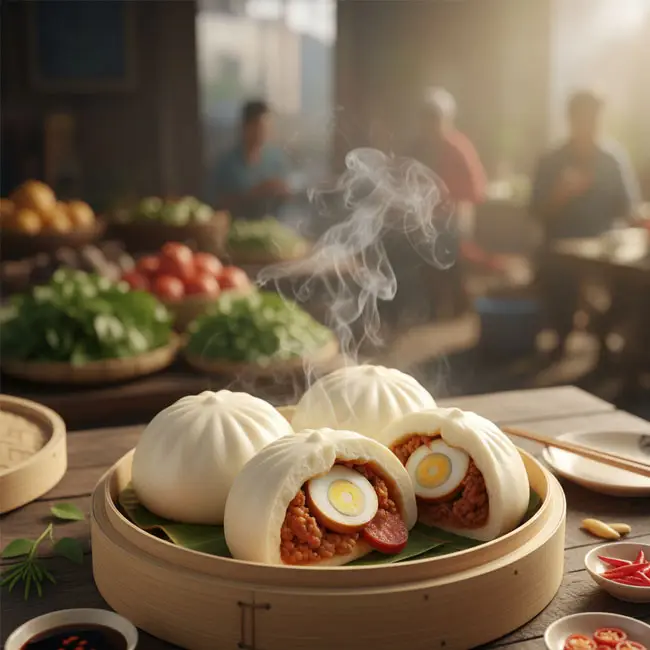
🔹 Recipe 2: Bánh Bao (Steamed Pork Buns)
About this Recipe: The Ultimate Steamed Snack
Bánh Bao is the Vietnamese version of the classic steamed pork bun, a delightful, warm, handheld meal. These are characterized by their pure white, soft, and slightly sweet dough that is wrapped around a savory filling. Unlike the baked Bánh Mì, these are cooked entirely by steam, giving them an incredibly delicate, spongy texture. They are perfect for breakfast, a hearty snack, or a light lunch.
Ingredients & Measurements
Dough:Ingredient - Measurement - Notes
- All-Purpose Flour 3 cups (360g) Must be low-protein for softness.
- Sugar 1/4 cup (50g) For sweetness and to feed the yeast.
- Instant Dry Yeast 1 tablespoon For rapid rise.
- Baking Powder 1 teaspoon Helps create the signature fluffiness.
- Milk (warm) 1 cup (240ml) Essential for tenderness.
- Vinegar (white) 1 teaspoon Helps maintain the brilliant white color.
- Vegetable Oil 2 tablespoons For a smooth, easy-to-handle dough.
Filling:Ingredient - Measurement - Notes
- Ground Pork 1 lb (450g) Use medium-fat for juiciness.
- Hard-boiled Quail Eggs 6-8 Optional, but traditional.
- Chinese Sausage (Lạp Xưởng) 1 link, sliced thin Adds a sweet, savory bite.
- Wood Ear Mushrooms 1/4 cup, soaked & chopped For texture.
- Onion 1/2 cup, diced
- Seasoning Soy sauce, fish sauce, sugar, pepper To taste.
Step-by-Step Instructions
1.Make the Filling: Sauté the onions until soft. Add the pork, mushrooms, and seasoning. Cook until the pork is no longer pink. Let cool completely.
2.Make the Dough: In a large bowl, whisk together the flour, sugar, yeast, and baking powder. Add the warm milk, vinegar, and oil. Mix until a dough forms.
3.Knead & Proof: Knead the dough for 5-8 minutes until smooth. Place in an oiled bowl, cover, and let rise in a warm place for about 60 minutes, or until doubled.
4.Assemble the Buns: Punch down the dough and divide it into 6-8 equal balls. Roll each ball into a flat circle (thicker in the center, thinner on the edges).
5.Fill and Seal: Place a portion of the filling and one quail egg (if using) in the center of the dough. Bring the edges up and pinch/twist them together to seal, forming a pleated dome shape.
6.Second Proof: Place each bun on a small square of parchment paper. Cover and let rest for 30 minutes (this is vital for the final fluffiness).
7.Steam: Fill a steamer pot with water and bring it to a boil. Place the buns (still on their paper squares) in the steamer basket, ensuring they don't touch.
8.Cook: Steam for 15-20 minutes. Do not lift the lid during this time! Immediately remove the buns and serve warm.
Tips & Mistakes to Avoid
- Tip: To get the whitest buns, use a low-protein flour and add the white vinegar to the dough—it helps neutralize natural yellowing.
- Mistake: Do not over-steam! Over-steaming makes the dough dense and wet. Stick to the 15-20 minute rule.
- Tip: Ensure your filling is completely cool before wrapping; hot filling will melt the dough and ruin the seal.
- Mistake: Don't crowd the steamer basket. The buns expand significantly, and if they touch, they will fuse together and tear when removed.
FAQ
Q1: Why do my Bánh Bao buns look yellowish instead of white?
A1: This usually happens if you use bread flour (high protein), if the water you used to steam wasn't boiling, or if you didn't include the small amount of white vinegar in the dough.
Q2: Can I freeze Bánh Bao?
A2: Yes, these freeze wonderfully! Wrap the cooled, fully-steamed buns individually in plastic wrap and freeze. Reheat them by steaming them again for 5-10 minutes.
Q3: What variations can I use for the filling?
A3: You can easily swap the pork for ground chicken, use finely chopped hard-boiled chicken eggs instead of quail eggs, or make a sweet version filled with mashed sweet beans or taro paste.
Summary
Bánh Bao offers a delightful contrast to the crunchy Bánh Mì. The soft, sweet dough wrapping a savory, meaty heart is a comforting combination. By using the right flour and ensuring a short second proof and proper steaming technique, you’ll achieve that cloud-like texture that makes this Vietnamese steamed bun an international favorite.
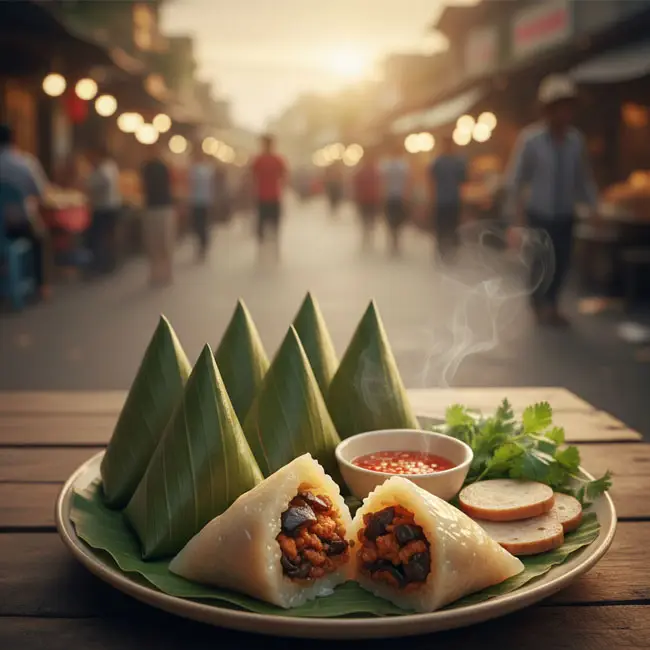
🔹 Recipe 3: Bánh Giò (Rice Flour Dumplings)
About this Recipe: The Delicate Street Food Delight
Bánh Giò is a unique and incredibly satisfying Vietnamese snack, particularly popular in Northern Vietnam. It's often called a "rice pyramid dumpling" because of its distinct shape (thanks to the banana leaf wrapping). The magic of Bánh Giò is its dough: it's not a baked or yeasted bread, but a silken, smooth, and savory rice flour paste that has an almost custard-like texture when steamed. It perfectly contrasts with the savory pork and mushroom filling.
Ingredients & Measurements
Dough (The Paste):Ingredient - Measurement - Notes
- Rice Flour 1 cup (120g) Not sweet/glutinous rice flour!
- Tapioca Starch 2 tablespoons Adds elasticity and transparency.
- Water 5 cups (1.2 liters) High water content is key.
- Salt 1 teaspoon
- Chicken Stock Cube (or powder) 1/2 cube For savory flavor.
- Vegetable Oil 2 tablespoons For smoothness.
Filling:Ingredient - Measurement - Notes
- Ground Pork 1/2 lb (225g)
- Wood Ear Mushrooms 2 tablespoons, soaked & chopped
- Shallots 2 tablespoons, minced
- Fish Sauce 1 tablespoon For that essential umami.
- Pepper & Sugar To taste
- Banana Leaves 8-10 squares (approx. 10x10 inches) For wrapping (or use aluminum foil/parchment).
Step-by-Step Instructions
1.Prepare the Filling: Sauté the shallots until fragrant. Add the ground pork and mushrooms, breaking up the meat. Season generously with fish sauce, pepper, and sugar. Cook until the meat is done. Set aside to cool completely.
2.Make the Dough Paste: In a large saucepan, whisk together the rice flour, tapioca starch, water, salt, oil, and stock powder until smooth.
3.Cook the Paste (The Magic Step): Place the saucepan over medium-low heat. Stir constantly for about 10-15 minutes. The mixture will slowly thicken and become opaque, turning into a thick, smooth, translucent paste. Remove immediately from heat once thickened.
4.Prepare the Wraps: If using banana leaves, quickly pass them over a flame or dip them in boiling water to make them pliable. Lay two leaves together (to form a strong wrap).
5.Assemble and Fold: Scoop 2-3 tablespoons of the rice paste onto the center of the leaves. Place 1-2 tablespoons of the cool pork filling in the middle of the paste. Top the filling with another layer of rice paste.
6.Shape: Fold the banana leaves tightly over the paste and filling, tucking the edges to form a neat, classic pyramid (or triangular) shape. Secure the seams with string or toothpicks.
7.Steam: Arrange the wrapped dumplings in a large steamer pot. Steam for 45–60 minutes over medium-high heat until the rice paste is completely opaque and firm.
8.Serve: Let cool slightly before unwrapping and serving with a light, acidic fish sauce dipping sauce (nước chấm).
Tips & Mistakes to Avoid
- Tip: When cooking the paste, do not stop stirring! If you stop, lumps will form at the bottom, and the texture will be ruined.
- Mistake: Do not use sticky/glutinous rice flour in the paste. It will turn rock hard and chewy instead of silky and soft.
- Tip: If you can’t find banana leaves, you can use parchment paper cut into squares, but you will lose the subtle, wonderful aroma the banana leaf imparts.
- Mistake: Ensure the filling is cool before wrapping. Hot filling will make the paste runny and impossible to fold neatly.
FAQ
Q1: Why is my Bánh Giò dough still liquid after steaming?
A1: This usually means the paste was not cooked long enough on the stovetop! It needs to be thickened into a very thick, opaque paste before wrapping and steaming. Steaming alone cannot completely cook a raw, watery batter.
Q2: Is Bánh Giò supposed to be eaten hot or cold?
A2: It is best enjoyed when it is still warm or room temperature. When it gets cold, the rice starch firms up, making the texture less desirable.
Q3: Can I add vegetables to the Bánh Giò filling?
A3: Yes! Finely diced carrots, jicama (for crunch), or water chestnuts are common additions that add flavor and texture to the savory pork filling.
Summary
Bánh Giò is a unique culinary experience that shows how Vietnamese cooking masters the use of rice flour. The silky, delicate texture of the rice paste, combined with the savory, aromatic pork filling, makes this a comforting and filling snack. Once you master the technique of cooking the rice paste on the stovetop, you'll find these delicious parcels incredibly easy to make!
Final Thoughts: Your Vietnamese Baking Adventure Awaits
See? Mastering Vietnamese breads isn't about magical secrets; it’s about understanding the specific role of different flours and utilizing techniques like steaming (for Bánh Bao and Bánh Giò) and high-heat steam baking (for Bánh Mì).
Each of these three recipes offers a completely different texture and flavor profile, proving the incredible versatility of Vietnamese baking. We encourage you to start with the Bánh Mì roll to conquer that perfect crunch, then move on to the tender, savory world of Bánh Bao and Bánh Giò.
Grab your ingredients, don't be afraid of the kneading, and remember that every mistake is just a step toward perfection. When you take that first bite of a homemade, warm Bánh Mì or a fluffy Bánh Bao, you’ll realize the journey was absolutely worth it. Share your best Vietnamese baking creations with us—we can't wait to see your perfect crunch!
| 🇻🇳 🍞 < Back |