
🏠 Home > 🗺️ Recipes > 🥗 Salads > 🇹🇻 Tuvalu Salads
🇹🇻 🥗 Tuvalu Salads Recipes
Published by Supakorn | Updated: June 2026
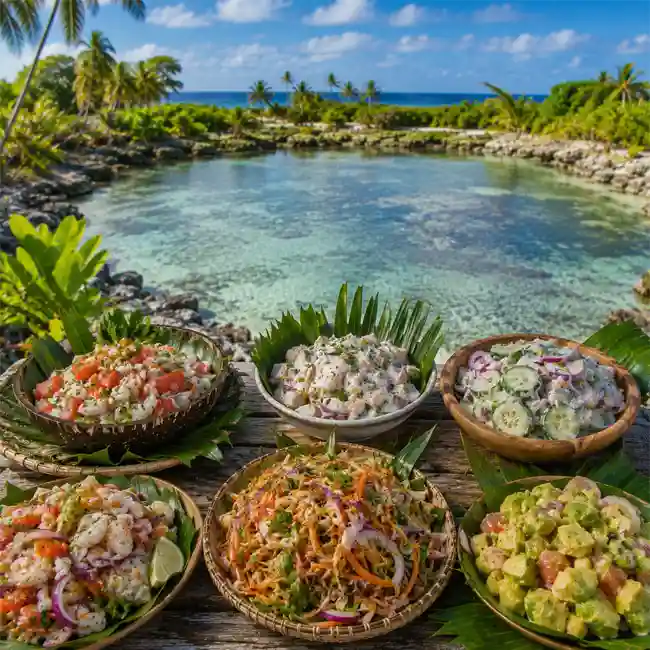
🇹🇻 🥗🌊 Why Tuvalu Salads Are the Ultimate Island Food Story
Let’s be real — when you think of Tuvalu, you probably picture tiny atolls, crazy-blue lagoons, and coconut trees swaying for days. But food? Specifically salads? That’s where things get interesting. In Tuvalu, salads aren’t just a side dish you push around your plate. They’re a whole vibe. They tell stories about the ocean, the land, the weather, and how people here have lived off what the sea and soil give them for generations.
Tuvalu is one of the smallest countries in the world, just nine coral atolls between Australia and Hawaii. No rivers, no mountains, barely any soil. So you can imagine, growing lettuce and tomatoes isn’t exactly easy. That’s what makes Tuvaluan salads so unique. They’re built on resilience, creativity, and serious island resourcefulness. We’re talking coconut, taro, breadfruit, pandanus, fresh-caught seafood, and whatever greens you can coax out of sandy ground. It’s authentic, it’s iconic, and honestly, it’s pretty irresistible once you get it.
This isn’t about fancy plating or complicated dressings. Tuvalu salads are about freshness, community, and eating with the tides. If you’re into travel food that actually means something, these are must-try. So grab a coconut and let’s dig in.
🌴 Food Culture in Tuvalu: Eating With the Ocean and the Seasons
• Island life sets the menu: In Tuvalu, food culture is 100% tied to what nature provides that day. Fishing boats go out at dawn, and if the catch is good, that’s lunch. If the breadfruit tree is loaded, that’s dinner. Salads here follow the same rhythm. No supermarket runs. You eat what’s ready, when it’s ready.
• Community is the main ingredient: Meals are rarely a solo thing. Families and neighbors gather, spread woven mats under a fale or palm tree, and share from big platters. Salads get passed around just like stories. Everyone takes a bit, chats, laughs. It’s social food, not formal food.
• Resourcefulness is everything: With limited farmland and no big grocery chains, Tuvaluans became masters at using every part of the plant. Young taro leaves, coconut shoots, grated coconut meat, even the starchy water from soaked pulaka — nothing goes to waste. That mindset shapes every salad.
• Tradition meets simplicity: Cooking methods are simple — boiling in coconut milk, grilling over hot stones, or just serving raw and fresh. The goal isn’t to mask flavors. It’s to celebrate them. A squeeze of lime, a handful of sea salt, and grated coconut can turn basic ingredients into something top-tier.
• Celebrations mean bigger spreads: On holidays like Te Aso o Tuvalu or after a big fishing trip, salads get more elaborate. That’s when you’ll see colorful combos of root crops, seafood, and coconut cream all together. Food is gratitude here, and salads are part of saying “thank you” to the sea.
🥥 Iconic Tuvalu Salad Ingredients You Have to Know
• Coconut in every form: If Tuvalu had a national flavor, it’s coconut. Grated fresh, squeezed for cream, young coconut water, coconut sap — it shows up in almost every salad. It adds richness, sweetness, and that creamy texture that ties everything together.
• Pulaka, the island staple: This is giant swamp taro, grown in pits dug into the atoll. It’s starchy, earthy, and super filling. When sliced thin and mixed with coconut cream and greens, it becomes the base of some of the most authentic Tuvalu salads. Think of it as the island’s answer to potatoes.
• Breadfruit, the tree that feeds: Ulu is roasted, boiled, or steamed, then cubed into salads. It’s mild, slightly sweet, and soaks up coconut flavors like a dream. When it’s in season, you’ll find it everywhere.
• Pandanus fruit and leaves: The bright orange pandanus fruit is chewy and sweet, sometimes added to salads for color and texture. The leaves? They’re used to wrap food or infuse dishes with a vanilla-like aroma.
• Fresh from the reef: While we’re not talking recipes here, it’s impossible to skip the seafood. Parrotfish, tuna, and crab are often flaked into salads cold, right after being caught. The ocean is Tuvalu’s fridge.
• Island greens: Don’t expect romaine. Local greens include taro leaves, laulu (young coconut shoots), and wild portulaca. They’re hardy, slightly salty from the sea breeze, and packed with nutrients.
• Tropical fruit pops: Ripe banana, papaya, and lime get tossed in for sweetness and acid. Lime especially — it’s the go-to “dressing” to brighten up anything heavy.
🍽️ How Tuvaluans Eat: The Real Dining Experience
• Hands, mats, and no rush: Forget knives and forks. In many homes, you’ll sit cross-legged on a mat, eat with your hands, and take your time. Meals are slow, because they’re also catch-up time. A salad bowl gets passed, you take a scoop with taro or breadfruit, and the conversation keeps rolling.
• Shared platters over individual plates: One big dish in the middle, everyone digs in. It’s practical and it’s about equality — no one gets more or less. Salads work perfectly for this because you can mix and match bites.
• Coconut cream is the “sauce”: Instead of bottled dressings, most salads are finished with lolo, thick coconut cream. It’s rich, cooling, and makes root crops way more satisfying. Sometimes it’s mixed with a bit of seawater for salt. Yes, really.
• Eating with the tides: Fishing and harvesting depend on tides and weather. So meal times shift. A salad lunch might happen at 11am if the boats came in early, or at 3pm if the heat was too intense. Flexibility is part of the culture.
• Leftovers become tomorrow’s fuel: Nothing is tossed. Leftover salad often gets wrapped in banana leaves and reheated in the umu — the earth oven — the next day. Flavors get even deeper.
🏝️ Tuvalu Salads and Travel: Taste the Atoll Life
• Food as a window to the islands: You can’t really “get” Tuvalu without tasting it. The salads here tell you how isolated, beautiful, and self-reliant the place is. One bite of coconut-and-pulaka salad and you understand the soil, the rain, the sea. It’s edible geography.
• Village feasts are the best intro: If you’re lucky enough to visit, get invited to a community kaiga. That’s where you’ll see the real spread — salads made from ingredients picked that morning, served with stories from elders. It’s the ultimate cultural immersion, no tour guide needed.
• Eco-eating in action: Tuvalu is on the front lines of climate change. Rising seas affect crops and fishing. So salads here aren’t just food; they’re a lesson in sustainability. Locals eat low on the food chain, waste nothing, and adapt constantly. Travelers notice that, and it sticks with you.
• Market mornings on Funafuti: The main atoll’s small market is where you’ll see salad ingredients in their raw form — piles of taro, baskets of pandanus, coconuts stacked high. Even if you don’t cook, walking through tells you what’ll be in your lunch later.
• No restaurant scene, just real food: Tuvalu doesn’t do touristy restaurants. You eat in guesthouses, family homes, or at community events. That means the salads you try are the same ones locals eat. It’s as authentic as it gets, and that’s the secret travelers love.
🌺 Secret Touches That Make Tuvalu Salads Iconic
• Sea salt, straight from the lagoon: Some families still collect seawater, evaporate it in the sun, and use those crystals. It’s mineral-rich and gives salads a taste you literally can’t replicate anywhere else.
• Smoky umu flavor: Even cold salads sometimes include ingredients that were lightly smoked in the earth oven. That hint of smoke against sweet coconut? Game-changer.
• Banana leaf serving bowls: No dishes needed. Fresh banana leaves are folded into natural bowls. They add a subtle aroma and make cleanup zero-waste.
• Generational twists: Grandma’s version of a salad might have extra pandanus, while a younger cook adds papaya. Recipes shift by household, so every salad is a little different. That’s what keeps them must-try every time.
• Eating with your eyes first: Color matters. Orange pandanus, green taro leaves, white coconut, pink fish — salads are made to look like the reef. It’s island art you can eat.
🐟 Best Times and Places to Experience Tuvalu Salad Culture
• After a fishing haul: When the boats come in and the catch is shared, salads appear fast. Fresh fish + coconut + lime = the definition of irresistible.
• During Tefolaha festivals: These celebrations honor the ancestors with dance, song, and massive feasts. Salads are prepped in huge quantities, and everyone contributes something.
• Atoll picnics: Families take boats to uninhabited islets for the day. They bring baskets of cooked taro, coconuts, and greens, then assemble salads on the beach. That’s top-tier Tuvalu dining.
• Rainy season abundance: More rain means more greens and fruit. Salads get bigger, brighter, and more varied from November to April.
• Guesthouse hospitality: Most visitors stay in small family-run guesthouses. The hosts usually cook, and salads are always on the table. Ask questions — you’ll get the stories behind each ingredient.
💡 Why Tuvalu Salads Deserve More Love Globally
• They’re the original “local and seasonal”: Long before it was a food trend, Tuvalu was doing it out of necessity. Salads here have zero food miles. That’s something the world is trying to get back to.
• Nutrition without trying: Taro, coconut, fish, greens — it’s naturally balanced. Carbs, healthy fats, protein, minerals. No diet plans needed.
• Climate story on a plate: Every salad is a reminder of how fragile and resilient atoll life is. Eating them connects you to bigger conversations about oceans and sustainability.
• Flavor that surprises you: Sweet, salty, creamy, smoky, acidic — all in one bite. If you think island food is bland, Tuvalu salads will prove you wrong.
• They bring people together: In a world of takeout and solo meals, Tuvalu’s shared salad culture feels grounding. It’s food as community, and we could all use more of that.
🌞 The Everyday Magic of Tuvalu Salads
Here’s the thing about Tuvalu salads: they’re not trying to be trendy. They’re just lunch. Or dinner. Or the thing you bring to your cousin’s house because the breadfruit tree went wild this week. And yet, that everyday-ness is what makes them so special.
They remind you that good food doesn’t need a chef’s pedigree or imported ingredients. It needs fresh air, clean water, and people who know how to treat those gifts with respect. In Tuvalu, a salad is never just a salad. It’s the tide report, the weather forecast, the family news, and the island’s history all mixed in a banana-leaf bowl.
So if you ever make it to those nine little dots in the Pacific, skip the idea of “tourist food.” Sit on a mat, pass the platter, and taste what the atoll tastes like. That’s the real Tuvalu. And honestly? It’s the ultimate salad experience you didn’t know you needed.
❔❓ FAQ
Q1.What makes Tuvalu salads different from other Pacific Island salads?
Tuvalu salads stand out because of the extreme environment. With almost no soil and heavy reliance on the ocean, ingredients like pulaka, pandanus, and coconut shoots are used more than in other islands. The flavor is also simpler — less spice, more focus on coconut cream, lime, and sea salt. It’s all about tasting the atoll itself.
Q2.Are Tuvalu salads served as a main dish or a side?
Both, depending on the day. If the fishing was good and there’s fresh seafood mixed in, a salad can totally be the main event. On lighter days, it’s served alongside boiled taro or breadfruit to round out the meal. Flexibility is key in Tuvaluan food culture.
Q3.Can visitors try authentic Tuvalu salads easily?
Yes, but not in restaurants because those barely exist. The best way is through guesthouse meals, community events, or if a local family invites you to eat. Tuvaluans are incredibly hospitable, and sharing food is part of the culture. Just be respectful, curious, and ready to eat on a mat.
Q4.Do Tuvalu salads always include seafood?
Not always, but often. The ocean is the main protein source, so when fish or crab is available, it’ll likely end up in the salad. During times when the catch is low, salads lean more on root crops, coconut, and greens. It really depends on what the sea provided that morning.
🥗 Discover the Best Sugar-Free Tuvaluan Salads Inspired by Island Flavors
👉 Enjoy 3 Top Sugar-Free Tuvaluan Salads
| 🌐 🥗 < Back | 🇹🇻 🍲 < Previous | Next > 🍞 🇹🇻 |