
🏠 Home > 🗺️ Recipes > 🧊🍵 Glacial Herbal Elixirs (Primitive Drinks) > ☀️ The Great Rift Valley (East Africa): Glacial Herbal Elixirs (Primitive Drinks) Recipes > 🧊🍵 1.The Rift Valley Dawn Baobab Fruit Brew
🧊🍵 How Our Ancestors Turned Rift Valley Baobab Into a Life-Giving Brew
Published by Supakorn | Updated: November 2026
You ever wonder what humans were drinking long before supermarkets, long before farming, long before we even had pots with handles? I am not talking about water from a river. I am talking about the first time someone decided to take something wild, crush it, mix it, and create something that actually kept the tribe alive.
That is exactly what this Rift Valley Baobab Fruit Brew is. This is not a smoothie trend. This is one of the oldest survival recipes on the planet.
🦏🌍 Prehistoric Ancestral Palate: The Early Pleistocene Era, Circa 200,000 Years Ago
We are going back to a time when the Great Rift Valley was not just a landscape, it was the kitchen, the pharmacy, and the church for early humans. Think about 200,000 years ago. The cradle of humankind.
❄️ The Pleistocene Chronicles: 30,000 - 300,000 Years of Glacial Survival
Now picture this. Outside, the wind is howling. Not the soft wind you hear on a camping trip. This is a Pleistocene wind, cutting across the high savanna and whistling through the mouth of a limestone cave. Snow dusts the highlands of Ethiopia and Kenya even though you are in Africa. The air smells like cold stone, wet earth, and smoke.
Inside the cave, a small fire crackles. Not a big roaring campfire, but a low, sacred, carefully tended fire built on flat stones. The smoke clings to the cave ceiling, blackening it over thousands of years. An elder is sitting close to it, cracking open something that looks like a small coconut, but it is not. It is a baobab fruit, hard as a rock. When it breaks, a white, powdery pulp spills out. The children watch because they know what comes next. This powder mixed with water from the spring is going to become the sour, tangy, life-saving brew that has kept their people alive through droughts, long hunts, and harsh migrations. The mammoth hunters in the north had their bone marrow. The people of the Rift had baobab.
🔥 The Primeval Legacy of Human Survival
Why did our ancestors love baobab so much? It was not just about taste. It was about pure survival instinct.
Baobab is often called the Tree of Life, and for good reason. The tree itself can live for over a thousand years. It stores water in its massive trunk during the rainy season to survive the brutal dry months. And its fruit? Nature's perfect survival capsule. The pulp inside is naturally dry, almost like a powder, so it does not rot quickly. It is packed with vitamin C, more than you would find in many modern fruits, plus calcium, potassium, and fiber. It is tart, almost like a natural citrus.
For a hunter-gatherer, this was gold. You could carry it for days without it spoiling. You could mix a handful with water and you instantly had energy, hydration, and nutrients. It was not just food. It was a symbol of resilience. The taste was the taste of home, the taste of safety after a long hunt. It was the original sports drink, but without any of the artificial stuff we have today.
📚 The Paleolithic Resurrection
So how did we lose this recipe? Simple. Farming came along. Once we started planting wheat and barley, we forgot about the wild trees. We started brewing grains instead of foraging fruits.
But now, we are bringing it back. What we are doing here is not just making a drink. We are resurrecting a ritual that was sealed under layers of volcanic ash and time in the Rift Valley. We are not using hot stones to boil water in an animal skin anymore, like they did. We are using your modern kitchen. But the soul of it, the method, the tangy smell, the way it foams a little when you stir it, that is exactly the same. It is raw, it is alive, and it is unbelievably refreshing.
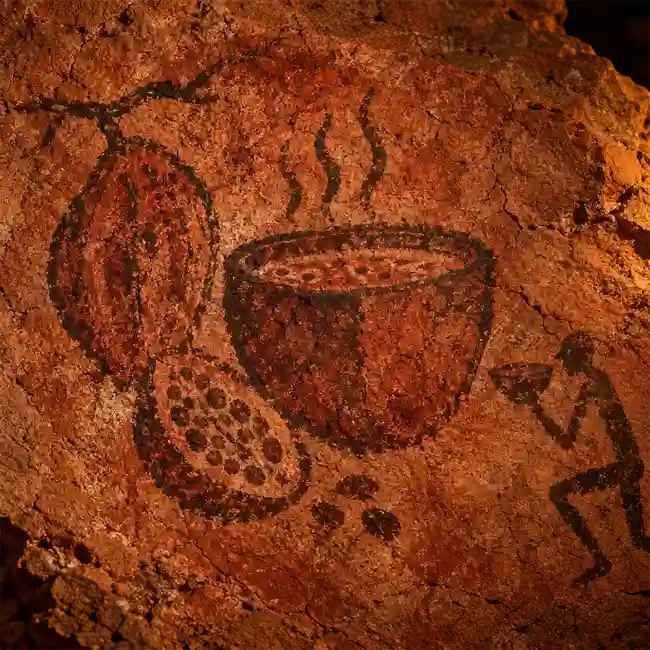
🍵 Recipe: The Rift Valley Dawn Baobab Fruit Brew
This is the recipe I call Dawn Brew because this is what they would have drunk at sunrise before a long trek across the savanna. It is non-alcoholic, naturally tangy, and energizing.
🧊 Echoes from the Glacial Ice
Archaeologists working in sites like Olduvai Gorge and around Lake Turkana did not find a written recipe, of course. What they found was more interesting. They found piles of cracked baobab pods near ancient hearths, far from where the trees grow, meaning someone carried them there. They found grinding stones stained white with baobab pulp residue. And on some cave walls in Kondoa, there are rock paintings showing figures carrying round fruits that look exactly like baobab.
The legend among the Hadzabe people, one of the last true hunter-gatherer tribes in the Rift, says that the baobab tree was once too proud, so the gods planted it upside down, with its roots in the air. That is why it looks so strange. But they also say the fruit was a gift to humans to never be thirsty. The elders would mix the pulp with cold spring water and a touch of wild honey to make a drink for hunters to carry in ostrich eggshells. That story is thousands of years old.
🌿 Wild Foraged Essentials & The Hunter’s Pantry
Here is where we bridge the ancient and the modern. I will give you what they used, and what you can use today.
📍 The Primitive Staples:
Back then, life was simple. They had fresh spring water, often slightly mineral-rich from the volcanic rock. They had wild baobab fruit pulp, sun-dried naturally on the tree. They had raw wild honey, smoked from cliff hives, dark and smoky. They sometimes added crushed seeds from the moringa tree for extra nutrition, and a pinch of wood ash salt that they collected from burned acacia wood, which gave it minerals. That was it. Pure, wild, and straight from the landscape.
📍 Modern Kitchen Substitutes:
You do not need to go to Tanzania to make this. Here is how we translate it for your kitchen. Use pure baobab fruit powder instead of the whole pod, which you can find online or in health stores, make sure it is 100 percent baobab with nothing added. Use filtered cold water or natural spring water instead of cave spring water. Use raw, unfiltered wildflower honey or date syrup instead of cliff honey. Use a tiny pinch of Himalayan pink salt or Celtic sea salt instead of wood ash salt. And if you want that ancient extra kick, use a little bit of moringa leaf powder.
📍 Paleolithic Proportions:
This makes about 2 large servings, enough for two hunters.
• Baobab fruit powder: 4 tablespoons, about 30 grams
• Cold filtered water or spring water: 4 cups, about 1 liter
• Raw wildflower honey: 2 tablespoons, you can adjust to taste
• Moringa leaf powder: half a teaspoon, optional but very ancestral
• Himalayan pink salt: one eighth of a teaspoon, just a pinch
• Fresh lime juice: 1 teaspoon, optional, to brighten the tartness
• Ice cubes made from filtered water: a handful, if you want it chilled like a mountain spring
🥄 The Primitive Culinary Ritual
This is the ritual. Take your time with it. No blenders screaming needed.
1.Awaken the Pulp: In a large clay bowl or glass jug, add your 4 tablespoons of baobab powder. Do not dump all the water at once. Add just one cup of water first. Use your fingers or a wooden spoon to work it into a thick, smooth paste. This is how they did it, breaking up the clumps by hand. Feel how it gets creamy and slightly sticky.
2.Call the Water: Now pour in the remaining 3 cups of cold water slowly while stirring continuously. You will see it transform into a cloudy, pale, milky drink with a slight tan color. It should look like a desert sunrise. Keep stirring for a full minute. The powder is naturally dry, so it needs this time to fully dissolve.
3.Sweeten the Hunt: Add your 2 tablespoons of raw honey. Since the water is cold, stir for another minute until the honey completely melts into the brew. If you are using date syrup, it will blend faster and give a deeper, caramel-like note.
4.Mineral Blessing: Add your pinch of salt and the optional moringa powder and lime juice. Stir again. The salt will not make it salty, it will just make the sourness pop and add the minerals that the ancient ash salt gave.
5.The Resting: This is the most important ancestral step. Let it sit for 10 minutes. Do not drink it immediately. Let the pulp fully hydrate and let the flavors marry. In the cave, they would leave it by the fire while they prepared for the hunt. You can leave it on your counter.
6.Serve: Stir one last time and pour into wooden cups or simple glasses. Drink it slightly cool, not super ice-cold.
✨ Secrets of the Ancestral Fire
Want to make it taste truly ancient and perfect every time? Here are the secrets I learned after many failed batches.
◦ Never Use Hot Water: This is the biggest mistake. Hot water kills the vitamin C and makes the baobab bitter and slimy. The ancestors always used cold spring water. Always cold.
◦ Control the Sourness: Baobab is naturally very tart. If your batch tastes too sour, you did not do anything wrong, that is its nature. Do not add more honey right away. First, add that tiny pinch of salt. Salt tames the sourness better than sweetener and keeps it authentic.
◦ Do Not Over-Blend: If you use a high-speed blender, it whips too much air into it and breaks down the natural pectin, making it foamy and then watery later. Hand stirring is not just romantic, it gives a better texture.
◦ The Sediment is Sacred: You will see some fine sediment settle at the bottom. That is normal. Do not strain it. That sediment is fiber and calcium. In the tribe, the last sip with all the sediment was given to the elder as a sign of respect. Just give it a swirl before you drink.
◦ Storage Wisdom: This brew is alive. It will keep in the fridge for up to 48 hours in a sealed glass jar. It will separate, just shake it. After 2 days, it starts to ferment naturally, so drink it fresh.
◦ Harvest Quality: Not all baobab powder is equal. Look for powder that is off-white to light beige, not pure white. Pure white means it has been overly processed. A slight citrus smell is a good sign.
🐫❓ Paleolithic Wisdom & Secrets FAQ
Q1:Is this really healthy or just a story?
It is genuinely a nutritional powerhouse. Baobab pulp is one of the richest natural sources of vitamin C, has more calcium than milk per weight, and is loaded with prebiotic fiber. The hunter-gatherers did not know the science, but they knew that kids who drank it got sick less often during the dry season.
Q2:Is it safe for everyone?
Yes, it is just fruit powder and water. It is naturally free from gluten, dairy, and nuts. However, because it is so high in fiber, if you have never had it before, start with half a serving. Let your gut get used to it. And if you are pregnant or have a specific medical condition, just check with your practitioner as you would with any new superfood.
Q3:What does it actually taste like?
Imagine a mix between a pear, a grapefruit, and a slight tamarind tang. It is tart first, then earthy, then a little sweet if you added honey. It is not like juice. It is more complex, a little chalky in a good way, like drinking the savanna wind. Most people love it after the second sip when their palate understands it.
Q4:Can I make it sweeter or add other things?
Absolutely. The base is sacred, but the tribe always adapted. Some people add a few mashed wild berries. You can add a little fresh mint leaf. Just keep the baobab as the star. Do not add refined sugar, it ruins the ancestral balance and makes it too sweet to be refreshing.
👅 The Taste of Primeval History
When you take your first sip, close your eyes. That sharp, tangy hit at the front of your tongue, that is 200,000 years of human history. It is not sweet soda. It is not complicated. It is clean, wild, slightly sour, and incredibly alive.
It is the taste of a time when food was not made in a factory. It was found, carried, broken open with a stone, and shared. There are no chemicals here. No artificial flavors. Just fruit that dried naturally in the African sun, water, and honey. It is the most honest drink you will ever taste.
🏠 Final Thoughts: Taming the Ice Age in Your Modern Kitchen
You do not need a cave. You do not need a fire pit made of stones. You just need a bowl, some powder, and ten minutes of patience.
I love making this recipe in my small modern kitchen because it instantly changes the room. The smell of baobab is so earthy and unique that for a second, you are not in a condo or a house anymore. You are somewhere vast and open. You are connected to every human who came before you who needed to find a way to survive.
So try it tomorrow morning. Instead of your usual drink, make the Rift Valley Dawn Brew. Take it to your balcony, your garden, or just sit by your window. Drink it slowly. You are not just hydrating. You are participating in the oldest food tradition we have.
Let your kitchen become a little wilder.
🔥 The Sacred Tribe: Claim Your Ancestral Heritage
If this story gave you chills, if the taste of baobab made you feel something ancient wake up, then you are one of us.
We are a small but growing tribe of modern humans who believe that the best food is not the newest food. It is the oldest. We are foragers, home cooks, history lovers, and survival dreamers who are done with ultra-processed everything.
We are bringing these lost recipes back, one brew, one fire, one story at a time. Make this brew, share it with someone you love, and tell them where it came from. Teach your kids that food can be an adventure.
Welcome to the Sacred Tribe. Your ancestors would be proud.
📜 Credit to the Keepers of the Paleolithic Legacy
This recipe is inspired by archaeological findings from the Great Rift Valley system, ethnobotanical studies of the Hadzabe and Maasai communities, and preserved botanical evidence surrounding ancient hearths dating back approximately 200,000 years. We have respectfully adapted this ancestral preparation for contemporary kitchens while preserving the wild, untamed essence and survival wisdom of our earliest forebears in East Africa.
| ☀️ 🧊🍵 < Back |