
🏠 Home > 🗺️ Recipes > 🍞 Breads > 🇱🇨 Saint Lucia Breads Recipes
🇱🇨 🍞 Authentic Saint Lucia Breads: Creole Bakeries & Island Street Food
Published by Supakorn | Updated: November 2026
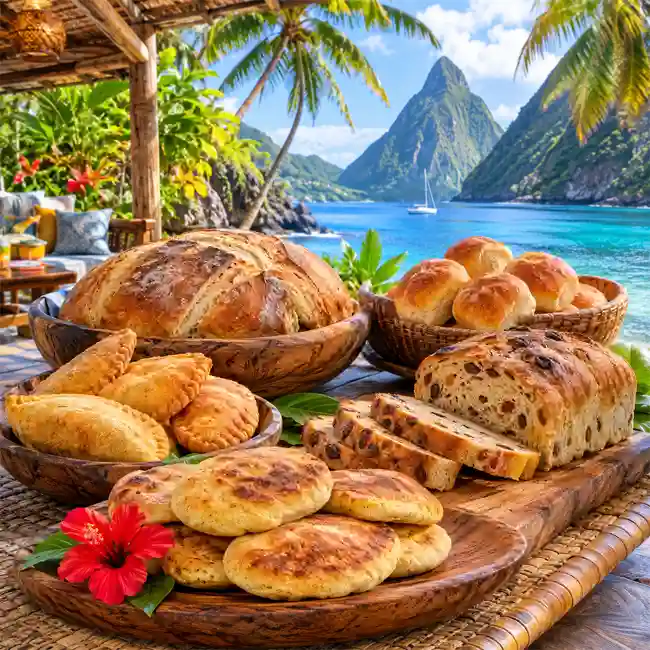
🌋🌴 Introduction: The Cultural Heritage of Saint Lucia Breads
Picture this. It's early morning on a Caribbean island. The air smells of warm dough and sweet spices, and somewhere nearby a vendor is lifting golden fried bakes out of hot oil. You're standing between green hills and blue sea, and you're hungry. That's what Saint Lucia breads feel like.
If you've never tried them, think of this guide as a friend talking you through the island's bread culture. Saint Lucia is a small island with a big personality. Its food reflects its history, and bread sits right at the center of it. You'll find bread at breakfast, at lunch, at roadside stands, on Sunday tables and at festival stalls.
Here's why Saint Lucian bread tastes the way it does:
• Indigenous roots: The island's earliest peoples relied on cassava and other root crops, and that starchy, filling tradition still shapes local cooking.
• African influence: Enslaved Africans brought cooking skills, frying techniques and a talent for making humble ingredients taste incredible.
• French and British layers: The island changed hands between the French and the British many times. That left behind Creole (Kwéyòl) language, Creole flavors and baking habits.
• East Indian contributions: Indentured laborers from India brought flatbreads and spice traditions, which blended into the island's everyday food.
The result is a bread culture that's practical, comforting and full of character. Saint Lucia breads aren't fancy. They're made to be shared, dunked, stuffed and eaten with your hands, usually with a smile.
In this guide we'll cover the food culture, the standout breads, the places to taste them, the flavors and the ingredients behind them. We won't get into recipes here. This is about helping you understand and enjoy Saint Lucia's bread scene, whether you're planning a trip or just curious.
🍽️ The Art of Saint Lucia Dining Culture & Social Eating
Saint Lucians treat food as a social event. A meal is rarely just about eating. It's about catching up, joking around and making sure everyone has enough.
Here's what everyday food life looks like:
◦ Breakfast is a big deal: Many locals start the day with something hearty. Fried bakes with saltfish, smoked herring or cheese are classic. A mug of cocoa tea often sits beside the plate, made from local cocoa and warm spices like cinnamon and nutmeg.
◦ Bread is the sidekick to everything: It scoops up stews, soaks up sauces and turns a simple filling into a full meal.
◦ Sunday is for family: Sunday meals tend to be generous and unhurried. Bread, rice, provisions (starchy root vegetables), stewed meats and fresh salads often share the table.
◦ Sharing is normal: Passing a basket of warm bread around is just how things are done. Nobody counts slices.
◦ Roadside stops are part of the routine: Locals pick up fresh bread from village bakeries or from vendors, often on the way to work or school.
Pace matters here too. Island life has a relaxed rhythm, and meals follow it. Nobody rushes through breakfast. You chat, you sip your tea, you take your time. If you visit, do the same. Slow down and let the bread be the start of a good conversation.
Friday nights add another layer. Many communities gather for lively street gatherings with music, grills and plenty of snacks. Bread shows up there too, tucked beside fried fish or stuffed with fillings, and eaten while you're standing, chatting and swaying to the beat.
🗺️ Where Culture Meets Flavor: Iconic Food Tourism Spots
You don't need a fancy restaurant to taste real Saint Lucian bread. Some of the best bites are in everyday places. Here are spots and settings worth adding to your list:
◦ Castries Central Market: The capital's main market is colorful and busy. You'll see fresh produce, spices and local snacks. It's a great place to understand the ingredients that end up in Saint Lucian kitchens, and to grab a quick bite from nearby vendors.
◦ Gros Islet Friday Night Street Party: This is one of the island's best-known weekly events. Expect music, food stalls and a party atmosphere. Look for fried snacks and bread-based bites sold alongside grilled favorites.
◦ Anse La Raye Seafood Friday: This fishing village is known for its weekly seafood night. Seafood is the star, but fresh bread and fried bakes make perfect partners for it.
◦ Soufrière and the Pitons area: The twin Pitons are a UNESCO World Heritage Site. Around the town you'll find small eateries and local cooks serving Creole-style meals. Stop for a hearty breakfast before a hike or a scenic tour.
◦ Village bakeries across the island: Small neighborhood bakeries are the real heroes. Many turn out fresh rolls and loaves daily, and locals know exactly which one makes their favorite.
◦ Festival time: Events like Saint Lucia Carnival in July and Jounen Kwéyòl (Creole Day) in October celebrate local culture, language and food. These are excellent moments to sample traditional snacks and breads.
A friendly travel tip: go early. Fresh bread is at its best in the morning, and popular items can sell out. If you see a line at a small stand, join it. Locals usually know best.
🥖 Top Iconic Saint Lucia Breads Specialties
Now the part you've been waiting for. Here are the breads and bread-style snacks that define the island's table.
✦ 🥟 Fried Bakes: These are the stars of the breakfast scene. Fried bakes are golden, puffy dough pockets that are crisp outside and soft inside. They're often split and filled, or served alongside a main dish. Many people call them the ultimate comfort food. Whenever someone says "bake and saltfish," this is the bread they mean.
✦ 🍞 Hops Bread: This is a beloved Caribbean-style bread roll. It has a crisp crust and a soft, slightly chewy inside. It's baked in small rolls that are easy to tear apart, and it's often served with butter, cheese or a hearty filling. Fans will tell you it's the perfect everyday bread.
✦ 🥥 Coconut Bread: Coconut is everywhere in the Caribbean, and this bread shows why. It's a sweet, fragrant loaf or roll that tastes like the tropics. It's great with a hot cup of tea, as a snack or as a little afternoon treat.
✦ 🧀 Bread and Cheese: Simple and iconic. A fresh roll or bake with a slice of cheese is a classic grab-and-go snack. Don't underestimate it. When the bread is warm and fresh, this humble pair is deeply satisfying.
✦ 🐟 Bake and Saltfish: This pairing is a breakfast legend. Salted fish is cooked with onions, peppers and seasonings, then served with a warm fried bake. It's savory, hearty and full of island personality.
✦ 🍌 Banana Bread and Sweet Loaves: Ripe bananas are abundant, so sweet loaves are a natural fit. Banana bread, spiced loaves and other sweet breads show up at bakeries and family tables.
✦ 🍪 Roti and Flatbreads: Thanks to the East Indian community's influence, soft flatbreads wrapped around curried fillings are popular too. They make a filling lunch and show how many cultures shaped the island's food.
✦ 🍠 Cassava-Based Breads: Cassava has deep roots in Caribbean history. Cassava bread is a gluten-free, flat and slightly crisp tradition tied to the region's Indigenous heritage. You may not see it on every corner, but it's worth knowing about, and worth trying if you spot it.
✦ 🍩 Local Sweet Treats: Beyond bread, you'll find coconut sweets, turnovers and other small baked snacks. They're often sold in little bags or wrapped in paper, perfect for walking around town.
Quick tip for first-timers: if you only try three things, make them a fried bake, a fresh hops roll and a coconut bread. That trio gives you a great taste of what the island does best.
🌶️ Flavor Profile: What Makes Saint Lucia Breads Unique?
So what do these breads actually taste like? A few things set them apart.
◦ Simple but satisfying: Saint Lucia breads aren't loaded with fancy extras. The flavor comes from good, fresh dough and careful cooking.
◦ Warm sweetness: Many breads have a gentle sweetness, especially coconut bread and sweet loaves. It's comforting, not sugary.
◦ Savory partners: The breads are often paired with salty, spicy or smoky fillings. That contrast is part of the fun. A plain, soft bake and a punchy saltfish filling make a balanced bite.
◦ Crisp meets soft: Fried bakes and hops bread both play with texture. You get a lightly crisp outside and a soft, airy inside.
◦ Aromatic spices: Nutmeg, cinnamon, vanilla and sometimes ginger give sweet breads and drinks a gentle, cozy fragrance.
◦ Fresh heat on the side: Local hot pepper sauce is a common companion. A little goes a long way, so taste it first.
The overall vibe is "balanced and hearty." Nothing is overwhelming, and everything is meant to make you feel full, happy and well looked after.
🧂 Essential Ingredients & Traditional Cooking Techniques
Understanding what goes into Saint Lucian breads makes eating them even better. The basics are humble, but the way they come together is what counts.
🌿 Signature Spices & Local Ingredients
Here are the building blocks you'll hear about again and again:
◦ Flour: The base for most breads and bakes. It's simple, filling and versatile.
◦ Coconut: Grated or in milk form, it adds richness and fragrance to sweet breads and rolls.
◦ Nutmeg: A Caribbean favorite. Just a pinch brings warmth and aroma to baked goods and cocoa tea.
◦ Cinnamon: Often paired with nutmeg for a cozy spice combination in sweet breads and warm drinks.
◦ Vanilla: Adds gentle sweetness and depth to loaves and rolls.
◦ Ginger: Adds a lively, slightly zingy note to some sweet treats.
◦ Bananas and plantains: Ripe bananas sweeten loaves, while green bananas, known locally as green figs, are a staple on the savory side of the table.
◦ Saltfish: Salted fish has been a Caribbean pantry staple for generations, and it's a classic partner for fried bakes.
◦ Smoked herring: A smoky, salty filling that many locals love for breakfast.
◦ Fresh peppers, onions and herbs: These bring brightness and kick to fillings and sides.
◦ Cocoa: The island grows cocoa, and locally made cocoa sticks or balls are used to make a comforting hot breakfast drink.
◦ Cassava: A root crop with deep historical importance across the Caribbean, used in traditional breads and other dishes.
Many of these ingredients are grown or sourced locally. That "farm to table" feel isn't a trend here. It's simply how people have eaten for a very long time.
🔥 Time-Honored Cooking Methods
You don't need to learn a recipe to appreciate the methods. Here's how traditional Saint Lucian breads typically come to life:
◦ Deep frying for bakes: Dough is shaped, then fried until golden and puffed. The goal is a light, fluffy interior with a crisp outer layer. It's quick, and it's why bakes show up so often at breakfast time.
◦ Oven baking for rolls and loaves: Hops bread and sweet loaves are baked until the crust turns golden. Many village bakeries have used traditional ovens for years, and some use wood-fired ones.
◦ Hand kneading: Plenty of bakers still rely on their hands and experience. They judge the dough by feel, not by a timer.
◦ Slow, patient resting: Giving dough time to rise helps create that soft, airy texture people love.
◦ Simple steaming and stewing on the side: The breads are often served with slow-cooked or stewed dishes, so the sauces and fillings get plenty of time to develop flavor.
◦ Serving fresh: This is the unwritten rule. Most Saint Lucian bread is best eaten the same day, still warm.
Techniques get passed down from parents and grandparents. Many bakers can't tell you exact measurements, but they know when it's right. That kind of inherited skill is part of what makes the bread special.
🦜❓ Frequently Asked Questions (FAQ)
Q1: What is the most popular bread in Saint Lucia?
Fried bakes are probably the most iconic and widely loved. They're a breakfast favorite, often served with saltfish, smoked herring or cheese. Hops bread is also hugely popular as an everyday roll, and coconut bread is a favorite sweet option.
Q2: What is "bake and saltfish" in Saint Lucia?
It's a classic breakfast. A fried bake, which is a golden, puffy piece of dough, is served with seasoned salted fish cooked with onions, peppers and spices. Locals often enjoy it with a hot cup of cocoa tea. The pairing is savory, filling and deeply tied to Saint Lucian food culture.
Q3: What is hops bread?
Hops bread is a small, crusty bread roll that's soft inside and popular across the Caribbean. In Saint Lucia it's an everyday staple, served with butter, cheese or a savory filling. You'll find it at bakeries across the island, and it's best when it's still warm.
Q4: Where can I try authentic Saint Lucia breads as a tourist?
Start with local bakeries and markets. Castries Central Market is a great place to explore, and small eateries in towns like Soufrière often serve traditional breakfasts. Weekly events such as the Gros Islet Friday night street party and Anse La Raye's seafood night are also good places to sample local bites. Go early for the freshest bread, and ask locals for their favorite spot.
🙏 Culinary Heritage & Credit to Saint Lucia Traditions
Every great food tradition has people behind it, and Saint Lucia's bread culture is no exception. This guide is a friendly introduction. The real knowledge belongs to the island's bakers, home cooks, market vendors and families, who have kept these traditions alive through generations.
Here's who deserves the credit:
✦ The island's Indigenous peoples, whose agricultural wisdom, especially around cassava, shaped the region's food story.
✦ African ancestors, whose cooking skills and resourcefulness are woven into the island's flavors and techniques.
✦ French and British influences, which left their mark on language, baking habits and Creole culture.
✦ East Indian communities, who added spices, flatbreads and new ideas to the island's kitchens.
✦ Modern Saint Lucian bakers and cooks, who keep these breads fresh, affordable and delicious today.
If you're lucky enough to visit, be a respectful guest. Ask questions with curiosity, support small local vendors and bakeries, and try things the way locals eat them. Learn a few words of Kwéyòl if you can. A friendly "bonjou" (good morning) goes a long way. And if someone offers to explain how a bread is made or eaten, listen. Those conversations are often the best part of the trip.
Saint Lucia breads tell a story of survival, creativity, community and joy. They're humble, but they carry centuries of history in every bite. So next time you tear into a warm bake or a soft coconut roll, you're tasting the island itself.
Happy eating, and enjoy every crumb. 🍞🌴
🍞 Golden, Fluffy Saint Lucian Bakes: Easy Homemade Caribbean Bread in Half an Hour
👉 Bake Authentic Saint Lucian Breads
| 🌐 🍞 < Back | 🇱🇨 🥗 < Previous | Next > 🍱 🇱🇨 |