
🏠 Home > 🗺️ Recipes > 🍲 Soups > 🇵🇭 Philippines Soups
🇵🇭 🍲 Philippines Soups Recipes
Published by Supakorn | Updated: February 2026
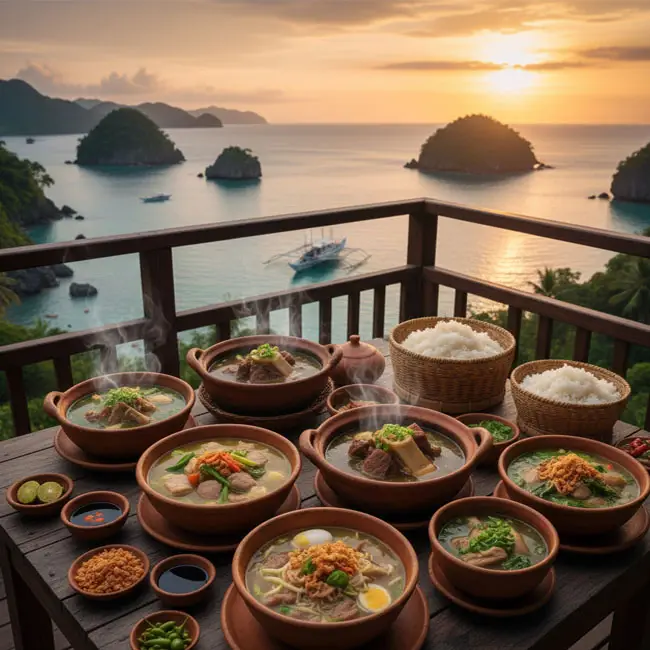
🏝️🌊⛰️ The Warm Embrace of the Islands: An Introduction to Filipino Soups🥣
Hey there! If you’ve ever wondered what a hug feels like in food form, you’re looking for Filipino soups. In a country that is tropical almost all year round, you might think people would avoid hot liquids—but it’s actually the opposite! Filipinos have a deep, soul-level obsession with soup. Whether it’s a scorching 95°F ( 35°C ) afternoon or a rainy typhoon morning, there is always a pot of something simmering on the stove.
In the Philippines, soup isn't just an appetizer or a side dish. Most of the time, the soup is the main event. It’s the "Ulam" (the main dish) that is poured generously over a mountain of steaming white rice. The culture of Filipino soup-making is all about "Sabaw" (broth). For many Filipinos, a meal isn't complete without a bit of sabaw to moisten the rice and carry the flavors of the meat and vegetables. It’s the ultimate comfort food that brings families together, heals the soul, and defines the Filipino dining experience.
🍋 The Power of Sour: Why We Love Tangy Broths
If there is one flavor profile that defines the Philippine soup identity, it is Sourness. While other cultures might lean toward salty or spicy, Filipinos have a biological craving for the "asim" (sourness).
This isn't just about taste; it’s about geography. The Philippines is home to an incredible array of souring agents. We use everything from Calamansi and Kamias (bilimbi) to Batuan fruit and, most famously, Tamarind (Sampaloc). Sour soups are believed to be refreshing in the heat and medicinal when you're feeling under the weather. That sharp, lip-puckering tang is what makes your appetite skyrocket, a concept we call pampagana.
🍲 The "Big Three": Iconic Filipino Soups You Have to Try
When you sit down at a Filipino "Pista" (festival) or a simple carinderia (local eatery), these are the legendary soups that rule the menu.
🥣 Sinigang: The National Favorite
You can’t talk about Philippines soups without starting with Sinigang. It is the undisputed heavyweight champion of Filipino comfort food. It’s a sour soup usually made with pork (Sinigang na Baboy), shrimp (na Hipon), or fish (na Isda). What makes it special is the mix of vegetables: water spinach (kangkong), radish, eggplant, okra, and string beans. Every sip is a rollercoaster of sour and savory that makes you want to go back for a second plate of rice.
🥩 Bulalo: The Rich and Beefy Classic
Hailing from the cool highlands of Tagaytay and Batangas, Bulalo is the king of beef soups. It is a light-colored soup made by slow-cooking beef shanks and marrow bones for hours until the collagen melts into the broth. It’s simple—usually seasoned only with black peppercorns, fish sauce, and onions—but the flavor is incredibly deep. The best part? Using a straw or a small spoon to get the buttery bone marrow out of the bone. It’s pure indulgence!
🌿 Tinola: The Ultimate Home-Cooked Comfort
If Sinigang is for parties, Tinola is for home. It is a ginger-based chicken soup that tastes like a warm blanket. It usually features wedges of green papaya (or sayote) and chili pepper leaves (dahon ng sili). The ginger is the star here; it cleanses the palate and warms the chest. It’s the go-to meal for anyone feeling a bit sick or for new mothers, as it’s believed to be incredibly nourishing.
🍚 The "Sabaw" Culture: How We Eat Our Soup
In the Philippines, there is a specific way to enjoy soup that might surprise newcomers. It’s a very communal and tactile experience.
🥄 The Rice Volcano
Most Filipinos don't eat soup in a separate bowl. Instead, we create what I like to call a "Rice Volcano." You put your rice in the middle of your plate, create a small crater, and pour the hot soup right into it. The rice absorbs the broth, turning every grain into a flavor bomb.
🥣 Communal Bowls
In a traditional Filipino household, the large pot of soup is placed in the center of the table. There isn't always a serving spoon; people often use their own spoons to scoop out a bit of broth or a piece of meat. It’s an intimate way of eating that signals trust and family.
🧂 The "Sawsawan" Sidekick
Just like with appetizers, Filipino soups are never served alone. They always come with a side of Patis (fish sauce) with a few crushed bird's eye chilies or a squeeze of calamansi. This allows each person to customize the saltiness and heat of their bowl.
🍜 Regional Soup Wonders: Beyond the Basics
With so many islands, the soup varieties are endless. Let’s take a quick trip across the regions!
🥥 Binakol (Visayas)
Coming from the islands of Panay and Aklan, Binakol is a variation of chicken tinola, but with a tropical twist. Instead of just water, the broth is made with coconut water and pieces of young coconut meat. This gives the soup a subtle sweetness and a creamy mouthfeel that is absolutely divine.
🌶️ Kansi (Iloilo/Bacolod)
Imagine if Sinigang and Bulalo had a baby—that would be Kansi. It’s a beef shank soup that uses a local fruit called Batuan for sourness and Achuete (annatto) for a vibrant orange color. It’s sour, fatty, and deeply savory. It’s often cited as one of the best soups in the world by international food critics!
🍜 Lomi (Batangas)
Unlike the clear broths mentioned above, Lomi is a thick, gooey egg noodle soup. It’s packed with various toppings like pork liver, chicharon (pork rinds), and sliced meatballs. It’s so thick it’s almost like a gravy, and it’s the ultimate "comfort snack" in the province of Batangas.
⛈️ The "Rainy Day" Connection
In the Philippines, the sound of rain on a tin roof is the universal signal to start boiling water for soup. There’s a specific category of "heavy" soups we crave during the typhoon season:
• Arroz Caldo: A thick rice ginger porridge with chicken. It’s the Filipino version of Congee, topped with toasted garlic and scallions.
• Luto sa Gata: Many soups in the Bicol region or Mindanao use coconut milk (gata), making them thick, creamy, and spicy—perfect for warming up when the weather turns chilly.
• Suam na Mais: A comforting corn soup with minced pork and spinach, using fresh grated white corn to thicken the broth.
✨ Why Filipino Soups Stand Out
What makes Filipino soups truly special isn't just the ingredients; it’s the patience. Most of these dishes involve "Laga" (boiling) for a long time. We don't rush the process. We wait for the beef to fall off the bone and for the tamarind to release its juices.
Moreover, Filipino soups are incredibly balanced. They often include a wide variety of vegetables, making them a complete, healthy meal in a single pot. They represent the Filipino spirit: resourceful, warm, and always better when shared with others.
❓ FAQ: Frequently Asked Questions
❓ Q1. Is Sinigang always sour?
Yes! The defining characteristic of Sinigang is its sourness. However, the level of sourness can vary depending on whether the cook uses tamarind, guava (which makes it slightly sweeter), kamias, or calamansi.
❓ Q2. Can I eat Filipino soups if I'm on a diet?
Actually, many Filipino soups are quite healthy! Clear broths like Tinola and Sinigang are packed with vegetables and lean proteins. If you’re watching your calories, just go easy on the rice and skip the fatty marrow in Bulalo.
❓ Q3. What is the difference between "Sabaw" and "Sabaw-isda"?
"Sabaw" is the general term for broth or soup. "Sabaw-isda" specifically refers to a fish-based broth. In many coastal regions, a simple fish soup made with ginger, tomatoes, and onions is the daily staple because it’s fresh, light, and easy to prepare.
🍲 Authentic Filipino Comfort: Simple One-Pot Soups for a Cozy Kitchen
👉 Cook 3 Beginner-friendly Philippines Soups
| 🌐 🍲 < Back | 🇵🇭 🍷 < Previous | Next > 🥗 🇵🇭 |