
🏠 Home > 🗺️ Recipes > 🥘 Sauces > 🇲🇲 Myanmar Sauces
🇲🇲 🥘 Myanmar Sauces Recipes
Published by Supakorn | Updated: February 2026
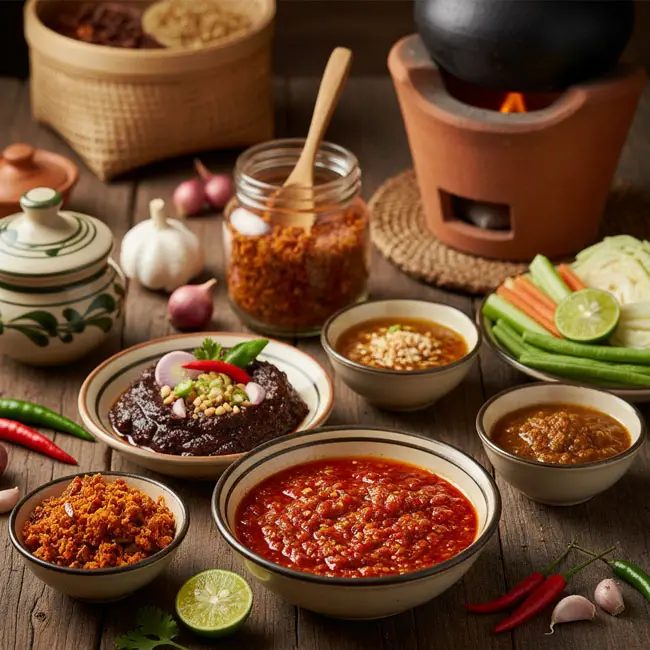
🍯 Flavor Foundations: Why Burmese Sauces Are the True MVPs of the Table
Hey there, fellow food lover! If you’ve ever tried Burmese cuisine, you know it’s a harmonious blend of flavors—not as fiercely spicy as Thai food, nor as curry-heavy as Indian, but uniquely balanced with savory, sour, and salty notes. This complexity doesn't just come from the main dishes like Shan Noodles or Mohinga; it’s built on the condiments and sauces served alongside them.
In Myanmar, the "sauce" isn't an afterthought—it’s the customizable, hyper-local foundation of every meal. Whether you're at a bustling tea shop or a traditional home dinner, you’ll find a line-up of potent, fragrant, and vibrant bowls and jars waiting to transform your food. The Burmese are masters of fermentation, fried aromatics, and the perfect chili-tamarind balance.
🍱 The Art of the Side-Table Spread
When you sit down for a traditional Burmese meal, you'll notice something immediately: the table is crowded! Even a simple meal of rice and curry usually comes with a platter of fresh vegetables (yay-pway) and at least three or four different small bowls. These are your sauces and condiments. In Myanmar culture, a meal is a collaborative effort between the cook and the diner. The cook provides the base, but you provide the final flair by adding more heat, more salt, or more tang.
🐟 The Fermented Powerhouses: Umami at Its Core
If you’re looking for the heart of Burmese flavor, look no further than Ngapi. This pungent, salty, and incredibly savory paste made from fermented fish or shrimp is the country's answer to bouillon, MSG, and a seasoning all rolled into one.
🥣 Ngapi Yay (The Runny Dipping Sauce)
Ngapi Yay literally translates to "runny Ngapi" and is the quintessential dipping sauce found on almost every Lower Burmese dining table. Think of it as a Burmese nam prik (Thai chili dip) but with its own distinct personality.
• The Vibe: It starts with a base of Ngapi, which is boiled with water, lots of garlic, onions, tomatoes, and sometimes a little turmeric. This simmering process mellows the raw, pungent smell of the paste while concentrating its umami.
• The Experience: It’s a thin, flavorful, and slightly grainy dip. It's often seasoned with a squeeze of lime juice and fresh chili to achieve that characteristic Burmese trifecta: savory-salty, tangy, and spicy.
• How to Eat It: It’s served with an assortment of raw or blanched vegetables—think cool cucumber, raw eggplant, ladyfingers, or cabbage. You simply dip the veg into the Ngapi Yay and scoop it up with your rice. For many, this simple combination is the ultimate comfort food.
🦐 Balachaung (The Crispy, Crunchy Condiment)
While not a sauce in the liquid sense, Balachaung is arguably the most famous and addictive dry condiment in Myanmar. It’s more of a crispy chili-shrimp floss that travels well and lasts forever—a pantry essential for every Burmese household.
• The Recipe: This is a labor of love! Dried shrimp are mixed with deep-fried onions, garlic, ginger, and tons of chili flakes. The ingredients are cooked in oil until everything is crispy, dry, and almost flossy.
• The Taste: It’s a perfect explosion of flavors: savory from the dried shrimp, sweet and fragrant from the fried aromatics, and seriously spicy from the chili.
• How to Eat It: Balachaung is your go-to flavor booster. Sprinkle it generously over plain white rice, mix it into noodles, or add a spoonful to a simple egg curry. It’s the "everything seasoning" of Myanmar!
🌶️ The Essential Oils and Dipping Sauces
Beyond the fermented goodness, Burmese tables rely on aromatic oils and sweet-sour dips to enhance the vast array of salads (thoke) and fried snacks (a-kyaw).
🧄 Garlic Oil and Chili Oil (Nga Yoke Thi Thel)
You can’t make a Burmese noodle dish or salad without a generous slick of fragrant oil. Often, the flavor of the oil is just as important as the sauce itself.
• Garlic Oil: The base for many thoke. Garlic is slowly cooked in oil until golden and crispy, infusing the fat with a sweet, nutty aroma. The crispy fried garlic bits are scooped out and used as a crunchy topping, while the fragrant oil is reserved for mixing.
• Burmese Chili Oil (Nga Yoke Thi Thel): This is the fiery sidekick. Unlike the heavy sesame-based Chinese chili oils, Burmese versions often feature dried chili flakes, sometimes mixed with fried garlic, shallots, or dried fish/shrimp powder. The resulting oil is bright red, smoky, and potent.
🍈 Burmese Sweet and Sour Tamarind Dip (Achin Yè)
This dip is the dedicated partner to all the deep-fried street snacks—the A-Kyaw (fritters). Because Burmese fried snacks are often simple (like gourd, onion, or bean fritters), they need a bold, flavorful counterpart.
• The Recipe: The sauce is built around the pulp of the tamarind fruit, which provides a natural, deep sourness. This is balanced with a touch of palm sugar (jaggery) for sweetness and a dash of fish sauce for saltiness.
• The Magic: The resulting sauce is thick, tangy, sweet, and nutty. It's the perfect acidic counterpoint to the oiliness of the fritters, ensuring the meal never feels too heavy.
🏔️ The Taste of the Highlands: Shan-Style Pè-Ngapi
While the coast and plains rely on fish and shrimp Ngapi, the Shan State in the northern highlands has its own answer to the powerful umami paste: Pè-Ngapi.
• The Fermented Bean: This version is made from fermented soybeans, similar to a dense, flavorful soybean cake or paste. Since the Shan States are landlocked, they traditionally did not have easy access to fresh seafood.
• The Flavor: Pè-Ngapi offers a deep, earthy, savory flavor that is crucial to Shan dishes like Shan Tofu Noodle Salad. It’s often used as a seasoning base or a crumbled condiment and is a must-try for vegetarian or vegan diners who want to experience the powerful "Ngapi" flavor profile without the fish.
🥬 The Seasonal and the Fresh: Variations Across Regions
Myanmar is a large country with over 135 ethnic groups, and each region has its own "secret sauce."
🥗 Mango and Lime Dips
In the summer months, when mangoes are abundant, you'll find Mango Thoke or green mango dipping sauces. These are tart, refreshing, and usually mixed with a bit of shrimp paste and chili to wake up the palate in the tropical heat.
🐟 Rakhine-Style Spicy Dips
The Rakhine people (from the western coast) are famous for their love of extreme heat. Their sauces often omit the sugar found in other regions, focusing instead on a fiery blend of green chilis, salt, and very pungent fermented fish. It’s not for the faint of heart, but it’s incredibly addictive for spice lovers!
🥢 How to Navigate the Sauce Table Like a Pro
If you find yourself at a Burmese dinner party or a roadside stall, here are a few tips on using these sauces:
1. Start Small: Burmese condiments can be very salty or very spicy. Add a little bit to your rice, taste it, and then adjust.
2. The Rice Mix: Don't just dip; many locals mix a bit of Balachaung or Ngapi Yay directly into their rice to flavor every single grain.
3.Respect the Ngapi: If the smell is a bit strong for you at first, try a version that has been cooked with tomatoes and onions (Ngapi Chat). It’s much milder and a great "entry-level" fermented sauce.
4.Balance the Oily with the Sour: If you’re eating a rich pork curry, look for a tamarind-based sauce or a sour soup (chin-yay) to cleanse your palate between bites.
🌟 The Soul of the Meal
Myanmar’s sauces and condiments are more than just seasonings; they are the soul of the meal. They represent a culture of customization, a history of clever preservation through fermentation, and a deep love for bold, contrasting flavors. Whether it’s the crunch of Balachaung or the zing of a tamarind dip, these sauces are what turn a simple bowl of rice into a Burmese feast.
❓ Frequently Asked Questions (FAQ)
1. What is the main difference between Ngapi Yay and Balachaung?
The difference is texture and application. Ngapi Yay is a runny, cooked dipping sauce served with fresh vegetables. Balachaung is a dry, crispy, chili-shrimp floss used as a universal topping for rice and noodles.
2. Is Burmese chili oil similar to Chinese chili crisp?
They are cousins! However, Burmese chili oil tends to be a bit more straightforward, focusing on the smoky heat of the chilis and the sweetness of fried garlic or shallots, whereas Chinese chili crisp often includes fermented beans and Sichuan peppercorns.
3. Can I find vegetarian or vegan alternatives to Ngapi?
Yes! Look for Pè-Ngapi (fermented soybean paste). It’s a staple in Shan cuisine and provides that deep, savory "umami" kick without using any animal products.
4. How long do these condiments last?
Dry condiments like Balachaung can last for months in an airtight jar, making them the perfect travel snack. Fresh sauces like Ngapi Yay are best consumed within a day or two.
5. Why is tamarind used so much in Burmese sauces?
Tamarind is a local superfruit in Myanmar. It provides a "bright" acidity that cuts through the oiliness of fried foods and rich curries much better than vinegar or lemon might.
🥘 The Unsung Heroes of Myanmar Cuisine: 3 Essential Sauces and Condiments You Must Master
| 🌐 🥘 < Back | 🇲🇲 🍱 < Previous |