
🏠 Home > 🗺️ Recipes > 🍞 Breads > 🇲🇲 Myanmar Breads
🇲🇲 🍞 Myanmar Breads Recipes
Published by Supakorn | Updated: February 2026
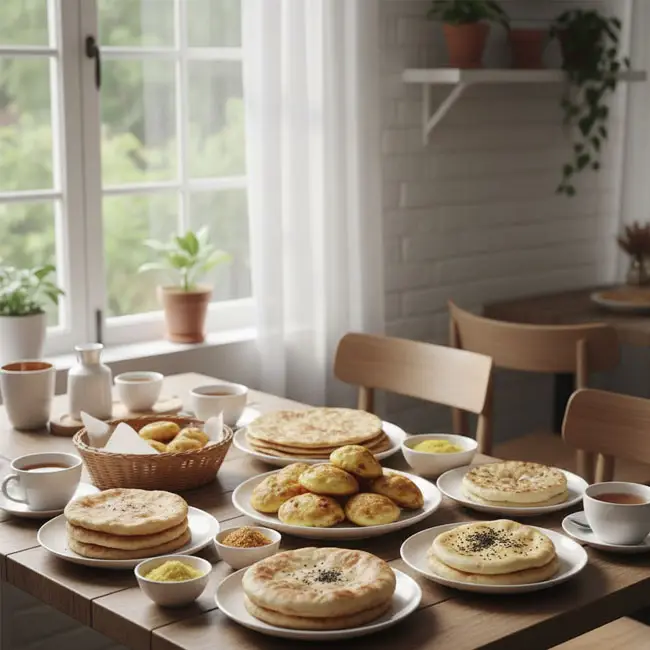
🥐 Beyond Rice: The Indian-Influenced Heart of Burmese Breakfast
When you think of Burmese food, you probably picture bowls of fragrant Mohinga (fish noodle soup) or the crunchy delight of Laphet Thoke (tea leaf salad). And you’d be right! Rice and noodles are the bedrock of the Burmese diet.
But if you hit the streets of Yangon or Mandalay early in the morning, you’ll discover a whole other culinary scene that tells a fascinating story of cross-cultural flavor. This is the world of Burmese breads and savory pastries, a collection of flaky, chewy, and deeply satisfying doughs that owe much of their existence to the strong influence of Indian cuisine, particularly from migrants in the colonial era.
☕ The Tea Shop: A Cultural Hub
In Myanmar, "going for tea" isn't just about the drink; it’s about the spread of breads on the table. Tea shops serve as the neighborhood living room. You’ll see businessmen, students, and families huddled over small tables, tearing apart pieces of oily flatbread and dunking them into thick, milky tea. These aren’t your average store-bought loaves; they are culinary experiences defined by technique, texture, and communal sharing.
🗺️ A Fusion of Geography and History
Because Myanmar shares a long border with India, the influence of wheat-based cooking has integrated seamlessly into the local palate. While Southeast Asia is generally a "rice culture," the presence of tandoor ovens and griddles (tawas) in Burmese cities creates a unique hybrid. It’s where the aromatic spices of the West meet the tropical ingredients of the East.
🥞 Palata: The Flaky, Versatile Superstar Flatbread
The Palata (often spelled Paratha, a nod to its Indian heritage) is arguably the king of Burmese breakfast breads. But to call it merely a paratha would be missing the point. The Burmese version has been lovingly adopted, customized, and perfected over generations, making it a distinct street-food superstar.
✨ What Makes It So Good?
• The Flakiness: The secret to a perfect Palata is the technique. The dough—made from wheat flour, a little sugar, and oil—is repeatedly kneaded, oiled, stretched until paper-thin, and then meticulously folded into a tight coil. This layering technique is what gives the finished bread that glorious, flaky, shatteringly crisp exterior and soft, chewy interior.
• The Showmanship: You can often see the masters at work at street stalls, quickly slapping, twirling, and stretching the dough with practiced ease before frying it on a large, hot griddle. It’s dinner and a show!
🍽️ The Versatility of the Palata
Palata is an all-day food that transitions perfectly between savory and sweet:
• Palata & Curry: The classic savory pairing. The flaky bread is perfect for tearing and scooping up rich, oily chicken, mutton, or vegetable curries.
• E-Jee Palata (Egg Palata): A favorite breakfast snack where the dough is wrapped around a beaten egg during the frying process, resulting in a savory, pocket-like omelet.
• Sweet Palata: For those with a sweet tooth, many stalls offer it slathered in condensed milk or sprinkled with white sugar. It’s the ultimate comfort snack.
🥢 Breakfast Staples: Dipping Sticks and Baked Dough
While Palata is fried and layered, other dough-based foods offer different textures, from airy and crisp to spongy and soft, proving that when it comes to mont (the Burmese word for snacks/pastries), variety is king.
🥖 E Kya Kway: The Unsung Hero of Breakfast
If you’re looking for the ultimate breakfast dipper, it’s the E Kya Kway (Ay-Jah Kway). These are the Burmese version of the Chinese youtiao—long, golden-brown, deep-fried breadsticks.
• Dipping Culture: E Kya Kway’s beauty lies in its airy-and-hollow-on-the-inside texture, which makes it an ideal sponge. It’s primarily designed to be dipped into the savory fish broth of Mohinga, into a bowl of black coffee, or into a cup of rich, sweet Burmese tea (Laphet Yay).
• A Savory Side: You'll also find them torn up and added as a crunchy garnish to noodle salads, providing an extra layer of savory crunch that absorbs the dressing perfectly.
🥙 Nan Byar: The Tandoor-Style Flatbread
Nan Byar (literally "Naan Bread") is another testament to the enduring Indian influence. This is a fluffy, slightly chewy flatbread baked quickly in a traditional charcoal tandoor oven.
• The Iconic Pairing: While it can be eaten with curry, its most iconic Burmese pairing is with Pè Byouk (creamy, boiled yellow or brown peas). Street vendors serve the warm, slightly charred Nan Byar alongside the creamy bean paste, often topped with a drizzle of peanut oil and a sprinkle of salt. It’s a protein-rich, comforting, and very affordable breakfast staple.
🥘 The Other 'Mont': Savory Pancakes and Crispy Bites
In the world of Burmese snacks, not everything is made from wheat. Many of the most beloved "bread-like" snacks are actually rice-based pancakes that offer a completely different mouthfeel.
🥞 Bein Mont: The Sweet and Savory Rice Pancake
Bein Mont is a fascinating street food that often surprises visitors. It looks like a thick, round pancake but offers a complex blend of textures.
• The Batter: It starts with a base of rice flour or glutinous rice flour, which gives it a slightly sticky, chewy center.
• The Toppings: It’s cooked on a large, shallow griddle and topped with a mix of crunchy toasted peanuts, creamy coconut shavings, sesame seeds, and sometimes jaggery (palm sugar) or caramelized shallots. The result? A fluffy cake with a sweet-and-nutty, slightly crunchy crust.
🎎 Mont Lin Ma Yar: The Adorable "Husband and Wife Snack"
This popular street snack is less of a bread and more of a crispy dumpling, affectionately named the "Husband and Wife Snack".
• The Name: The name comes from how it's made: two halves of rice batter are poured into a dimpled pan. Before they are fully cooked, the vendor joins the two halves together, completing the "marriage" and creating a small, spherical, crispy bite.
• The Flavor: They are usually savory, filled with chopped scallions, yellow split peas, and sometimes a quail egg. They are the ultimate salty, poppable street bite.
🏙️ The Art of Living: Eating Breads in Myanmar
To truly enjoy Burmese breads, you have to understand the pace of life in Myanmar. Bread isn't just "fast food" to be eaten on the run; it’s part of a social ritual.
🤝 Communal Sharing
When you sit at a tea shop, it’s common for a variety of breads to be placed in the center of the table. You don’t have to eat them all—you only pay for what you consume. This encourages a "try a bit of everything" mentality that makes every breakfast feel like a mini-feast.
☀️ The Morning Rush
The best time to experience these breads is between 6:00 AM and 9:00 AM. This is when the tandoors are hottest and the frying oil is fresh. As the tropical sun rises, the smell of toasted wheat and boiling peas fills the air, creating an atmosphere that is uniquely Burmese.
🌟 A Culinary Intersection
Myanmar’s breads and street pastries are a culinary intersection, demonstrating how external influences—from the tandoors of India to the fry-breads of China—can be embraced and transformed into something distinctly local. From the flaky Palata to the spongy Nan Byar, they offer a perfect starting point for exploring the savory and comforting heart of Burmese street food culture.
❓ Frequently Asked Questions (FAQ)
1. Is Burmese Palata the same as Indian Paratha?
While they share the same roots, they have evolved differently. The Burmese Palata is often flakier and lighter, designed specifically to be eaten with the local style of watery chicken curries or dipped in condensed milk. The technique of stretching the dough is very similar to the "Roti Canai" found in Malaysia.
2. What is the most popular breakfast pairing for bread in Myanmar?
The most classic and popular breakfast pairing is Nan Byar (Naan) with Pè Byouk (creamy boiled beans). It’s the breakfast of champions for many locals—simple, nutritious, and incredibly satisfying.
3. What is the main ingredient in most Burmese street snacks (Mont)?
While Palata and Nan Byar are made from wheat, most snacks categorized as Mont (like Mont Lin Ma Yar or Bein Mont) rely on rice flour or glutinous rice flour. This gives them a distinctively soft, spongy, or chewy texture compared to wheat breads.
4. Can I find these breads throughout the day?
While they are most famous as breakfast items, many tea shops in big cities like Yangon and Mandalay serve Palata and Nan Byar well into the afternoon and evening. However, for the freshest E Kya Kway (fried sticks), morning is definitely best!
5. Are these breads vegetarian?
Mostly, yes! Palata and Nan Byar are vegetarian, though Palata is fried in oil (and occasionally ghee). The traditional pairing of Nan Byar with boiled beans is a fantastic vegan-friendly option as long as no animal fat is used for frying the onions on top.
🍞 Golden Layers and Fluffy Pockets: Unlocking the Secrets of Classic Myanmar (Burmese) Bread Recipes
| 🌐 🍞 < Back | 🇲🇲 🥗 < Previous | Next > 🍱 🇲🇲 |