
🏠 Home > 🗺️ Recipes > 🥗 Salads > 🇫🇲 Micronesia Salads
🇫🇲 🥗 Micronesia Salads Recipes
Published by Supakorn | Updated: June 2026
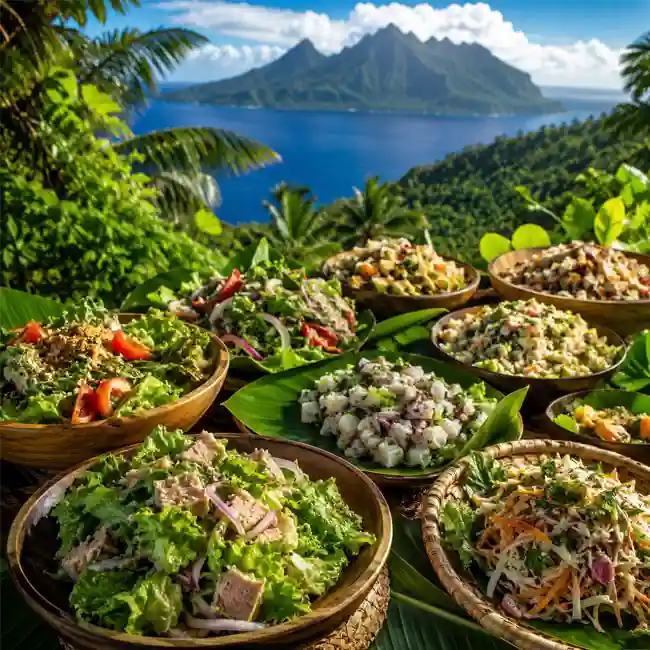
🇫🇲 🥗 Why Micronesia Salads Tell The Real Island Story
If you think salads are just boring lettuce bowls, Micronesia will change your mind fast. Out here in the western Pacific, a salad isn’t a side dish — it’s a snapshot of 2,000+ islands, each with its own soil, reef, and story. From Pohnpei’s misty highlands to the atolls of the Marshall Islands, Micronesian salads are where land meets lagoon, where family recipes meet fresh catch, and where food is always tied to fa’afetai, or gratitude.
What makes these salads so different? Three things:
• Freshness is non-negotiable: Most ingredients are harvested the same morning. Taro leaves, breadfruit, pandanus, coconut, and reef fish don’t sit in a fridge for days. They go from garden or ocean to table in hours.
• Community comes first: You rarely make a Micronesian salad for one. Salads show up at kamadipw in Pohnpei, yap gatherings in Yap, and Sunday to’on feasts in Chuuk. Sharing is the whole point.
• No waste, full respect: Root-to-frond and fin-to-tail cooking is the norm. Banana blossoms, papaya leaves, and even the broth from boiling taro become part of the salad story.
So when you taste a Micronesian salad, you’re not just eating. You’re tasting weather patterns, canoe routes, and family lineages. Let’s dive into the bowls that locals actually love.
🏝️ 🌿 The Food Culture Behind Micronesia Salads: More Than Just Vegetables
🥥 Island Pantries: What Grows, What’s Caught, What’s Shared
Micronesia isn’t one place. It’s the Federated States of Micronesia — Pohnpei, Chuuk, Yap, Kosrae — plus Palau, Marshall Islands, Nauru, and Kiribati. Each island group has its own “salad DNA” based on what the land and sea provide.
• Starchy bases rule: Forget croutons. Breadfruit ulu, taro mwahng, green banana, and cassava are the hearty foundations. They’re boiled, roasted in earth ovens uhmw, or grated fresh to give salads real substance. A fisherman in Chuuk needs fuel, not just foliage.
• Coconut is everything: Grated fresh coconut, coconut milk, and coconut sap vinegar sour toddy replace olive oil and balsamic here. It adds creaminess, tang, and that unmistakable Pacific aroma. In Kosrae, “finishing with coconut milk” is like adding salt — it just happens.
• Ocean garden toppings: Sea grapes nama, seaweed limu, raw reef fish, clams, and octopus get tossed in like cherry tomatoes elsewhere. On Eauripik atoll, a salad isn’t complete without a handful of limu picked at low tide.
• Leaves with purpose: Taro leaves, pumpkin tips, moringa malunggay, and fiddlehead ferns are blanched or pounded. They’re not garnish — they’re nutrition. Many are grown in household gardens called nansapw in Pohnpei.
🥗 Eating the Micronesian Way: No Forks, All Family
Eating salad in Micronesia looks different from a café in New York. Here’s how locals do it:
• Hands and banana leaves: Many salads are eaten by hand, often scooped with a piece of taro or breadfruit. Banana leaves act as plates during feasts. It’s tactile, social, and zero waste.
• One big bowl energy: Salads are served in large wooden kama bowls or enamel basins. Everyone digs in. Taking the last piece without offering it around? That’s bad form.
• Timing matters: Heavy coconut-based salads are often eaten midday when the sun is highest and you need calories. Lighter, citrusy fish salads hit the table when it’s hot and you want to cool down.
• Respect for inasi and elders: The first serving always goes to chiefs, pastors, or grandparents. In Yap, younger folks wait until elders say wa’ab. Food is hierarchy, history, and love rolled into one.
🍍 Salads as a Passport: Food and Island Tourism
If you’re island-hopping through Micronesia, salads are your tastiest map. Each state and country uses local produce to tell you where you are.
• Pohnpei: The Misty Mountain Salads: Up in the highlands, sakau kava farms share space with taro patches. Pohnpeian salads lean earthy — pounded taro leaves with coconut cream, smoked reef fish, and chili. Visit Nan Madol and you’ll find roadside stalls selling lihli taro leaf salad wrapped in breadfruit leaves. Cool climate = heartier greens.
• Chuuk: Lagoon-to-Bowl Flavors: Chuuk’s massive lagoon means seafood salads dominate. Think raw tuna tossed with cucumber, lime from backyard trees, and nama sea grapes. After diving the WW2 wrecks, locals will feed you achuun fish salad to rehydrate. The lagoon literally flavors lunch.
• Yap: Stone Money Meets Stone Pot Salads: Yapese cuisine is deeply traditional. Salads often feature turmeric-roasted breadfruit and blanched fiddleheads, dressed with fermented coconut. Eat it at a tabinaw men’s house and you’re participating in a custom older than written history.
• Kosrae: The Sleepy Island’s Citrus Twist: Kosrae is known for its citrus. Tangerines, limes, and sour oranges get squeezed over taro and octopus salads. It’s bright, sharp, and perfect after a trek to the Lelu Ruins. Locals say Kosraean salads “wake you up” like the sunrise over the Pacific.
• Palau: Reef and Mangrove Salads: Palau’s salads bridge land and sea. You’ll get demok — mangrove clam salad with taro stems — or papaya salad with reef fish. Visit the Rock Islands and guides will pack a salad lunch: no mayo, no wilt, just fresh everything.
• Marshall Islands: Atoll Survival Salads: On low-lying atolls where soil is thin, pandanus and coconut are heroes. Marshallese salads use grated coconut, sprouted coconut iu, and preserved breadfruit bwiro. After a day of outrigger sailing, jokuk salad with banana and coconut milk is pure energy.
So yes, you can eat your way through Micronesia one salad at a time. And you should.
🌺 🔥 Iconic Must-Try Micronesia Salads You’ll Hear About From Locals
No recipes here — just the stories, flavors, and why each one matters. These are the bowls people ask for at reunions, bring to church, and crave when they’re off-island.
🍃 Pohnpeian Lihli: The Taro Leaf Classic
• What it is: Tender taro leaves pounded or blanched, then swirled with thick coconut cream, chili, and bits of smoked fish or chicken.
• Why it’s iconic: Lihli is served at kamadipw feasts to honor guests. The taro leaf must be cooked right — undercooked and it itches your throat. When done well, it’s silky, rich, and deeply comforting.
• Vibe check: Earthy, smoky, with a slow coconut finish. Eaten warm with baked breadfruit. This is Pohnpei’s “mac and cheese” — everyone’s mom makes it best.
🐟 Chuukese Achuun: The Fisherman’s Ceviche
• What it is: Raw reef fish or tuna, diced small and “cooked” in local lime juice, mixed with cucumber, onion, chili, and sometimes sea grapes.
• Why it’s iconic: Chuuk has more water than land. Achuun is what you make when the boat comes in at noon. No fridge needed — the acid and chili keep it fresh.
• Vibe check: Bright, sharp, ocean-clean. It hits like a cold plunge after working under the Micronesian sun. Served with taro or rice.
🍠 Yapese Golay: Breadfruit Power Salad
• What it is: Roasted breadfruit chunks tossed with blanched fiddlehead ferns, turmeric, and a dressing of fermented coconut sap.
• Why it’s iconic: Breadfruit maa is life in Yap. Golay shows up during mitmit ceremonies. The fermented dressing adds umami that ties the whole island together.
• Vibe check: Nutty, earthy, with a funky tang. It’s substantial enough to be a meal after working in the taro patch.
🍋 Kosraean Fukuro: Citrus Octopus Salad
• What it is: Tender boiled octopus sliced thin, mixed with taro stems, Kosraean lime, and a splash of coconut milk.
• Why it’s iconic: Kosrae’s citrus groves are legendary. The lime cuts the richness of octopus and coconut, making fukuro addictive on humid days.
• Vibe check: Zesty, chewy, refreshing. Locals eat it as a cool-down after harvesting or fishing.
🥭 Palauan Demok Salad: Mangrove to Mouth
• What it is: Mangrove clams or tiny shrimp, boiled and tossed with shredded green papaya, taro leaves, and coconut.
• Why it’s iconic: Mangroves are Palau’s nurseries. Demok honors that ecosystem. It’s often packed for Rock Island boat trips because it travels well.
• Vibe check: Briny, green, slightly sweet from papaya. It tastes like Palau’s forests meeting its reefs.
🥥 Marshallese Jokuk: The Atoll Energy Bowl
• What it is: Ripe banana or preserved breadfruit bwiro, mashed with grated coconut, coconut sap syrup, and sometimes sprouted coconut.
• Why it’s iconic: On atolls with little soil, jokuk is survival turned into celebration. It’s calorie-dense, sweet, and made for sharing after sailing.
• Vibe check: Sweet, creamy, tropically rich. Think “Pacific energy bar” in salad form.
🌶️ Pan-Micronesian Finadene Salad Twist
• What it is: Not a single island dish, but a style. Any local green — kangkong, fiddleheads, cabbage — tossed in finadene: soy sauce, lemon, onion, chili.
• Why it’s iconic: Finadene came with global contact but got adopted everywhere. It’s the “ranch dressing” of Micronesia — put it on anything.
• Vibe check: Salty, sour, spicy, umami. It makes vegetables disappear fast at potlucks.
🌴 📍 Salads and Place: How Geography Shapes The Bowl
🏔️ High Island vs. Low Atoll: The Salad Divide
• High islands like Pohnpei, Kosrae, Palau: Volcanic soil = taro, banana, ferns, breadfruit. Salads are greener, leafier, heavier. More rainfall means more fresh greens year-round.
• Atolls like Marshall Islands, outer Yap: Coral soil = coconut, pandanus, preserved foods. Salads are denser, sweeter, built for storage. Fresh greens are a luxury after supply ships arrive.
So if your salad has fiddleheads, you’re probably in the mountains. If it’s all coconut and banana, you’re on an atoll. Food is your GPS.
🌦️ Seasonality: Typhoon Season to Mango Season
Micronesians eat with the calendar:
• Breadfruit season May-August: Expect ulu salads everywhere. Villages roast hundreds at once in uhmw earth ovens.
• Taro harvest after rainy season: Fresh lihli and taro stem salads peak. Leaves are most tender now.
• Mango and citrus season: Green mango salads and lime-heavy achuun take over. It’s also fiesta season, so salads are everywhere.
• Post-typhoon: Preserved foods star. Bwiro breadfruit and sprouted coconut salads keep people fed when gardens are damaged.
Travel tip: Ask “what’s in season?” and you’ll eat like a local while supporting farms recovering from weather.
🛶 Food As Culture: Salads At Ceremonies
• Funerals and remembrance: In Chuuk, light fish salads are served because heavy food is avoided during mourning.
• First birthdays kehpw: Pohnpei families make lihli and coconut salads in massive quantities. It’s about abundance and community blessing.
• Church Sundays: After service, salads appear alongside reef fish and taro. It’s the original potluck.
• Chiefly tribute nohpwei: In Yap, specific salads are prepared for chiefs. The ingredients and who prepares them follow strict custom.
You can’t separate the salad from the occasion. That’s why tourists who only hit resorts miss the real flavor.
✈️ 🍽️ How To Experience Authentic Micronesia Salads As A Traveler
🛒 Where To Find The Real Stuff
• Local markets: Kolonia Market in Pohnpei, Weno Market in Chuuk. Go before 9am. Look for aunties selling salads in reused takeout containers or banana leaf wraps.
• Village feasts: If you’re invited to a kamadipw or to’on, say yes. It’s the best way to try 10 salads in one sitting. Bring fruit or help prep to show tihkan respect.
• Roadside stands: On Palau’s Compact Road or Kosrae’s circumferential road, you’ll see coolers with demok or octopus salad. Cash only, $2-$5 a serving.
• Family homestays: Many guesthouses will cook local if you ask. Say “I want to try real island salad” and watch their face light up.
🙏 Etiquette: Eat Well, Stay Welcome
• Wait to be served: Don’t grab first. Let elders or hosts start.
• Try everything: Even if you’re unsure. Refusing food can offend. Take a small “taste portion” if you must.
• Compliment the cook: “Kalahngan” in Pohnpei, “Sirow” in Chuukese. It means thank you and goes a long way.
• No waste talk: Don’t say “I’m on a diet” while pushing food away. If you’re full, say “Kaselehlie, I’m so full from your amazing cooking.”
🌎 Why These Salads Matter For The Future
Climate change, shipping costs, and imported processed foods are pressing on Micronesia. But salads are resistance:
• Food security: Taro, breadfruit, and coconut are climate-resilient. Promoting salads built on them keeps traditions alive and bellies full.
• Health: Diabetes is a real challenge in the Pacific. Fresh, coconut-based salads with fish and greens are part of the solution locals are reviving.
• Cultural pride: When young Micronesians post achuun or lihli on socials, they’re saying “this is us.” It’s heritage you can eat.
So every time you choose a local salad over imported fries, you’re voting for island resilience. And it tastes better, anyway.
🥗 🌟 The Secret To Micronesia Salads: It’s Not The Recipe
Here’s the thing: you can google “Pohnpeian lihli” and get ingredients. But you won’t get the taste. Because the secret isn’t in the coconut milk ratio. It’s in the context:
• The taro was planted by your uncle during a full moon.
• The fish was caught by your cousin at 5am.
• The lime was from the tree your grandma planted when you were born.
• The salad was mixed in a bowl carved by your grandfather.
That’s why Micronesian salads hit different. They’re 10% ingredients, 90% connection. You can’t export that. You have to go, sit, share, and listen.
So next time you see “island salad” on a hotel menu, ask where the taro came from. If they don’t know, find the market. Find the auntie. Find the story. That’s the ultimate Micronesian salad experience — and it’s absolutely irresistible.
👋❓ FAQ: Micronesia Salads
Q1.Are Micronesia salads vegetarian or vegan friendly?
Many are! Dishes like lihli taro leaf salad, golay breadfruit salad, and green papaya salad can be made 100% plant-based. Coconut milk replaces dairy, and smoked fish is often optional. Just ask the cook “no fish, please” — kahpwal men pihr in Pohnpeian. But always check, because some use fish broth or tiny shrimp for flavor.
Q2.What’s the difference between salads in Micronesia vs. Polynesia or Melanesia?
Great question. Micronesian salads lean heavier on breadfruit, taro, and coconut with lots of raw fish. Polynesian salads, like Hawaiian poke, use more soy sauce and sesame influence. Melanesian salads, like in Fiji, feature more kokoda with chili and cassava. Micronesia is the “breadfruit belt” — that starchy base makes salads more of a meal than a side.
Q3.Can I find authentic Micronesia salads outside the islands?
In Hawaii, Guam, and parts of California with Micronesian communities, yes. Look for Chuukese, Pohnpeian, or Marshallese stores and restaurants. They often sell achuun, lihli, or jokuk on weekends. Outside the Pacific, it’s tough because fresh taro leaves and breadfruit don’t export well. Your best bet is to visit or make friends with someone from the islands.
Q4.Why is coconut in almost every Micronesian salad?
Three reasons: availability, nutrition, and flavor. Coconut palms grow everywhere, even on atolls with bad soil. Coconut milk adds healthy fats and calories needed for physical island life. And the flavor — creamy, slightly sweet, tropical — balances salty fish and bitter greens. In Micronesia, coconut isn’t a trend. It’s infrastructure.
🥗 Affordable Island Flavors: 3 Easy Micronesian Salads That Cost Less Than $5
👉 Delight in 3 Irresistible Budget Micronesian Salads Under $5!
| 🌐 🥗 < Back | 🇫🇲 🍲 < Previous | Next > 🍞 🇫🇲 |