
🏠 Home > 🗺️ Recipes > 🍞 Breads > 🇲🇾 Malaysia Breads > 🍞 1.Festive Roti Jala (Lacy Net Crepes) , 2.Indulgent Roti Bom , 3.Traditional Roti Benggali
🍞 Master the Golden Flour: Elevating Your Festive Table with Malaysian Breads
Published by Supakorn | Updated: February 2026
Hey there, fellow food lover! If you’ve ever walked past a Malaysian bakery or a Mamak stall during the holiday season, you know that the smell of toasted flour, melting butter, and sweet coconut is enough to make anyone weak in the knees. Malaysian breads aren't just your average loaves; they are works of art that tell a story of cultural fusion—where Indian flipping techniques meet British baking traditions and local tropical ingredients.
Lately, these breads have been taking the international culinary world by storm. From London brunch spots serving "Roti" instead of pancakes to gourmet bakeries in San Francisco trying to replicate that perfect Malaysian "stretch," people everywhere are craving that authentic texture. But why go out when you can bring that holiday magic into your own kitchen?
In this guide, I’m going to share three show-stopping Malaysian bread recipes that are perfect for your holiday gatherings. These aren't just "recipes"; they are the secret handshakes of the Malaysian baking world. We’re going to cover:
🏆 • Recipe 1: Festive Roti Jala (Lacy Net Crepes) – The elegant, golden centerpiece of any Malay holiday feast.
🏆 • Recipe 2: Indulgent Roti Bom – A thick, spiralized sweet bread that is pure holiday decadence.
🏆 • Recipe 3: Traditional Roti Benggali – The ultimate fluffy white loaf that’s built for dipping into festive curries.
Let’s get our hands floury and unlock these expert secrets!
🍞 Recipe 1: Festive Roti Jala (The Lace Bread)
🍞 About this Recipe
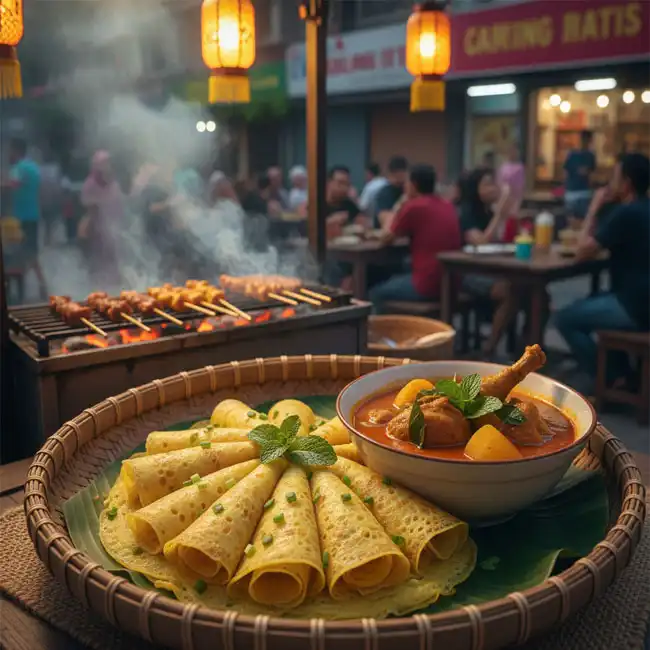
Roti Jala literally translates to "Net Bread." It is a delicate, golden crepe that looks like a piece of intricate lace. In Malaysia, this is the "special occasion" bread. Whether it's a wedding, a birthday, or a holiday open house, a platter of neatly folded Roti Jala alongside a bowl of thick chicken curry is a sign that the host really cares. It’s light, slightly chewy, and its "netted" structure is specifically designed to trap as much curry as possible in every bite.
🍞 Ingredients & Measurements
The Batter Base:
• 3 cups all-purpose flour
• 2 large eggs
• 2 cups coconut milk (diluted or light)
• 1 cup water (adjust for consistency)
• 1 teaspoon salt
• 1 teaspoon turmeric powder (for that signature golden holiday color)
The Cooking Fat:
• 2 tablespoons vegetable oil or ghee (for greasing the pan)
Equipment:
• A Roti Jala mold (a cup with multiple funnels at the bottom). If you don't have one, a squeeze bottle with a small nozzle works too!
🍞 Step-by-Step Instructions
1.The Mix: In a large bowl, whisk together the flour, salt, and turmeric powder.
2.The Liquids: Add the eggs, coconut milk, and water. Whisk until very smooth. To be extra "professional," pour the batter through a fine-mesh sieve to remove every single lump. The batter should be the consistency of heavy cream—thin enough to flow but thick enough to hold a line.
3.The Heat: Heat a non-stick flat pan over medium-low heat. Lightly brush with a tiny bit of oil or ghee.
4.The "Net" Technique: Fill your mold with batter. Moving your hand in a swift, circular, and overlapping motion over the pan, create a "net" pattern. It should look like a lacy doily.
5.The Cook: Roti Jala cooks very quickly (about 1 to 1.5 minutes). You don't flip it! Once the top looks dry and the edges start to lift, it’s done.
6.The Fold: Slide it onto a plate. While still warm, fold the sides in and roll it up into a neat cylinder or fold it into a triangle.
🍞 Tips & Mistakes to Avoid
• The Sieve is Non-Negotiable: If there is even one tiny lump of flour, it will clog the nozzle of your mold and ruin your pattern. Always strain your batter!
• Control the Heat: If the pan is too hot, the batter will set before you finish your pattern. Keep it on medium-low for a smooth, even color.
• Consistency Check: If the "lines" of your net are breaking, the batter is too thick. Add a tablespoon of water. If they are merging into a pancake, it’s too thin. Add a tablespoon of flour.
• Keep it Moist: Stack the finished Roti Jala and cover them with a clean cloth or lid so they stay soft and pliable for serving.
🍞 FAQ
Q1.Can I make this without turmeric?
You can, but it will look pale. Turmeric is used mostly for color, not just flavor.
Q2.What curry goes best with this?
A thick Chicken or Mutton Curry is the traditional partner, as the "net" catches the thick gravy perfectly.
🍞 Summary
Roti Jala is the most elegant bread in the Malaysian repertoire. Its beautiful appearance and ability to soak up flavors make it a guaranteed hit for any holiday table.

🥐 Recipe 2: Indulgent Roti Bom (The Flavor Bomb)
🥐 About this Recipe
If Roti Canai is the daily bread, Roti Bom is its richer, sweeter, more festive cousin. It is smaller, thicker, and coiled into a tight spiral. The "secret" to a great Roti Bom is the heavy use of margarine or ghee and sugar within the layers. During the holidays, this is the bread people reach for when they want comfort. It’s crispy on the outside, incredibly "doughy" on the inside, and carries a caramelized sweetness that is totally addictive.
🥐 Ingredients & Measurements
The Dough:
• 500 grams high-protein bread flour
• 1 cup warm water
• 2 tablespoons condensed milk (the secret to the local flavor!)
• 1 tablespoon sugar
• 1 teaspoon salt
• 1 tablespoon ghee or melted butter (for the dough)
The Layering & Frying:
• 1/2 cup ghee or margarine (at room temperature)
• 4 tablespoons granulated sugar (for sprinkling inside)
• Extra ghee for pan-frying
🥐 Step-by-Step Instructions
1.Knead the Dough: Mix the flour, water, condensed milk, sugar, salt, and 1 tbsp ghee. Knead until the dough is smooth and elastic (about 10-15 minutes by hand).
2.The Rest: Divide the dough into small balls (about the size of a golf ball). Coat each ball with ghee and let them rest in a bowl for at least 4 hours (overnight in the fridge is best for elasticity).
3.The Stretch: Flatten a dough ball. Using your palms and oil, stretch it out on a flat surface until it is paper-thin and translucent.
4.The "Bom" Layering: Spread a layer of ghee over the stretched dough and sprinkle with a teaspoon of sugar.
5.The Coil: Roll the thin dough into a long "rope," then coil that rope into a tight circular spiral, like a snail shell. Tuck the end underneath.
6.The Press: Gently flatten the spiral with your palm, but keep it relatively thick (about 1cm).
7.The Fry: Fry on a flat griddle over medium heat with more ghee. Press it down occasionally. Cook until both sides are golden brown and crispy.
🥐 Tips & Mistakes to Avoid
• Resting is Everything: If you don't let the dough rest, it will snap back when you try to stretch it. Be patient!
• Don't Be Shy with Ghee: Roti Bom is not a diet food. The fat is what creates the separation between the layers and gives it that "flaky but chewy" texture.
• Medium Heat Only: Because there is sugar inside, it can burn quickly. Use medium heat so the inside cooks through while the outside caramelizes.
• The "Fluff" Technique: Once you take the bread off the heat, give it a quick "clap" with your hands from the sides (be careful, it's hot!). This shatters the layers and makes it extra fluffy.
🥐 FAQ
Q1.Can I use butter instead of ghee?
You can, but ghee has a higher smoke point and a nuttier aroma that is more authentic.
Q2.Is this a dessert?
In Malaysia, it’s eaten both as a breakfast with curry or as a dessert with extra condensed milk on top.
🥐 Summary
Roti Bom is a decadent holiday treat. It’s the kind of bread that makes the kitchen smell like a dream and leaves everyone reaching for "just one more piece."
🍞 Recipe 3: Traditional Roti Benggali (The Fluffy Cloud Loaf)
🍞 About this Recipe
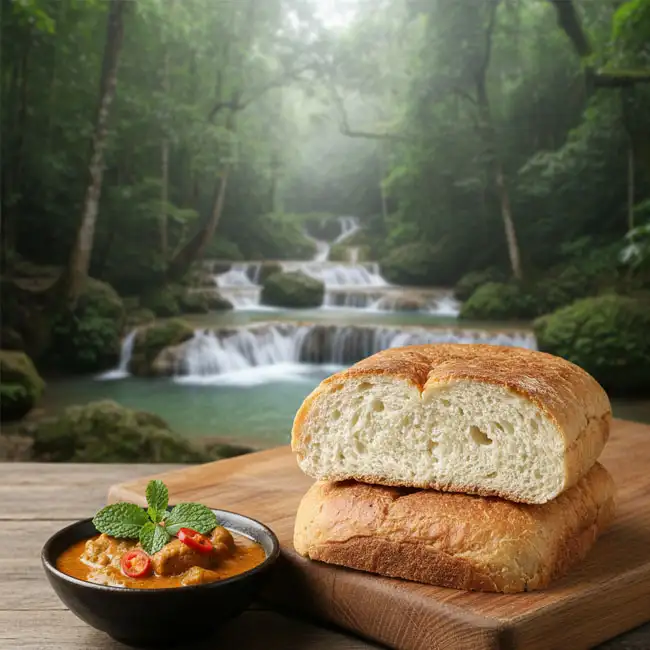
Don't let the name fool you—Roti Benggali is a Malaysian icon, particularly in Penang. It is a thick-crusted, white sandwich bread with an interior so soft it feels like a cloud. Historically, it was sold by "bread men" on motorcycles. For a holiday gathering, this is the perfect "utility" bread. It is meant to be torn into large chunks and used to "mop up" the remains of a big festive stew or curry. It’s simple, rustic, and incredibly satisfying.
🍞 Ingredients & Measurements
The Dough:
• 500 grams bread flour
• 320 ml lukewarm water
• 11 grams active dry yeast (1 sachet)
• 2 tablespoons sugar
• 1 teaspoon salt
• 40 grams butter or shortening (at room temperature)
The Secret Crust Coating:
• 2 tablespoons melted butter (for brushing after baking)
• A pinch of salt
🍞 Step-by-Step Instructions
1.Activate Yeast: Mix warm water, sugar, and yeast. Let it sit for 5-10 minutes until it becomes frothy.
2.Combine: Mix flour and salt. Add the yeast mixture and butter. Knead until you have a soft, tacky dough. It should be smoother than regular bread dough.
3.First Rise: Place in a greased bowl, cover, and let it rise in a warm spot for 1 hour or until doubled in size.
4.The Shape: Punch the dough down. Divide it into 4 equal portions and shape them into rectangles. Place them side-by-side in a high-sided loaf tin (they should be touching).
5.Second Rise: Let them rise again in the tin for 45 minutes. They should rise high above the rim!
6.Bake: Bake at 375 degrees Fahrenheit or 190 degrees Celsius for 25-30 minutes. The top should be a deep, dark golden brown.
7.The Shine: Immediately after taking it out of the oven, brush the top generously with melted butter. This keeps the crust soft and gives it a professional glow.
🍞 Tips & Mistakes to Avoid
• High Protein Flour: Use bread flour, not all-purpose. You need the gluten to support the "high rise" that Roti Benggali is famous for.
• The "Touch" Rule: Placing the dough pieces side-by-side in the tin forces them to rise up rather than out, creating that signature tall, pull-apart shape.
• Don't Under-Bake: This bread needs a strong crust to hold its shape. Don't be afraid if the top looks darker than your usual sandwich bread.
• Cool Before Slicing: If you cut it while it’s piping hot, the steam escapes and the bread will lose its "cloud-like" bounce.
🍞 FAQ
Q1.Why is it called Benggali?
It’s believed to be a corruption of the word "Penggali" or a reference to the traders who originally brought the recipe. It's 100% a Malaysian staple now!
Q2.How do I store it?
Since it has no preservatives, wrap it in foil or a bread bag. It’s also amazing toasted the next day.
🍞 Summary
Roti Benggali is the ultimate comfort loaf. It brings a rustic, "village-style" charm to your holiday table and is the perfect partner for any saucy Malaysian dish.
🥖 Final Thoughts
There you have it—the three kings of the Malaysian holiday bread world. Whether you go for the artistic beauty of Roti Jala, the sweet indulgence of Roti Bom, or the comforting fluffiness of Roti Benggali, you are adding a layer of authentic Malaysian soul to your festivities.
I know baking can feel a bit scary sometimes, especially with techniques like "flipping" or "netting," but remember: the best bread is made with love (and maybe a little bit of extra ghee!). Don't worry if your first Roti Jala looks more like a "blob" than a "net"—it will still taste amazing.
The holidays are all about sharing and trying new things. I encourage you to pick one of these this weekend and give it a go. Your kitchen will smell like a Malaysian paradise, and your guests will be blown away by your expert baking secrets.
Happy baking, and may your holiday table be full of warmth, laughter, and plenty of bread!
| 🇲🇾 🍞 < Back |