
🏠 Home > 🗺️ Recipes > 🧊🥩 Ice Age Ancestral Feast (Paleo Food) > ❄️ Loess Plateau & Yellow River Basin: Ice Age Ancestral Feast (Paleo Food) Recipes
❄️ 🧊🥩 Loess Plateau & Yellow River Basin: Ice Age Ancestral Feast (Paleo Food) Recipes
Published by Supakorn | Updated: August 2026
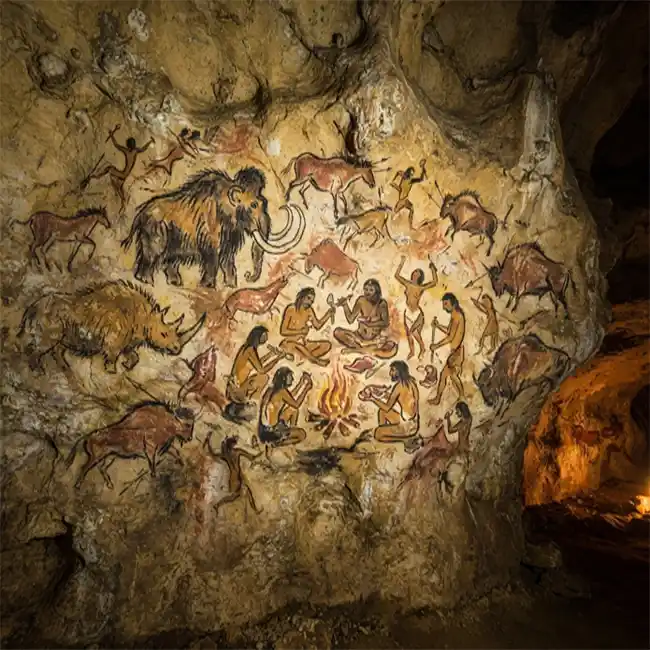
Welcome to the coldest, most badass kitchen in human history. Forget your air fryer. We are going back 30,000 to 300,000 years to the Loess Plateau and the Yellow River Basin, when this place was not yellow fields and modern cities, but a roaring, windy, mammoth-trodden tundra-steppe. This is where your ancestors learned to turn ice, fire, bone, and stone into survival.
If you think Paleo diet is trendy now, wait till you see the original version.
🧊 📜 The Ice Age Chronicles: 30,000 - 300,000 B.C.
The Loess Plateau is not just dirt. It's a time machine. Those thick, yellowish wind-blown dust layers, called loess, buried and preserved everything for hundreds of thousands of years. Combined with the ancient terraces of the Yellow River, it gives us one of the most complete Paleolithic records on Earth.
Let's break down the timeline of this frozen food story:
• The Deep Freeze Setting: From 300,000 to 30,000 years ago, the planet was in a cycle of brutal glacial and interglacial periods. The Loess Plateau was a vast, open mammoth steppe. Think dry, dusty, howling winds, freezing winters dropping below -30°C, and short, intense summers. No rice paddies. Just hardy grasses, sparse shrubs, and hardy animals.
• The Lower Paleolithic Chapter (300,000 - 150,000 B.C.): This is Peking Man territory. At sites like Zhoukoudian near Beijing, early humans like Homo erectus and early Denisovans were already here. They weren't master chefs yet, but they were learning. The biggest revolution? Taming fire. Evidence shows controlled use of fire by at least 400,000 years ago in this region. Fire meant warmth, safety, and the first-ever cooked meal.
• The Middle Paleolithic Chapter (150,000 - 40,000 B.C.): The Neanderthals and Denisovans era, and the early arrival of Homo sapiens. Tools got smarter. We see Mousterian-style stone flakes, scrapers, and points made from quartzite. They were no longer just scavenging. They were organized hunters. They learned to follow the herds across the frozen Yellow River.
• The Upper Paleolithic Chapter (40,000 - 30,000 B.C.): This is the golden age of the Ice Age kitchen. Fully modern humans arrived with blades, bone needles, awls, and even art. At sites like Shuidonggou on the edge of the Loess Plateau, we find sophisticated hunting camps, structured hearths, and grinding stones. This is when the feast truly began.
🦴 Excavated Paleolithic Relics: Ancestral Meals & Elixirs
We know what they ate not from cookbooks, but from the kitchen trash they left behind. Archaeologists found charred bones, cracked marrow, burnt seeds, pollen in cave soil, and greasy residues on stone tools. Here is the reconstructed ancestral menu, the original Hunter-Gatherer Recipes of Northern China.
These are documented food traditions, not modern inventions, based on faunal assemblages and paleobotanical remains from caves like Lingjing, Zhoukoudian, and Salawusu.
🔥 The Mammoth Hunter's Fire Pit - Core Proteins
• Loess Mammoth Roast: Woolly mammoth and woolly rhinoceros were the ultimate prize. A single mammoth could feed a clan for weeks. Bones show cut marks and massive burn pits. The meat was likely roasted in large chunks over open fire pits or smoked for preservation.
• Yellow River Wild Horse Steak: Equus przewalskii, the wild horse, was incredibly abundant. Its bones are the most common find. The meat is lean, rich in iron, and was likely seared quickly on hot stones.
• Bison and Aurochs Chops: Giant steppe bison and wild cattle provided thick, fatty meat. Evidence of large-scale butchery sites shows they were hunted strategically in valleys.
• Glacial Bone Marrow Elixir: This was the Ice Age superfood. Long bones of deer, horses, and bovids were deliberately smashed with hammerstones to extract the fatty, calorie-dense marrow inside. Some bones were even heated to render the marrow into a warm, drinkable broth. This is pure Ancient Survival Foods energy.
• Cave Deer and Gazelle Skewers: Mongolian gazelle and red deer were the everyday staple. Smaller, easier to catch, and perfect for skewering on sharpened bone splints over a hearth.
🌿 The Forager's Frozen Pantry - Ancient Foraging Recipes
Meat was king, but our ancestors were brilliant foragers. The steppe was not barren if you knew where to look.
• Hackberry and Wild Jujube Mash: Charred seeds of Celtis (hackberry) and wild jujube have been found in hearths. These sweet, tart berries were collected in autumn and mashed into a paste, possibly dried for winter.
• Wild Millet and Grass Seed Cakes: This is a huge discovery. Grinding stones from 30,000+ years ago on the Loess Plateau show starch grains of wild millet, Panicum, and other grasses. They were grinding seeds into rough flour long before agriculture. The flour was mixed with water and marrow and baked on hot rocks.
• Cattail Rhizome Roast: Pollen and rhizome remains from wetlands along the Yellow River suggest cattail roots were dug up, roasted in ashes, and chewed for their starchy core.
• Pine Nut and Walnut Trail Mix: Pine trees and wild walnut survived in sheltered valleys. Charred nut shells are common. A handful of pine nuts is pure fat and protein for a freezing hunt.
• Glacial Herb Infusion: Not a tea for pleasure, but for medicine. Residues of Artemisia (mugwort), ephedra, and wild ginger have been found. They were likely steeped in hot water using heated stones dropped into animal skin pouches, creating a warm, non-alcoholic, medicinal infusion to fight cold and illness.
❄️ Living Like the Mammoth Hunters: Paleolithic Survival & Cave Heritage
How did they actually live and eat? It was all about community, mobility, and zero waste.
• The Hearth is Home: The fire pit was the center of everything. Not just for cooking, but for light, warmth, storytelling, and tool-making. A cave hearth was never left to die. Someone was always on fire duty.
• Eat Everything, Waste Nothing: This was the ultimate nose-to-tail philosophy. Meat for muscle, marrow for fat, hides for clothes and shelter, bones for tools and needles, sinew for thread, and stomachs for water carriers and cooking bags. Stone Age Food Traditions were about total respect for the animal.
• Seasonal Migration Feasting: They did not live in one cave year-round. They followed food. Summer camps on high loess ridges for hunting and foraging seeds, winter camps in deep, south-facing limestone caves along the Yellow River to escape the Siberian wind. Their diet changed with the trail.
• The Original Stone Grilling Technique: No pots. They used two methods. Direct roasting on wooden spits over fire, and stone-boiling. Heat river cobbles in fire until glowing hot, then drop them into a water-filled pit lined with hide. The water boils instantly, cooking meat and roots. It is the earliest form of Ancient Fire Cooking.
• Modern Cave Heritage Tourism: You can still feel this today. You can visit Zhoukoudian Peking Man Site Museum near Beijing, a UNESCO World Heritage Site. You can walk the Shuidonggou Paleolithic Site in Ningxia on the edge of the Loess Plateau, where you can see excavated hearths and try stone tool making. You can also explore the Salawusu (Sjara-osso-gol) site in Inner Mongolia, where woolly rhino fossils were found alongside human tools.
🏔️ Taming the Frozen Wilderness: Glacial Valleys & Ice Epoch Trails
For the modern traveler and food explorer, the Loess Plateau is not just history. It is an edible landscape. The same geography that fed Ice Age hunters now offers incredible trekking and foraging routes.
• The Loess Canyons and Wind Valleys: The dramatic gullies and cliffs you see today were carved by wind and water during the Ice Age. Hiking through them is like walking through a 300,000-year-old pantry map. Guides point out wild edible plants that have survived since the Paleolithic.
• The Frozen Yellow River Terraces: The river itself was wider, wilder, and often frozen solid in winter. Ancient people used it as an ice highway to hunt and transport meat. Today, winter walks along the upper Yellow River in Qinghai and Gansu give you a real sense of that frozen world.
• Ice Epoch Wildlife Watching: The mammoths are gone, but their relatives remain. This region is still home to wild argali sheep, blue sheep, and Mongolian wild ass in protected reserves. Seeing them helps you understand what the hunters saw.
• Foraging with Anthropologists: Some eco-tours in Shanxi and Shaanxi now offer Primitive Food Traditions walks, where you learn to identify wild millet, hackberries, and edible roots just like an Ice Age forager, with a focus on Early Human Food Traditions and sustainability.
💬 Paleolithic Mysteries FAQ: Unlocking Cave Kitchen Secrets
Q1.Is the Paleolithic bone marrow diet actually healthy and safe?
Absolutely, and it was essential. Bone marrow is one of the most nutrient-dense foods on the planet. It is packed with healthy monounsaturated fats, collagen, stem cells, Vitamin A, Vitamin K2, and iron. For humans surviving in -20°C, that concentrated fat was the difference between life and death. It provided more calories per gram than any lean meat. Modern nutritionists now recognize marrow as a key part of Ancient Survival Foods.
Q2.Did Ice Age people really eat grains before farming was invented?
Yes! This is one of the biggest Stone Age Kitchen Secrets revealed by the Loess Plateau. We used to think hunter-gatherers only ate meat and berries. But starch analysis on 30,000-year-old grinding stones from Longwangchan and Shizitan proves they were harvesting and grinding wild millet and grasses. They made a kind of crude flatbread or porridge thousands of years before anyone planted a field. It is the true Earliest Human Recipes for bread.
Q3.How do we know for sure what they ate 100,000 years ago without written records?
We have four amazing lines of evidence. First, zooarchaeology - bones with cut marks and charring. Second, paleobotany - ancient pollen, seeds, and starch grains preserved in cave dirt and on tools. Third, residue analysis - microscopic fat and protein trapped in cracks of stone tools. And fourth, isotopic analysis - studying chemical signatures in human teeth and bones to see what proteins they consumed. It is real forensic food science.
Q4.Can I try authentic Ice Age food today?
You can taste the inspiration. While you cannot eat mammoth, you can try ethically sourced game meats like deer and bison prepared with primitive techniques, wild millet porridge, roasted pine nuts, and bone broth made exactly the same way - slow-simmered over fire for 24 hours. Many museums like the Shuidonggou Site offer experiential Primitive Cooking Secrets workshops where you can make seed cakes on hot stones.
🧠 Final Thoughts: The Untamed Soul of Primeval Gastronomy
Eating like the Loess Plateau mammoth hunters was never about diet trends. It was about pure, raw connection. Every bite was earned, every fire was sacred, and every meal was shared.
This was food without chemicals, without packaging, without waste. Just stone, fire, bone, and the wisdom of the frozen steppe. The Hidden Prehistoric Recipes of this land remind us that our bodies and souls were built for resilience, for community, and for flavor born from survival.
This Ice Age Ancestral Feast is not just history. It is the root of all Chinese culinary culture that would later flourish along the Yellow River. And the best part? We are just scratching the surface. The full, fire-tested recipes for each of these ancient dishes are coming next.
Stay wild, stay curious, and keep your fire burning.
🏛️ Credit to the Keepers of the Paleolithic Heritage
This historical overview is compiled from Paleolithic archaeological records, glacial ice-core studies, and prehistoric cave discoveries. We honor the resilience of our ancient ancestors and the dedicated researchers unearthing human history.
Our deepest respect goes to the field teams of the Chinese Academy of Sciences Institute of Vertebrate Paleontology and Paleoanthropology (IVPP), the archaeologists of Peking University and Northwest University, the researchers at the Zhoukoudian Museum, Shuidonggou Site Museum, and all international partners studying the Loess Plateau and Yellow River Basin. Their work in extreme conditions preserves the story of humanity for future generations.
🧊🥩 The Primitive 50K BP Steppe Bison Feast: Unleash Your Inner Caveman
👉 Ice Age Feast: Loess Plateau & Yellow River
| 🌐 🧊🥩 < Back | Next > 🍵 ❄️ |