
🏠 Home > 🗺️ Recipes > 🧊🥩 Ice Age Ancestral Feast (Paleo Food) > ❄️ Loess Plateau & Yellow River Basin: Ice Age Ancestral Feast (Paleo Food) Recipes > 🧊🥩 1.Glacial Fire-Scorched Yellow River Steppe Bison Roast
🧊🥩 The Primitive 50K BP Steppe Bison Feast: Unleash Your Inner Caveman
Published by Supakorn | Updated: August 2026
🦴 Prehistoric Ancestral Palate: The Late Pleistocene Epoch (50,000 Years Ago)
🧊 The Pleistocene Chronicles: 30,000 - 300,000 Years of Glacial Survival
Picture this: freezing winds howling across the endless expanse of the Yellow River steppe, driving swirling sheets of snow against rugged limestone cliffs. Outside the cave mouth, temperatures plummet far below freezing, and giant megafauna roam the tundra. But inside, warm golden embers crackle against dark stone walls etched with charcoal figures. The sharp, irresistible aroma of rendered animal fat and charred, wild-seasoned meat fills the crisp air. Back then, cooking was not merely an art or a hobby—it was the ultimate ritual of survival. Every meal represented a victory over the harsh glacial elements, bringing the tribe together around the dancing flames to celebrate another day alive.
🩸 The Primeval Legacy of Human Survival
Deep within our modern DNA lives the lingering memory of the open fire. For hundreds of thousands of years, our ancient hunter-gatherer ancestors relied on raw instinct, relentless physical endurance, and pure, unadulterated nutrition to thrive in brutal environments. They didn't count calories or worry about processed additives. They ate rich marrow, dense wild game, cold-hardened roots, and pungent wild herbs straight from the tundra. This dense, nutrient-rich ancestral diet fueled human brain evolution, provided unyielding stamina, and forged an unbreakable connection between human survival and the natural landscape.
📜 The Paleolithic Resurrection
Today, we are excavating those forgotten culinary roots from deep beneath the thawing glacial ice. By resurrecting these raw, primitive cooking methods—roasting large cuts over glowing hardwood embers, scorching meats on flat river rocks, and crusting proteins in crushed wild botanicals—we bridge the gap across fifty millennia. You don't need a time machine or a cave to experience the primal power of a true Paleolithic feast. All you need is fresh open flame, quality ingredients, and the willingness to let your wild instincts take over the kitchen.
🥩 Recipe: Glacial Fire-Scorched Yellow River Steppe Bison Roast
🎨 Echoes from the Glacial Ice
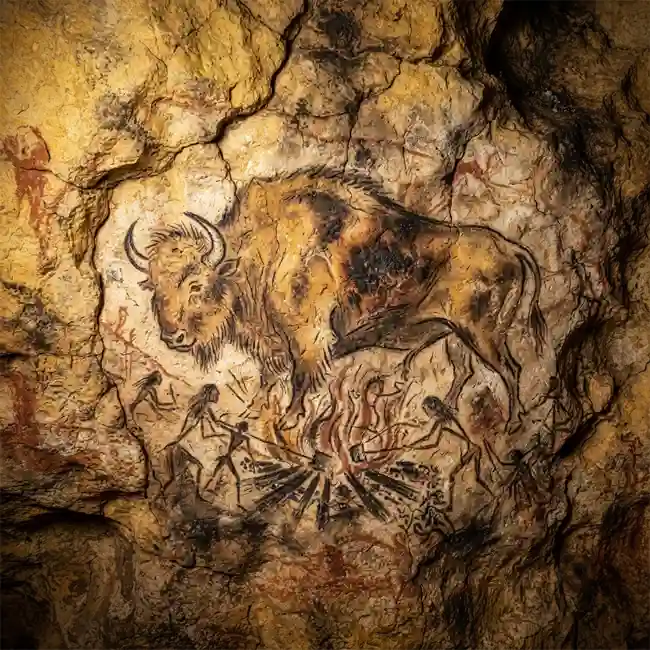
Etched into the soot-stained ceilings of ancient Eurasian caves are vivid depictions of massive, hump-backed steppe bison (Bison priscus). Archaeological digs along historic river basins frequently uncover cracked bison long bones alongside scorch-marked river stones and charred remnants of wild garlic and pine resin. These ancient sites tell the story of great seasonal hunts where tribes harvested giant bison, sharing the energy-dense feast around community bonfires. This recipe captures the exact spirit of those prehistoric victory feasts, adapted beautifully for your modern setup.
🌿 Wild Foraged Essentials & The Hunter’s Pantry
• The Primitive Staples: In the late Pleistocene, hunters targeted high-fat, nutrient-dense wild game like the steppe bison. The meat was carved into heavy roasts and slathered with rich bone marrow fat to retain moisture over direct heat. For flavor, paleolithic gatherers gathered wild alliums (ancient garlic and onion relatives), resinous evergreen pine needles, crushed sumac berries, and mineral-rich natural cliff salt deposits.
• Modern Kitchen Substitutes:
◦ Steppe Bison Meat: Substitute with 100% grass-fed American bison chuck roast or bison ribeye roast. If bison is unavailable, high-quality grass-fed beef chuck roast or venison roast works wonderfully.
◦ Rendered Fat: Substitute wild bison fat with rendered beef tallow or grass-fed marrow fat.
◦ Wild Alliums: Substitute wild steppe garlic with fresh garlic cloves and wild ramps or green scallions.
◦ Wild Forest Botanicals: Substitute tundra evergreen needles with fresh rosemary sprigs, fresh thyme, and crushed juniper berries.
• Paleolithic Proportions:
◦ Main Cut: 3 to 4 pounds grass-fed bison roast (or grass-fed beef chuck roast)
◦ Marrow Fat Base: 4 tablespoons rendered beef tallow or liquefied bone marrow fat
◦ Wild Allium Crust: 6 cloves fresh garlic, finely crushed
◦ Green Herbs: 3 tablespoons fresh rosemary, finely chopped
◦ Forest Berry Crunch: 1 tablespoon dried juniper berries, coarsely crushed
◦ Earth Seasoning: 1.5 tablespoons coarse rock salt or pink Himalayan salt
◦ Crushed Spice: 1 tablespoon cracked black peppercorns or coarse wild pepper
🔥 The Primitive Culinary Ritual
1.Bring Meat to Room Temperature: Remove the bison roast from cold storage at least 45 minutes before cooking. Pat the entire surface completely dry using paper towels.
2.Prepare the Primitive Rub: In a small bowl, combine the crushed garlic, chopped fresh rosemary, crushed juniper berries, coarse rock salt, and cracked pepper.
3.Bind with Ancestral Fat: Slather the entire bison roast thoroughly with 3 tablespoons of rendered beef tallow or marrow fat, ensuring every crevice is coated.
4.Crust the Roast: Generously press the garlic-herb mixture into every side of the oiled bison roast, creating a thick, aromatic layer.
5.Set Up the Heat Source: Prepare an outdoor charcoal grill or cast-iron skillet for dual-zone cooking. If using a open campfire, let the wood burn down until you have a deep bed of white-hot embers.
6.The Initial Primal Sear: Place the roast directly over intense heat or sear it in a smoking-hot cast-iron skillet with the remaining tallow. Sear each side for 3 to 4 minutes until a deep, dark, caramelized crust forms.
7.Slow Ember Roasting: Move the roast away from direct flame to indirect heat (around 275°F to 300°F / 135°C to 150°C). Cover or tent loosely with foil.
8.Monitor the Internal Temperature: Roast slowly until the internal temperature reaches 125°F (51°C) for rare or 135°F (57°C) for medium-rare. Bison is extremely lean, so avoid overcooking!
9.The Vital Resting Phase: Transfer the roasted bison to a wooden cutting board and let it rest undisturbed for 15 to 20 minutes. This allows the hot juices to redistribute evenly throughout the meat fibers.
10.Carve and Serve: Slice thick, rustic slabs against the grain and serve immediately alongside hot roasted root vegetables.
🔥 Secrets of the Ancestral Fire
• Target White-Hot Embers, Not Flames: Direct licking flames will char the outside of lean bison meat to black soot long before the inside cooks through. Always wait until wood or hardwood charcoal burns down into glowing gray-white embers before cooking.
• Respect the Lean Nature of Bison: Bison contains significantly less intramuscular fat than grain-fed commercial beef. High heat over long durations will dry it out completely. Keep roasting temperatures gentle and rely heavily on internal thermometer readings rather than guesswork.
• Never Skip the Marrow Fat Coat: Coating the exterior in tallow or marrow fat creates a protective shield. It crisps up under the fire, trapping moisture deep within the roast.
• Heavy Coarse Salt is Essential: Prehistoric cooking relies on bold, unrefined salt to enhance natural game flavors. Avoid fine table salt; use coarse rock salt or sea salt flakes to get that delightful mineral crunch in every bite.
• Control Flare-Ups with Distance: If fat dripping off the roast causes fire flare-ups, raise the grate higher or shift the roast slightly off to the side. Smoke enhances flavor, but raw gasoline-like soot ruins it.
🧠 Paleolithic Wisdom & Secrets FAQ
Q1.Is bison meat safe to cook to medium-rare like beef?
Yes, absolutely! In fact, because bison is so lean, serving it medium-rare (around 130°F–135°F) is the absolute best way to ensure maximum tenderness and flavor. Overcooking bison past medium causes the protein fibers to contract tightly, making the meat tough.
Q2.Can I replicate this primitive recipe indoors without an open campfire?
Definitely. You can achieve amazing results indoors by heavy-searing the crusted roast in a blistering hot cast-iron skillet on your stovetop, then transferring the skillet directly into a preheated oven at 275°F (135°C) until it hits your target internal temperature.
Q3.What modern side dishes best align with a true Paleo feast?
To keep your meal authentically primal, pair the bison roast with simple wild-inspired sides like fire-roasted parsnips, charred carrots, roasted sweet potatoes, sautéed wild mushrooms, or fresh dark leafy greens dressed in olive oil and lemon.
🍖 The Taste of Primeval History
When you slice into this majestic roast, you are greeted by an insanely vibrant pink interior wrapped in a smoky, herb-crusted bark. The natural flavor of bison is rich, slightly sweet, and deep—devoid of any overwhelming gaminess. Combined with the earthy crunch of juniper, pungent garlic, and rendered tallow, every bite tastes intensely pure, satisfying, and unburdened by modern chemical processing. This is pure fuel for the human body, exactly as nature intended.
🌋 Final Thoughts: Taming the Ice Age in Your Modern Kitchen
Cooking like a Paleolithic human doesn't require living in a cave or hunting wild megafauna across frozen tundras. It is about stripping away the noisy distractions of modern processed foods and reconnecting with elementary culinary forces: real fire, high-quality grass-fed meat, ancient aromatics, and simple patience. By bringing this 50,000-year Steppe Bison Roast to your dinner table, you transform your everyday kitchen into a sacred sanctuary of culinary history, proving that the simplest methods are often the most extraordinarily delicious.
🐺 The Sacred Tribe (Claim Your Ancestral Heritage)
Are you ready to step away from factory-farmed meals and reignite your ancestral palate? Join our growing tribe of primitive cooking enthusiasts, modern foragers, and Paleo purists! Subscribe to our newsletter today to unlock exclusive wilderness recipes, ancient fire-building techniques, and step-by-step guides to mastering ancestral gastronomy right at home. Leave a comment below with your favorite wild game cuts, share your open-fire creations with the tribe, and keep the primeval flame burning bright!
📚 Credit to the Keepers of the Paleolithic Legacy
This recipe is lovingly inspired by late Paleolithic archaeological discoveries, Eurasian cave art records, and preserved glacial relics from the Ice Age era (30,000 - 300,000 B.C.). We have meticulously adapted these wild, ancestral preparations for modern kitchens while honoring the untamed soul and primal wisdom of our earliest forebears.
| ❄️ 🧊🥩 < Back |