
🏠 Home > 🗺️ Recipes > 🍱 Snacks > 🇰🇮 Kiribati Snacks
🇰🇮 🍱 Kiribati Snacks Recipes
Published by Supakorn | Updated: June 2026
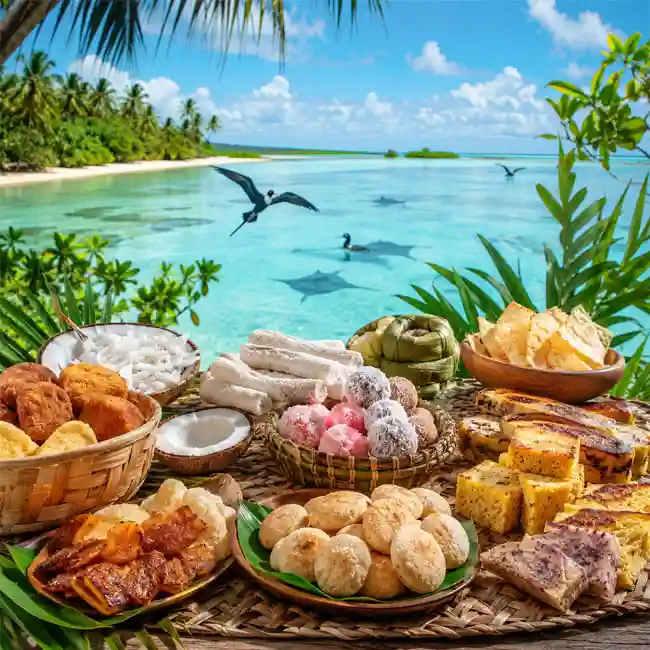
Hello there, fellow foodie adventurer! If you have ever stared at a world map and wondered what life—and more importantly, what eating—is like on a remote ring of coral atolls in the middle of the massive Pacific Ocean, you are in the perfect place. Today, we are taking an imaginary tropical vacation to the beautiful nation of Kiribati (pronounced Kirr-i-bas).
We are going to dive deep into the fascinating, sun-drenched world of Kiribati snacks. This isn't your average supermarket snack run. We are talking about treats born from towering coconut palms, ancient root vegetables hidden in the sandy soil, and the freshest seafood imaginable. Grab a refreshing drink, get comfortable, and let's explore the ultimate, authentic guide to how people snack in paradise!
🇰🇮 🍱🌊 The Soul of the Atoll: An Introduction to Kiribati Food Culture
To truly appreciate a country's snacks, you have to understand how the people live. Kiribati is a gorgeous collection of 32 coral atolls and one raised coral island, scattered across a mind-bogglingly large patch of the ocean. Because these islands are made of coral sand, the soil isn't super rich like volcanic islands. You won't find massive fields of wheat, fields of corn, or rows of potato plants here. Instead, the local people—the I-Kiribati—have spent centuries mastering the art of creating delicious, comforting, and filling treats from a very specific, select group of local ingredients.
Snacking in Kiribati is all about simplicity, resourcefulness, and a deep respect for Mother Nature. The local culinary culture relies heavily on what can be harvested from the sea and what can survive the tropical sun. When you take a bite of a traditional Kiribati snack, you are tasting centuries of island history, seafaring wisdom, and the pure, unadulterated flavors of the South Pacific. It is a food culture that doesn't hide behind heavy bottled sauces or processed chemicals; it lets the natural sweetness of coconut and the earthy richness of local crops do all the talking.
🍽️ 🌿 The Core Ingredients That Define Kiribati Snacks
Before we look at the specific iconic snack names, let's meet the superstar ingredients that show up in almost every single bite on the islands. These are the building blocks of the I-Kiribati pantry:
• The All-Powerful Coconut (Te Nii): In Kiribati, the coconut palm is literally called the "tree of life," and for good reason! Every single stage of the coconut is used for snacking. Young coconuts provide sweet, refreshing water and soft, jelly-like meat. Mature coconuts give thick, luxurious cream and crunchy flesh. Even the sweet sap from the coconut flower bud is harvested daily to make local syrups.
• The Mighty Pandanus Fruit (Te Kaina): This looks like a giant, pinecone-shaped alien fruit hanging from walking-stick roots. It has a uniquely sweet, fragrant, and slightly floral flavor. The individual keys of the fruit are chewed on raw as a quick snack, or processed into thick, dried pastes that can last for years.
• Babai (The Giant Swamp Taro): This isn't your typical garden vegetable. Babai is a labor of love, grown in deep, hand-dug muddy pits filled with fresh groundwater. It takes years to grow a single giant corm, making it a highly prized ingredient reserved for special occasions, feasts, and traditional heavy snacks.
• Breadfruit (Te Mai): When baked or roasted, this amazing starchy fruit develops a texture remarkably similar to freshly baked bread or warm potatoes. It is incredibly versatile and serves as the perfect canvas for rich coconut cream.
• The Infinite Bounty of the Ocean: With the ocean right at their doorstep, seafood is a massive part of daily life. Small fish, crabs, clams, and octopus are frequently transformed into quick, savory mid-afternoon bites.
🏝️ 😋 15 Iconic and Authentic Kiribati Snacks You Need to Know
Now, let's get into the most exciting part! While you won't find standard recipes with exact measurements here today, these are the legendary, mouth-watering snack concepts and menu names that define the local flavor profile.
1. Buatoro (The Classic Sweet Taro Cake): This is arguably one of the most famous sweet treats in Kiribati. It is a comforting, dense baked pudding made by combining mashed taro or babai with sweet coconut cream. Sometimes, local pumpkin is mixed in to give it a beautiful golden hue. It is traditionally wrapped up cleanly in banana leaves and baked until the edges get beautifully caramelized and fragrant.
2. Tebwan (The Roasted Breadfruit Snack): Imagine a snack that bridges the gap between roasted potatoes and fresh bread. Whole breadfruits are placed directly onto hot coals until the skin turns completely black. Once you peel away the charred outer layer, you are left with soft, steaming, cream-colored flesh that is torn into bite-sized pieces and dipped straight into thick coconut cream.
3. Te Kamaimai (The Sweet Coconut Toddy Syrup): This is the ultimate natural sweetener of the islands. Fresh sap is painstakingly harvested from the coconut blossom twice a day. It is then boiled down slowly for hours until it transforms into a thick, dark, sticky, and deeply caramelized syrup. It tastes like a tropical version of maple syrup or molasses and is drizzled over almost every starch imaginable.
4. Kabwibwi (Dried Pandanus Paste Bites): A true testament to island ingenuity, this snack is made by boiling pandanus fruit pulp, scraping out the sweet fibers, rolling it flat, and sun-drying it on mats. The result is a chewy, sweet, fruit-leather-style snack that fishermen take out to sea because it keeps perfectly for months without refrigeration.
5. Grated Coconut and Toddy Balls: A quick, sweet bite that children absolutely love. Freshly grated mature coconut meat is tossed with a generous splash of sweet coconut toddy syrup. The mixture is hand-rolled into small, bite-sized spheres. It is a simple, high-energy snack that keeps everyone going during hot afternoons.
6. Raw Fish in Coconut Milk (Amori): On the savory side of things, this is the ultimate refreshing midday pick-me-up. Freshly caught reef fish is cut into clean cubes, rinsed in clean seawater, and tossed with fresh lime juice and a heavy splash of raw coconut milk. It is cool, creamy, acidic, and incredibly revitalizing.
7. Roasted Babai Chips: A modern twist on ancient staples! Thin slices of the giant swamp taro are sliced up thinly and shallow-fried or roasted until completely crispy. Tossed with just a touch of sea salt, they make an incredible alternative to potato chips, boasting a much earthier and heartier crunch.
8. Baked Pandanus Flour Cakes: The dried, fibrous paste from the pandanus fruit can be ground down into a fragrant, golden flour. This unique flour is mixed with water and coconut cream to form small, dense dough balls that are steamed or baked, yielding a beautifully chewy snack with an aroma that fills the whole village.
9. Tebwi (Fresh Pandanus Keys): Sometimes the best snack requires absolutely no cooking at all. When the pandanus fruit is perfectly ripe, the individual sections (called keys) are broken off the main hub. Locals love to chew on the fleshy, bright orange base of these keys, sucking out the sweet, piney, aromatic juice before discarding the fibrous threads.
10. Coconut Embryo (Te Utu): Inside a coconut that has fallen to the ground and begun to sprout, a magical transformation happens. The liquid inside turns into a soft, spongy, fluffy white ball that absorbs the nutrients of the nut. This embryo is scooped out and eaten raw. It has a texture like cotton candy mixed with sponge cake, and a mild, sweet, coconutty flavor.
11. Steamed Pumpkin Pudding: Pumpkin grows surprisingly well in certain parts of the islands, and locals love to grate it down, mix it thoroughly with rich coconut cream, and steam it inside large leaves. It creates a bright orange, silk-smooth snack that melts in your mouth.
12. Sun-Dried Octopus Strips: For a chewy, savory snack packed with protein, fresh octopus is cleaned, flattened out, and hung up on lines under the intense tropical sun until dried. It is then sliced into thin strips and chewed on throughout the day, offering a rich, salty, umami flavor that islanders adore.
13. Sweetened Coconut Flesh Strips (Te Kamano): Medium-aged coconut meat, which is firm but still pliable, is carved out into long, elegant ribbons. These ribbons are gently simmered in coconut toddy syrup until they absorb the deep caramel flavor, then left to dry into a beautiful, glossy, sweet jerky.
14. Fried Breadfruit Fritters: A popular treat found in local island markets. Ripe breadfruit is mashed up, shaped into rustic little patties, and fried until the exterior forms a gorgeous, golden-brown crust while the inside stays fluffy and sweet.
15. Salted Reef Fish Bites: Small fish are salted heavily and dried thoroughly in the sun. Whenever anyone feels a bit hungry between meals, they tear off small pieces of this intensely savory dried fish and pair it with a piece of plain, creamy mature coconut meat to balance out the saltiness.
🏡 🌸 The Island Lifestyle: Eating, Sharing, and the Maneaba Way
To understand snacking in Kiribati, you have to understand how the community functions. Life here moves at a relaxed, peaceful pace dictated by the ocean tides and the sun. There are no massive fast-food chains or neon-lit 24-hour convenience stores. Instead, snack culture is deeply intertwined with communal living.
The center of social life in every Kiribati village is the Maneaba—a massive, open-air community hall with a towering thatched roof. When people gather at the Maneaba for meetings, dances, or celebrations, food is always the ultimate connector. Snacking is rarely a solitary event done in secret. If you are sitting under a tree enjoying some fresh coconut embryo or chewing on a pandanus key, and a neighbor walks past, it is custom to invite them to join you with a warm smile.
Children roam the villages freely, climbing trees to knock down fresh green coconuts for a quick afternoon drink and snack. Elders sit in the shade, skillfully processing pandanus fruits while sharing stories of the past. Food isn't just fuel here; it is a daily celebration of togetherness, family ties, and hospitality.
✈️ 🗺️ Wanderlust and Flavors: Food as a Gateway to Kiribati Tourism
If you are a traveler who loves planning trips based on what your stomach desires, Kiribati offers an eco-tourism experience unlike anything else on Earth. Visiting these islands is like stepping back in time to a simpler, untouched world of pristine nature.
As a tourist exploring the main hub of Tarawa or venturing out to the pristine outer islands like Abemama or Tabiteuea, food will be your bridge to the local culture. Guest houses and eco-lodges love introducing visitors to authentic local snacks. Imagine coming back from a long morning of world-class bonefishing, scuba diving among untouched coral reefs, or exploring historical World War II relics, only to be handed a plate of freshly charred breadfruit dipped in sweet coconut syrup.
Because the country is so remote, experiencing Kiribati snacks is a badge of honor for true food travelers. You can't just buy these flavors in a jar online; you have to physically sit on a woven pandanus mat, feel the warm Pacific breeze on your face, listen to the crashing ocean waves, and receive the food directly from the hands of a welcoming local host.
🧠 💡 Fun Facts About Kiribati Snacking Traditions
• The Ultimate Survival Food: The sun-dried pandanus paste snack (Kabwibwi) is so resilient that it can remain perfectly edible for several years if stored correctly, making it the ultimate historical survival food for long ocean voyages.
• Natural Sugar Rush: The sweet coconut toddy syrup used to sweeten snacks is completely organic and unrefined, packed with natural vitamins and minerals direct from the tree.
• Eco-Friendly Packaging: Long before the rest of the world started worrying about plastic pollution, Kiribati was using 100% biodegradable snack wrappers. Banana leaves, pandanus leaves, and clean coconut shells are the original, eco-friendly plates of the Pacific!
• The Secret Balance: Locals instinctively know how to balance their snacks. High-carb starch snacks like taro or breadfruit are almost always paired with healthy fats from coconut cream to keep you full and energized for hours.
🧐 FAQ: Frequently Asked Questions About Kiribati Snacks
Q1. What do Kiribati snacks taste like overall?
They are beautifully balanced, clean, and completely natural. The sweet snacks rely on the rich, caramelized flavor of coconut toddy syrup and the floral notes of pandanus fruit. The savory snacks are incredibly fresh, highlighting the natural creaminess of coconut milk mixed with the clean saltiness of the sea.
Q2. Are snacks in Kiribati generally healthy?
Yes, absolutely! Traditional Kiribati snacks are incredibly clean and healthy because they are made from whole, unprocessed ingredients like fresh seafood, root vegetables, fruit, and coconut. They are packed with fiber, healthy fats, and essential minerals, with zero artificial preservatives or refined sugars.
Q3. Can I find western-style snacks in Kiribati?
In the main urban center of South Tarawa, you will find small local shops that import western snacks like potato chips, biscuits, and sodas. However, out in the rural villages and beautiful outer islands, traditional, locally sourced snacks are still the absolute king.
Q4. Why is coconut used in almost every single Kiribati snack?
Because the sandy, low-lying coral atoll soil makes it very difficult for most agricultural crops to survive, the resilient coconut palm is one of the few plants that thrives effortlessly across Kiribati. Over hundreds of years, locals became master chefs at utilizing every single stage of the coconut to create a wide variety of textures and flavors
🍱 Level Up Your Next Movie Marathon with These Island-Style Crunchy Treats
👉 Experience 3 Iconic I-Kiribati Weeknight Snacks
| 🌐 🍱 < Back | 🇰🇮 🍞 < Previous | Next > 🥘 🇰🇮 |