
🏠 Home > 🗺️ Recipes > 🍷 Drinks > 🇬🇲 Gambia Drinks
🇬🇲 🍷 Gambia Drinks Recipes
Published by Supakorn | Updated: February 2026
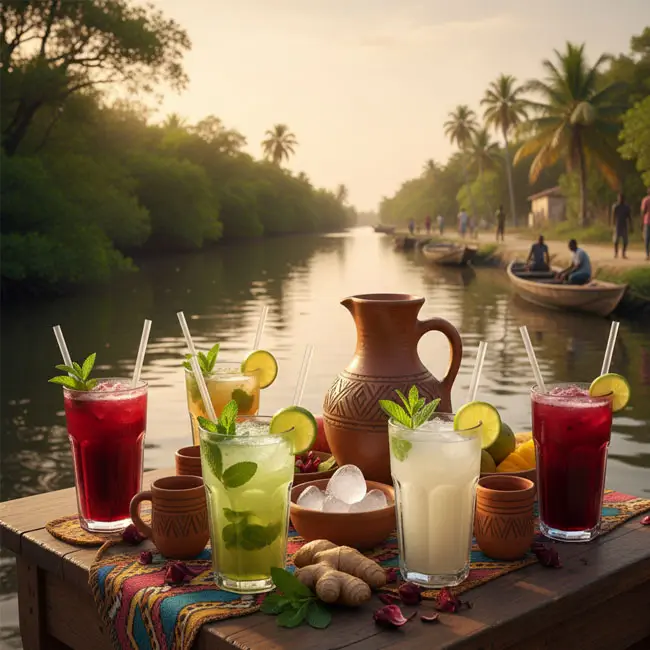
🥤 Sip the Spirit of The Gambia
In The Gambia, every drink tells a story. Whether it’s a glass of chilled baobab juice shared under the afternoon sun or a cup of hot attaya sipped slowly with friends, drinks here go far beyond refreshment — they’re part of daily life, community, and culture.
Gambian beverages are simple, natural, and full of character. Most are made from local fruits, herbs, or seeds, carrying the essence of Africa’s warm climate and fertile soil. And the best part? Almost all of them are non-alcoholic, enjoyed by everyone from kids to elders.
When you visit a Gambian home, you’ll rarely leave without being offered a drink. Whether it’s something sweet, tangy, or soothing, these drinks reflect the country’s warm hospitality — the kind that welcomes you in and makes you feel like family.
🤝 A Culture of Hospitality in Every Cup
If food in The Gambia is about togetherness, then drinks are about friendship. Sharing a beverage is often the beginning of conversation. In homes, markets, and street stalls, you’ll find people exchanging laughter over glasses of juice or tea.
Offering a drink is never rushed. It’s an invitation to sit, relax, and connect. On hot afternoons, a cold glass of wonjo cools both body and mood. During religious gatherings or family visits, fruit-based drinks show care and generosity.
In a world that often moves too fast, Gambian drink culture gently reminds you to slow down.
🌱 Nature’s Pantry – The Source of Gambian Refreshments
Gambian drinks start with the land. Fruits, flowers, roots, and seeds grow naturally across the countryside, shaped by a tropical climate and generations of farming knowledge.
Baobab trees tower over villages, hibiscus flowers dry under the sun, ginger roots are pulled fresh from the soil. These ingredients don’t travel far — they go straight from nature to kitchen to cup.
What makes these drinks special is not complexity, but respect for ingredients. Minimal processing. Honest flavors. A deep understanding of balance between sweetness, tang, and spice.
🧺 Homemade First, Store-Bought Second
Traditionally, Gambian drinks are made at home. Mothers teach daughters how to balance flavors. Elders pass down tricks — when to soak longer, when to strain gently, when to add sweetness.
Even today, homemade drinks are preferred. Street vendors often prepare their drinks at dawn, using family recipes. You can taste the difference — it’s personal, not industrial.
🍹 Popular Non-Alcoholic Drinks in The Gambia
Let’s take a relaxed walk through the drinks you’ll encounter most often — in homes, markets, ceremonies, and everyday life.
🌳 1. Baobab Juice (Bouye)
Baobab juice is iconic. Creamy, tangy, and deeply satisfying, it comes from the fruit of the baobab tree — known as the “tree of life.”
Its flavor is unique: slightly citrusy, gently sweet, and naturally rich. Many Gambians grow up drinking bouye, especially during hot seasons when the body craves cooling nourishment.
It’s filling, refreshing, and often associated with comfort and home.
🌺 2. Wonjo (Hibiscus Drink)
Bright red and instantly recognizable, wonjo is joy in a glass. Made from dried hibiscus petals, it’s tangy, refreshing, and visually stunning.
Wonjo is everywhere — weddings, markets, Ramadan tables, casual afternoons. Each version reflects the maker’s personality: some prefer it sharp and sour, others smooth and sweet.
It’s the drink that says “celebration” without saying a word.
🌶️ 3. Ginger Drink
Bold and energizing, ginger drink wakes you up from the first sip. It’s spicy, refreshing, and deeply satisfying — especially when served cold.
Some versions are fiery, others mellow, but all share that unmistakable ginger warmth. Many people drink it not just for taste, but for how it makes them feel: alert, refreshed, alive.
🍂 4. Tamarind Juice (Daah)
Tamarind juice brings balance. Sweet meets sour, earthy meets refreshing. It’s especially popular during fasting periods, when the body needs gentle hydration and energy.
Its flavor lingers, making it a favorite for slow sipping rather than quick drinking.
🍵 5. Attaya – The Tea Ceremony
Attaya is not rushed. It’s brewed slowly, poured carefully, and shared intentionally.
The three rounds of tea symbolize life, friendship, and love — and everyone knows the rhythm. Conversations flow naturally as the tea grows sweeter.
Attaya is about presence. About listening. About being together.
🕰️ Everyday Rituals and Seasonal Moments
Drinks in The Gambia follow the rhythm of the day:
• Morning: light teas or juices
• Afternoon: cooling fruit drinks
• Evening: long attaya sessions
Seasonal changes also influence choices. During hotter months, hibiscus and tamarind dominate. During cooler evenings, tea takes center stage.
🌙 Drinks During Ramadan and Religious Life
During Ramadan, drinks take on deeper meaning. Families prepare jugs of baobab, wonjo, or tamarind before sunset, ready to share.
Breaking the fast with a natural drink is both nourishing and symbolic — a moment of gratitude and togetherness.
💚 Health and Wellness in Gambian Beverages
Long before “superfoods” became trendy, Gambians understood the healing power of natural ingredients.
• Baobab supports immunity
• Ginger aids digestion
• Hibiscus cools the body
• Tamarind refreshes and detoxes
• Green tea sharpens focus
These drinks don’t just hydrate — they care for the body gently and naturally.
👨👩👧👦 Drinks That Teach and Connect Generations
Children learn by watching. Teenagers learn by helping. Elders guide with patience.
Making drinks becomes a shared activity — a way to pass on values, not just recipes. Respect, generosity, balance, and patience all live inside a single cup.
🛍️ Gambia’s Street Drink Culture
Markets in The Gambia are alive with color. Large jars of juice glisten in the sun. Vendors smile, scoop, and pour.
Street drinks are affordable, fresh, and deeply local. Each seller adds a personal touch — a bit more ginger here, a splash of mint there.
It’s refreshment with personality.
🏠 Bringing Gambian Drinks to Your Kitchen
You don’t need special equipment. Just good ingredients, curiosity, and time.
Experiment. Taste. Adjust. Share.
Making Gambian drinks at home isn’t about perfection — it’s about intention.
🌍 The Global Future of Gambian Beverages
Today, ingredients like baobab and hibiscus are gaining global attention. Cafés, wellness brands, and smoothie bars are discovering what Gambians have always known.
Yet at home, these drinks remain humble — rooted in family, tradition, and everyday life.
🌟 Final Thoughts
Gambian drinks are more than refreshment. They’re culture in liquid form.
Every sip carries warmth, generosity, and connection. They remind us that slowing down, sharing, and enjoying natural flavors can be deeply satisfying.
If you want to taste The Gambia — start with a drink.
❓ FAQ
Q1: Are Gambian drinks alcoholic?
No. Traditional Gambian drinks are overwhelmingly non-alcoholic and enjoyed by all ages.
Q2: What are the most popular Gambian drinks?
Baobab juice (bouye), hibiscus drink (wonjo), ginger drink, and attaya tea.
Q3: Can these drinks be made at home?
Yes! Most Gambian drinks are simple and rely on natural ingredients easily found worldwide.
🍷 Authentic Gambia Drinks Recipes You’ll Love
| 🌐 🍷 < Back | 🇬🇲 🍨 < Previous | Next > 🍲 🇬🇲 |