
🏠 Home > 🗺️ Recipes > 🧊🥩 Ice Age Ancestral Feast (Paleo Food) > 🏔️ Franco-Cantabrian Region: Ice Age Ancestral Feast (Paleo Food) Recipes
🏔️ 🧊🥩 Franco-Cantabrian Region: Ice Age Ancestral Feast (Paleo Food) Recipes
Published by Supakorn | Updated: August 2026
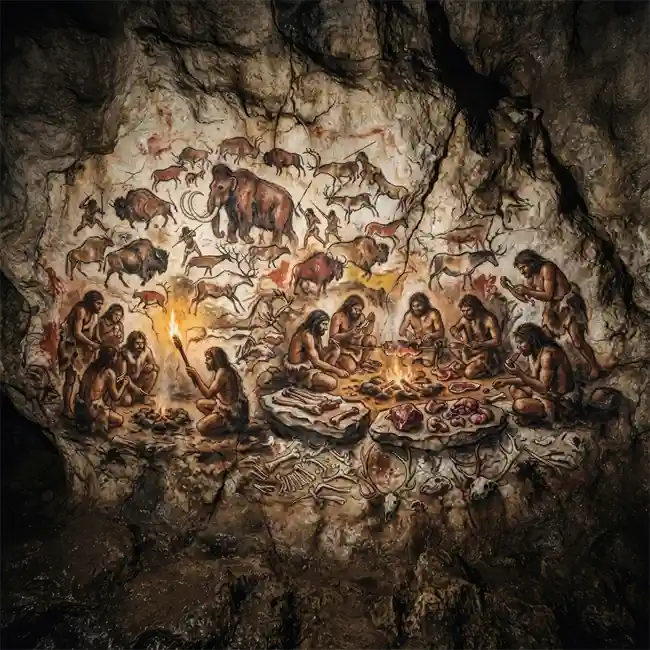
Imagine stepping into a rugged landscape where glaciers stretched across distant mountains, vast grasslands echoed with the footsteps of mammoths, and survival depended entirely on nature's generosity. Long before farms, villages, or written history existed, the people of the Franco-Cantabrian Region mastered one of humanity's greatest achievements—learning how to live, hunt, gather, and cook in one of the harshest climates our species had ever faced.
Stretching across what is now northern Spain and southwestern France, the Franco-Cantabrian Region became one of Europe's most important Ice Age refuges. During the coldest phases of the Upper Paleolithic, this remarkable landscape sheltered generations of hunter-gatherers who left behind spectacular cave paintings, carefully crafted stone tools, butchered animal bones, ancient hearths, and priceless archaeological clues about everyday life.
Today, researchers continue uncovering fascinating evidence showing that these early communities possessed far more sophisticated food knowledge than many people imagine. They understood seasonal migration, tracked enormous herds across frozen valleys, gathered nutritious wild plants, extracted calorie-rich marrow from bones, roasted meat over carefully controlled fires, and made efficient use of nearly every edible resource nature offered.
Although we cannot recreate every prehistoric meal with complete certainty, archaeology allows us to reconstruct an extraordinary picture of Ice Age cuisine—one built on observation, adaptation, cooperation, and respect for the environment.
This journey explores that remarkable culinary world, revealing how prehistoric families transformed survival into tradition long before agriculture changed human civilization forever.
🏔️ 📜 The Ice Age Chronicles: 30,000 – 300,000 B.C.
When people hear the phrase "Ice Age," they often picture towering glaciers, woolly mammoths, and small bands of cave dwellers wrapped in animal hides. While those images contain elements of truth, the real story is far richer and spans an astonishing period of human history.
The earliest chapters stretch back nearly 300,000 years, when early members of our own species, along with other human relatives, began adapting to dramatically changing climates across Europe. Over countless generations, landscapes shifted repeatedly between warmer and colder periods, forcing prehistoric communities to become masters of adaptation.
Rather than living inside caves all the time, many groups used caves seasonally. These natural shelters protected families from freezing winds, predators, and heavy snowfall while also preserving evidence that archaeologists continue studying today.
❄️ Lower Paleolithic: The First Foundations
The Lower Paleolithic represents humanity's earliest experiments with technology and survival.
During this immense period, people gradually learned how to:
• Shape simple stone cutting tools
• Break large animal bones for nutritious marrow
• Process meat more efficiently
• Gather edible roots, nuts, berries, and wild greens
• Observe animal migration patterns
• Work together during scavenging and hunting
Fire was not yet universally mastered during the earliest stages, meaning many meals were likely eaten raw or only lightly processed using stone tools.
Even so, these pioneering humans established behaviors that would influence countless generations.
🔥 Middle Paleolithic: Fire Changes Everything
By the Middle Paleolithic, remarkable innovations transformed everyday life.
Controlled fire became increasingly reliable.
This single discovery revolutionized prehistoric food culture in countless ways.
Fire allowed ancient people to:
• Roast tougher cuts of meat.
• Soften connective tissue.
• Improve food safety.
• Produce warmth during freezing winters.
• Extend daylight for social gatherings.
• Protect campsites from dangerous predators.
• Harden wooden hunting spears.
• Preserve certain foods through gentle drying near hearths.
Evidence from numerous archaeological sites suggests hearths became central gathering places where hunting stories, tool making, and food preparation naturally came together.
Instead of being merely a cooking method, fire became the heart of prehistoric community life.
🧊 Upper Paleolithic: The Golden Age of Ice Age Hunters
Between roughly 50,000 and 30,000 years ago, hunter-gatherer societies across the Franco-Cantabrian Region reached remarkable levels of cultural sophistication.
This period witnessed:
• Beautiful cave art.
• Advanced flint technology.
• Carefully planned hunting expeditions.
• Decorative ornaments.
• Bone and antler tools.
• Improved food processing techniques.
• Seasonal movement between hunting territories.
Rather than randomly chasing animals, Ice Age hunters demonstrated an impressive understanding of migration cycles.
They followed herds across valleys, rivers, and open plains, timing hunts according to seasonal animal behavior.
Large mammals often included:
• Woolly mammoth
• Reindeer
• Wild horse
• Steppe bison
• Red deer
• Ibex
• Aurochs
Smaller prey also played an important role.
These included:
• Arctic hare
• Birds
• Fish
• Freshwater shellfish
• Rabbits in warmer intervals
Every successful hunt represented more than food.
Animal hides became clothing.
Bones became tools.
Antlers became spear points.
Sinew became cordage.
Fat fueled lamps.
Nothing useful was wasted.
🌿 Ancient Foraging Was Just as Important
Popular culture sometimes portrays Ice Age diets as consisting entirely of meat.
Archaeology tells a more balanced story.
Whenever seasonal conditions allowed, prehistoric families actively gathered plant foods to complement hunted game.
Depending on the climate and local environment, these resources included:
• Wild berries
• Hazelnuts
• Pine nuts
• Edible roots
• Tubers
• Mushrooms
• Wild onions
• Aromatic herbs
• Young leaves
• Seeds
• Tree cambium during difficult winters
Although plant remains rarely survive for tens of thousands of years, microscopic residue analysis, pollen studies, starch grains preserved on ancient tools, and dental calculus have revealed that early humans consumed a surprisingly varied diet.
Their food choices were guided not by recipes written on paper, but by generations of observation passed from one family to another. Every season brought new opportunities, and every landscape demanded different knowledge. That wisdom—earned through experience rather than agriculture—formed the foundation of what we now recognize as some of the earliest human food traditions.
🦴 Excavated Paleolithic Relics & Ancestral Menus
While no handwritten cookbook has ever survived from the Ice Age, archaeologists have uncovered something even more fascinating—thousands of clues preserved beneath layers of earth, deep inside limestone caves, and alongside ancient hearths that once warmed prehistoric families. Burned bones, stone knives, butchering marks, pollen grains, microscopic starch residues, charred seeds, and fragments of animal fat all help researchers reconstruct what may have appeared on the menus of Europe's earliest hunter-gatherers.
Across the Franco-Cantabrian Region, famous cave systems have revealed that food preparation was far more organized than many people imagine. These discoveries tell a story not only of survival but also of planning, cooperation, and remarkable environmental knowledge.
Rather than relying on a single source of food, Ice Age communities adapted continuously to changing seasons. During one part of the year, migrating reindeer dominated the landscape. In another, wild horses crossed open grasslands. Along rivers, fish became valuable additions to the diet, while nearby forests offered edible plants whenever the climate permitted.
Although the exact recipes remain lost to time, archaeology allows us to identify many of the foods that likely formed the foundation of Paleolithic cuisine.
🔍 Reading Ancient Kitchens Through Archaeology
Every excavation adds another piece to the prehistoric puzzle.
Scientists examine evidence such as:
• Stone cutting tools coated with microscopic animal proteins.
• Hearths containing layers of charcoal from repeated cooking fires.
• Bones showing systematic butchering marks made by sharp flint blades.
• Cracked long bones intentionally opened to collect nutrient-rich marrow.
• Burned bone fragments indicating roasting over open flames.
• Dental calculus preserving tiny plant particles.
• Pollen trapped within ancient cave sediments.
• Grinding stones carrying traces of wild seeds and roots.
• Animal migration patterns preserved in surrounding fossil deposits.
None of these discoveries reveal complete recipes, but together they paint an increasingly detailed picture of daily food preparation across thousands of generations.
🍖 Legendary Ice Age Dishes Reconstructed by Researchers
Modern archaeological interpretation has inspired descriptive names for meals that may have existed in various forms during the Upper Paleolithic. These names are not historical titles from the Ice Age itself but are based on excavated evidence and reconstructed food traditions.
Some of the most recognizable ancestral menu concepts include:
🥩 Hearth-Roasted Mammoth Cuts
One of the most iconic images of the Ice Age is the mammoth.
Although mammoth hunting was dangerous and probably uncommon compared with smaller prey, archaeological sites show that mammoth meat was occasionally processed wherever these enormous animals became available.
Researchers believe large sections of meat may have been:
• Slowly roasted beside open hearths.
• Smoked near controlled fires.
• Shared among multiple families.
• Preserved naturally by freezing winter temperatures.
A single successful hunt could provide food and useful materials for an entire community.
🦴 Fire-Roasted Marrow Bones
Bone marrow represented one of nature's richest energy sources.
Large limb bones from:
• Reindeer
• Bison
• Horse
• Aurochs
• Mammoth
were deliberately cracked using heavy hammerstones.
The soft marrow inside supplied:
• Healthy fats
• Calories during harsh winters
• Essential nutrients
• Long-lasting energy
Today, broken marrow bones remain one of the strongest archaeological indicators of organized food processing during the Paleolithic.
🦌 Glacier Valley Reindeer Roast
Reindeer became one of the most dependable food animals throughout colder periods.
Entire hunting strategies often revolved around seasonal migrations.
Evidence suggests nearly every usable part of the animal found a purpose.
These included:
• Lean meat
• Organs
• Fat
• Tendons
• Bones
• Hide
• Antlers
Nothing valuable was discarded.
🐎 Stone Hearth Wild Horse Feast
Wild horses grazed across the open steppe landscapes surrounding many Franco-Cantabrian settlements.
Excavated horse bones displaying cut marks reveal careful butchering rather than random scavenging.
Researchers believe horse meat provided:
• High-quality protein
• Dense muscle nutrition
• Valuable fat reserves during colder months
Horse hunting required teamwork, planning, and intimate knowledge of animal behavior.
🔥 Ancient Bison Fire Pit Supper
Steppe bison ranked among the largest grazing animals hunted during parts of the Upper Paleolithic.
These powerful creatures supplied communities with:
• Large quantities of meat.
•Thick insulating hides.
• Durable bones for tool production.
• Horn cores useful for crafting.
Their remains appear repeatedly throughout important archaeological sites across southwestern Europe.
🌿 Glacial Herb & Wild Root Gathering
The Ice Age landscape was not entirely frozen.
During warmer seasons and in sheltered valleys, edible plants flourished.
Foragers likely collected:
• Wild thyme
• Sorrel
• Watercress
• Edible grasses
• Young nettles
• Fern shoots where appropriate
• Wild garlic relatives
• Seasonal berries
• Nuts
• Tubers
Plant gathering helped diversify diets while reducing dependence on unpredictable hunts.
🏞️ Famous Cave Discoveries That Inspire Paleolithic Food History
Some of the world's most celebrated archaeological sites are located within the Franco-Cantabrian Region, preserving extraordinary evidence of Ice Age life.
Among the most influential are:
• Altamira Cave, renowned for its magnificent painted bison and evidence of Upper Paleolithic occupation.
• El Castillo Cave, containing some of Europe's oldest known cave art alongside traces of repeated human habitation.
• Tito Bustillo Cave, where archaeological remains reveal long-term use by hunter-gatherer communities.
• Ekain Cave, famous for remarkably preserved horse paintings that reflect the importance of these animals in Ice Age culture.
• Isturitz Cave, which has yielded stone tools, bone implements, ornaments, and evidence of complex human activity.
• La Garma Cave, preserving exceptionally intact Paleolithic occupation layers that continue to reshape our understanding of prehistoric daily life.
Together, these sites reveal that food was deeply connected to movement, environment, craftsmanship, and social cooperation. Hearths often became the center of communal life, where families prepared game, repaired tools, shared knowledge, and strengthened bonds that helped them survive one of the most demanding climates in human history.
Rather than viewing these meals simply as sources of nutrition, archaeologists increasingly recognize them as reflections of culture. Every carefully butchered bone, every reused hearth, and every gathering of edible plants tells the story of people who understood their landscape with extraordinary precision.
Their kitchens had no walls, their recipes lived only in memory, and their ingredients changed with every season. Yet those ancient traditions laid the foundations of humanity's enduring relationship with food, fire, and the natural world.
❄️ Living Like the Mammoth Hunters: Paleolithic Survival & Cave Heritage
Life in the Franco-Cantabrian Region during the Ice Age was anything but simple. Every sunrise brought new challenges, from finding food and maintaining warmth to avoiding dangerous predators and navigating landscapes shaped by glaciers. Yet despite these hardships, Paleolithic communities developed remarkably effective ways of living that allowed them to thrive for thousands of years.
Rather than wandering aimlessly, Ice Age hunter-gatherers understood their surroundings in extraordinary detail. They recognized the seasonal rhythms of migrating animals, remembered the locations of fresh water, identified edible plants as they emerged each year, and knew which valleys offered shelter when harsh weather arrived. Their survival depended not on luck but on generations of accumulated knowledge passed from elders to younger members of the group.
Archaeological discoveries suggest these communities were highly cooperative. Hunting large animals required careful planning, while gathering edible plants, preparing food, maintaining fires, and crafting tools were all shared responsibilities that strengthened the group's chances of survival.
🏕️ A Day in an Ice Age Camp
Although every community adapted to local conditions, many daily routines likely followed familiar patterns.
A typical day may have included:
• Checking nearby hunting grounds for fresh animal tracks.
• Gathering firewood before changing weather conditions.
• Sharpening flint blades and repairing hunting equipment.
• Preparing hides for clothing and shelter.
• Collecting edible roots, berries, herbs, and seasonal plants.
• Processing meat from recent hunts.
• Breaking bones to recover nutritious marrow.
• Caring for children and teaching survival skills.
• Maintaining the communal hearth throughout the day.
The fire was much more than a place for cooking.
It provided:
• Warmth during freezing nights.
• Protection from predators.
• Light for evening activities.
• A place to prepare tools.
• A gathering point for storytelling and passing down knowledge.
For thousands of years, this simple hearth became the heart of prehistoric family life.
🐘 Following the Great Animal Migrations
One of the greatest skills Ice Age hunters possessed was patience.
Instead of chasing animals randomly, they carefully observed migration routes that repeated season after season.
Commonly followed species included:
• Reindeer
• Wild horses
• Steppe bison
• Red deer
• Ibex
• Aurochs
Hunters learned:
• Where herds crossed rivers.
• Which valleys acted as natural funnels.
• When young animals were most vulnerable.
• How weather affected migration timing.
• Which routes remained reliable over generations.
This deep understanding of animal behavior helped maximize hunting success while conserving energy—an essential strategy in an unforgiving environment.
🌿 Nature Was Their Pantry
The Ice Age landscape was often cold, but it was far from lifeless.
Whenever conditions allowed, families gathered a surprising variety of wild foods.
Seasonal resources likely included:
• Wild berries.
• Hazelnuts.
• Pine nuts.
• Edible roots.
• Mushrooms.
• Tender shoots.
• Aromatic herbs.
• Wild greens.
• Seeds.
• Tree bark cambium during periods of scarcity.
This balanced approach reduced dependence on hunting alone and demonstrated an impressive understanding of seasonal ecosystems.
🏞️ Exploring Ice Age Heritage Today
One of the most exciting aspects of studying the Franco-Cantabrian Region is that many of its remarkable archaeological landscapes can still be explored today.
Visitors interested in prehistoric history can discover museums, interpretation centers, and carefully protected cave sites that reveal how ancient hunter-gatherers once lived.
Highlights include:
• Visiting world-famous cave art reproduced for conservation purposes.
• Exploring prehistoric museums displaying authentic Paleolithic tools.
• Walking nature trails once crossed by migrating Ice Age animals.
• Learning from archaeological exhibitions explaining ancient food traditions.
• Discovering reconstructions of prehistoric camps and hunting techniques.
• Experiencing educational programs dedicated to Ice Age life.
Many heritage locations emphasize conservation, ensuring these irreplaceable sites remain protected for future generations while allowing visitors to appreciate one of humanity's earliest chapters.
Instead of imagining prehistoric life only through books, travelers can stand within the same valleys, forests, and limestone landscapes where Ice Age communities once hunted, gathered, and built their fires.
🏔️ Taming the Frozen Wilderness: Glacial Valleys & Ice Epoch Trails
The dramatic scenery of the Franco-Cantabrian Region tells a story written long before recorded history. Towering mountains, limestone cliffs, deep caves, winding rivers, and broad valleys were all shaped by repeated cycles of glaciation and climate change.
For prehistoric people, these landscapes were more than beautiful—they were essential to survival.
Every valley, cave, ridge, and river offered unique opportunities and challenges.
❄️ The Ice Age Landscape
During colder periods, much of Europe experienced harsh environmental conditions.
The Franco-Cantabrian Region became an important refuge because it offered:
• Relatively milder coastal climates.
• Abundant freshwater sources.
• Diverse wildlife populations.
• Natural limestone shelters.
• Access to forests, rivers, and open grasslands.
These environmental advantages helped sustain human populations through some of the coldest chapters of the Paleolithic.
🦌 Natural Hunting Corridors
Glacial valleys acted as natural travel routes for migrating animals.
Rather than crossing steep mountains, large herbivores often followed predictable pathways through lower terrain.
Hunters learned to use these landscapes strategically by observing:
• Narrow valley entrances.
• River crossings.
• Elevated observation points.
• Seasonal grazing grounds.
• Sheltered resting areas for animal herds.
This knowledge transformed geography into one of the most valuable hunting tools available.
⛺ Limestone Caves: Nature's Shelters
The famous caves of the Franco-Cantabrian Region served many purposes beyond temporary shelter.
Archaeological evidence suggests they functioned as places for:
• Seasonal occupation.
• Food preparation.
• Tool production.
• Artistic expression.
• Social gatherings.
• Protection from severe weather.
The stable conditions inside many caves also helped preserve archaeological materials that continue revealing new discoveries today.
Without these natural shelters, much of what we know about Paleolithic life might have been lost forever.
🚶 Walking Ancient Ice Epoch Trails
Modern travelers can follow routes that echo prehistoric journeys through spectacular natural landscapes.
Popular experiences include:
• Hiking through glacial valleys.
• Exploring protected geological parks.
• Visiting prehistoric interpretation centers.
• Learning about Ice Age wildlife.
• Observing limestone formations shaped over millions of years.
• Discovering educational archaeological trails.
These experiences combine outdoor adventure with an appreciation for human history, allowing visitors to connect with landscapes that have witnessed countless generations of survival.
🌍 Why the Franco-Cantabrian Region Matters
The Franco-Cantabrian Region occupies a unique place in the story of humanity.
Its archaeological treasures help answer some of our biggest questions:
• How did humans survive extreme climate change?
• How did early communities organize hunting?
• When did complex food preparation begin?
• How did fire transform daily life?
• What role did cooperation play in survival?
Every new excavation adds another chapter to this remarkable story, reminding us that the foundations of human resilience were built not in cities or kingdoms but in caves, valleys, and open landscapes shaped by ice.
The frozen wilderness challenged every generation that lived there, yet it also inspired innovation, cooperation, and adaptability. Those enduring qualities remain some of the greatest legacies of the Paleolithic world.
🐘 Paleolithic Mysteries FAQ: Unlocking Cave Kitchen Secrets
The Ice Age continues to inspire archaeologists, anthropologists, nutrition researchers, and history enthusiasts around the world. While many mysteries remain unsolved, decades of scientific discoveries have helped answer some of the most common questions about Paleolithic food traditions and daily life in the Franco-Cantabrian Region.
Q1. Did Ice Age people really follow what we now call a "Paleo diet"?
Not exactly.
The modern Paleo diet is inspired by prehistoric eating habits, but it is not an exact recreation of Ice Age cuisine.
Ancient hunter-gatherers ate whatever their local environment provided throughout the changing seasons. Their food choices depended on:
• Climate conditions
• Animal migrations
• Seasonal plants
• Geographic location
• Available natural resources
Unlike modern diets, there was no universal menu shared by every Paleolithic community. Each group adapted to its own landscape, making flexibility one of the greatest strengths of prehistoric survival.
Q2. Why was bone marrow considered such an important food?
Bone marrow was one of nature's most valuable energy sources during the Ice Age.
Archaeological evidence shows that prehistoric people intentionally broke large animal bones to recover the nutrient-rich marrow hidden inside.
Researchers believe marrow was prized because it offered:
• Energy-dense natural fats
• Essential nutrients
• Long-lasting calories during cold seasons
• Efficient use of every hunted animal
The widespread discovery of cracked marrow bones across Paleolithic sites highlights the remarkable resourcefulness of early hunter-gatherers.
Q3. Was prehistoric food safe to eat without modern kitchens?
Early humans developed practical food preparation methods through generations of experience.
Archaeological evidence suggests they improved food safety by:
• Roasting meat over controlled fires
• Selecting fresh animals after successful hunts
• Processing carcasses efficiently with sharp stone tools
• Cooking near well-maintained hearths
• Consuming seasonal foods while fresh
Although they lacked modern sanitation, their knowledge of local ecosystems and careful handling of food played an important role in everyday survival.
Q4. How do archaeologists know what Ice Age people ate?
Scientists combine evidence from many different fields to reconstruct prehistoric diets.
Important sources include:
• Animal bones showing butchering marks
• Ancient hearth remains
• Stone tools with microscopic residue
• Fossil pollen
• Charred plant remains
• Dental calculus preserving tiny food particles
• Stable isotope analysis of ancient skeletons
• Environmental studies of Ice Age landscapes
Rather than relying on a single discovery, researchers assemble thousands of small clues to build an increasingly accurate picture of prehistoric life.
Every excavation adds another fascinating chapter to humanity's earliest culinary history.
🧠 Final Thoughts: The Untamed Soul of Primeval Gastronomy
The story of the Franco-Cantabrian Region is far more than a tale of survival in a frozen wilderness. It is a remarkable chapter in the history of human ingenuity, resilience, and our enduring relationship with the natural world.
Long before agriculture reshaped civilization, Ice Age hunter-gatherers had already mastered the art of adapting to constantly changing environments. They learned to read the movements of migrating herds, recognize the seasons of edible plants, maintain life-saving fires, and transform every successful hunt into food, clothing, tools, and shelter.
Their meals were not created from written recipes or measured ingredients. Instead, they were shaped by experience, observation, and generations of shared knowledge. Every roasted cut of wild game, every carefully cracked marrow bone, and every handful of gathered plants reflected a deep understanding of the landscape that surrounded them.
Today, archaeology allows us to reconnect with these forgotten food traditions. Excavated caves, ancient hearths, stone tools, and remarkable works of prehistoric art continue to reveal how our ancestors lived, cooperated, and thrived during one of Earth's most challenging climatic periods.
Although many original recipes have disappeared into history, the spirit behind them remains timeless. Respect for nature, sustainable use of resources, seasonal eating, and community cooperation continue to inspire people around the world.
This article has explored the cultural foundations of Ice Age cuisine, but the journey has only just begun.
In the next chapters of this series, we'll dive deeper into individual Paleo dishes inspired by archaeological discoveries. You'll discover reconstructed ancestral meals, ancient fire-cooking traditions, remarkable hunting practices, and the fascinating stories behind some of the most iconic foods of the Paleolithic world.
The kitchens may have been caves, the tables may have been stone, and the ingredients may have come directly from the wild—but these forgotten culinary traditions remain among the most extraordinary chapters in the history of human food.
🏛️ Credit to the Keepers of the Paleolithic Heritage
Our understanding of Ice Age food traditions would not exist without the dedication of countless archaeologists, paleoanthropologists, geologists, conservation specialists, museum curators, and scientific researchers who continue to study humanity's earliest chapters with extraordinary care.
Through painstaking excavations, laboratory analysis, environmental reconstruction, and interdisciplinary collaboration, these experts help preserve fragile evidence that has survived for tens of thousands of years. Every stone tool, hearth, cave painting, butchered bone, and fossilized plant fragment contributes to a deeper appreciation of how early humans adapted, innovated, and flourished in an ever-changing world.
Their work not only expands our knowledge of prehistoric cuisine but also reminds us that our shared human story began long before written language, agriculture, or civilization itself.
By protecting Paleolithic heritage sites and supporting ongoing scientific research, we ensure that future generations can continue exploring the remarkable legacy of the Ice Age and the resilient communities who called it home.
Historical Credit
This historical overview is compiled from Paleolithic archaeological records, glacial ice-core studies, prehistoric cave discoveries, zooarchaeological research, paleoenvironmental evidence, and anthropological scholarship. We honor the resilience of our ancient ancestors and the dedicated researchers whose work continues to illuminate the remarkable story of humanity's earliest food traditions and Ice Age heritage.
🧊🥩 Unearthing the Lascaux Cave Wild Boar Fire Feast
👉 Unearth the Franco-Cantabrian Ice Age Ancestral Feast
| 🌐 🧊🥩 < Back | Next > 🍵 🏔️ |