
🏠 Home > 🗺️ Recipes > 🧊🥩 Ice Age Ancestral Feast (Paleo Food) > 🏔️ Franco-Cantabrian Region: Ice Age Ancestral Feast (Paleo Food) Recipes > 🧊🥩 1.Franco-Cantabrian Glacial Boar & Marrow Rock Feast
🧊🥩 Unearthing the Lascaux Cave Wild Boar Fire Feast
Published by Supakorn | Updated: August 2026
Welcome, modern traveler! Have you ever stood in your sleek, stainless-steel kitchen, looked at a piece of raw meat, and felt a strange, deep pull toward something far more primal? You aren't alone, my friend. Long before gas stoves, non-stick pans, and digital timers came along, our ancestors were whipping up incredible, nutrient-dense meals with nothing more than raw fire, cold stone, and pure instinct. Today, we are taking a fascinating journey back to the Ice Age to recreate a mouthwatering, legendary dish: the Lascaux Cave Wild Boar Fire Feast. Grab a seat by the hearth, drop your modern worries, and let’s explore how our ancient family cooked, survived, and thrived! 🍖🔥
🏔️ 🦴 Prehistoric Ancestral Palate: The Middle to Upper Paleolithic Era (30,000 to 300,000 Years Ago)
To truly appreciate the food we are making today, we have to slip into the mind and world of our ancient ancestors. The Paleolithic era wasn't just a time of rough survival; it was the golden dawn of human culinary creativity.
❄️ The Pleistocene Chronicles: 30,000 - 300,000 Years of Glacial Survival
Picture this: howling glacial winds whipping past the dark mouth of a limestone cavern in southwestern France. Outside, an endless blanket of snow stretches across tundra plains where woolly mammoths and fierce wild boars roam. Inside the Lascaux cave, however, the atmosphere is alive and warm.
The air is thick with the rich, intoxicating scent of hardwood smoke, rendering animal fats, and aromatic wild herbs crushed on flat river stones. A small band of hunters sits gathered around a roaring hearth pit, their faces flickering in the firelight. They aren't just eating to survive the brutal cold; they are celebrating a successful hunt, telling stories through flickering shadows, and nourishing their bodies with the densest nutrients nature can offer.
🩸 The Primeval Legacy of Human Survival
Our ancestors didn't worry about calorie counting, low-fat diets, or artificial preservatives. Their survival rested on raw instinct, incredible physical endurance, and a deep respect for the natural world.
Every single part of a harvested animal was a precious gift. Fat meant brain-nourishing fuel during months of frozen darkness. Marrow meant vitality, immunity, and strength. Wild greens, tart berries, and tough roots dug out of the freezing mud added vibrant flavors and vital vitamins. This pure, unadulterated relationship with food is coded directly into our DNA. Eating this way isn't just a diet—it’s a homecoming to our shared human lineage.
🌋 The Paleolithic Resurrection
For thousands of years, these unbelievable open-fire techniques lay hidden away, preserved only under layers of melting glacial ice and ancient rock sediment. But today, we are blowing away the dust of time!
By blending ancient hearth-cooking principles with modern culinary availability, we are bringing back the raw, rustic magic of cave-style roasting. We are throwing out the hyper-processed ingredients and artificial junk to uncover the rich, deep, and wild flavors that sustained our species for hundreds of thousands of years.
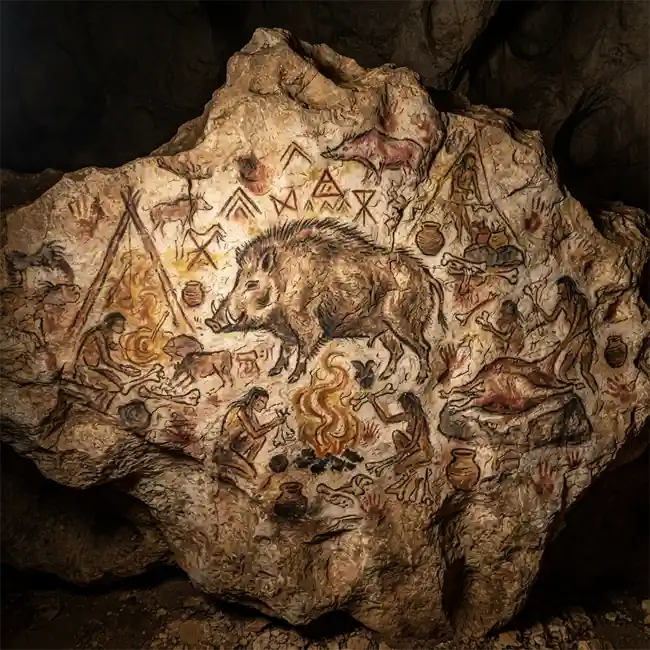
🐗 Recipe: Franco-Cantabrian Glacial Boar & Marrow Rock Feast
Get ready for an epic culinary adventure! This recipe captures the heart of prehistoric outdoor feasts, yielding a juicy, deeply seasoned wild roast coated in herbs, berries, and rich marrow fat.
📜 Echoes from the Glacial Ice
Deep within the chamber walls of the Lascaux cave in Dordogne, France, stunning rock art depicts powerful wild beasts—boars, ibex, and bison—brushed onto stone with charcoal and red ochre. Archaeological digs around these sites reveal fire-scorched river rocks, animal bones cracked open for nutrient-rich marrow, and traces of wild pine and juniper. These ancient wall paintings weren't just art; they were sacred records of life, gratitude, and communal feasts celebrated after a long, hard hunt.
🌿 Wild Foraged Essentials & The Hunter’s Pantry
• The Primitive Staples
Back in the Ice Age, the hunter’s pantry was stocked entirely by mother nature. Hunters targeted large game rich in saturated fat, such as wild boar, deer, and ancient oxen. Bone marrow was extracted and used like golden butter to baste lean meats over open flames.
For seasonings, early humans relied on the wild flora around their encampments: resinous pine needles, crushed juniper berries, earthy roots, garlic-flavored wild mustard leaves, and tangy wood sorrel.
• Modern Kitchen Substitutes
Since most of us can't trek into a glacial forest to hunt a wild boar, here is how you can easily swap in high-quality, modern grocery ingredients without losing an ounce of authentic flavor:
◦ Wild Boar Roast substitute: High-quality pork shoulder, pork collar, or venison roast.
◦ Marrow Bones substitute: Fresh beef marrow canoe bones from your local butcher.
◦ Wild Juniper Berries substitute: Dried juniper berries (easily found in the spice aisle) mixed with a tiny pinch of crushed black pepper.
◦ Crushed Pine Needles substitute: Fresh rosemary leaves paired with a touch of fresh thyme.
◦ Wild Tart Berries substitute: Fresh or frozen wild cranberries, lingonberries, or unsweetened blackberries.
◦ Rock Salt substitute: Course-ground coarse sea salt or pink Himalayan rock salt.
• Paleolithic Proportions
Here is your exact ingredient breakdown to feed a modern tribe of 4 to 6 hungry hunters:
◦ Main Protein: 1.5 kilograms of Wild Boar Roast (or Pork Shoulder / Venison Roast)
◦ Fat & Moisture Source: 500 grams of Beef Marrow Bones (scooped for pure marrow)
◦ Primary Herbal Seasoning: 2 tablespoons of finely chopped Fresh Rosemary
◦ Earthy Herbal Accent: 1 tablespoon of finely chopped Fresh Thyme
◦ Wild Berry Spice: 1.5 tablespoons of Dried Juniper Berries, coarsely crushed
◦ Tangy Glaze Element: 1 cup of Fresh Wild Cranberries or Blackberries, lightly mashed
◦ Pungent Root Accent: 4 cloves of fresh Garlic, smashed and minced
◦ Mineral Seasoning: 1.5 tablespoons of Coarse Sea Salt
◦ Crushing Oil Binder: 3 tablespoons of Cold-Pressed Extra Virgin Olive Oil or Rendered Lard
🔥 The Primitive Culinary Ritual
◦ Step 1: Prep the Ancestral Rub
Take your crushed juniper berries, chopped rosemary, chopped thyme, minced garlic, and coarse sea salt. Mix them together in a bowl with your olive oil or rendered lard to form a thick, fragrant herb paste.
◦ Step 2: Extract the Marrow
Using a small knife or spoon, scoop the rich raw bone marrow out of the beef bones. Gently mash the soft marrow directly into your herb paste until you have a smooth, decadent ancestral rub.
◦ Step 3: Score and Coat the Roast
Take your wild boar (or pork) roast and use a sharp knife to score crosshatch cuts across the top layer of fat. This allows the seasoning and melting marrow to seep deep into the meat fibers. Rub the herb-marrow paste all over the roast, massaging it into every single crack and crevice.
◦ Step 4: Layer the Wild Fruit
Spread your crushed cranberries or blackberries evenly over the top of the coated roast. The natural fruit acids will tenderize the wild meat fibers while it cooks, adding a gorgeous tangy balance to the rich fat.
◦ Step 5: Slow Fire Roasting
Preheat your oven to 320 degrees Fahrenheit / 160 degrees Celsius (or set up an outdoor charcoal grill for indirect zone cooking). Place the roast in a heavy cast-iron skillet or roasting pan. Roast slowly for about 2 to 2.5 hours until the internal temperature reaches 155 degrees Fahrenheit / 68 degrees Celsius.
◦ Step 6: High-Heat Fire Sear
Turn your oven up to 428 degrees Fahrenheit ( 220 degrees Celsius ) (or move your roast directly over hot coals) for the final 10 to 15 minutes. This creates a beautifully charred, crispy herb crust that mimics the scorching heat of ancient cave hearth stones.
◦ Step 7: The Tribe's Rest
Remove the roast from the heat and let it rest undisturbed for 15 minutes. This allows the aromatic juices to redistribute throughout the meat, ensuring every single bite is tender, moist, and wildly flavorful. Slice thick and serve warm!
🛠️ Secrets of the Ancestral Fire
Cooking like a prehistoric chef is all about mastering heat, fat, and simplicity. Here are the ultimate tips and common traps to keep in mind when preparing your feast:
◦ Control Your Heat Zones: Never cook wild meat directly over high, roaring flames from start to finish. Big open flames will burn the exterior herbs to ash while leaving the thick interior cold and tough. Build a low-heat zone for slow cooking, and save the intense heat for a quick final sear.
◦ Preserve Every Drop of Rendered Fat: When cooking lean game meats, moisture drains away fast. Always catch the rendered juices and melted marrow in a pan below the roast, and use a spoon to baste the meat every 20 minutes.
◦ Mind the Herb Burning: Delicate fresh leaves can scorch quickly. Crushing your fresh herbs into a lipid base like oil, lard, or bone marrow shields them from bitter scorching while pulling out their essential oils.
◦ Don't Skip the Resting Phase: Cutting into hot meat immediately after taking it off the fire causes all the succulent juices to spill onto your cutting board. Patience is a hunter's greatest virtue—let it rest!
💬 ❓ Paleolithic Wisdom & Secrets FAQ
Q1.Is eating wild game meat like boar and marrow safe for modern digestions?
Absolutely! High-quality wild boar and beef marrow purchased from certified butchers are clean, incredibly nutrient-dense, and completely safe. In fact, wild game is often far higher in healthy omega-3 fatty acids and protein than grain-fed commercial meats. Just make sure to cook pork or boar to a safe internal temperature of at least 155 degrees Fahrenheit / 68 degrees Celsius.
Q2.What if I don't have an outdoor open fire or cast-iron skillet?
No worries at all! While a cast-iron skillet over live coals gives you that rustic outdoor feeling, a standard home oven and a basic roasting pan will yield phenomenal results. The key is low-and-slow heat combined with a quick high-heat searing finish.
Q3.Why did ancient humans mix tart fruit berries with roasted meat?
Our ancestors quickly figured out that tart berries did two awesome things: the natural plant acids helped tenderize tough, lean wild game, and the bright, sour notes cut right through the heavy, rich taste of animal fat. Plus, it tastes fantastic!
Q4.How does this recipe fit into a modern Paleo diet lifestyle?
It fits perfectly! This recipe is 100% free from refined sugars, gluten, dairy, processed seed oils, and artificial additives. It relies entirely on whole, nutrient-dense foods that honor genuine ancestral eating principles.
🥩 The Taste of Primeval History
When you take your first bite of this feast, you aren't just tasting dinner—you are experiencing a culinary time machine.
The initial crunch reveals a smoky, salty, herb-crusted skin infused with the woody aroma of pine and juniper. Beneath that crust lies remarkably tender, juicy meat dripping with the rich, buttery goodness of rendered bone marrow. The subtle, tangy burst of tart berries breaks through the rich fat, creating an extraordinary balance of sweet, savory, earthy, and wild notes. It is bold, pure, deeply satisfying, and free from any chemical clutter. This is comfort food in its most ancient, honest form.
🧊 Final Thoughts: Taming the Ice Age in Your Modern Kitchen
Bringing the spirit of the Paleolithic age into your modern kitchen is a powerful reminder of where we come from. You don't need a cold cave in ancient Europe or a stone spear to enjoy the incredible foods that shaped human history. All you need are wholesome ingredients, a respect for basic fire techniques, and a appetite for real flavor.
So the next time you feel tired of boring, bland, over-processed weeknight meals, turn off your phone, fire up your oven or grill, and cook like your life depends on it. Transform your dining room into a tribal hearth and enjoy a true feast of legends!
🐺 The Sacred Tribe (Claim Your Ancestral Heritage)
Are you ready to step away from the modern food grid and reclaim your natural heritage? You are part of an ever-growing global tribe of passionate home cooks, Paleo enthusiasts, and outdoor adventurers who value real food made with wild soul.
Share this recipe with your friends, invite your favorite people over for a primal feast, and let us know in the comments how your roast turned out! Don't forget to subscribe to our tribe's newsletter for more forgotten prehistoric recipes, fire-cooking secrets, and ancestral food traditions delivered straight to your inbox. Stay wild, eat well, and keep the ancient fire burning!
🏛️ Credit to the Keepers of the Paleolithic Legacy
"This recipe is inspired by Paleolithic archaeological discoveries, cave art records, and preserved glacial relics from the Ice Age era (30,000 - 300,000 B.C.). We have meticulously adapted these wild, ancestral preparations for modern kitchens while honoring the untamed soul of our earliest forebears."
| 🏔️ 🧊🥩 < Back |