
🏠 Home > 🗺️ Recipes > 🍝 Main Dishes > 🇩🇰 Denmark Main Dishes Recipes
🇩🇰 🍝 Authentic Denmark Main Dishes: Traditional Nordic Classics & Hygge Food Culture
Published by Supakorn | Updated: November 2026
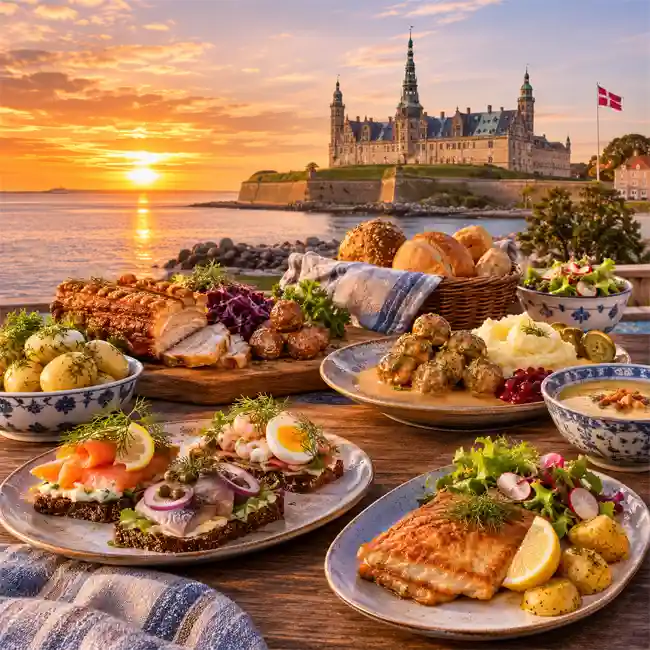
🏳️🌈🍽️ Introduction: The Cultural Heritage of Denmark Main Dishes
When people think about Denmark, they often picture charming cobblestone streets, colorful waterfront houses, cozy countryside villages, and a relaxed Scandinavian lifestyle. But there is another wonderful part of Danish culture that deserves just as much attention: its traditional food.
Denmark main dishes reflect a fascinating combination of Nordic history, agricultural traditions, coastal living, and a deep appreciation for simple, satisfying meals. Danish cuisine is not necessarily about complicated presentations or extravagant ingredients. Instead, it celebrates fresh seasonal produce, locally sourced meats, seafood, hearty vegetables, and time-honored cooking methods that have been passed down through generations.
Traditional Danish food developed around the country's natural environment. With a relatively cool climate, fertile farmland, and an extensive coastline, Denmark has long relied on pork, potatoes, rye bread, fish, dairy products, and preserved ingredients.
These everyday staples gradually became the foundation of Danish home cooking. Many traditional recipes were originally created to make the most of available ingredients, reduce food waste, and provide enough nourishment for families working on farms or living in fishing communities.
Today, Danish cuisine continues to balance tradition with modern creativity. Classic dishes remain popular in family homes, traditional restaurants, neighborhood cafés, and local food markets. At the same time, contemporary Danish chefs are finding new ways to celebrate familiar ingredients while maintaining the distinctive character of Nordic cooking.
Whether you are exploring Copenhagen for the first time, traveling through the countryside, or simply curious about Scandinavian food, discovering Denmark's traditional main dishes offers a delicious introduction to the country's identity.
🏡 The Art of Danish Dining Culture & Social Eating
One of the most charming aspects of Danish food culture is the importance of enjoying meals together. Eating is not simply something people do to satisfy hunger. It is also an opportunity to slow down, connect with family and friends, and enjoy everyday life.
A particularly meaningful Danish concept is hygge, which describes a feeling of comfort, warmth, and togetherness. Although hygge can be experienced in many different situations, sharing a homemade meal around a welcoming dining table is one of its most recognizable expressions.
Traditional Danish households often favor practical, comforting dishes that can be enjoyed by everyone. A family dinner might include roasted pork, boiled potatoes, creamy gravy, and seasonal vegetables. On another evening, the table might feature meatballs, a simple salad, or a hearty potato-based dish.
Lunch also has an important place in Danish dining traditions. One of the country's best-known lunchtime customs revolves around smørrebrød, an open-faced sandwich served on dense rye bread and topped with carefully arranged ingredients.
Rather than treating food as something that must always be elaborate, Danish dining emphasizes balance, quality, and enjoyment.
Some familiar characteristics of Danish eating culture include:
◦ Family-style meals: Traditional home cooking often brings several generations together around familiar dishes.
◦ Seasonal ingredients: Local vegetables, root crops, fish, and fresh produce influence everyday menus throughout the year.
◦ Comforting portions: Many traditional main dishes are filling and practical, reflecting the country's agricultural heritage.
◦ Simple presentation: Good ingredients and recognizable flavors are often more important than complicated decoration.
◦ Shared food traditions: Holidays, family celebrations, and special gatherings frequently revolve around traditional recipes.
Another interesting feature is the Danish appreciation for everyday routines. Breakfast, lunch, and dinner each have their own familiar food traditions, creating a recognizable rhythm that connects modern life with older generations.
For visitors, experiencing a traditional Danish meal is a wonderful way to understand the country's relaxed lifestyle and appreciation for quality time.
🗺️ Where Culture Meets Flavor: Iconic Food Tourism Spots
Food and travel are closely connected in Denmark. Different regions offer their own culinary character, shaped by local ingredients, historical communities, and geographical surroundings.
Copenhagen is an excellent starting point for anyone interested in traditional Danish cuisine. The capital combines historic food customs with contemporary Nordic dining. Visitors can explore traditional restaurants, neighborhood cafés, food halls, and market areas where classic Danish dishes sit alongside modern interpretations.
One of the most recognizable destinations is Torvehallerne, a popular covered market where visitors can discover Danish specialties, local produce, baked goods, and everyday food favorites.
The historic streets of central Copenhagen also offer opportunities to experience traditional open-faced sandwiches and familiar Danish comfort food.
Aarhus, Denmark's second-largest city, provides another interesting culinary experience. Its combination of urban culture, coastal surroundings, and regional food traditions makes it an appealing destination for travelers who want to explore modern Danish dining alongside traditional favorites.
Odense, located on the island of Funen, offers a charming connection to Danish history and countryside food culture. The region is associated with agricultural traditions, local produce, and classic home cooking.
Bornholm, an island in the Baltic Sea, has a distinctive culinary identity influenced by fishing communities and island life. Traditional smoked fish, particularly smoked herring, is an important part of its regional food heritage.
Meanwhile, the coastal areas of Jutland offer a closer look at Denmark's relationship with the sea. Local seafood, fish preparations, and simple countryside meals reflect the practical traditions of communities that have depended on fishing and farming for generations.
Exploring these destinations allows travelers to understand that Danish food is more than a collection of famous recipes. It is a reflection of regional landscapes, local communities, and everyday Scandinavian life.
🥘 Top Iconic Denmark Main Dishes Specialties
Danish cuisine features many recognizable dishes that combine simple ingredients with satisfying flavors. Some are closely associated with family dinners, while others are popular lunchtime favorites or traditional specialties enjoyed during celebrations.
Here are some of the most iconic traditional Danish main dishes and food specialties worth discovering.
🥪 1. Smørrebrød – Denmark's Famous Open-Faced Sandwich
Smørrebrød is arguably one of the most recognizable symbols of Danish food culture.
This traditional open-faced sandwich starts with a slice of dense Danish rye bread, commonly known as rugbrød. It is topped with a carefully selected combination of ingredients, creating a satisfying meal that can range from simple and rustic to beautifully presented.
Popular toppings include sliced roast beef, pickled herring, boiled eggs, shrimp, potatoes, liver pâté, and fresh vegetables.
What makes smørrebrød special is the attention given to its arrangement. Each topping is selected to complement the bread, textures, and accompanying flavors.
Although it is often enjoyed for lunch, certain substantial versions can be satisfying enough to serve as a light main meal.
For travelers exploring Denmark, smørrebrød is an essential introduction to the country's culinary identity.
🍖 2. Stegt Flæsk med Persillesovs – Crispy Pork with Parsley Sauce
Stegt flæsk med persillesovs is widely recognized as one of Denmark's most beloved traditional dishes.
It consists of slices of pork belly cooked until golden and crispy, traditionally served with boiled potatoes and a creamy parsley sauce.
The contrast between the crisp pork, soft potatoes, and fresh herbal sauce creates a wonderfully comforting combination.
This dish reflects the historical importance of pork in Danish agriculture and home cooking. For generations, pork has been a familiar ingredient in Danish kitchens, making it an important part of the country's traditional food heritage.
Stegt flæsk is particularly popular among people looking to experience authentic Danish comfort food rather than contemporary restaurant interpretations.
🍽️ 3. Frikadeller – Traditional Danish Meatballs
Frikadeller are classic Danish pan-fried meatballs that appear regularly in family kitchens and traditional restaurants.
Usually prepared with ground pork or a mixture of pork and beef, these meatballs have a tender interior and a lightly browned exterior.
They are commonly served with boiled potatoes, brown gravy, pickled vegetables, or cabbage-based side dishes.
Unlike some other European meatball varieties, Danish frikadeller are typically shaped into slightly flattened oval portions before cooking.
Their popularity comes from their versatility. They can be served as part of a traditional evening meal, packed into lunchboxes, or enjoyed cold as part of a smørrebrød topping.
For many Danish families, frikadeller represent the familiar taste of home cooking.
🐟 4. Fiskefrikadeller – Danish Fish Cakes
Fiskefrikadeller are traditional Danish fish cakes that showcase the country's strong connection with coastal food traditions.
Typically made with white fish such as cod or other locally available varieties, these fish cakes have a soft texture and mild flavor.
They are commonly accompanied by boiled potatoes, remoulade, lemon, fresh vegetables, or a simple salad.
Fiskefrikadeller are especially interesting because they demonstrate how Danish cuisine transforms fresh seafood into practical everyday meals.
They are also a popular option for people who want to explore traditional Danish food beyond the country's famous pork dishes.
🥔 5. Biksemad – A Classic Danish Comfort Food
Biksemad is a traditional Danish skillet dish that makes excellent use of leftover ingredients.
Its name is commonly associated with a mixture of chopped food, and the dish typically includes diced potatoes, pieces of cooked meat, and onions fried together in a pan.
Beef or pork may be used, depending on what is available.
The finished dish is often served with a fried egg and pickled beetroot, creating a combination of savory, crispy, and slightly tangy flavors.
Biksemad has a particularly interesting connection with traditional household cooking because it reflects the Danish habit of making practical use of leftover food.
It is uncomplicated, filling, and deeply connected to everyday comfort food culture.
🍖 6. Flæskesteg – Traditional Danish Roast Pork
Flæskesteg is a famous Danish roast pork dish traditionally prepared with the skin left on.
The skin is carefully scored and roasted until it develops a crunchy crackling texture, while the meat remains tender and flavorful.
It is commonly served with boiled potatoes, brown gravy, and traditional accompaniments such as caramelized potatoes and red cabbage.
Flæskesteg holds a particularly important place in Danish holiday dining, especially during Christmas celebrations.
Its combination of crispy skin, tender meat, and familiar side dishes makes it one of the country's most recognizable festive meals.
🥩 7. Hakkebøf med Bløde Løg – Danish Beef Patties with Soft Onions
Hakkebøf med bløde løg is a traditional Danish meal featuring a pan-fried ground beef patty topped with soft, slowly cooked onions.
It is generally accompanied by potatoes and brown gravy, creating a simple but satisfying combination.
The onions are an important part of the dish because their sweetness complements the savory flavor of the beef.
This traditional meal is particularly representative of Danish home cooking, where everyday ingredients are transformed into familiar family favorites.
🍛 8. Boller i Karry – Danish Meatballs in Curry Sauce
Boller i karry is an interesting example of how international influences became part of traditional Danish home cooking.
The dish consists of meatballs served in a mild, creamy curry sauce, usually accompanied by rice.
Although curry is not originally Danish, this preparation became a familiar comfort food in Danish households during the development of modern home cooking traditions.
Its flavor is generally gentle rather than intensely spicy, making it popular with children and adults alike.
Boller i karry demonstrates that Danish cuisine has evolved over time while maintaining its preference for comforting, practical meals.
🥓 9. Æbleflæsk – Pork and Apples
Æbleflæsk is a traditional Danish preparation combining pork with apples and onions.
The dish brings together savory meat and the natural sweetness of cooked apples, creating an interesting balance of flavors.
It has historical associations with the island of Funen, where apples have played an important role in local food traditions.
Æbleflæsk is particularly associated with autumn and winter meals, when apples are widely available.
It is also a wonderful example of how Danish cooking uses seasonal ingredients to create distinctive regional specialties.
🌭 10. Danish Hot Dogs – A Beloved Street Food Classic
Although Danish hot dogs are often considered street food rather than formal main dishes, they are an essential part of the country's everyday food culture.
A traditional Danish hot dog typically features a sausage served in a bun or on its own, accompanied by toppings such as mustard, ketchup, remoulade, crispy fried onions, raw onions, and pickled cucumber.
The combination of textures and sauces gives Danish hot dogs their distinctive character.
Street-side hot dog stands have long been part of the urban landscape, particularly in Copenhagen.
For visitors, trying a traditional Danish hot dog is an easy and enjoyable way to experience local food culture.
🐟 11. Stegt Sild – Danish Fried Herring
Stegt sild is a traditional preparation of herring that reflects Denmark's long relationship with fishing and seafood preservation.
The fish is typically fried and may be served with onions, potatoes, or traditional pickled accompaniments.
Herring has historically been an important source of food in coastal Scandinavian communities, and it continues to hold an important place in Danish culinary heritage.
The dish is particularly interesting for visitors who want to discover the country's traditional seafood flavors.
🥔 12. Brændende Kærlighed – Danish Mashed Potato Comfort Food
Brændende kærlighed, which translates to burning love, is a traditional Danish comfort dish made with mashed potatoes and crispy fried bacon or pork.
It is often topped with sautéed onions and served with pickled beetroot.
The name gives the dish a memorable identity, while its simple combination of familiar ingredients makes it especially comforting.
This is a wonderful example of traditional Danish home cooking, where inexpensive ingredients become a hearty and satisfying meal.
🥬 13. Forloren Hare – Danish Mock Hare Meatloaf
Forloren hare is a traditional Danish meatloaf-style dish whose name translates to mock hare.
Despite the name, it is generally prepared using ground meat rather than hare.
The mixture is shaped into a loaf and baked, often with bacon added to provide extra flavor and moisture.
It is traditionally served with potatoes, brown gravy, and vegetables.
Forloren hare has a long-standing place in Danish family dining and is particularly associated with traditional home-style meals.
🍲 14. Gule Ærter – Traditional Danish Yellow Pea Soup
Gule ærter is a hearty yellow pea soup with deep roots in traditional Danish food culture.
It is commonly prepared with dried yellow peas, vegetables, and pork, creating a thick and nourishing meal.
Depending on the regional or household tradition, the dish may include different vegetables and cuts of meat.
Historically, dried peas were useful ingredients because they could be stored for extended periods, making them practical for colder seasons.
Gule ærter remains an interesting example of Denmark's traditional approach to preserving ingredients and preparing warming meals.
🍮 15. Risalamande – A Classic Danish Christmas Dessert
Although risalamande is a dessert rather than a main dish, it deserves a place in any discussion of traditional Danish dining because of its cultural importance.
This creamy rice dessert is traditionally prepared with rice pudding, whipped cream, chopped almonds, and vanilla.
It is commonly served during Christmas celebrations with warm cherry sauce.
An interesting tradition involves hiding a whole almond in the dessert. The person who discovers it receives a small gift, making the dessert part of a playful family celebration.
Risalamande demonstrates how Danish food traditions extend beyond everyday meals into seasonal celebrations and shared family memories.
🌿 Flavor Profile: What Makes Denmark Main Dishes Unique?
The distinctive character of Danish cuisine comes from its relationship with the Nordic environment and its preference for balanced, recognizable flavors.
Rather than relying heavily on intense seasoning, many traditional Danish dishes emphasize the natural taste of their main ingredients.
Several characteristics help define traditional Danish food:
◦ Savory and comforting: Pork, beef, fish, and potatoes are frequently combined to create satisfying meals.
◦ Creamy textures: Dairy products, butter, and cream are commonly used in traditional sauces and side dishes.
◦ Fresh herbal notes: Parsley, dill, and other herbs provide freshness and balance.
◦ Sweet and savory combinations: Apples, caramelized onions, pickled vegetables, and meat often appear together.
◦ Preserved flavors: Pickling, salting, and smoking contribute distinctive flavors to traditional dishes.
◦ Earthy ingredients: Rye bread, root vegetables, cabbage, and potatoes reflect the agricultural character of Danish cooking.
One especially interesting aspect is the balance between richness and acidity. For example, crispy pork may be served with a fresh parsley sauce, while savory meatballs may accompany tangy pickled vegetables.
These combinations help prevent traditional meals from feeling overly heavy.
🧺 Essential Ingredients & Traditional Cooking Techniques
Understanding the ingredients behind Danish cuisine makes it easier to appreciate why its traditional dishes have remained popular for generations.
Denmark's agricultural landscape, cool climate, and surrounding waters have shaped the ingredients that appear most frequently in its kitchens.
🥕 Signature Spices & Local Ingredients
Traditional Danish cooking often depends on a relatively straightforward collection of ingredients rather than an extensive selection of strong spices.
Some of the most important ingredients include:
◦ Pork: One of the most recognizable foundations of Danish traditional cooking, used in roast dishes, meatballs, bacon-based meals, and sausages.
◦ Beef: Commonly featured in ground beef patties, meatloaf, and traditional family dinners.
◦ Fish and seafood: Herring, cod, plaice, and other seafood varieties reflect Denmark's coastal geography.
◦ Potatoes: A staple ingredient that appears in roasted, boiled, mashed, and fried preparations.
◦ Rye bread: Dense, nutritious rugbrød is an essential part of Danish lunch culture.
◦ Cabbage: White cabbage and red cabbage are traditional vegetables used in side dishes and seasonal meals.
◦ Apples: Particularly important in regional cooking and traditional sweet-and-savory combinations.
◦ Dairy products: Milk, cream, butter, and other dairy ingredients contribute to sauces and baked foods.
◦ Onions: Frequently used to develop sweetness and savory depth in traditional dishes.
◦ Fresh herbs: Parsley and dill are familiar ingredients that bring freshness to Nordic meals.
In terms of seasoning, Danish cooking commonly uses salt, black pepper, mustard, and selected herbs. Some recipes also incorporate bay leaves, nutmeg, or mild curry seasoning.
The overall approach is to enhance the natural flavors of ingredients rather than overpower them.
🔥 Time-Honored Cooking Methods
Traditional Danish cooking developed around methods that were practical for rural households and fishing communities.
Many of these techniques remain important in modern Danish kitchens.
1. Roasting
Roasting is especially important for pork dishes such as flæskesteg. The technique allows the meat to develop a rich flavor while creating the famous crispy crackling on the surface.
2. Pan-Frying
Pan-frying is widely used for frikadeller, fiskefrikadeller, hakkebøf, and other everyday dishes. It creates a browned exterior while keeping the interior tender.
3. Boiling and Simmering
Potatoes, vegetables, soups, and meat-based preparations are frequently cooked through boiling or gentle simmering.
This approach is particularly useful for traditional dishes that emphasize soft textures and comforting flavors.
4. Pickling and Preservation
Pickling has historically been an important part of Danish food culture.
Vegetables and fish could be preserved to extend their availability beyond the harvesting or fishing season.
Pickled cucumber, beetroot, and herring remain familiar elements of traditional Danish meals.
5. Smoking
Smoking has a long history in Danish coastal communities, particularly for fish.
Bornholm is especially well known for its smoked fish traditions, making this cooking method an important part of the island's culinary identity.
6. Baking
Bread is another essential part of Danish food culture. Traditional rye bread is particularly significant, while pastries and baked goods demonstrate the country's long-standing appreciation for bakery craftsmanship.
Together, these techniques reveal how Danish cuisine developed through practicality, seasonal awareness, and respect for local ingredients.
🇩🇰❓ Frequently Asked Questions (FAQ)
Q1. What Are the Most Famous Traditional Danish Main Dishes?
Some of the most famous traditional Danish dishes include stegt flæsk med persillesovs, frikadeller, flæskesteg, hakkebøf med bløde løg, biksemad, and fiskefrikadeller.
Smørrebrød is also an essential Danish specialty, particularly for lunch.
These dishes represent the country's agricultural traditions, coastal food heritage, and everyday home cooking.
Q2. What Do Danish People Traditionally Eat for Dinner?
Traditional Danish dinners often include pork, beef, fish, potatoes, vegetables, and gravy.
Popular meals include Danish meatballs with potatoes, roast pork with red cabbage, and beef patties topped with soft onions.
The exact menu varies between households and seasons, but traditional Danish dinners generally emphasize comforting ingredients and satisfying portions.
Q3. What Is Denmark's Most Famous Traditional Food?
Smørrebrød is probably Denmark's most internationally recognizable food specialty.
It consists of rye bread topped with ingredients such as fish, meat, eggs, cheese, or vegetables.
However, stegt flæsk med persillesovs is also particularly important as a traditional Danish national dish.
Q4. Where Can Travelers Experience Authentic Danish Food?
Copenhagen is one of the best places to explore traditional Danish cuisine, with its historic restaurants, neighborhood cafés, and food markets.
Aarhus and Odense also offer opportunities to discover Danish food traditions.
For regional specialties, Bornholm is particularly interesting because of its traditional smoked fish heritage and strong connection with coastal food culture.
🏛️ Culinary Heritage & Credit to Denmark Traditions
Denmark's culinary heritage is built on centuries of agricultural knowledge, coastal traditions, regional ingredients, and family recipes.
Many dishes that are considered everyday comfort food today originally developed because Danish households needed practical ways to prepare nourishing meals using ingredients that were locally available.
Pork, potatoes, rye bread, fish, cabbage, and dairy products became essential elements of this food culture. Over time, traditional cooking methods and family preferences transformed these basic ingredients into dishes that are now closely associated with Danish identity.
What makes Danish cuisine particularly interesting is its ability to preserve tradition while welcoming change.
Classic dishes such as frikadeller, stegt flæsk, and flæskesteg continue to connect modern generations with their culinary past. Meanwhile, younger chefs and contemporary restaurants are finding creative ways to reinterpret Nordic ingredients without losing their cultural significance.
Regional food traditions also deserve recognition. The coastal communities of Jutland, the agricultural landscapes of Funen, the urban food culture of Copenhagen, and the island traditions of Bornholm each contribute something distinctive to Denmark's culinary story.
For travelers, discovering these foods is about more than simply trying something new. It is an opportunity to understand how geography, history, family life, and local customs influence what people eat.
Most importantly, Danish food culture reminds us that a memorable meal does not always need complicated ingredients or elaborate preparation. Sometimes, the best experiences come from familiar food, carefully selected ingredients, and good company around the table.
From a traditional plate of crispy pork and potatoes to beautifully arranged smørrebrød, Denmark main dishes offer an authentic taste of Nordic heritage, everyday comfort, and the unmistakable spirit of Danish hygge.
🍝 Discover Denmark's Most Delicious Low-Carb Comfort Food
👉 Cook Traditional Danish Main Dishes
| 🌐 🍝 < Back | 🇩🇰 🥪 < Previous | Next > 🍨 🇩🇰 |