
🏠 Home > 🗺️ Recipes > 🥪 Appetizers > 🇩🇰 Denmark Appetizers Recipes
🇩🇰 🥪 Authentic Denmark Appetizers: Smørrebrød & Hygge Table Style
Published by Supakorn | Updated: November 2026
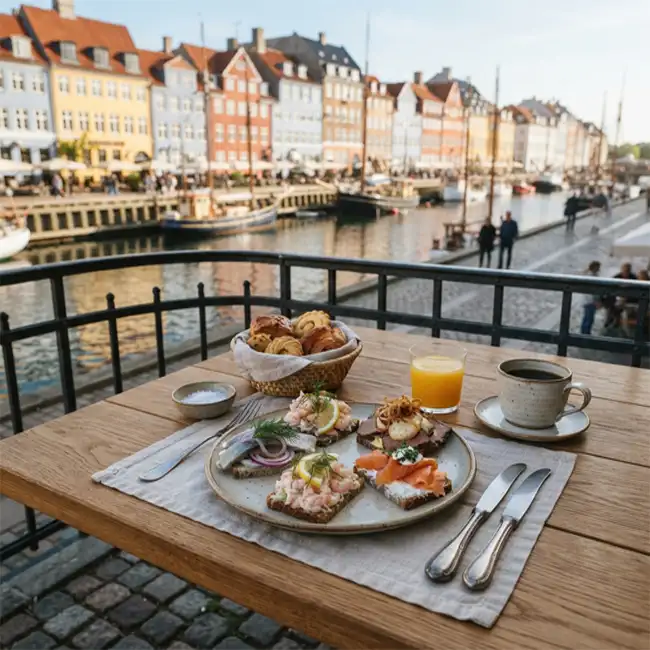
🇩🇰🏰 Introduction: The Cultural Heritage of Denmark Appetizers
When people think of Denmark, they usually picture colorful harbor houses, bikes everywhere, and, of course, the famous Danish pastry. But there's a whole other side of Danish food that doesn't get nearly enough attention: the appetizers. These are the small, savory, beautifully put-together bites that Danes have been perfecting for generations.
Danish appetizers aren't about tiny fussy canapés you eat in one bite and forget. They're hearty and honest. They're built on dark rye bread, cold-water fish, good butter, and toppings stacked so neatly they look like little works of art. Many of them come from a time when Danish families had to make it through long, dark winters, so preserving food by pickling, curing, and smoking became an everyday skill.
These traditional starters reflect what Denmark is all about:
• Practicality: Nothing gets wasted. Leftover roast pork, boiled potatoes, and yesterday's meatballs all get a second life on rye bread.
• Seasonality: Spring brings new potatoes and fresh shrimp, summer brings strawberries and herbs, and winter brings rich pâtés and pickled fish.
• Coziness: Food is meant to be shared slowly, around a table, with candles lit and nobody in a rush.
• Craftsmanship: Even the simplest open-faced sandwich gets arranged with care. Danes really do eat with their eyes first.
So grab a seat, get comfy, and let's dig into the delicious world of Denmark's appetizers together.
🕯️ The Art of Denmark Dining Culture & Social Eating
You can't talk about Danish food without talking about hygge. It's hard to translate, but it roughly means a warm, cozy, content feeling you get when you're relaxed with people you like. Food sits right at the heart of it.
Here's what eating together actually looks like in Denmark:
• The long lunch (frokost): In Denmark, lunch is where the appetizer-style dishes really shine. A traditional Danish lunch can stretch over several hours, especially on weekends or holidays, with platters of fish, meats, and bread passed around the table.
• Det kolde bord (the cold table): This is the Danish version of a buffet spread, with bowls and platters of pickled herring, cold cuts, salads, pâtés, and breads. Everyone builds their own little open-faced sandwiches as they go.
• There's an order to things: Danes usually eat in a set sequence. Fish first (especially herring), then other seafood like shrimp or fried fish fillets, then meat dishes like pâté and meatballs, and finally cheese. Jumping straight to the meat before the herring? Your Danish friends might give you a playful look.
• Fresh plates between courses: At a proper spread, you often switch plates when moving from fish to meat so the flavors don't mix.
• Knife and fork, please: Smørrebrød is not finger food. Even though it's technically a sandwich, you eat it with cutlery. Picking it up with your hands is a classic tourist move.
• Holiday feasts: Christmas lunch (julefrokost) and Easter lunch (påskefrokost) are big deals. Families and coworkers gather around long tables packed with traditional starters, and these meals can easily last all afternoon.
• Candles all year round: Danes burn more candles per person than almost anyone else on Earth. Even at a casual lunch, you'll often find a few lit on the table.
The vibe is relaxed, social, and unhurried. Food is the excuse to sit together, talk, laugh, and enjoy the moment.
🗺️ Where Culture Meets Flavor: Iconic Food Tourism Spots
If you're planning a trip and want to taste authentic Danish appetizers right where they come from, here are some spots worth putting on your list:
◦ Copenhagen's classic lunch houses: The capital is home to historic smørrebrød restaurants, some dating back more than a century. They serve dozens of open-faced sandwich combinations from long handwritten menus, often in cozy basement dining rooms with low ceilings and old wooden furniture.
◦ Torvehallerne, Copenhagen: This glass-covered food market is a dream for food lovers. You'll find modern smørrebrød stalls, fresh fish counters, cheese shops, and bakeries selling proper rye bread.
◦ Nyhavn, Copenhagen: The postcard-perfect canal lined with colorful houses. It's touristy, sure, but sitting by the water with a plate of shrimp on rye is a classic experience.
◦ Reffen Street Food, Copenhagen: A huge, laid-back harbor-side street food area where Nordic flavors meet global cuisine. You'll find modern spins on Danish snacks next to food from all over the world.
◦ The pølsevogn (hot dog wagon): Danish street food at its most iconic. These little carts sell bright red sausages and "ristet hot dogs" piled with remoulade, ketchup, mustard, crispy fried onions, and pickled cucumber slices. A must-try snack.
◦ Bornholm Island: This Baltic island is famous for its smokehouses, with tall white chimneys rising over towns like Gudhjem and Hasle. It's the birthplace of the legendary "Sol over Gudhjem" (more on that below).
◦ Aarhus Street Food: Denmark's second-largest city has a lively food hall scene where you can try both traditional and creative takes on Danish starters.
◦ Skagen, North Jutland: At the northern tip of Denmark, where two seas meet, this fishing town is known for super fresh shrimp and fish, perfect for seafood-topped open sandwiches.
◦ Limfjord region: Known for mussels and oysters. Seafood lovers should definitely stop here.
◦ Odense, Funen: The hometown of Hans Christian Andersen is also great for cozy traditional cafés serving classic Danish lunch dishes.
Traveling through Denmark by its food is honestly one of the best ways to understand the country. Each region adds its own twist depending on what the land and sea give them.
🌟 Top Iconic Denmark Appetizers Specialties
Okay, here's the fun part. These are the must-try Danish appetizers and traditional starters that you'll see again and again across the country.
◦ 🥪 Smørrebrød (Open-Faced Sandwiches): The undisputed king of Danish appetizers. The name literally means "butter and bread." It starts with a thin slice of dense rye bread spread with butter or fat, then gets topped with anything from fish to meat to eggs, all neatly arranged and garnished. There are hundreds of combinations, and each one has its own personality.
◦ 🐟 Marinerede Sild (Pickled Herring): Herring has been a Danish staple for centuries. It's cured in a sweet-and-sour vinegar brine with onions and spices, and it's usually the very first thing you eat at a traditional lunch. You'll find several versions, like classic clear-brine herring, red herring, and herring in creamy sauces.
◦ 🍛 Karrysild (Curry Herring): A surprisingly popular twist: pickled herring in a creamy, mildly sweet curry sauce, often served with raw onion rings, capers, and a sliced hard-boiled egg. It sounds unusual, but it's addictive.
◦ ☀️ Sol over Gudhjem ("Sun over Gudhjem"): A famous Bornholm specialty. It's smoked herring on rye bread topped with a raw egg yolk (the "sun"), chopped radishes, chives, and raw onion. It's named after the little fishing town where it was born.
◦ ⭐ Stjerneskud ("Shooting Star"): A seriously generous open-faced sandwich. It has one steamed and one fried fillet of plaice on buttered white bread, piled with shrimp, a swirl of dressing, caviar or lumpfish roe, asparagus, and a lemon wedge. It's fancy, fun, and very Danish.
◦ 🦐 Rejer på Rugbrød (Shrimp on Rye): Small, sweet cold-water shrimp heaped high on buttered bread, often with mayo, dill, and lemon. Locals sometimes call it "the shrimp mountain" when it's piled extra high.
◦ 🍖 Frikadeller (Danish Meatballs): Flattened, pan-fried meatballs usually made from minced pork, onion, eggs, and breadcrumbs. They're eaten warm or cold, and a cold frikadelle on rye with pickled red cabbage is a total classic.
◦ 🐠 Fiskefrikadeller (Fish Cakes): The seafood cousin of frikadeller. They're golden pan-fried fish cakes that are usually served with remoulade and a lemon wedge. They're super popular on rye bread too.
◦ 🥖 Leverpostej (Liver Pâté): A warm or cold baked pork liver pâté that's practically a national treasure. It's often topped with crispy bacon, sautéed mushrooms, or pickled beets. Kids and grandparents alike love it.
◦ 🩺 Dyrlægens Natmad ("The Vet's Midnight Snack"): Possibly the best name for a sandwich ever. It has liver pâté, salted beef, meat jelly (aspic), raw onion rings, and cress, all stacked on rye. The story goes that it was created for a local veterinarian's late-night snack.
◦ 🥔 Kartoffelmad (Potato Sandwich): Thin slices of cold boiled new potatoes on rye bread, topped with mayo, crispy fried onions, chives, and sometimes radishes. It's simple, cheap, and delicious, especially in early summer when new potatoes are in season.
◦ 🥩 Roastbeef Smørrebrød: Rare roast beef on rye topped with remoulade, crispy fried onions, grated horseradish, and pickles. Big flavor, lots of crunch.
◦ 🌀 Rullepølse (Rolled Pork): A spiced, rolled, and pressed pork cold cut, sliced thin and served on rye with meat jelly and raw onion.
◦ 🥧 Tarteletter (Puff Pastry Shells): Crispy little pastry cups filled with a creamy chicken and white asparagus stew. They're a nostalgic favorite at family gatherings and holiday lunches.
◦ 🍗 Hønsesalat (Chicken Salad): A creamy chicken salad, often with mushrooms, asparagus, and crispy bacon, served on rye or in tarteletter.
◦ 🐟 Røget Laks & Gravad Laks (Smoked & Cured Salmon): Silky salmon served with dill, mustard sauce, and scrambled eggs or on rye bread. It's elegant and super popular as a starter.
◦ 🌭 Ristet Hot Dog: The street-food appetizer of champions. A grilled sausage in a bun loaded with toppings, grabbed from a pølsevogn on any busy street corner.
If you're new to Danish food, start with smørrebrød, pickled herring, and frikadeller. That trio gives you a perfect introduction.
👅 Flavor Profile: What Makes Denmark Appetizers Unique?
So what do Danish appetizers actually taste like? Here's the honest breakdown:
• Sweet and sour balance: Pickled herring, pickled cucumbers, red cabbage, and beets all bring a tangy sweetness that cuts through richer foods. This sweet-sour contrast shows up everywhere.
• Rich and buttery: Danes don't hold back on butter. It forms the base of nearly every open-faced sandwich and acts as a delicious barrier that keeps the bread from getting soggy.
• Earthy and hearty: Dark rye bread gives that deep, slightly sour, nutty flavor that grounds everything sitting on top of it.
• Smoky and salty: Smoked fish, cured meats, and salted herring bring a coastal, oceanic saltiness that reflects Denmark's deep connection to the sea.
• Fresh and herby: Dill, chives, cress, and parsley add brightness to balance the heavier elements.
• Creamy: Remoulade, mayo, curry dressing, and mustard sauces add a smooth richness.
• Crunchy: Crispy fried onions, raw onion rings, radishes, and crisp bacon add texture so every bite is interesting.
• Mild, not spicy: Danish food is generally gentle on heat. Instead of chili, the "kick" comes from mustard, horseradish, raw onion, and vinegar.
The magic is in the contrast. You get soft and crunchy, rich and tangy, salty and sweet, all in a single bite. That's what makes Danish appetizers so satisfying and so memorable.
🧺 Essential Ingredients & Traditional Cooking Techniques
To really appreciate Danish appetizers, it helps to understand the building blocks behind them. These aren't fancy imported luxuries. They're humble, local ingredients transformed through smart, time-tested methods.
🌿 Signature Spices & Local Ingredients
Here are the core ingredients that give traditional Danish starters their character:
• Rugbrød (Danish Rye Bread): The foundation of it all. It's dense, dark, sour, and packed with whole grains and seeds. It's nothing like soft sandwich bread. It's hearty enough to hold heavy toppings without falling apart.
• Butter: Danish dairy is world-famous, and good salted butter is spread generously on almost everything.
• Herring: The fish that fed Denmark for centuries. It's affordable, plentiful, and perfect for pickling and smoking.
• Cold-water shrimp: Small, sweet, and delicate, usually from the North Atlantic.
• Plaice and other white fish: Used in fried fillets and fish cakes.
• Salmon and eel: Often smoked and served as a more luxurious starter.
• Pork: Denmark is a major pork producer, so pork shows up in frikadeller, liver pâté, rolled pork, and more.
• Dill: Probably the most "Danish" herb of all, especially paired with fish and potatoes.
• Chives, cress, and parsley: Fresh green garnishes that brighten up every plate.
• Mustard: Both sweet Danish mustard and grainy styles appear often.
• Horseradish: Freshly grated, it adds a sharp, nose-tingling bite to roast beef and fish.
• Remoulade: A mayo-based sauce with chopped pickles, mild curry, and turmeric. It's yellow, tangy, and goes on everything from fish cakes to hot dogs.
• Allspice, bay leaf, and peppercorns: Classic pickling spices used in herring brines.
• Curry powder: A surprising but beloved addition, especially in curry herring and remoulade.
• Onions: Raw, pickled, or crispy fried. Onions are absolutely everywhere.
• Beets and red cabbage: Usually pickled, adding sweet-tangy color.
• Cucumbers: Thinly sliced and quick-pickled as agurkesalat.
• New potatoes: A seasonal celebration in early summer.
• Lumpfish roe: Little red or black fish eggs used as a pretty, salty garnish.
• Eggs: Hard-boiled, scrambled, or raw yolk on top, depending on the dish.
🔥 Time-Honored Cooking Methods
These techniques have been passed down through generations of Danish home cooks:
◦ Pickling: Before refrigerators, pickling was essential for surviving long winters. Herring, cucumbers, beets, and red cabbage are all preserved in sweet-sour vinegar brines. Today it's done for flavor as much as for preservation.
◦ Curing: Salmon gets cured with salt, sugar, and plenty of dill to create gravad laks. Herring is first salted, then soaked and marinated.
◦ Smoking: Bornholm's smokehouses are famous for hot-smoking herring over alder wood, which gives a golden color and gentle smoky flavor. Salmon and eel are also smoked throughout the country.
◦ Sourdough rye baking: Rugbrød is traditionally made with a sourdough starter, often kept alive and shared within families for years. The bread is baked slowly in loaf tins to get that dense, moist crumb.
◦ Pan-frying in butter: Frikadeller, fish cakes, and plaice fillets are all fried until golden in butter or a mix of butter and oil.
◦ Baking: Liver pâté is baked in tins, often in a water bath, until it's smooth and set. Tarteletter shells are baked until crisp and flaky.
◦ Rolling and pressing: Rullepølse is made by seasoning a flat piece of pork, rolling it tightly, cooking it, and pressing it so it slices neatly.
◦ The art of assembly: This might sound minor, but building smørrebrød properly is a real skill. Professional smørrebrød makers (yes, it's a trained profession in Denmark) learn how to balance colors, textures, and heights so each sandwich looks as good as it tastes.
These methods show how Danish cooks turned the limits of a cold northern climate into a cuisine full of character, flavor, and creativity.
🦢❓ Frequently Asked Questions (FAQ)
Q1. What is the most famous Danish appetizer?
The most famous Danish appetizer is smørrebrød, the classic open-faced sandwich made on buttered rye bread. It comes with countless toppings, like pickled herring, shrimp, liver pâté, roast beef, or potatoes. It's considered a national dish and a must-try for anyone visiting Denmark.
Q2. How do you eat smørrebrød the traditional way?
You eat smørrebrød with a knife and fork, not with your hands. Traditionally, you start with fish toppings (especially herring), move on to other seafood, then meat-based sandwiches, and finish with cheese. Take your time, because it's meant to be enjoyed slowly with good company.
Q3. Are Danish appetizers spicy?
Not really. Danish appetizers are generally mild. Instead of chili heat, they get their punch from mustard, horseradish, raw onion, vinegar, and pickles. The overall flavor is balanced, savory, slightly tangy, and comforting rather than fiery.
Q4. Are there vegetarian Danish appetizers?
Yes! Some great vegetarian-friendly options include kartoffelmad (potato on rye with mayo, chives, and crispy onions), egg and tomato smørrebrød, cheese with radishes, and smørrebrød topped with pickled beets or roasted vegetables. Modern Copenhagen eateries also offer plenty of creative plant-based versions.
🙏 Culinary Heritage & Credit to Denmark Traditions
Every bite of a Danish appetizer carries a story worth honoring. Behind each neatly stacked open-faced sandwich and every jar of pickled herring are generations of Danish home cooks, farmers, fishermen, bakers, and smørrebrød makers. They shaped this cuisine with patience, creativity, and deep respect for local ingredients.
Here's a little appreciation for the people and traditions behind it all:
◦ The fishing communities of Bornholm, Skagen, and the Danish coastline, whose knowledge of smoking and curing fish has been passed down for centuries.
◦ The farmers who produce the grains for rye bread, the dairy for that famous butter, and the pork that fills so many classic dishes.
◦ The home cooks, especially grandmothers and parents, who kept sourdough starters alive, perfected family frikadeller recipes, and taught younger generations how to pickle and preserve.
◦ The professional smørrebrød makers, a respected trade in Denmark, who turned the humble open sandwich into an art form.
◦ The historic lunch houses of Copenhagen, which have protected and celebrated these traditions for over a hundred years.
◦ The new generation of Nordic chefs, who keep these classics alive while giving them fresh, modern interpretations without losing their soul.
Danish food culture is a beautiful reminder that great cuisine doesn't need to be complicated. It's about honest ingredients, smart techniques born from necessity, and the simple joy of sharing a table with people you care about.
So the next time you sit down to a plate of smørrebrød or take your first bite of pickled herring, remember that you're tasting centuries of Danish history, resilience, and hygge. Full credit and heartfelt respect go to the people of Denmark for preserving such a delicious and meaningful culinary heritage. 🇩🇰
Velbekomme! (That's Danish for "enjoy your meal!") 😊
🥪 Crunchy Keto Danish Seed Crackers with Smoked Salmon & Shrimp Remoulade: Healthy Party Bites
👉 Savor Iconic Danish Appetizers
| 🌐 🥪 < Back | Next > 🍝 🇩🇰 |