
🏠 Home > 🗺️ Recipes > 🍞 Breads > 🇨🇾 Cyprus Breads
🇨🇾 🍞 Cyprus Breads Recipes
Published by Supakorn | Updated: April 2026
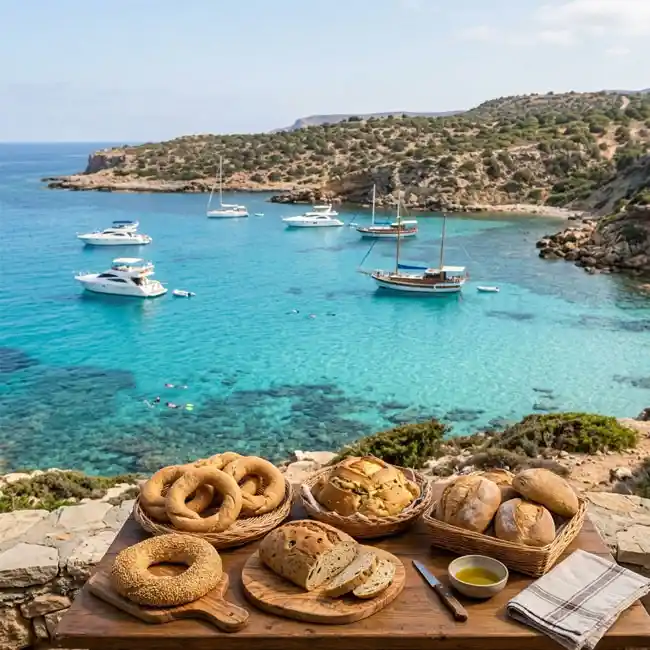
If you’ve ever walked through a Cypriot village at the crack of dawn, there is one scent that defines the experience: the intoxicating aroma of fresh dough rising in a traditional wood-fired oven. In Cyprus, bread isn't just a side dish or something you use to make a sandwich. It is the very soul of the table. It is a sacred element of hospitality, a vessel for ancient traditions, and the literal "glue" that holds a Mediterranean feast together.
From the crunchy, sesame-studded rings sold on street corners to the complex, cheese-filled pastries prepared for Easter, the world of Cyprus Breads is vast, flavorful, and deeply connected to the island’s sun-soaked earth. Let’s break bread together and explore why the bakery is the heartbeat of every Cypriot community.
🌾🗻 The Flour and the Flame: A Culture of Baking 🇨🇾 🍞
To understand bread in Cyprus, you have to look back at the island's history as a grain-producing hub. For centuries, wheat and barley were the lifeblood of the local economy. Baking wasn't a commercial activity; it was a communal ritual.
🏠 The "Fournos": The Heart of the Yard
Traditionally, every house in Cyprus had a "Fournos"—a dome-shaped outdoor oven built from mud and straw or local stone. Even today, as you drive through the countryside, you’ll see these iconic white domes in backyards. Firing up the oven was an all-day event. Neighbors would gather, children would help carry the wood, and the entire street would benefit from the heat. This communal spirit is why bread in Cyprus still tastes like "home," even when you buy it from a modern bakery in Nicosia or Limassol.
🤝 Bread as a Social Contract
In Cypriot culture, you never serve a meal without bread. Whether you are eating a fresh salad, a bowl of hearty soup, or a plate of grilled Halloumi, the bread is there to scoop, dip, and savor. It is a symbol of "Parea"—the act of gathering with friends to share a meal and life’s stories. Offering someone a piece of bread is the ultimate sign of peace and welcome.
🥖 The Stars of the Bakery: Iconic Cypriot Loaves
Cyprus has a dizzying array of breads, each with its own specific texture, scent, and purpose. While you’ll find standard baguettes in the cities, the traditional varieties are what truly capture the island's spirit.
🥯 Koulouri: The King of Sesame
If there is an "official" bread of Cyprus, it is the Koulouri. This is a large, ring-shaped loaf or a long, baton-like bread that is heavily encrusted with sesame seeds and sometimes nigella seeds.
• The Texture: It has a unique, dense crumb and a very crunchy exterior.
• The Ritual: It’s often enjoyed for breakfast, torn into chunks, and paired with local honey, olives, or a thick slice of tomato. The smell of toasted sesame seeds on a fresh Koulouri is the smell of a Cypriot morning.
🍞 Prosphoro and Village Bread
"Village Bread" (Choriatiko Psomi) is the rustic, sourdough-style loaf that sustained generations. Made with "yellow flour" (durum wheat), it has a thick, dark crust that protects a soft, chewy interior. It’s the kind of bread that stays fresh for days and only gets better when toasted over an open fire. In religious contexts, a special version called Prosphoro is baked with a sacred seal, representing the deep tie between the bakery and the Orthodox Church.
🥧 Beyond the Loaf: Savory Pastries and Festive Breads
Cypriots are masters of the "filled" bread. Some of the most famous baked goods on the island blur the line between bread and pastry.
🧀 Flaouna: The Easter Legend
You cannot talk about Cyprus baking without mentioning Flaouna. These are square or triangular pies traditionally made once a year for Easter.
• The Filling: They are packed with a heavy, pungent mixture of special "Flaouna cheese," eggs, mint, and raisins.
• The Significance: Making Flaounas is a massive family undertaking. The smell of these baking in the oven is the unmistakable signal that spring has arrived. It’s a flavor that is intensely local—salty, sweet, and aromatic all at once.
🌿 Tahinopitta and Eliopitta
For those who want something on the go, the local bakeries offer a variety of "pittas":
• Eliopitta (Olive Bread): Pieces of dough rolled with black olives, onions, and fresh mint. It’s the ultimate savory snack.
• Tahinopitta (Tahini Bread): A sweet, spiraled bread filled with rich sesame paste and cinnamon. It’s naturally vegan and incredibly satisfying, making it a favorite during fasting periods.
📍 A Baker’s Travel Guide: Where to Find the Best Bite
If you’re traveling through Cyprus, your GPS should be guided by the scent of yeast and woodsmoke.
🏔️ The Mountain Villages: Palaichori and Galata
For the most authentic "Village Bread," head into the Troodos Mountains. Villages like Palaichori are famous for their traditional bakeries that still use ancient leavening techniques. Here, the bread is heavy and hearty, designed to fuel a day of mountain hiking or farming.
🌊 The Paphos Coast: Carob-Infused Delights
In the Paphos region, you might find breads influenced by the "Black Gold" of the island—carob. Some artisanal bakers add carob flour or syrup to their dough, resulting in a dark, slightly sweet, and earthy bread that pairs perfectly with the local goat cheese.
🏰 Lefkosia (Nicosia): The Modern Artisan
The capital city is home to a new wave of "slow bread" enthusiasts. While they respect the old ways, these modern bakers are experimenting with ancient grains and wild ferments, proving that Cyprus bread culture is evolving while staying true to its roots.
🥗 How to Eat Like a Local: The Bread Etiquette
In Cyprus, you don't just "eat" bread; you engage with it.
• The Dip: Never leave a drop of olive oil or tomato juice on your plate. Use a "papara" (a chunk of bread) to clean the plate. It’s considered a compliment to the cook!
• The Toppings: A classic Cypriot snack is a slice of village bread rubbed with a cut tomato, drizzled with local olive oil, and sprinkled with dried oregano and sea salt.
• The Morning Toast: Try toasting Koulouri and spreading it with "Anari" (a mild whey cheese) and a drizzle of carob syrup. It’s the Mediterranean version of pancakes and syrup.
✨ Why Cyprus Breads are Special
The secret isn't just in the recipe; it’s in the geography. The hard durum wheat grown in the Mesaoria plain gives the bread its golden color and sturdy texture. The wild herbs like mint and coriander that grow on the hillsides find their way into the doughs. And the water, often sourced from mountain springs, adds a purity to the ferment.
When you tear into a loaf of Cyprus bread, you are tasting the sun, the soil, and the centuries of hands that have kneaded dough before you. It is a simple pleasure, but in Cyprus, it is the highest form of culinary art.
🤔 FAQ (Frequently Asked Questions)
Q1. What makes Cyprus "Village Bread" different from regular white bread?
Traditional Cyprus Village Bread is made using durum wheat (yellow flour) and a natural sourdough starter. This gives it a much denser texture, a thicker crust, and a slightly tangy flavor compared to the light, airy white loaves found in supermarkets. It is also much more filling and has a higher nutritional value.
Q2. Is it easy to find vegan bread options in Cyprus?
Yes! Because of the fasting traditions in the Greek Orthodox Church (Lent), many Cypriot breads and pastries are naturally vegan. Tahinopitta (tahini bread), Eliopitta (olive bread), and most traditional Koulouri are made without eggs or dairy, making the island a paradise for vegan bread lovers.
🍞 Effortless Cypriot Baking: Traditional Holiday Breads Made Simple
👉 Try 3 Cypriot Celebration Breads
| 🌐 🍞 < Back | 🇨🇾 🥗 < Previous | Next > 🍱 🇨🇾 |