
🏠 Home > 🗺️ Recipes > 🍨 Desserts > 🇨🇺 Cuba Desserts
🇨🇺 🍨 Cuba Desserts Recipes
Published by Supakorn | Updated: May 2026
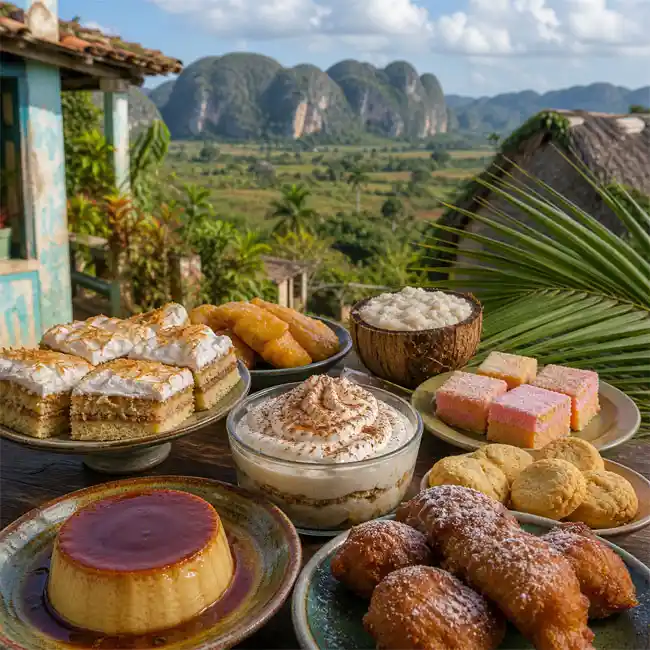
If you’ve ever walked through the sun-drenched streets of Old Havana or felt the salty breeze in Varadero, you know that Cuba isn’t just a place—it’s a feeling. And honestly, my friend, nothing captures that feeling quite like the island's obsession with all things sweet. In Cuba, dessert isn't just the end of a meal; it’s a lifestyle, a cultural hug, and a testament to a history as rich and layered as a piece of puff pastry.
We are diving deep into the world of Cuba Desserts. We’re talking about the soul of the Caribbean, where sugar cane was once king and where every bite tells a story of Spanish heritage, African roots, and that unmistakable tropical flair. Grab a coffee (extra sugar, please!), and let’s explore why the Cuban sweet tooth is legendary.
🇨🇺 🍩 The Sweet Soul of the Island: Understanding Cuban Food Culture
To understand Cuban desserts, you have to understand the people. Cubans are warm, resilient, and incredibly social. Food is the glue that holds families together, and "postre" (dessert) is the grand finale of every Sunday "almuerzo."
🏠 A Tradition of Home-Style Cooking
Most of the famous sweets you’ll find across the island didn't start in fancy industrial kitchens. They started in abuela’s (grandmother’s) kitchen. Because of Cuba’s unique history, home cooks became masters of "making magic out of a little." This led to a culture of conserves and custards—desserts that use simple, local ingredients like eggs, condensed milk, and tropical fruits to create something sophisticated.
🥭 The Influence of the Tropical Sun
Geography is everything here. Cuba is blessed with an abundance of tropical fruits that most of the world only dreams of. Guava (guayaba), mango, papaya (often called fruta bomba in Havana), and coconut are the stars of the show. When you combine these with the high-quality sugar produced on the island, you get a dessert profile that is intensely sweet, aromatic, and deeply satisfying.
🏝️ From Farm to Table: Origins and Travel Flavors
When you travel through Cuba, the desserts change with the landscape. If you’re hanging out in the lush valley of Viñales, you might find more fruit-based preserves. If you’re in the bustling city of Santiago de Cuba, the Afro-Cuban influences might bring more spice and coconut into your bowl.
🏛️ Havana: The Hub of Street Sweets
Havana is where the old meets the new. Here, the "churreros" (churro vendors) are the kings of the street. You’ll see locals standing in line at small windows, waiting for hot, crispy dough coated in sugar. It’s the ultimate "walking food" as you admire the classic cars and colonial architecture.
🛶 The Countryside: Natural Sweetness
In the rural provinces, desserts are often more rustic. Think of Cascos de Guayaba (guava shells) served with a thick slice of salty yellow cheese. This sweet-and-salty combo is the "national snack" of Cuba. It represents the simplicity of island life—taking what the tree gives you and pairing it with what the farm produces.
🍰 The Heavy Hitters: Iconic Cuban Dessert Names You Need to Know
While we aren't getting into the kitchen just yet, you need to know the "Celebrity List" of Cuban sweets. These are the names that define the menu at every "Paladar" (private restaurant) from Pinar del Río to Baracoa.
🍮 1. Flan de Leche (The undisputed King)
If Cuba had a national anthem for food, it would be Flan. It’s silkier and denser than the French version. The secret? The heavy use of condensed and evaporated milk. It’s topped with a dark, bitter-sweet caramel that pools around the base like a golden lake.
🥐 2. Pastelitos de Guayaba
These are the flaky, buttery pastries that define Cuban bakeries (panaderías). Usually made with puff pastry and filled with thick guava paste, they sometimes include cream cheese for a tangy balance. They are the perfect companion for your morning start.
🍚 3. Arroz con Leche
Rice pudding is common across Latin America, but the Cuban version is often scented heavily with cinnamon and lemon zest. It’s creamy, comforting, and usually served cold to beat the Caribbean heat.
🥥 4. Coquito Prieto
Deep in the heart of the island, coconut is transformed into dark, chewy macaroons or gooey preserves. It’s an explosion of texture that honors the African influence on Cuban gastronomy.
🥖 5. Torrejas
Think of this as the Cuban version of French Toast, but taken to a whole new level. Slices of bread are soaked in a spiced syrup (sometimes with honey and cinnamon) and fried until golden. It’s soft, syrupy, and absolutely addictive.
🥥 Living the "Dulce" Life: How Cubans Eat
In Cuba, eating is a slow process. It’s about conversation. You’ll rarely see a Cuban rushing through a dessert.
• The "Merienda": This is the mid-afternoon snack. Around 3:00 PM or 4:00 PM, everything slows down for a little something sweet and a shot of espresso.
• The Shared Plate: It’s very common to see a large platter of Dulce de Leche or fruit preserves placed in the middle of the table for everyone to dip into with a spoon.
• Festivals: During local "Carnavales," street stalls are packed with sweets. It’s a time when the whole community comes out to celebrate with music, dance, and, of course, plenty of sugar.
🗺️ Why Dessert is Your Best Travel Guide
If you really want to see the "real" Cuba, follow the sugar trail.
• Trinidad: This UNESCO World Heritage site is famous for its colonial charm. Here, you should look for local honey-based sweets that reflect the region's agricultural history.
• Baracoa: Located at the eastern tip of the island, this is the "Chocolate Capital." Because cocoa grows so well here, the desserts take a darker, richer turn. You haven't lived until you've tried the local Cucurucho—a mix of coconut, sugar, and fruit wrapped in a palm leaf.
🌈 The Future of Cuban Sweets
Even as Cuba evolves and new culinary influences arrive, the classic desserts remain untouched. Why? Because they are tied to memory. For the Cuban diaspora living in Miami, Spain, or anywhere else in the world, a bite of a Pastelito or a spoonful of Flan is a ticket back home.
The ingredients are simple, the methods are traditional, but the result is pure magic. It’s a reminder that even in hard times, life can be very, very sweet.
👋❓ FAQ (Frequently Asked Questions)
Q1.What makes Cuban desserts different from other Latin American sweets?
The main difference lies in the texture and the specific ingredients. Cuban desserts rely very heavily on canned milks (condensed and evaporated) due to historical availability, which gives them a much richer, denser mouthfeel than the lighter, milk-based desserts of other regions. Also, the pairing of sweet fruits with salty cheese is a uniquely Cuban obsession!
Q2.Can I find these desserts easily if I travel to Cuba today?
Absolutely! While some ingredients can sometimes be scarce, "Paladares" (private restaurants) and street vendors almost always have the classics like Flan, Arroz con Leche, or fruit preserves. In fact, seeking out the "postre del día" (dessert of the day) is one of the best ways to experience authentic local flavors during your trip.
🍨 Stress-Free Sweetness: The Ultimate Guide to Make-Ahead Cuban Treats
👉 3 Must-Try Celebration Cuban Desserts
| 🌐 🍨 < Back | 🇨🇺 🍝 < Previous | Next > 🍷 🇨🇺 |