
🏠 Home > 🗺️ Recipes > 🥘 Sauces > 🇭🇷 Croatia Sauces
🇭🇷 🥘 Croatia Sauces Recipes
Published by Supakorn | Updated: April 2026
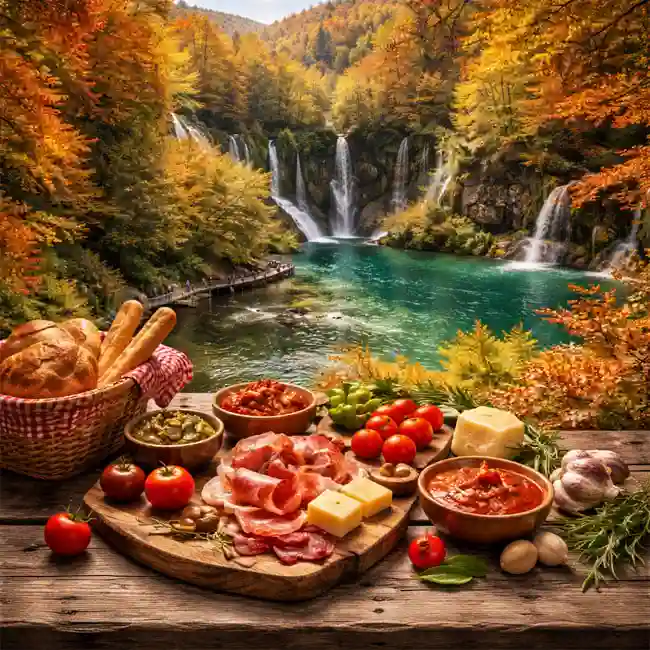
Hey there, food lover! If you’ve ever sat down at a wooden table in a sun-drenched Croatian konoba (that’s a traditional tavern), you’ve probably noticed something. While the grilled fish and slow-roasted meats are the stars of the show, there is always a supporting cast of small bowls, jars, and drizzled liquids that transform the meal from "good" to "I’m-never-leaving-this-country" great.
We’re talking about Croatia Sauces. In this corner of the world, a sauce isn't just an afterthought or something you squirt out of a plastic bottle. It’s a labor of love, often prepared in massive batches during the harvest season and shared like gold among neighbors. Whether it’s the smoky, pepper-based spreads of the inland or the herb-infused oils of the coast, these sauces are the literal "secret sauce" of Croatian hospitality.
Let’s take a deep dive into the saucy side of the Adriatic and beyond!
🇭🇷 🥘The Cultural Heart of the Croatian Pantry🌐🏰
To understand Croatian sauces, you have to understand the rhythm of life here. It’s a culture that respects the seasons. When the peppers are ripe, the whole neighborhood smells like roasting vegetables. When the olives are pressed, the liquid gold is treated with more reverence than fine perfume.
In Croatia, sauces and condiments serve two main purposes: Preservation and Enhancement. Historically, many of these "sauces" were ways to keep the flavors of summer alive through the cold winter months. Today, they are the essential bridge between a simple ingredient and a complex, layered dish.
🌿 Mediterranean Freshness meets Balkan Boldness
The "Sauce Map" of Croatia is split right down the middle:
• The Coastal Style: Heavily influenced by Italian and Greek traditions. It’s all about simplicity—extra virgin olive oil, pungent garlic, fresh parsley, and the brine of the sea.
• The Continental Style: This is where things get bold, smoky, and a little bit spicy. Influenced by Hungarian and Ottoman history, these sauces rely on peppers, tomatoes, and root vegetables.
🏺 The Heavy Hitters: Iconic Croatian Sauces and Spreads
You can't claim to know Croatian food without being on a first-name basis with these legendary condiments. They are the staples that you will find in almost every household from Zagreb to Dubrovnik.
🍅 1. Ajvar: The "Balkan Caviar"
If Croatia had a national condiment, Ajvar would be it. This is a creamy, smoky spread made primarily from roasted red bell peppers and eggplant.
• The Vibe: It’s savory, slightly sweet, and can range from mild to "eye-watering" spicy.
• How it’s used: Croatians put Ajvar on everything. It’s the perfect partner for grilled meats (like Ćevapi), it’s spread on thick slices of bread, and it’s even stirred into stews to add depth. It’s the ultimate "everything sauce."
🧄 2. Tržački Umak (The Garlic & Parsley Staple)
If you order grilled fish anywhere on the coast, it will come with a side of this. It’s a simple emulsion of chopped garlic, fresh flat-leaf parsley, and high-quality olive oil.
• The Vibe: It’s punchy, fresh, and incredibly aromatic.
• How it’s used: You drizzle it over sea bream, calamari, or even boiled potatoes and Swiss chard (blitva). It’s the scent of a Dalmatian summer.
🌶️ 3. Ljutenica and Pindjur
These are the cousins of Ajvar. Pindjur is usually milder and features more tomato and onion, giving it a chunkier, saucier texture. Ljutenica is for the brave—it usually packs a serious chili punch. They represent the incredible variety of vegetable-based preserving that happens every autumn.
🍅 4. Salsa (The Dalmatian "Šalša")
Don’t confuse this with Mexican salsa! In Dalmatia, Šalša is a slow-cooked tomato sauce that is the backbone of coastal home cooking. It’s cooked for hours until the tomatoes break down into a sweet, thick concentrate seasoned with local herbs.
🍽️ The "Eating Lifestyle": How to Sauce Like a Local
In Croatia, you don’t just "dip" your food. There is an etiquette and a lifestyle attached to these flavors.
🥣 The Art of the "Side Bowl"
In a traditional Croatian meal, the sauces are rarely served on the meat. They come in small communal bowls. This allows everyone to customize their flavor profile. Taking a big dollop of Ajvar and spreading it across your plate to "swipe" your meat through is a standard move.
🥖 The Bread Connection
As we’ve discussed before, bread is king. But what is a king without his queen? These sauces are the perfect companion for the "mopping up" (toćanje) ritual. A thick, homemade tomato Šalša is practically begging to be cleaned off the plate with a crust of bread.
❄️ The "Zimnica" Tradition
The word Zimnica refers to "winter stores." In late September, you’ll see families gathering in yards with giant pots over open fires. They are making their sauces for the year. This isn't just about food; it's a social event. Grandmothers pass down their specific ratios of pepper to eggplant, and the resulting jars are stored in cellars like treasures.
🍋 Regional Specialties: A Saucy Road Trip
Let’s look at how the flavors change as you move through the different regions of Croatia.
🌊 Istria: The Land of Liquid Gold and Truffles
Istria is world-famous for its olive oil. Here, the "sauce" is often just the oil itself, perhaps infused with the famous Istrian white or black truffles. A simple cream sauce tossed with fuži (local pasta) and shaved truffles is the height of Istrian luxury.
🏰 Dalmatia: Mediterranean Simplicity
In the south, the sauces are lighter. You’ll find Samardžija, a sauce made with dried figs and vinegar, or simple reductions of balsamic and honey to go with hard cheeses. The focus is on letting the fresh catch of the day shine.
🌾 Slavonia: The Spice Frontier
In the east, the sauces get redder and hotter. This is the land of paprika. You’ll find rich, red bases for fish paprikaš (a spicy river fish stew) that are so thick they almost coat the spoon. The sauces here are designed to warm you up from the inside out.
🌿 The Secret Ingredients: What Makes Them Special?
Why can’t you just recreate these at home with supermarket ingredients? There are a few "secret" factors at play.
1.Sun-Drenched Veggies: The peppers used for Ajvar are specifically "Kurtovska Kapija"—a flat, fleshy red pepper that has a high sugar content when roasted.
2.Cold-Pressed Oils: Croatian olive oil is consistently ranked among the best in the world. Its peppery, grassy notes provide a base that no commercial vegetable oil can match.
3.Wild Herbs: Sage, rosemary, and bay leaves grow wild along the Adriatic. These "wild" versions have a much higher essential oil content, making the sauces incredibly fragrant.
🌟 Why We Love the Croatian Sauce Culture
Beyond the taste, these sauces represent a connection to the land and to family. When a Croatian friend gives you a jar of their family’s Ajvar, they aren’t just giving you a condiment—they are giving you a piece of their summer, their hard work, and their heritage.
It’s about taking the simple gifts of the earth—a pepper, a clove of garlic, a splash of oil—and turning them into something that brings people together around a table.
🧐 FAQ: Everything You Wanted to Know About Croatia Sauces
Q1. Is Ajvar vegan-friendly?
Absolutely! Traditional Ajvar is made purely from roasted peppers, eggplant, sunflower or olive oil, salt, and a bit of vinegar. It is a staple for those following a plant-based diet and is one of the most flavorful vegan condiments in the world.
Q2. How long do these homemade sauces last?
Because of the traditional canning and pasteurization methods (the Zimnica process), unopened jars of Ajvar or Pindjur can last for up to a year in a cool, dark place. Once opened, they should be kept in the fridge and consumed within a week or two—though they usually disappear much faster than that!
Q3. What is the best sauce to pair with grilled seafood?
You cannot go wrong with the classic Tržački Umak (garlic, parsley, and olive oil). It enhances the natural sweetness of the fish without overpowering it. For something a bit more unique, try a drizzle of Istrian truffle oil or a light lemon-caper emulsion which is also popular in coastal regions.
🥘 Spice Up Your Life: Exploring the Bold and Zesty Condiments of Croatia
👉 Must-Try 3 Croatian Flavorful Sauces
| 🌐 🥘 < Back | 🇭🇷 🍱 < Previous |