
🏠 Home > 🗺️ Recipes > 🥘 Sauces > 🇭🇷 Croatia Sauces > 🥘 1.Spicy Homemade Ajvar (The Balkan Gold) , 2.Ljutenica (The "Angry" Vegetable Relish) , 3.Spicy Samobor-Style Mustard (Muštarda)
🥘 Spice Up Your Life: Exploring the Bold and Zesty Condiments of Croatia
Published by Supakorn | Updated: April 2026
🔥 🇭🇷 Introduction: The Secret Fire of the Balkans🌶️🥘
Hey there! When most people think of Mediterranean food, they usually picture light salads, olive oil, and maybe some grilled fish. But if you’ve ever sat down at a family table in Croatia, you know there is a whole other side to the story. We’re talking about the bold, smoky, and absolutely fiery sauces that sit at the center of every meal.
In Croatia, a meal isn't just about the main course; it’s about the "extras." Over the last few years, these condiments have exploded in popularity across Europe and North America. Why? Because they offer a deep, complex heat that you just can't get from a standard bottle of hot sauce. They are rich, vegetable-forward, and packed with layers of flavor.
In this deep dive into Croatian spice, I’m going to show you how to recreate three of the most iconic "fiery" favorites:
🌶️🔥 • Recipe 1: Spicy Ajvar (The legendary roasted pepper caviar)
🌶️🔥 • Recipe 2: Ljutenica (The "angry" sauce that lives up to its name)
🌶️🔥 • Recipe 3: Spicy Samobor-Style Mustard (A sinus-clearing, zesty kick)
If you’re someone who carries a bottle of hot sauce in your bag, or if you just want to impress your friends at the next BBQ, you’re in the right place. Let’s get our hands a little messy and turn up the heat!
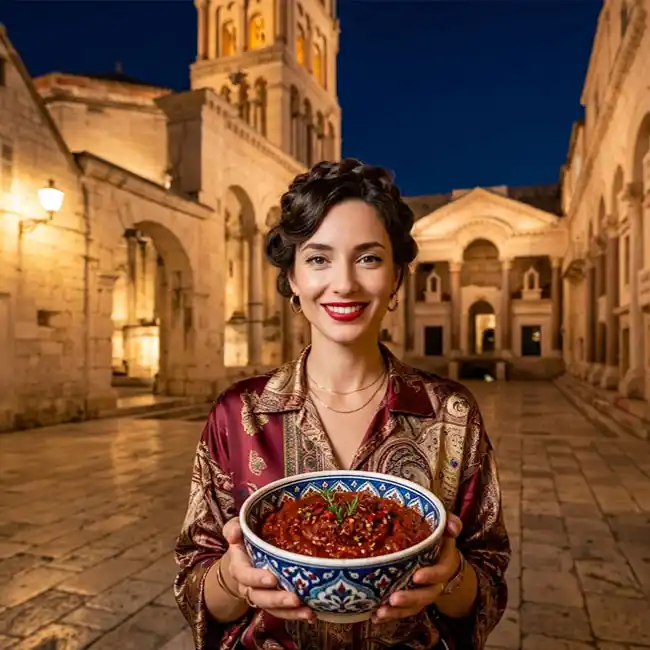
🌶️ Recipe 1: Spicy Homemade Ajvar (The Balkan Gold)
🥘 About this Recipe
Ajvar (pronounced AY-var) is often called "Balkan Caviar," and for good reason. It is a labor of love. While you can buy mild versions in the store, nothing beats a homemade Spicy Ajvar. It’s made primarily from roasted red horn peppers and eggplant. The "fiery" version uses a generous amount of local chili peppers to give it a slow-burn finish that perfectly complements grilled meats. It’s smoky, silky, and absolutely addictive.
🌿 Ingredients & Measurements
• 5 kilograms of red horn peppers (Kurtovska Kapija variety is best)
• 2 large eggplants (about 1 kilogram total)
• 500 milliliters of sunflower oil
• 3 to 5 large red chili peppers (depending on your heat tolerance)
• 2 tablespoons of salt
• 1 tablespoon of sugar
• 2 tablespoons of white vinegar
👩🍳 Step-by-Step Instructions
1.The Roasting: Roast the whole red peppers, eggplants, and chilies over an open flame or in a very hot oven (428 degrees Fahrenheit / 220 degrees Celsius) until the skins are charred and blistered.
2.The Steaming: Place the hot vegetables in a large bowl and cover with plastic wrap for 15 minutes. This makes peeling a breeze.
3.The Clean-Up: Peel off the charred skin, remove the stems, and take out the seeds. Try to get as many seeds out as possible for a smooth texture!
4.The Grind: Use a meat grinder or a food processor to pulse the vegetables into a thick, chunky paste.
5.The Slow Cook: Place the paste in a large, heavy-bottomed pot. Add half the oil, salt, sugar, and vinegar.
6.Patience is Key: Cook on low heat for 2 to 3 hours, stirring constantly. Add the remaining oil gradually as the mixture absorbs it.
7.The Test: It’s done when the mixture is thick enough that you can see the bottom of the pot when you draw a wooden spoon through it.
8.Jarring: Pour into sterilized jars while hot and seal immediately.
💡 Tips & Mistakes to Avoid
• Mistake: Rushing the cooking process. If you don't cook it long enough, the Ajvar will be watery and won't develop that deep, smoky flavor.
• Tip: If you want it even spicier, leave the seeds in the chili peppers. That’s where the real fire lives!
• Mistake: Using olive oil. Authentic Ajvar uses sunflower or vegetable oil because it has a neutral taste that lets the peppers shine.
❓ FAQ
Q1.How long does it last?
Unopened jars can last all winter in a cool, dark place. Once opened, keep it in the fridge and eat it within two weeks.
Q2.What do I serve it with?
Everything! Grilled chicken, sausages, or even just spread thick on a slice of sourdough bread.
📝 Summary
Spicy Ajvar is the ultimate pantry staple. It takes time, but once you taste that smoky heat, you’ll never go back to store-bought.
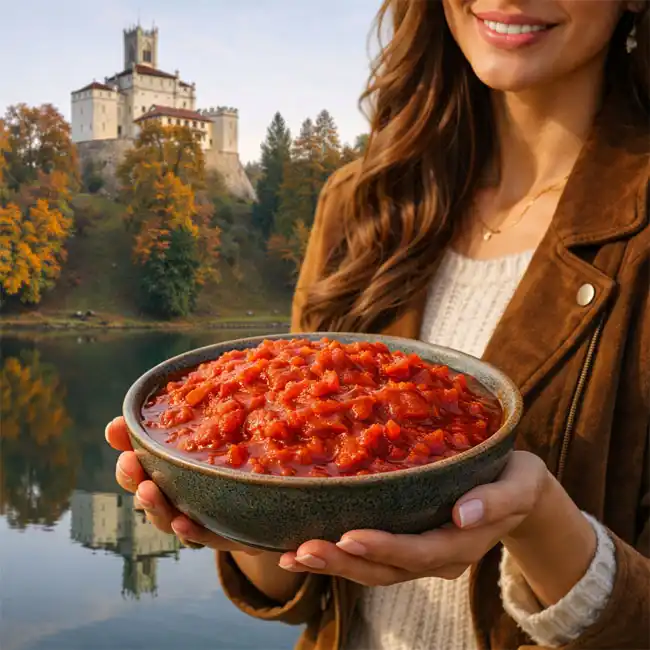
🍅 Recipe 2: Ljutenica (The "Angry" Vegetable Relish)
🥘 About this Recipe
The name Ljutenica comes from the word "ljuto," which literally means spicy or hot. If Ajvar is the sophisticated cousin, Ljutenica is the wild one. It’s chunkier, tangier, and usually much hotter. It includes tomatoes and garlic, giving it a bright acidity that cuts through the heat. It’s called "angry" because the heat hits you fast and makes your face flush!
🌿 Ingredients & Measurements
• 2 kilograms of roasted red peppers (peeled and chopped)
• 1 kilogram of ripe tomatoes
• 500 grams of carrots (boiled and mashed)
• 10 large cloves of garlic (finely minced)
• 4 to 6 hot feferoni peppers (finely chopped)
• 150 milliliters of sunflower oil
• 100 milliliters of apple cider vinegar
• 2 tablespoons of salt
• 1 tablespoon of sugar
• 1 bunch of fresh parsley (chopped)
👩🍳 Step-by-Step Instructions
1.Tomato Base: Grate the tomatoes or blend them, then simmer in a pot until the volume reduces by half and becomes a thick sauce.
2.Vegetable Medley: Add the chopped roasted peppers and the mashed carrots to the tomato base.
3.Add the Fire: Stir in the chopped feferoni peppers and the minced garlic.
4.Seasoning: Add the oil, vinegar, salt, and sugar.
5.Simmer: Cook on medium-low heat for about 45 minutes to an hour, stirring frequently to prevent sticking.
6.The Finish: Five minutes before taking it off the heat, stir in the fresh parsley. This adds a burst of freshness to the "anger."
7.Storage: Transfer to sterilized jars and let them cool upside down to create a vacuum seal.
💡 Tips & Mistakes to Avoid
• Tip: For the best flavor, use the most "unattractive," overripe tomatoes you can find. They have the highest sugar content.
• Mistake: Forgetting to stir. Because of the tomato and sugar content, this mixture can burn easily on the bottom of the pot.
• Tip: If you want a "cleaner" heat, use dried chili flakes instead of fresh feferoni peppers.
❓ FAQ
Q1.Is Ljutenica the same as salsa?
Not really. It’s much more concentrated and has a cooked, smoky flavor from the roasted peppers that salsa lacks.
Q2.Can I make it less spicy?
Sure, just reduce the number of feferoni peppers, but then it wouldn't really be "Ljutenica" anymore, would it?
📝 Summary
Ljutenica is bold, garlic-heavy, and perfect for those who like their condiments to have a bit of an attitude.
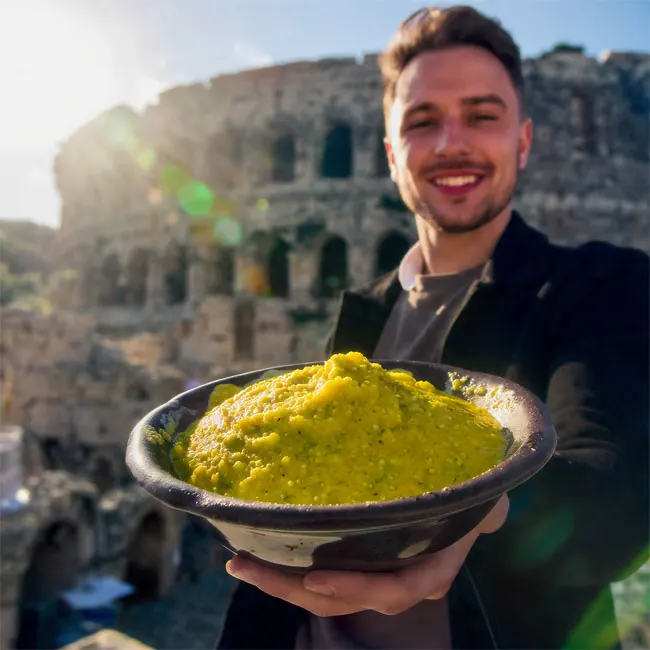
🟡 Recipe 3: Spicy Samobor-Style Mustard (Muštarda)
🥘 About this Recipe
Samobor is a beautiful town near Zagreb famous for its culinary traditions. Their "Muštarda" is unlike any yellow mustard you’ve had in a plastic bottle. It’s a dark, potent, and spicy condiment made from mustard seeds and grape must (the juice of pressed grapes). While we aren't using alcohol here, the concentrated grape juice gives it a unique sweet-and-spicy kick that clears your sinuses instantly!
🌿 Ingredients & Measurements
• 200 grams of yellow mustard seeds
• 100 grams of black mustard seeds (these provide the extra heat)
• 300 milliliters of unsweetened white grape juice (concentrated/reduced)
• 100 milliliters of white wine vinegar
• 1 teaspoon of salt
• 1/2 teaspoon of ground cloves
• 1 teaspoon of cinnamon
• 1 tablespoon of honey
👩🍳 Step-by-Step Instructions
1.The Reduction: Pour the grape juice into a small saucepan and simmer until it reduces by half. This creates a thick, sweet syrup.
2.Seed Prep: Grind the mustard seeds in a spice grinder or blender until they are a coarse powder. (Don't make them too fine; you want some texture).
3.The Soak: In a glass bowl, mix the ground seeds with the vinegar and let them sit for 2 hours. This "activates" the spice.
4.Combine: Stir in the reduced grape juice, salt, cloves, cinnamon, and honey.
5.The Blend: Use an immersion blender to mix everything until it reaches your desired consistency.
6.The Mellowing: This is the most important part. Freshly made mustard is extremely bitter. Put it in a jar and let it sit in the fridge for at least 1 week. The flavors will harmonize and the bitterness will disappear, leaving only the "fire."
💡 Tips & Mistakes to Avoid
• Mistake: Eating it immediately. Trust me, it will taste terrible the first day. It needs time to age.
• Tip: Use a mix of yellow and black seeds. Black seeds are much more pungent and provide that "fiery" kick.
• Tip: If the mustard is too thick after a week, stir in a little more vinegar or grape juice.
❓ FAQ
Q1.What is grape must?
It's just unfermented grape juice. By reducing it, we get the flavor without any alcohol content.
Q2.What does it taste like?
It’s a complex mix of sweet, sour, and a very sharp, spicy heat that hits the back of your nose.
📝 Summary
Samobor-style mustard is a gourmet treat. It’s the perfect companion for a thick slice of ham or roasted meat.
✨ Final Thoughts
Creating your own fiery Croatian sauces is like bringing a piece of the Mediterranean sun into your kitchen. These recipes—Ajvar, Ljutenica, and Spicy Mustard—are more than just toppings; they are the heart of the Balkan dining experience.
The best part? You can control exactly how much "fire" you want to include. Whether you want a gentle glow or a full-blown inferno, these homemade versions beat anything you can find on a supermarket shelf.
I hope you give these a try, one by one. Start with the Ajvar—it’s a crowd-pleaser—and then work your way up to the "angry" Ljutenica. Don't forget to share your results and let me know which one was your favorite! Just remember: keep a glass of cold water nearby, because these sauces definitely don't play around. Happy cooking!
| 🇭🇷 🥘 < Back |