
🏠 Home > 🗺️ Recipes > 🍨 Desserts > 🇭🇷 Croatia Desserts
🇭🇷 🍨 Croatia Desserts Recipes
Published by Supakorn | Updated: April 2026
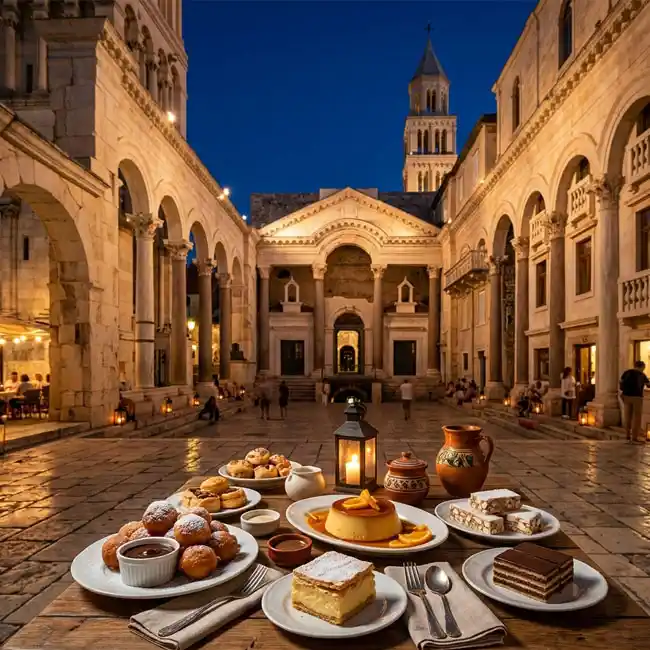
If you thought the Croatian coast was the only thing that could take your breath away, just wait until you take a seat at a local slastičarnica (pastry shop). Croatian desserts are a beautiful, sugary mosaic of history, geography, and pure grandmotherly love.
In this world, sugar isn't just a sweetener; it’s a storyteller. When you bite into a Croatian treat, you’re tasting centuries of Austro-Hungarian elegance, Ottoman spice, and Mediterranean freshness. Whether you’re a fan of flaky pastries that shatter at the touch of a fork or dense, fruit-filled delights that taste like a summer afternoon, Croatia has a seat saved for you at the dessert table.
🍯 🇭🇷 The Sweet Philosophy: How Croatians Do Dessert👑
In Croatia, dessert isn't just the end of a meal; it’s an event. It’s the "coffee and cake" culture that defines the rhythm of the day. If you walk through the streets of Zagreb or Split in the late afternoon, you’ll see locals lingering over small plates, talking about everything from politics to football, all while savoring a single slice of cake.
The "eating and living" style here is all about quality and patience. You won't find many overly processed, neon-colored candies. Instead, you’ll find ingredients pulled straight from the backyard: walnuts, honey, figs, carob, and lemons. There is a deep respect for the seasons; you eat chestnut desserts in the fall, citrusy treats in the winter, and stone-fruit galettes in the summer. It’s a slow-food approach to satisfy the soul.
🍰 The Continental Classics: Cream, Layers, and Elegance
The northern and central parts of Croatia were heavily influenced by the Habsburg Empire. This means the desserts here are grand, sophisticated, and often involve plenty of cream and puff pastry.
🍮 Samoborska Kremšnita
If there is a king of continental desserts, it is the Kremšnita. Specifically the version from the town of Samobor. Imagine two layers of impossibly thin, crispy puff pastry sandwiching a thick, wobbly, and ethereal layer of vanilla custard. Some versions add a layer of whipped cream on top, but the Samobor style is pure, custard-focused perfection. It’s usually served warm, and it’s like eating a sweet, vanilla-scented cloud.
🥐 Štrukli (Sweet Version)
Now, Štrukli is a bit of a chameleon. It can be a main dish, a side, or a dessert. The sweet version is a specialty of the Zagorje region. It consists of dough filled with fresh cottage cheese, folded into pillows, and either boiled or baked with a topping of cream. When served as a dessert, it’s topped with sugar and breadcrumbs, offering a comforting, rustic flavor that feels like a warm hug from a Croatian grandma.
🌰 Orehnjača and Makovnjača
These are the staples of every holiday table. They are yeast-based roll cakes—one filled with a rich, sweet walnut paste (Orehnjača) and the other with a dark, earthy poppy seed filling (Makovnjača). The secret is in the ratio; a good roll should have more filling than bread!
🍋 Coastal Confections: Sun, Salt, and Citrus
As you move toward the Adriatic Sea, the desserts change character. They become lighter, more aromatic, and heavily reliant on what grows on the rugged limestone cliffs.
🍮 Rozata
The jewel of Dalmatia, particularly Dubrovnik, is the Rozata. It is a creamy custard pudding, very similar to a flan or crème caramel. What makes it "Croatian" is the addition of Rozalin (a traditional rose petal liqueur flavoring) or lemon zest. It’s silky, cool, and served with a pool of amber caramel sauce. It is the ultimate refreshing end to a seafood lunch.
🍩 Fritule
If you’ve ever visited a Croatian Christmas market or a summer festival, you’ve smelled Fritule. These are small, doughnut-like balls flavored with citrus zest, raisins, and sometimes grated apples. They are fried until golden and dusted with powdered sugar. They are dangerously addictive—you can’t just eat one.
🍫 Rab Cake (Rapska Torta)
This cake from the island of Rab is a piece of art. Its history dates back to 1177 when it was reportedly served to Pope Alexander III. It’s a spiral-shaped pastry filled with a mixture of ground almonds, lemon, and maraschino flavor. It takes a lot of skill to make the intricate lace-like pastry edges, making it a dessert reserved for special occasions.
🏺 Ancient Ingredients: Honey, Figs, and Carob
Before modern sugar became common, Croatians used what the land provided. These ingredients still dominate the traditional dessert scene today.
• Carob (Rogač): Often used on the islands as a chocolate substitute, carob has a deep, nutty, and naturally sweet flavor. Carob cakes are dense, moist, and incredibly healthy-tasting.
• Figs (Smokve): In Dalmatia, you’ll often find Smokvenjak—a "fig cake" made of dried figs and chopped walnuts, pressed into a disk. It’s the original energy bar!
• Honey: Croatian honey is world-class, especially the sage and lavender varieties. It’s often drizzled over fresh cheese or used to sweeten traditional biscuits like Paprenjaci.
🥨 The Unique "Paprenjaci": The Cookie with a Kick
One of the most unique sweets you’ll find is the Paprenjak. It is a traditional biscuit that contains an unusual ingredient: black pepper.
Dating back to the Renaissance, these cookies represent the crossroads of trade. They are made with honey, walnuts, and a blend of spices like cinnamon and cloves, but the hit of black pepper at the end gives them a sophisticated warmth. They are usually embossed with traditional folk motifs, making them as beautiful to look at as they are to eat.
🏡 Dessert Etiquette: Guests and Celebrations
In Croatia, if you visit someone’s home, you will be served something sweet. It’s almost a law of hospitality. Usually, this involves a tray of "sitni kolači"—an assortment of tiny, bite-sized cakes and cookies.
These tiny treats are a point of pride for home bakers. During weddings or religious holidays, it’s common for families to prepare 10 to 15 different types of small cookies. It shows the guest that time and effort were put into their arrival. The "living" part of this is the shared experience; you sit, you have your tea or coffee, and you sample a little bit of everything.
🍧 Modern Trends: The New Wave of Croatian Pastry
While tradition is the backbone of the dessert culture, a new generation of pastry chefs in cities like Zagreb and Rovinj are shaking things up. They are taking the classic flavors—like the carob of the islands or the pumpkin seed oil of the north—and turning them into modern mousses, tarts, and macarons.
You might find a Bay Leaf Infused Panna Cotta or a Deconstructed Kremšnita served in a glass with salted caramel. This evolution ensures that the sweet heritage of Croatia stays relevant for the Instagram generation while keeping those nostalgic flavors alive.
🤔 FAQ: Your Sweet Questions Answered
Q1. Are Croatian desserts very sweet or sugary?
Compared to American or some Middle Eastern desserts, Croatian sweets are relatively moderate. While they use sugar, there is a much heavier emphasis on the natural flavors of nuts (walnuts, hazelnuts, almonds), fruits, and spices. You’ll find they are "rich" rather than just "sugary."
Q2. Which dessert should I try if I don’t like creamy cakes?
You should definitely go for the Fritule or a slice of Orehnjača (Walnut Roll). These are bread-based or dough-based and rely on texture and spice rather than heavy creams or custards. They are perfect for snacking on the go!
🍨 The Sweet Taste of the Adriatic: 3 Delicate Croatian Treats You Can Make at Home
👉 Savor 3 Croatian Tasty Desserts
| 🌐 🍨 < Back | 🇭🇷 🍝 < Previous | Next > 🍷 🇭🇷 |