
🏠 Home > 🗺️ Recipes > 🍨 Desserts > 🇭🇷 Croatia Desserts > 🍨 1.Soft & Silky Croatian Palačinke , 2.Walnut Kifle (Vanilin Kiflice) , 3.Pinca (Croatian Sweet Easter Bread)
🍨 The Sweet Taste of the Adriatic: 3 Delicate Croatian Treats You Can Make at Home
Published by Supakorn | Updated: April 2026
🇭🇷 🍮Introduction: Why the World is Falling for Croatian Sweets🌐👨👩👧👦
Hey there, fellow food lover! If you’ve ever wandered through the cobblestone streets of Dubrovnik or taken a sunset stroll in Split, you know that Croatia isn't just about crystal-blue water and Game of Thrones filming locations. It’s a hidden paradise for anyone with a sweet tooth—specifically for those who prefer their treats "mild and gentle."
In a world where desserts are often overloaded with corn syrup and heavy frosting, Croatian sweets stand out because they are incredibly balanced. They rely on simple ingredients like walnuts, lemon zest, honey, and fresh dough. They aren't "loud" flavors; they are whispers of sweetness that pair perfectly with a morning coffee or an afternoon chat with friends.
In this guide, I’m sharing three of the most beloved, authentic recipes that have gained a huge following outside the Balkans. We’re going to dive into:
👨👩👧👦 • Recipe 1: Palačinke (The fluffiest crepes you'll ever meet)
👨👩👧👦 • Recipe 2: Kifle (Walnut-filled crescent cookies that melt in your mouth)
👨👩👧👦 • Recipe 3: Pinca (A soft, citrusy Easter bread enjoyed year-round)
So, grab your apron, turn on some light music, and let’s bring a taste of the Mediterranean into your kitchen!
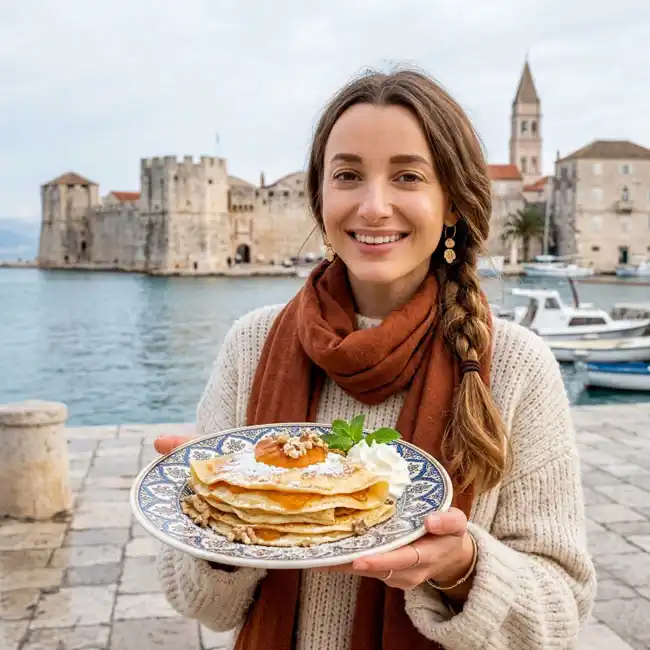
🥞 Recipe 1: Soft & Silky Croatian Palačinke
🍰 About this Recipe
Think of these as the cooler, more laid-back cousin of the French Crêpe. Palačinke are a staple in every Croatian household. Unlike American pancakes, they are thin and flexible, meant to be rolled or folded. What makes them "mild and gentle" is the addition of carbonated water in the batter, which creates a texture so light you could eat ten of them without feeling weighed down.
🥣 Ingredients & Measurements
• 2 large eggs (room temperature)
• 250 grams of all-purpose flour
• 300 milliliters of whole milk
• 200 milliliters of sparkling/carbonated water
• 1 tablespoon of granulated sugar
• 1 pinch of salt
• 1 teaspoon of vanilla extract
• 1 tablespoon of vegetable oil (plus extra for the pan)
• Optional: Zest of half a lemon
👩🍳 Step-by-Step Instructions
1.The Batter Mix: In a large bowl, whisk the eggs with sugar, salt, and vanilla until slightly frothy.
2.Adding the Base: Slowing pour in the milk while whisking. Gradually sift in the flour to avoid lumps.
3.The Secret Ingredient: Once the batter is thick, slowly stir in the sparkling water. This aerates the mix. Let it rest for 30 minutes—this is crucial for the gluten to relax!
4.Heat it Up: Lightly grease a non-stick skillet or crepe pan and set it over medium-high heat.
5.The Swirl: Pour a small ladle of batter into the center and quickly tilt the pan in a circular motion to coat the bottom.
6.Flip Time: Cook for about 1 minute until the edges turn golden brown. Flip and cook the other side for 30 seconds.
7.The Finish: Spread a thin layer of plum jam or walnut paste, roll them up, and dust with a tiny bit of powdered sugar.
💡 Tips & Mistakes to Avoid
• Mistake: Using cold milk. Cold ingredients can make the batter clumpy. Use room temperature for a silky finish.
• Tip: If your first pancake looks like a mess, don't worry! In Croatia, we say the first one is always for the dog. The pan needs that first one to reach the perfect temperature.
• Mistake: Over-mixing. Once you add the flour, whisk until just combined. Over-working it makes the palačinke chewy instead of tender.
❓ FAQ
Q1.Can I use still water instead of sparkling?
You can, but you’ll lose that signature lightness. The bubbles are what make them "gentle."
Q2.What is the traditional filling?
Rosehip jam or a mix of ground walnuts and sugar are the most authentic choices!
📝 Summary
Palačinke are the ultimate "everyday" dessert. They aren't fancy or complicated, but they represent the warmth of a Croatian kitchen perfectly.
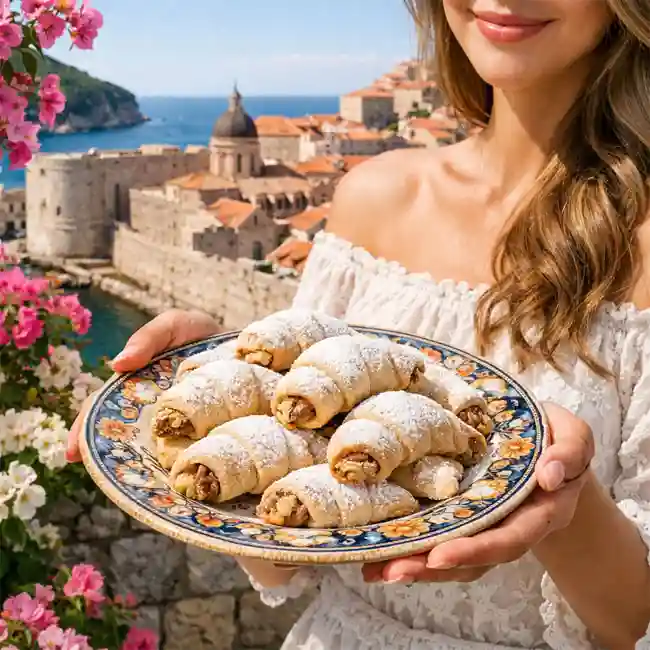
🥐 Recipe 2: Walnut Kifle (Vanilin Kiflice)
🍰 About this Recipe
If you want a cookie that literally dissolves on your tongue, this is it. Kifle (or Kiflice) are crescent-shaped cookies usually made during the holidays, but they are so good people make them all year. They use ground walnuts and are coated in vanilla-scented powdered sugar. They aren't overly sweet, making them the perfect "gentle" snack.
🥣 Ingredients & Measurements
• 300 grams of all-purpose flour
• 200 grams of cold unsalted butter (cubed)
• 100 grams of finely ground walnuts
• 70 grams of powdered sugar (for the dough)
• 1 large egg yolk
• 1 tablespoon of sour cream
• 100 grams of powdered sugar mixed with 2 packets of vanilla sugar (for coating)
👩🍳 Step-by-Step Instructions
1.Dough Prep: In a bowl, rub the cold butter into the flour using your fingertips until it looks like breadcrumbs.
2.Combine: Add the ground walnuts, 70g powdered sugar, egg yolk, and sour cream. Knead quickly until a smooth dough forms.
3.Chill Out: Wrap the dough in plastic and refrigerate for at least 1 hour. This makes it easier to handle.
4.Shape: Take small pieces of dough (about the size of a walnut) and roll them into small sausages, then bend them into a "C" or crescent shape.
5.Bake: Place on a parchment-lined tray and bake at 356 degrees Fahrenheit / 180 degrees Celsius for about 10–12 minutes. They should remain pale—don't let them brown!
6.The Coating: While still warm (but not hot), gently roll the cookies in the vanilla-powdered sugar mix.
💡 Tips & Mistakes to Avoid
• Tip: Use a food processor to grind the walnuts until they are almost like flour. Large chunks will make the cookies break.
• Mistake: Rolling them while they are too hot. They are very fragile when they first come out of the oven. Wait 2 minutes, then roll.
• Tip: These actually taste better on the second or third day as the flavors mellow out.
❓ FAQ
Q1.Can I use almonds instead of walnuts?
Absolutely! Almonds give a slightly sweeter, milder flavor.
Q2.How do I store them?
In an airtight tin box. They will stay fresh and delicious for up to two weeks.
📝 Summary
These little crescents are the definition of "melt-in-your-mouth." They are simple, elegant, and perfectly understated.
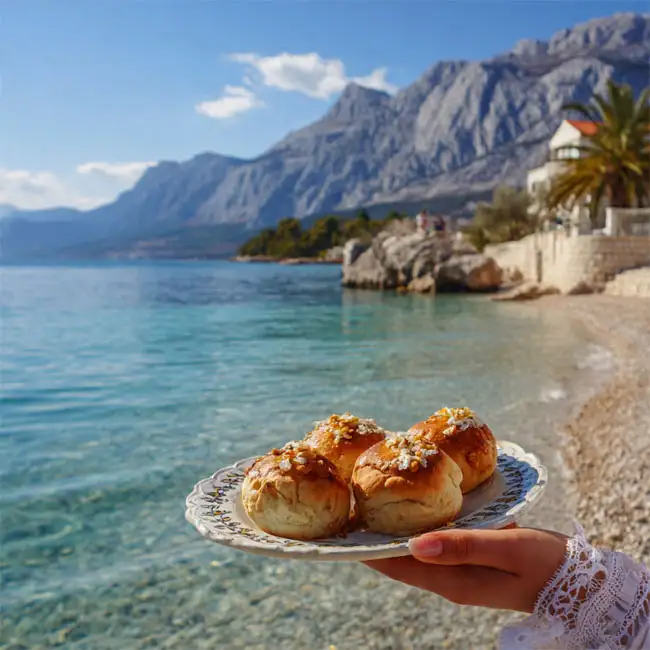
🍞 Recipe 3: Pinca (Croatian Sweet Easter Bread)
🍰 About this Recipe
While Pinca is traditionally an Easter bread, its citrusy aroma and brioche-like texture make it a favorite for breakfast throughout the year. It’s a "gentle" bread—rich with egg yolks but not heavy. The smell of lemon and orange zest wafting through the house while this bakes is something you’ll never forget.
🥣 Ingredients & Measurements
• 500 grams of bread flour
• 20 grams of fresh yeast (or 7 grams of dry yeast)
• 100 grams of granulated sugar
• 200 milliliters of warm milk
• 100 grams of melted butter
• 3 egg yolks
• Zest of 1 lemon and 1 orange
• 1 tablespoon of honey
• 1 pinch of salt
• 1 egg (for brushing) and pearl sugar for topping
👩🍳 Step-by-Step Instructions
1.Activate Yeast: Mix warm milk, yeast, and a teaspoon of sugar. Let it sit for 10 minutes until foamy.
2.Mix Wet Ingredients: In a separate bowl, whisk egg yolks, remaining sugar, melted butter, honey, and citrus zests.
3.Knead: Combine the flour, salt, yeast mixture, and wet ingredients. Knead (by hand or mixer) for 10 minutes until you have a smooth, elastic dough.
4.First Rise: Let the dough rise in a warm spot for about 2 hours, or until doubled in size.
5.Shape: Punch down and shape into two round loaves. Place on a baking sheet.
6.Second Rise: Let them rise for another hour.
7.The Signature Look: Use scissors to cut three deep slits from the center outward (making a "Y" shape). Brush with beaten egg and sprinkle with pearl sugar.
8.Bake: Bake at 320 degrees Fahrenheit or 160 degrees Celsius for 30–35 minutes. If it browns too fast, cover with foil.
💡 Tips & Mistakes to Avoid
• Mistake: Rushing the rise. This dough is heavy with fats (yolks and butter), so it needs time to get fluffy.
• Tip: Don't skip the citrus zest! That is where the "gentle" aromatic flavor comes from.
• Mistake: Too much heat. Bake at a slightly lower temperature (320 degrees Fahrenheit / 160 degrees Celsius) to ensure the inside is cooked without burning the outside.
❓ FAQ
Q1.Why did my Pinca turn out heavy?
Probably because the milk was too hot and killed the yeast, or the dough didn't have enough time to rise.
Q2.Can I add raisins?
Traditionally, many people do! Soak them in warm water first so they stay plump.
📝 Summary
Pinca is more than just bread; it’s a centerpiece. Its golden color and mild sweetness make it the perfect companion for a cup of herbal tea.
✨ Final Thoughts
There you have it—three authentic ways to bring the mild and gentle flavors of Croatia into your own home. What I love most about these recipes is that they aren't about being "perfect" or "fancy." They are about the process: the smell of the citrus, the feel of the dough, and the joy of sharing something handmade.
Whether you start with the silky Palačinke, the nutty Kifle, or the aromatic Pinca, you really can't go wrong. Each one offers a different texture but the same comforting, balanced sweetness.
I’d love to hear how your baking goes! Did you find the crescent shapes easy to roll? Did your kitchen smell like a Mediterranean bakery? Try them out one by one, and don't forget to share your experience (and maybe a photo!) with your friends. Happy baking!
| 🇭🇷 🍨 < Back |