
🏠 Home > 🗺️ Recipes > 🍞 Breads > 🇭🇷 Croatia Breads
🇭🇷 🍞 Croatia Breads Recipes
Published by Supakorn | Updated: April 2026
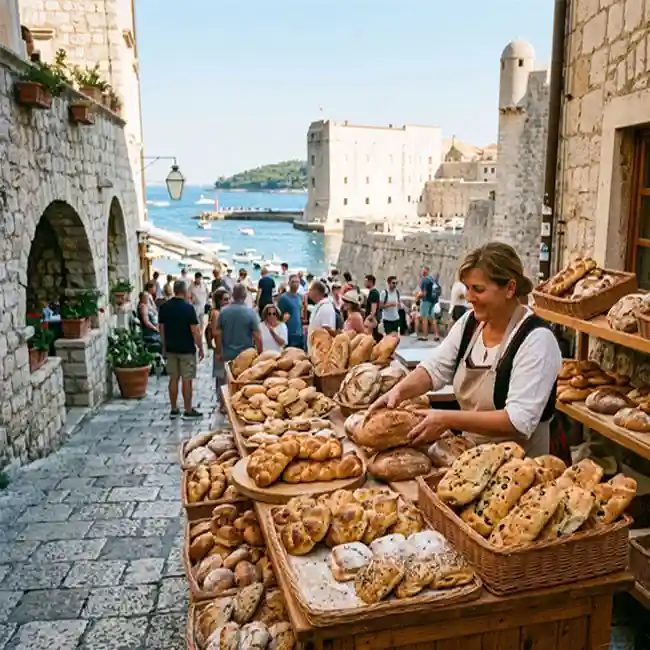
Hey there! If you’ve ever wandered through the cobblestone streets of Zagreb or felt the salty breeze on the Dalmatian coast, you know there’s one scent that follows you everywhere: the irresistible aroma of freshly baked bread. In Croatia, bread isn’t just a side dish or something you use to make a quick sandwich. It is the literal soul of the table.
Today, we’re diving deep into the world of Croatia Breads. We’re going to talk about the culture, the regional quirks, and why "breaking bread" is basically a national sport here. Grab a seat, maybe a little olive oil for dipping, and let’s get into it!
🇭🇷 🍞🥖The Cultural Soul of the Croatian Bakery🧡
To understand Croatian bread, you have to understand the geography. This country is a beautiful, delicious mix of Mediterranean vibes on the coast and Central European heartiness inland. This "clash of cultures" has created a bakery scene that is incredibly diverse.
In Croatia, bread represents hospitality. If you walk into a local’s home, don’t be surprised if the first thing you see is a loaf of bread and a small bowl of salt. It’s an ancient symbol of welcome. They take their dough seriously—like, "don't-even-think-about-buying-pre-sliced-plastic-bread" seriously. Most locals still visit the pekara (bakery) every single morning to get a loaf that’s still warm enough to fog up the paper bag.
🌊 Coastal vs. 🌲 Continental: A Tale of Two Doughs
The bread you find in the sunny south of Dalmatia is worlds apart from what you’ll find in the misty hills of Slavonia or the bustling streets of the capital.
• The Coast (Istria & Dalmatia): Here, it’s all about the "Peka" style and sourdoughs. The influence is heavy on olive oil, herbs, and textures that can withstand being dipped into rich brodetto (fish stew).
• The Interior (Zagreb & Slavonia): Move inland, and the bread gets heavier, darker, and more "Austro-Hungarian." You’ll find more rye, seeds, and cornmeal. It’s the kind of bread designed to keep you warm and fueled for a day of working in the fields or navigating a snowy winter.
🥐 Iconic Breads You Have to Know
Before we get into the "how-to" of living like a local, let's name-drop some of the heavy hitters in the Croatian bread world. These aren't just snacks; they are cultural icons.
🏺 1. Domaći Kruh pod Pekom (The Iron Bell Bread)
If there is a king of Croatian breads, this is it. "Peka" refers to a large iron bell used for outdoor cooking. The dough is placed on a stone hearth, covered with the bell, and then buried under burning embers.
• The Vibe: It’s rustic, smoky, and has a crust so thick you could probably use it as a shield. Inside? It’s soft, airy, and tastes like history.
🌻 2. Pogača (The Versatile Classic)
Pogača is a round, flat-ish bread that exists in dozens of variations. Some are simple and salty, others are stuffed with onions or herbs. It’s the ultimate "snack bread." In the town of Vis, they even make a version stuffed with salty fish and tomatoes (but we'll stick to the bread part for now!).
🌽 3. Kukuruzni Kruh (Cornbread)
Forget the sweet, cake-like cornbread you might find in the US. Croatian kukuruzni kruh is dense, hearty, and often has a slightly sour tang. It’s traditionally made in the northern regions and is the perfect partner for a thick vegetable soup.
🥨 4. Mlinci (The Bread-Pasta Hybrid)
Okay, this one is a bit of a curveball. Mlinci are thin, dried flatbreads. You don't eat them dry; you break them into pieces and soak them in meat juices or boiling water until they become soft and noodle-like. It’s a staple for festive dinners, especially around the holidays.
🧺 The "Way of Life": How Croatians Eat Their Bread
In many Western cultures, bread is being pushed to the side in favor of low-carb diets. In Croatia? Not a chance. Bread is the foundation of the "Gastro-Lifestyle."
🥗 The "Mopping" Technique
One of the most important cultural lessons you can learn in Croatia is the art of "toćanje." This is the act of using a piece of crusty bread to mop up every last drop of sauce, olive oil, or stew from your plate. To leave sauce on a plate is almost an insult to the cook—and a waste of good bread!
🥯 The Morning Ritual
The pekara is the heartbeat of every neighborhood. These bakeries are often open 24/7 or start their shifts in the middle of the night. It’s common to see people stopping by at 7:00 AM for a fresh bijeli kruh (white bread) or late at night after a long shift. The bread is usually sold unsliced, wrapped in a simple piece of white paper.
🏡 Sunday Family Lunch
Sunday lunch is sacred. It’s the time when the "good" bread comes out. Whether it’s a homemade loaf braided with care or a giant Peka bread brought in from the outdoor oven, the bread sits in the center of the table, usually broken by hand rather than cut with a knife. There’s something communal and grounding about passing around chunks of bread to your family.
🌾 Why Croatian Bread Just Tastes... Different?
If you’ve ever wondered why bread in Europe—and specifically Croatia—tastes better than the stuff in the supermarket back home, it comes down to three things: Ingredients, Time, and Tradition.
💧 1. The Water and Soil
Croatia is blessed with incredible natural springs and fertile plains (especially in the Slavonia region, often called the "breadbasket" of the country). The quality of the wheat and the mineral content of the water play a huge role in the fermentation process.
⏳ 2. No Rushing the Dough
Artisanal Croatian bakers aren't fans of chemical leaveners. Many traditional breads rely on long fermentation times. This doesn't just make the bread tastier; it makes it easier to digest. The "wild" yeasts found in the coastal air lend a specific tang to the sourdoughs of the region.
🔥 3. The Wood-Fired Connection
While modern bakeries use electric ovens, the soul of Croatian baking is still tied to wood-fired stone ovens. That hint of smoke and the uneven, char-kissed crust is something you just can't replicate in a standard kitchen.
🥨 Beyond the Loaf: The World of Savory Doughs
While we're focusing on bread, we can't ignore the cousins of the loaf. Croatia has a massive "dough culture" that blurs the line between bread and pastry.
🧀 Soparnik: The Coastal Legend
Hailing from the Poljica region, Soparnik is a savory pie made of two very thin layers of dough filled with Swiss chard, onions, and parsley. It’s baked on a stone hearth and covered in ashes. Once cleaned off, it’s brushed with olive oil and garlic. It’s technically a "pie," but it’s sold in every bakery as a bread-based snack.
🥟 Štrukli: The Comfort of the North
In the Zagorje region, you’ll find Štrukli. These are dough pillows filled with fresh cottage cheese. They can be boiled or baked, and they represent the ultimate comfort food. It’s soft, pillowy, and feels like a warm hug from a Croatian grandmother.
🗺️ A Regional Road Trip for Your Tastebuds
If you were to drive from the top of Croatia to the bottom, your bread basket would change every couple of hours.
1.Istria: You’ll find breads infused with local truffles or heavy with the scent of premium olive oil.
2.Lika: This mountainous region is famous for Basa cheese and heavy, dark breads that can survive the freezing winters.
3.Dalmatia: Look for Pogača od slanih srdela—a bread that’s basically a Mediterranean meal in one bite.
4.Slavonia: This is where the big, golden loaves of wheat and corn come from. Everything here is oversized and meant for sharing.
💡 Why You Should Care About "Old Bread"
In Croatia, throwing away bread is considered a "sin" by the older generation. This led to some of the best culinary inventions!
• Bread Salads: Old, crunchy bread is tossed with tomatoes, cucumbers, and lots of vinegar and oil.
• Breadcrumbs: Almost every household makes their own breadcrumbs from leftover loaves to use for breading meats.
• Soups: Stale bread is often used to thicken traditional garlic or tomato soups.
It’s a zero-waste culture that has existed long before "sustainability" became a buzzword. It’s born out of respect for the grain and the effort it takes to bake a loaf.
🥖 Wrapping It Up: The Simple Joy of the Crust
At the end of the day, Croatia breads aren't about fancy techniques or expensive ingredients. They are about the sun, the soil, and the people. Whether you’re tearing into a warm Pogača at a street market or sitting down for a five-course meal in a stone tavern, the bread is the constant. It’s the connector.
Next time you’re thinking about your next culinary adventure, don't just look at the main courses. Look at the bread basket. In Croatia, that’s where the real story begins. 🇭🇷
🙋♂️ FAQ: Everything You Wanted to Know About Croatian Breads
Q1. Is bread served for free in Croatian restaurants?
Usually, yes! In most traditional konobas (taverns) and restaurants, a basket of fresh bread is brought to the table as soon as you sit down. Sometimes there's a small "cover charge" (couvert) on the bill that includes the bread and a small spread, but it's almost always worth it for the handmade quality.
Q2. What is the most "traditional" bread I should try first?
If you want the true "wow" factor, look for Kruh pod Pekom. It’s the most unique to the region because of the iron-bell baking method. If you're looking for an everyday snack, grab a slice of Pogača from any local bakery.
Q3. Are there gluten-free bread options in Croatia?
While traditional Croatian bread culture is very heavy on wheat, corn, and rye, the bigger cities like Zagreb, Split, and Dubrovnik have seen a massive rise in health-conscious bakeries. You can now find gluten-free options in most major supermarkets (Konzum, Tommy, Spar) and specialized artisanal bakeries in tourist hubs.
🍞 From the Adriatic Coast to Your Kitchen: Discovering the Soul of Croatian Baking
👉 Learn 3 Croatian Specialty Breads
| 🌐 🍞 < Back | 🇭🇷 🥗 < Previous | Next > 🍱 🇭🇷 |