
🏠 Home > 🗺️ Recipes > 🍞 Breads > 🇭🇷 Croatia Breads > 🍞 1.Traditional Croatian Pogača (The Hearth Bread) , 2.Lepinja (The Famous Balkan Flatbread) , 3.Dalmatian-Style Soparnik (Savory Chard Flatbread)
🍞 From the Adriatic Coast to Your Kitchen: Discovering the Soul of Croatian Baking
Published by Supakorn | Updated: April 2026
🥖 🇭🇷 Introduction: The Magic of Croatian Oven-Fresh Delights🏰📖
Have you ever walked past a small village bakery in the heart of the Balkans and felt like the aroma was literally pulling you inside? There is something deeply spiritual about the way bread is baked in Croatia. It’s not just food; it’s a lifestyle, a warm welcome, and a piece of history served on a wooden board.
In recent years, the world has finally started catching on to what locals have known for centuries: Croatian breads are some of the most aromatic and satisfying in the world. Whether it’s the citrusy notes of a coastal loaf or the hearty, savory scent of a stuffed flatbread, these recipes are designed to make your house "smell like heaven."
In this ultimate guide, I’m taking you on a flour-dusted journey through three iconic recipes that have gained massive popularity among international foodies:
🥐 • Recipe 1: Pogača (The rustic, decorative flower bread)
🥨 • Recipe 2: Lepinja (The airy, cloud-like flatbread perfect for grilling)
🥖 • Recipe 3: Soparnik-Style Savory Pie (A thin, garlicky chard-filled masterpiece)
Don't let the idea of yeast and kneading intimidate you! We’re going to do this together, friend-to-friend. By the time you finish reading, you’ll be ready to transform your kitchen into a Mediterranean sanctuary.
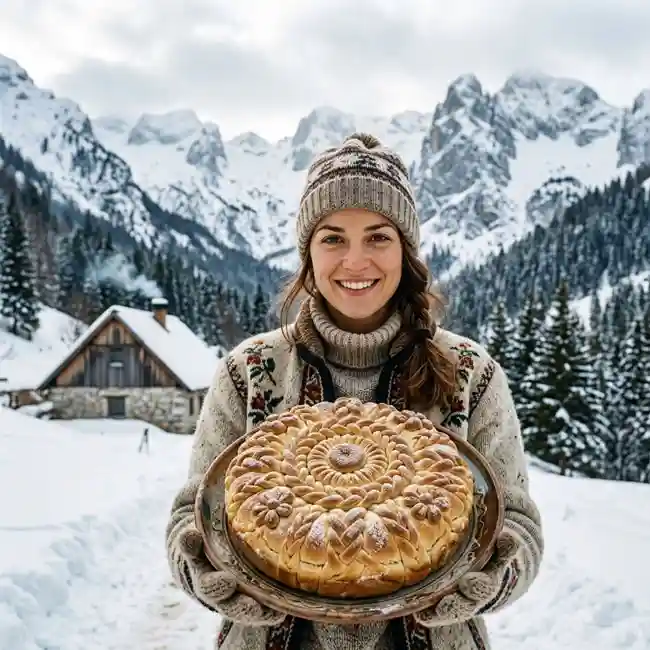
🍞 Recipe 1: Traditional Croatian Pogača (The Hearth Bread)
🥧 About this Recipe
Pogača is the "Queen" of Croatian hospitality. Traditionally, it was baked in the embers of a fireplace (the peka). It is a round, rustic bread that is often beautifully decorated with braids or patterns. The texture is denser than a baguette but softer than a standard white loaf, with a rich, buttery crust that smells like a warm hug. It’s the kind of bread you tear apart with your hands while it’s still steaming.
🌿 Ingredients & Measurements
• 500 grams of all-purpose flour (plus extra for dusting)
• 250 milliliters of lukewarm milk
• 100 grams of Greek yogurt (room temperature)
• 50 grams of melted unsalted butter
• 7 grams of dry yeast (1 packet)
• 1 teaspoon of granulated sugar
• 1.5 teaspoons of fine sea salt
• 1 egg yolk (for the wash)
• 1 tablespoon of sesame seeds or nigella seeds for topping
📝 Step-by-Step Instructions
1.Start the Yeast: In a small bowl, combine the warm milk, sugar, and yeast. Let it sit for 10 minutes until it becomes frothy and alive.
2.The Main Mix: In a large mixing bowl, combine the flour and salt. Create a well in the center and pour in the yeast mixture, the yogurt, and the melted butter.
3.Knead with Love: Mix until a shaggy dough forms, then move to a floured surface. Knead for about 8 to 10 minutes. You want the dough to feel smooth and elastic—like an earlobe!
4.The First Nap: Place the dough in a lightly oiled bowl, cover with a damp cloth, and let it rise in a warm spot for about 90 minutes.
5.Shaping: Once doubled in size, punch it down. Shape it into one large round disc or several small rolls arranged in a circle. You can use a knife to score a sunburst pattern on top.
6.Second Rise: Let the shaped loaf rest on your baking tray for another 30 minutes.
7.The Golden Finish: Brush the top with egg yolk mixed with a drop of water. Sprinkle your seeds generously.
8.Baking: Bake at 392°F / 200°C for the first 10 minutes, then lower to 356 degrees Fahrenheit ( 180 degrees Celsius ) for another 20 minutes until the crust is deep golden brown.
💡 Tips & Mistakes to Avoid
• Tip: Adding yogurt is the secret to a soft crumb that stays fresh for days. Don't skip it!
• Mistake: Using boiling milk. If the milk is too hot, it will kill the yeast and your bread will be as flat as a pancake. It should feel like a warm bath.
• Tip: Tap the bottom of the bread when it comes out; if it sounds hollow, it’s perfectly done.
❓ FAQ
Q1.Can I make this vegan?
Yes! Use almond milk, vegan butter, and coconut yogurt. Skip the egg wash and use a little olive oil instead.
Q2.Why did my crust turn out too hard?
You might have baked it too long or your oven was too dry. Try placing a small bowl of water at the bottom of the oven during baking to create steam.
📋 Summary
Pogača is a centerpiece bread. It’s perfect for Sunday dinners or as a gift for a neighbor. It’s simple, aromatic, and absolutely foolproof.
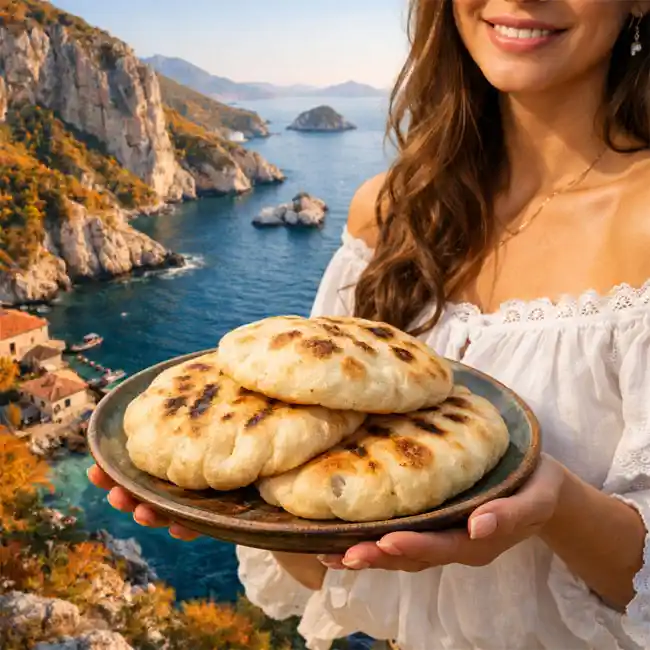
🥙 Recipe 2: Lepinja (The Famous Balkan Flatbread)
🥧 About this Recipe
If you’ve ever had Ćevapi (Balkan sausages), you’ve met Lepinja. It is an airy, pocket-filled flatbread that is famous for being incredibly soft. The aroma of Lepinja is very distinct—it smells like toasted grain and yeast. The trick to this bread is a very high hydration dough, which creates those beautiful big bubbles inside.
🌿 Ingredients & Measurements
• 500 grams of high-protein bread flour
• 400 milliliters of lukewarm water
• 7 grams of dry yeast
• 1 teaspoon of salt
• 1 teaspoon of sugar
• 2 tablespoons of olive oil (for handling the dough)
📝 Step-by-Step Instructions
1.The Wet Dough: This dough will be very sticky! Mix the water, yeast, and sugar. Gradually add the flour and salt. Mix with a wooden spoon until combined.
2.No-Knead Method: Instead of traditional kneading, use a wet hand to "fold" the dough over itself in the bowl several times every 15 minutes for one hour.
3.Long Rise: Cover the bowl and let it rise for 2 hours. The dough should be full of bubbles.
4.Dividing: Dust your workspace heavily with flour. Divide the sticky dough into 4 or 5 portions. Gently shape them into balls without popping the bubbles.
5.Flattening: Let the balls rest for 15 minutes, then gently press them down into thick discs (about 2cm thick).
6.The Pattern: Traditionally, we use the back of a knife to press a "checkerboard" or grid pattern into the top of the flatbread.
7.High Heat Bake: Preheat your oven to the highest setting (usually 482 degrees Fahrenheit or 250 degrees Celsius) with the baking tray inside. Slide the Lepinja onto the hot tray.
8.The Puff: Bake for only 8 to 10 minutes. They should puff up like balloons!
💡 Tips & Mistakes to Avoid
• Mistake: Adding too much flour. It’s tempting because the dough is sticky, but a dry dough won't puff up. Keep your hands wet or oiled instead of over-flouring the dough.
• Tip: As soon as they come out of the oven, wrap them in a clean kitchen towel. This "steams" the crust and makes them incredibly soft.
• Mistake: Opening the oven door too early. You need that intense heat trapped inside to create the pocket.
❓ FAQ
Q1.How do I eat this?
Slice it halfway through and fill it with grilled meats, cream cheese (Kaymak), or even just a drizzle of olive oil and salt.
Q2.Can I freeze them?
Yes! They freeze beautifully. Just toast them for a minute when you're ready to eat.
📋 Summary
Lepinja is the ultimate BBQ bread. It’s light, aromatic, and far superior to any store-bought pita you'll ever find.
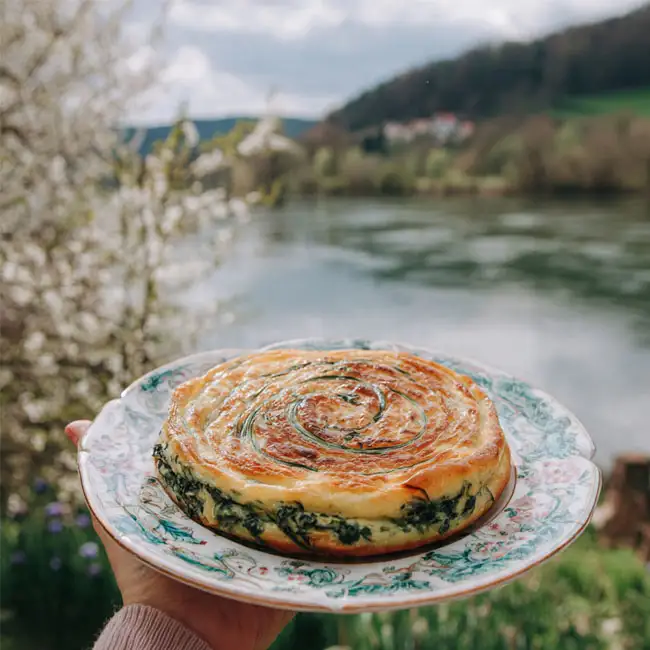
🥗 Recipe 3: Dalmatian-Style Soparnik (Savory Chard Flatbread)
🥧 About this Recipe
Technically a "savory pie," Soparnik is so bread-like in its execution that it’s a must-include. Coming from the Poljica region, it is so culturally significant that it’s protected by the EU. It consists of two paper-thin layers of dough filled with Swiss chard and onions. The real "heavenly" smell comes at the very end when the hot bread is rubbed with raw garlic and olive oil.
🌿 Ingredients & Measurements
For the Dough:
• 500 grams of all-purpose flour
• 3 tablespoons of olive oil
• 250 milliliters of water
• 1/2 teaspoon of salt
For the Filling:
• 1 kilogram of Swiss chard (washed and dried completely)
• 1 bunch of spring onions (chopped)
• 2 tablespoons of parsley (finely chopped)
• 3 tablespoons of olive oil
• Salt to taste
The Topping:
• 3 cloves of garlic (crushed)
• 50 milliliters of extra virgin olive oil
📝 Step-by-Step Instructions
1.Dough Prep: Mix the flour, salt, oil, and water. Knead until you have a firm, smooth dough. Divide into two equal balls and let them rest for 30 minutes.
2.Prepare the Chard: This is the most important part. The chard must be bone-dry. Slice it into very thin ribbons, mix with spring onions, parsley, and oil. Do not add salt until the very last second, or the leaves will release water!
3.Rolling Thin: Roll out the first ball of dough on a floured surface until it is paper-thin and circular.
4.The Filling: Spread the chard mixture evenly over the dough, leaving a small border at the edge.
5.The Lid: Roll out the second ball of dough just as thin and place it over the top. Pinch the edges together tightly to seal the pie.
6.Baking: In a standard oven, bake at 392 degrees Fahrenheit ( 200 degrees Celsius ) on a flat tray for about 20 minutes until the dough starts to blister and turn brown.
7.The Aromatic Secret: This is the "heaven" part. While the Soparnik is still piping hot, brush the entire surface with the garlic and olive oil mixture. Let it soak in for 5 minutes.
💡 Tips & Mistakes to Avoid
• Mistake: Using wet chard. If there is any water on the leaves, the bread will become soggy and won't get that nice charred finish.
• Tip: Traditionally, this is baked on a stone under hot ash. You can mimic this by using a pizza stone in your oven.
• Tip: Don't be shy with the garlic! The contrast between the earthy chard and the pungent garlic oil is what makes this famous.
❓ FAQ
Q1.Can I use spinach instead of chard?
You can, but spinach is much softer and more watery. If using spinach, squeeze it very well after chopping.
Q2.Do I eat it cold or hot?
It’s traditionally served at room temperature, cut into diamond shapes.
📋 Summary
Soparnik is a rustic masterpiece. It’s healthy, vegan-friendly, and the garlic-olive oil aroma will stay in your memory forever.
✨ Final Thoughts
Baking bread is one of the most rewarding things you can do in your kitchen. It requires patience, but the reward is a house that smells like a Croatian village and a meal that brings people together.
These three recipes—Pogača, Lepinja, and Soparnik—represent different parts of Croatian soul. One is for sharing with family, one is for casual summer grills, and one is a tribute to the humble ingredients of the earth.
I really encourage you to try these one at a time. Start with the Pogača if you want something comforting, or go for the Lepinja if you’re planning a sandwich night. Don't worry if your first loaf isn't "Instagram perfect"—the flavor and that heavenly aroma will be there regardless!
Once you’ve pulled your first tray out of the oven, come back and let me know how it went. There’s nothing I love more than hearing about a kitchen filled with the scent of fresh bread. Happy baking, my friend!
| 🇭🇷 🍞 < Back |