
🏠 Home > 🗺️ Recipes > 🍱 Snacks > 🇨🇳 China Snacks > 🍱 1.Jianbing
🍱 The Ultimate Guide to Iconic Chinese Street Snacks You Can Make at Home
Published by Supakorn | Updated: November 2026
🐼🥢 Introduction – Discover Jianbing: Authentic China Comfort Food
If you have ever found yourself wandering the bustling dawn streets of Beijing, Shanghai, or Tianjin, there is one intoxicating aroma you simply cannot escape. It is the fragrant harmony of toasted sesame oil, bubbling savory batter, cracked eggs sizzling on iron plates, and rich ribbons of dark, fermented soybean paste mingling with fresh scallions. Welcome to the vibrant realm of genuine Chinese street gastronomy, where fast food is not processed or frozen, but made fresh right in front of your eyes in less than three minutes flat.
Among the massive pantheon of popular China fast snacks that locals swear by, one undisputed champion reigns supreme across morning commutes and midnight markets alike: Jianbing (煎饼). Often referred to in the West as the classic Chinese breakfast savory crepe, Jianbing is so much more than a routine bite on the run. It is an edible masterpiece of contrasting textures and layered flavors. Imagine a thin, nutty, naturally gluten-friendly crepe made from a multi-grain batter, coated smoothly with fresh beaten egg and toasted black sesame seeds, flipped to reveal a deeply umami foundation brushed with sweet bean sauce and fiery garlic chili paste. Then comes the real magic: a sprinkling of pungent green scallions, fresh cilantro, tangy pickled mustard tubers, and a shattering, ultra-crispy fried wonton cracker (baocui) folded right in the center. Every single bite delivers a soft, chewy, crispy, savory, aromatic explosion that awakens all five senses.
In recent years, this beloved snack has traveled across oceans, drawing long, winding lines in London, New York, Melbourne, and Tokyo. International foodies simply cannot get enough of that signature snap and that deep, complex sauce profile. Yet, you do not need to book a flight to northern China or hunt down a trendy metropolitan food truck to experience this street-side marvel.
Today, we are demystifying the whole process right here. We have taken the authentic, generational street cart technique and adapted it carefully so that you can conquer it flawlessly in your own home kitchen using standard non-stick cookware or an electric griddle. Whether you want to spice up your weekend brunch rotation or dive deep into genuine regional flavors, you are in the right place. Tie on your apron, fire up the stove, and let us bring the bustling spirit of China's iconic snack alleys right onto your plate!
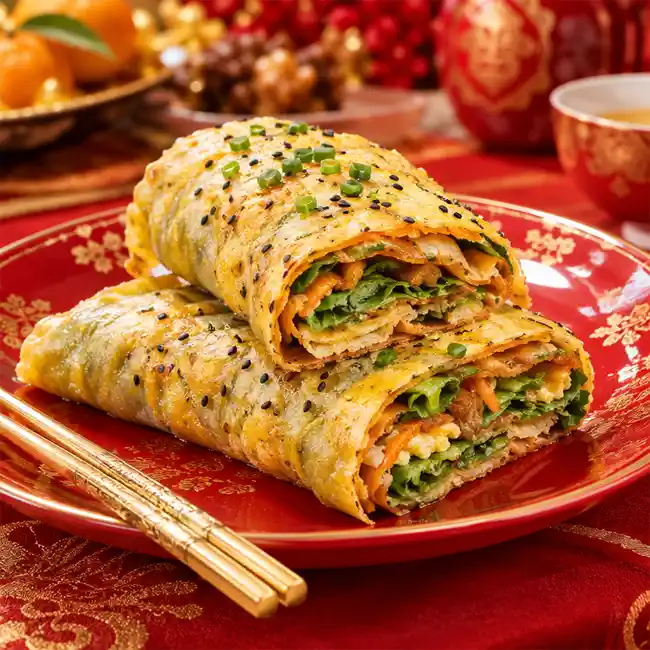
🍳 Authentic Jianbing Recipe
🥟 Culinary Background & Flavor Profile
To understand why Jianbing holds such a revered spot in Chinese snack culture, you have to appreciate its masterclass in textural architecture. Street vendors in northern China—most famously Tianjin and Shandong province—have spent generations perfecting this dish. The foundation starts with a distinct batter made not from plain processed wheat flour, but from a strategic blend of whole grain flours such as mung bean, millet, or buckwheat alongside wheat. This ancient grain combination gives the crepe an earthy, nutty baseline aroma while creating a batter that browns beautifully without turning heavy or gummy.
The moment the batter touches a blazing-hot cast-iron flat top, it sets almost instantly into a delicate sheet. The crack of an egg straight onto the cooking crepe serves a dual purpose: it enriches the dough with silky richness while acting as an edible culinary adhesive that catches the black sesame seeds and scallions.
Once flipped, the crepe acts as a canvas for the legendary northern sauce duo: Tianmianjiang (sweet fermented wheat bean sauce) and spicy broad bean or garlic chili paste. The sweetness of the dark bean paste counters the salty warmth of the eggs, while pickled vegetables cut right through the rich sauces. And finally, the inclusion of the baocui (crispy wonton cracker) supplies that hallmark crunch that contrasts sharply with the supple, tender crepe skin. From your very first bite, you experience soft, crisp, savory, sweet, pungent, and spicy flavors all operating in absolute harmony.
🥣 Essential Ingredients & Precise Measurements
To ensure complete culinary success, we have categorized every ingredient clearly. Note that precision in batter hydration guarantees that thin, street-authentic crepe consistency!
1. The Multi-Grain Batter Base
◦ 50 grams (about 1/3 cup plus 1 tablespoon) fine mung bean flour (or yellow soybean flour)
◦ 50 grams (about 1/3 cup plus 1 tablespoon) unbleached all-purpose flour
◦ 20 grams (about 2 tablespoons) cornstarch or tapioca starch
◦ 180 milliliters (3/4 cup) room-temperature water
◦ 1/2 teaspoon kosher salt
◦ 1/4 teaspoon ground white pepper
2. The Fresh Crepe Toppings (Per Individual Serving)
◦ 1 to 2 large eggs
◦ 1 teaspoon toasted black sesame seeds
◦ 1 tablespoon finely chopped scallions (green parts only)
◦ 1 tablespoon chopped fresh cilantro leaves and tender stems
3. The Signature Street Cart Glaze
◦ 1 tablespoon Tianmianjiang (sweet bean sauce) or quality hoisin sauce
◦ 1 teaspoon Chinese chili oil with crispy bits or garlic chili paste
◦ 1/2 teaspoon fermented red bean curd paste (optional, mashed with 1 teaspoon water for traditional Tianjin flavor)
◦ 1/2 teaspoon toasted sesame oil
4. The Crispy Core (Baocui) & Inner Fillings
◦ 4 square wonton wrappers or spring roll wrappers (per crepe, to fry your own fresh cracker)
◦ 120 milliliters vegetable oil or peanut oil (for shallow frying the crackers)
◦ 1 tablespoon finely chopped Zha Cai (Chinese pickled mustard tuber)
◦ 2 crisp, washed leaves of green leaf lettuce or tender romaine
🔥 Step-by-Step Cooking Instructions
⭐ Step 1: Craft the Homemade Crispy Cracker (Baocui)
◦ Take your square wonton wrappers and make two vertical parallel slits down the center of each wrapper using a sharp paring knife. These slits stop the wrapper from puffing up like a balloon while frying, keeping it flat and crunchy.
◦ Heat 120 milliliters of vegetable oil in a skillet or small saucepan over medium heat until it reaches roughly 175°C (350°F). You can test the heat by dipping the corner of a wonton wrapper into the oil; it should bubble vigorously right away.
◦ Gently slide the wrappers into the oil in single layers. Fry for roughly 30 to 45 seconds per side until they turn deeply golden brown and blistered.
◦ Lift the fried crackers out with tongs or chopsticks, and drain them thoroughly on a plate lined with paper towels. Set them aside in a dry place.
⭐ Step 2: Mix and Rest the Multi-Grain Batter
◦ In a medium ceramic or glass mixing bowl, whisk together the mung bean flour, all-purpose flour, cornstarch, kosher salt, and ground white pepper until evenly blended.
◦ Pour in the 180 milliliters of room-temperature water gradually while continuously whisking to eliminate all pockets of dry flour.
◦ Whisk vigorously until the batter transforms into a silky, lump-free liquid that resembles heavy whipping cream.
◦ Set the bowl aside to rest at room temperature for at least 15 to 20 minutes. Resting allows the starches to hydrate thoroughly, which prevents the cooked crepe from tearing apart during the flipping stage.
⭐ Step 3: Blend the Savory Glaze
◦ In a small condiment bowl, stir together the sweet bean sauce (or hoisin), chili paste or chili oil, optional mashed red bean curd, and toasted sesame oil until uniform.
◦ Keep a pastry brush or the back of a spoon handy next to your stove.
⭐ Step 4: Pour and Spread the Crepe Base
◦ Place a flat 10-inch or 12-inch non-stick crepe pan, skillet, or flat electric griddle over medium-low heat.
◦ Lightly dampen a paper towel with a few drops of neutral cooking oil and rub it very lightly across the surface of the pan. You want a matte finish, not pooled oil, or the batter will slip and slide instead of spreading.
◦ Pour roughly 80 to 90 milliliters (about 1/3 cup) of batter directly into the center of the warm pan.
◦ Working quickly, pick up your pan and swirl it steadily in a wide circular motion to spread the batter out into a thin, uniform sheet. If you have a traditional T-shaped wooden crepe spreader, lightly guide the batter in a circular swirl across the cooking surface.
◦ Let the batter cook undisturbed for about 60 to 90 seconds until the edges pull away cleanly and the top surface transitions from glossy wet to opaque matte.
⭐ Step 5: Incorporate the Egg and Aromatics
◦ Crack one large egg directly into the center of the setting crepe.
◦ Using a silicone spatula, wooden spreader, or fork, gently break the yolk and swirl the egg out until it blankets the entire surface of the crepe in a thin layer.
◦ While the egg is still raw and tacky, scatter 1 teaspoon of toasted black sesame seeds, half of your chopped scallions, and half of your cilantro evenly across the egg wash.
◦ Allow the egg to cook for another 60 to 75 seconds until it sets and becomes firm to the touch.
⭐ Step 6: The Masterful Flip
◦ Slide a wide, thin spatula carefully under the edges of the crepe to ensure it is completely freed from the pan.
◦ Confidently flip the entire crepe over in one fluid movement so that the egg and sesame side is now facing down against the warm skillet, and the original cooked flour base is facing up.
◦ Lower the burner heat to low to prevent burning the eggs beneath.
⭐ Step 7: Sauce, Fill, and Fold
◦ Using your pastry brush or spoon, generously brush your blended savory glaze all over the warm surface of the crepe.
◦ Sprinkle the chopped pickled mustard tuber (Zha Cai) and the remaining fresh scallions and cilantro evenly across the sauced surface.
◦ Lay your crisp lettuce leaves across the center line, and place two of your freshly fried crispy wonton crackers (baocui) directly on top of the greens.
◦ Fold one third of the crepe from the bottom upward over the crackers, then fold the opposite top third down, creating an envelope shape.
◦ Use the edge of your spatula to press down firmly across the middle of the folded roll, creating a neat crease, then fold the entire crepe in half once more into a compact, thick rectangular pocket.
◦ Transfer onto a plate or wrap in parchment paper, slice cleanly down the center, and prepare to indulge while it is piping hot!
💡 Chef's Pro Tips & Common Mistakes to Avoid
• Keep Pan Heat Moderate and Controlled: The single most common home mistake is dropping your batter onto a scorching hot skillet. If the pan is smoking hot, the batter will seize instantly into thick, clumpy clumps before you have a chance to spread it into a paper-thin sheet. Keep the heat on medium-low, allow the batter to spread smoothly, and only then adjust heat as needed.
• Avoid Greasing the Pan Heavily: Street vendors never pour liquid oil under their batter. Too much surface oil makes the wet batter bead up and glide around rather than sticking lightly and cooking into an unbroken sheet. Wipe the pan with an oiled towel until it looks virtually dry.
• Hydration and Rest Are Key: Never skip the 15-minute resting period for your batter. Mung bean flour absorbs water much more slowly than wheat flour. If you rush it, your crepe will feel brittle and crack into puzzle pieces during the fold.
• Substitute Ingredients with Confidence: If you cannot find authentic Chinese sweet bean sauce (Tianmianjiang), quality hoisin sauce mixed with a drop of regular soy sauce works wonders. If mung bean flour is hard to track down, you can substitute fine chickpea (besan) flour or whole-wheat flour at a 1:1 ratio with fantastic nutty results.
• Maintain That Crunch Factor: Always add your fried crackers and lettuce at the very last second right before folding. Leaving the crackers resting on hot, sauced surfaces inside the pan for minutes will steam them and ruin that precious crunch.
🍵 Pairings & Serving Suggestions
Jianbing is historically a northern breakfast staple, which means it thrives alongside warm, comforting morning sides.
• Traditional Warm Sweet Soy Milk (Doujiang): Nothing complements the salty, savory crunch of a warm Jianbing like a steamy bowl or glass of fresh, lightly sweetened soy milk. The creaminess cuts through the robust chili paste and sesame oil like a dream.
• Savory Tofu Pudding (Douhua): If you prefer keeping the entire meal savory, serve your crepe with soft silken tofu ladled with a light soy-ginger broth and a touch of scallion oil.
• Light Floral Teas: If enjoying Jianbing as an afternoon pick-me-up or evening snack, brew a pot of hot Jasmine green tea or fragrant Tieguanyin Oolong. The floral, crisp notes wash over the palate and refresh your tastebuds between rich bites.
• Pickled Cucumber Ribbons: A side of chilled, quick-pickled cucumber slices tossed in rice vinegar, garlic, and sea salt provides a cool, snappy contrast to the warm, spicy crepe.
🐲❓ Frequently Asked Questions (FAQ)
Q1: Can I make the batter ahead of time?
Yes, absolutely! You can whisk the batter together the night before, cover the bowl tightly with plastic wrap, and store it in your refrigerator for up to 24 hours. The flour will hydrate beautifully. Just make sure to give it a brisk whisk before cooking, as the starches naturally settle to the bottom over time.
Q2: What can I use if I do not want to deep-fry wonton wrappers?
While fresh-fried baocui is unmatched, you can achieve a great shortcut crunch by using store-bought puffed rice crackers, thick salted potato chips, or even lightly toasted crispy corn tortilla chips. They hold up surprisingly well against the hot savory sauces!
Q3: How do I store and reheat leftover Jianbing?
Jianbing is unequivocally at its absolute best eaten straight off the pan. However, if you have leftovers, do not microwave them, as the cracker will turn unpleasantly soggy. Instead, reheat the folded crepe in an air fryer at 180°C (350°F) for 3 to 4 minutes, or place it on a dry skillet over medium-low heat until warmed through and crisp on the exterior.
Q4: Can I make this recipe completely gluten-free?
You can! Simply replace the all-purpose flour in the batter with brown rice flour or extra cornstarch, ensure your bean paste is certified gluten-free (tamari-based hoisin works great), and swap the wonton wrappers for crispy fried gluten-free rice paper sheets.
⏱️ Recipe Quick Summary
✦ Prep Time: 15 minutes
✦ Batter Resting Time: 15 minutes
✦ Cook Time: 10 minutes
✦ Total Time: 40 minutes
✦ Servings: 2 large street-style crepes
✨ Final Thoughts & Kitchen Inspiration
Recreating iconic global street food at home is one of the most rewarding culinary adventures anyone can undertake. While a master street vendor in Beijing can swirl, egg, flip, and fold a Jianbing with dazzling speed in under ninety seconds, do not worry if your very first crepe turns out slightly irregular or tears around the edges. Culinary magic lives in flavor, fragrance, and joy—not rigid perfection.
The best part about mastering this legendary fast snack is that your kitchen now becomes your personal playground. You can lean into tradition with pickled mustard greens and fresh cilantro, or you can tailor it completely to your household preferences by adding sliced roast pork, leftover shredded chicken, grilled sausage, or a drizzle of your favorite hot sauces.
Once you hear that initial sizzle of the batter meeting the pan and catch that first whiff of toasted sesame seeds toasting over golden egg, you will realize that genuine street snacks are well within your everyday reach. Fire up your skillet, give this recipe a spin, and share your delicious creations with family and friends!
🏮 Culinary Heritage & Cultural Credit to Northern China
Every great culinary treasure has deep roots, and Jianbing stands as a testament to the profound food culture of Northern China. Historical folklore often traces the conceptual ancestor of this multi-grain flatbread back nearly two millennia to the Three Kingdoms period (circa 220–280 CE) in the fertile plains of Shandong province. Legend tells of the brilliant military strategist Zhuge Liang, whose troops lost their heavy iron cooking woks during battle. Undeterred, he instructed his cooks to spread seasoned wild grain and water pastes across flat, oiled military shields held directly over roaring campfires, providing rapid, portable nourishment for his soldiers.
Over the ensuing centuries, through the Ming and Qing dynasties, the craft evolved dramatically. In coastal Tianjin, cooks refined the technique by using pure mung bean batters, pairing the supple crepes with freshly fried dough sticks (youtiao) or crispy dough wafers (guoba), transforming military rations into an everyday urban art form.
Today, Jianbing represents more than just fast food; it embodies the tireless work ethic, ingenuity, and warmth of generations of street cart artisans who rise well before dawn in sub-zero winter temperatures to feed millions of hard-working commuters. By honoring these original techniques, sourcing authentic whole-grain flours, and appreciating the delicate craft of the iron griddle, we celebrate and pay homage to a living, breathing northern Chinese culinary tradition that continues to nourish and delight people around the globe.
| 🇨🇳 🍱 < Back |