
🏠 Home > 🗺️ Recipes > 🍞 Breads > 🇨🇳 China Breads > 🍞 1.Homemade China Breads
🍞 Homemade China Breads You Can Master in Your Own Kitchen
Published by Supakorn | Updated: November 2026
🇨🇳 Introduction – Discover Homemade China Breads: Authentic China Breads Comfort Food
Have you ever walked past a small bakery in Shanghai, Beijing, or Chengdu in the early morning and been stopped in your tracks by the smell of warm, freshly steamed bread? That soft, slightly sweet aroma drifting through the street is one of the most comforting food memories in all of China. It is not fancy. It is not complicated. It is just honest, beautiful bread made with care, and it has been loved for thousands of years.
Homemade China breads are a huge part of everyday life in China. From busy city breakfast stalls to quiet family kitchens in the countryside, bread is there for every meal. People eat it plain with hot soy milk in the morning, tear it apart to scoop up rich braised dishes at lunch, and enjoy it as a soft, fluffy snack in the afternoon. For travelers, tasting fresh Chinese bread is often one of the most surprising highlights of a trip, because it is so different from Western bread yet so instantly comforting and familiar.
What makes this recipe so special is that it brings that authentic street and home-kitchen experience right into your kitchen, without needing professional equipment or years of training. This is an original, traditional-inspired version that has been simplified for home cooks. You only need basic pantry ingredients, a mixing bowl, and a little patience. In return, you get soft, pillowy breads with a delicate sweetness, a tender crumb, and a golden, slightly chewy crust if you choose to bake them, or a snow-white, cloud-like texture if you choose to steam them.
So, are you ready to roll up your sleeves and make something truly irresistible? Let us make these homemade China breads together, step by step, fast and easy, and fill your home with that same warm bakery smell that makes everyone come running to the kitchen.
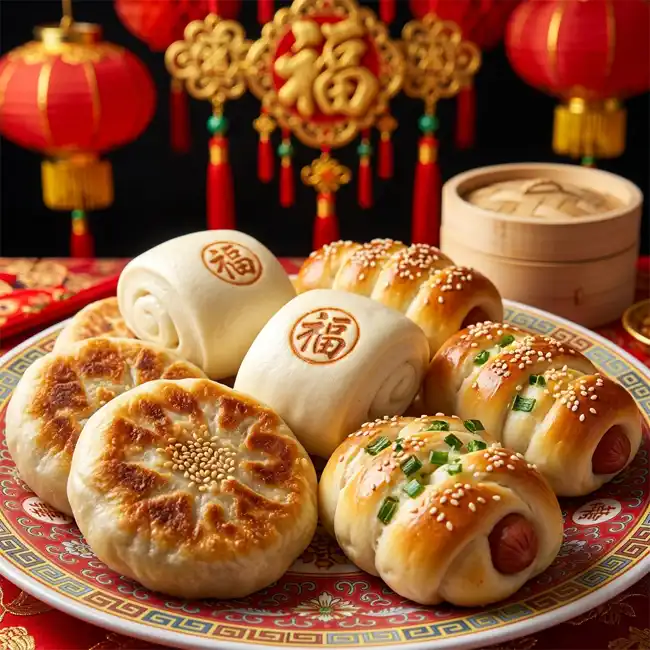
🥖 Authentic Homemade China Breads Recipe
✨ Culinary Background & Flavor Profile
Chinese breads are not just one style. They are a whole family of beloved breads, each with its own personality. Mantou, the classic steamed white bread, is soft, smooth, and mildly sweet. It has a clean, milky flavor and a bouncy, springy bite that makes it perfect for soaking up sauces. Hua Juan, or flower rolls, are twisted into beautiful layers with scallion, sesame, or five-spice, giving you a savory, aromatic experience in every bite. Shao Bing, a baked sesame flatbread, is crisp on the outside and layered and flaky on the inside.
What all of these breads share is a gentle sweetness, a soft yeast aroma, and an incredibly tender texture. Unlike heavy European breads, Chinese breads are light, moist, and almost melt in your mouth. The dough is enriched with just a little sugar and oil or milk, which keeps it soft for hours. When you tear a piece open, you should see fine, even layers and feel a soft pull. The taste is comforting, not overpowering, which is why it pairs so well with both savory and sweet dishes.
This recipe focuses on a versatile master dough that you can steam for classic soft mantou-style buns or bake for golden, fluffy dinner rolls. You will learn the authentic method, with a modern shortcut that saves time without losing flavor. Once you master this one dough, you can shape it into round buns, twisted flower rolls, or simple loaves, and you will always get that irresistible homemade result.
🛒 Essential Ingredients & Precise Measurements
For this recipe, we will make two styles from one master dough: soft steamed breads and golden baked breads. The ingredients below are enough for about 12 medium buns or 1 large loaf. All measurements are precise, so you can get consistent results every time.
✦ For The Master Dough:
◦ All-purpose flour: 500 grams, about 4 cups, sifted for a lighter texture
◦ Warm whole milk: 260 milliliters, about 1 cup plus 1 tablespoon, heated to lukewarm
◦ Active dry yeast: 7 grams, about 2 and 1 quarter teaspoons
◦ White granulated sugar: 30 grams, about 2 tablespoons, for gentle sweetness and yeast activation
◦ Fine sea salt: 5 grams, about 1 teaspoon
◦ Neutral vegetable oil or melted unsalted butter: 20 milliliters, about 1 and 1 half tablespoons
◦ Baking powder: 3 grams, about 1 half teaspoon, for extra lift and softness
✦ For The Steamed Version Topping and Finish:
◦ Parchment paper squares: 12 small squares, about 8 centimeters each, to prevent sticking
◦ A light brush of vegetable oil: about 1 teaspoon, for the steamer basket
◦ Optional sesame seeds: 1 tablespoon, for sprinkling on top before steaming
✦ For The Baked Version Topping and Finish:
◦ Egg wash: 1 large egg beaten with 1 tablespoon of milk, for a shiny golden crust
◦ White sesame seeds: 1 tablespoon, for a classic bakery look
◦ Melted unsalted butter or milk: 1 tablespoon, to brush on hot bread for extra softness
◦ Optional scallion and five-spice filling: 3 finely chopped scallions mixed with 1 half teaspoon five-spice powder and 1 pinch of salt, for savory flower rolls
✦ Helpful Pantry Notes:
◦ If you do not have whole milk, you can use low-fat milk plus 1 teaspoon of extra oil for richness.
◦ If you prefer a slightly sweeter bread for breakfast, increase sugar to 40 grams.
◦ For a dairy-free version, replace milk with warm water or unsweetened soy milk in the same amount.
👩🍳 Step-by-Step Cooking Instructions
Follow these steps in order. The whole process is simple, and most of the time is just waiting for the dough to rise while you relax.
✦ Step 1: Activate the yeast: Pour the warm milk into a large mixing bowl. The milk should feel warm on your wrist, not hot. Add the sugar and yeast, stir gently, and let it sit for 8 to 10 minutes until it becomes foamy and fragrant. This tells you the yeast is alive and ready.
✦ Step 2: Mix the dry ingredients: In a separate large bowl, whisk together the sifted flour, salt, and baking powder until well combined. Make a small well in the center.
✦ Step 3: Form the dough: Pour the foamy yeast mixture and oil into the well. Stir with a wooden spoon or chopsticks until a shaggy dough forms. Then switch to your hands and knead inside the bowl for 2 minutes.
✦ Step 4: Knead until smooth: Transfer the dough to a lightly floured surface. Knead for 8 to 10 minutes, pushing, folding, and turning. The dough should become smooth, soft, and slightly springy. It should not stick to your hands anymore. If it is too sticky, add flour 1 teaspoon at a time.
✦ Step 5: First rise: Shape the dough into a ball and place it in a lightly oiled bowl. Cover with a clean kitchen towel or plastic wrap. Let it rise in a warm place for 60 to 75 minutes, or until it has doubled in size.
✦ Step 6: Punch down and shape: Gently press the dough to release air. Divide it into 12 equal pieces, about 65 grams each. For round buns, roll each piece into a smooth ball. For flower rolls, roll each piece flat, brush with oil, sprinkle with scallion and five-spice, roll up, and twist. For a loaf, place the balls snugly in a greased loaf pan.
✦ Step 7: Second rise: Place steamed buns on parchment squares and place baked buns on a lined baking tray, leaving space between them. Cover loosely and let rise again for 25 to 30 minutes until puffy and light.
✦ Step 8A: For steamed breads: Bring water in a steamer or large pot to a boil, then reduce to medium heat. Place buns in the steamer, leaving space. Steam for 15 to 18 minutes. Turn off heat and let them rest inside with the lid on for 5 minutes. Do not open the lid early or they may collapse.
✦ Step 8B: For baked breads: Preheat your oven to 180 degrees Celsius, about 350 degrees Fahrenheit. Brush the risen buns gently with egg wash and sprinkle with sesame seeds. Bake for 18 to 22 minutes until deep golden brown and the tops sound hollow when tapped.
✦ Step 9: Finish and rest: For steamed breads, remove carefully and enjoy warm. For baked breads, brush immediately with melted butter or milk for a soft, shiny crust. Let cool for 10 minutes on a wire rack before tearing open.
✦ Step 10: Serve and enjoy: Serve your homemade China breads warm. Tear them open to show the soft, fluffy inside. They are best on the day they are made, but they also reheat beautifully.
💡 Chef's Pro Tips & Common Mistakes to Avoid
• Use lukewarm liquid, never hot: If your milk is too hot, it will kill the yeast and your bread will not rise. Aim for body temperature, comfortable to touch.
• Do not skip the second rise: This short second rise is what makes the bread incredibly light and fluffy. If you bake too early, the bread will be dense.
• Knead long enough for a silky dough: Under-kneaded dough tears easily and bakes up rough. When the dough is ready, it should stretch thin without breaking right away.
• Measure flour correctly: Scoop flour with a spoon into your measuring cup and level it off. Packing the cup will add too much flour and make the bread dry.
• Keep the steamer lid closed: Opening the lid during steaming lets cold air in and causes wrinkles and collapse. Always rest for 5 minutes after turning off the heat.
• Do not overcrowd the steamer or tray: Breads need room to expand. Leave at least 3 centimeters between each bun.
• For extra softness, add a little milk: Brushing baked breads with warm milk right out of the oven keeps the crust soft instead of crunchy.
• Common mistake: Too much yeast: More yeast does not mean faster and better. It can create a sour, yeasty taste. Stick to the measured amount for clean flavor.
• Common mistake: Cold kitchen: If your kitchen is cold, place the dough in the oven with only the light on, or next to a bowl of warm water. Warmth helps it rise evenly.
• Common mistake: Overbaking: Chinese breads should stay soft. Remove them as soon as they turn golden. Overbaking dries them out quickly.
• Storage tip: Store leftover breads in an airtight bag at room temperature for up to 2 days, or freeze for up to 1 month. Re-steam for 5 minutes or warm in the oven for best texture.
🍽️ Pairings & Serving Suggestions
Homemade China breads are wonderfully versatile, and you can serve them in so many delicious ways for breakfast, lunch, dinner, or as a snack.
◦ Classic breakfast: Serve warm steamed buns with hot soy milk, a soft boiled egg, and pickled vegetables for a traditional Chinese morning.
◦ With savory dishes: Tear baked breads and use them to scoop up braised eggplant, mapo tofu, stir-fried vegetables, or sweet and sour chicken. The soft bread soaks up the sauce beautifully.
◦ With soups: Pair them with hot and sour soup, wonton soup, or a simple winter melon soup. The bread balances the tangy and savory flavors.
◦ Sweet afternoon snack: Spread a thin layer of condensed milk, red bean paste, custard, or black sesame paste inside a warm bun for a delightful dessert-style treat.
◦ For parties: Make mini versions and serve them on a platter with scallion, chili oil, and sweet soy dipping sauce. Guests love tearing and sharing them.
◦ With tea: Enjoy them with fragrant jasmine tea, oolong tea, or chrysanthemum tea. The light, floral notes of tea pair perfectly with the milky bread.
◦ Kid-friendly idea: Fill small buns with cheese, sweet corn, or chocolate chips before the second rise for a fun surprise inside.
🎎❓ Frequently Asked Questions (FAQ)
Q1: Can I make this dough ahead of time?
Yes. After the first rise, you can cover the dough tightly and refrigerate it overnight. Let it come to room temperature for 30 minutes before shaping and doing the second rise. This slow chill actually improves the flavor.
Q2: Can I use instant yeast instead of active dry yeast?
Yes, you can. Use the same amount and mix it directly with the flour, skipping the activation step. Still let the dough rise until doubled for the best texture.
Q3: Why did my steamed breads turn out wrinkly?
This usually happens when the lid is opened too soon or the heat is too high. Steam on medium heat, not high, and let the buns rest inside for 5 minutes after turning off the heat before opening.
Q4: How do I keep leftover breads soft?
Store them in an airtight container or zip bag once completely cool. To reheat, steam for 5 minutes or microwave for 15 seconds with a damp paper towel on top. Avoid leaving them uncovered, as they dry out fast.
⏱️ Recipe Quick Summary
◦ Prep Time: 20 minutes plus rising time
◦ Cook Time: 15 to 22 minutes depending on steaming or baking
◦ Total Time: About 2 hours including rising
◦ Servings: 12 medium buns or 1 large loaf, serves 6 people
◦ Category: Breads, Comfort Food, Traditional Favorite
◦ Method: Steamed or Baked, Your Choice
◦ Difficulty: Easy, Beginner-Friendly
🌿 Final Thoughts & Kitchen Inspiration
Making authentic international bread at home is not as hard as it seems. With one simple dough, a little warmth, and a little patience, you can create something that tastes like it came straight from a beloved bakery in China. These homemade China breads are soft, comforting, and endlessly adaptable. You can keep them plain and simple, make them savory with scallion and five-spice, or turn them into sweet treats for your family.
Do not be afraid to make this recipe your own. Add your favorite filling, shape them into fun twists, or try both steamed and baked versions in one day to see which one you love most. Cooking is about joy, sharing, and discovery. So, bake a batch this weekend, invite someone you love to tear open a warm bun with you, and enjoy that magical moment when homemade bread fills your home with warmth.
If you try this recipe, tell us in the comments how it turned out. Did you steam or bake yours? What filling did you choose? Your experience might inspire the next home cook to start their own bread journey.
🏯 Culinary Heritage & Cultural Credit to China
This recipe is deeply inspired by the rich culinary heritage of China, where bread has been a staple for more than two thousand years. Mantou is believed to date back to the Three Kingdoms period, and over centuries, bakers across different regions developed their own unique versions, from the soft white buns of the North to the fluffy flower rolls of Shanxi and the sesame flatbreads of Beijing.
We share this recipe with deep respect for the generations of Chinese home cooks, street vendors, and master bakers who perfected these techniques through daily practice and family tradition. Their wisdom about fermentation, steaming, hand-shaping, and balancing simple flavors continues to inspire cooks around the world today. By making these breads at home, we honor that living tradition and celebrate the generosity of Chinese food culture, where a simple bun can carry history, family love, and community warmth in every bite.
| 🇨🇳 🍞 < Back |