
🏠 Home > 🗺️ Recipes > 🍨 Desserts > 🇰🇭 Cambodia Desserts
🇰🇭 🍨 Cambodia Desserts Recipes
Published by Supakorn | Updated: February 2026
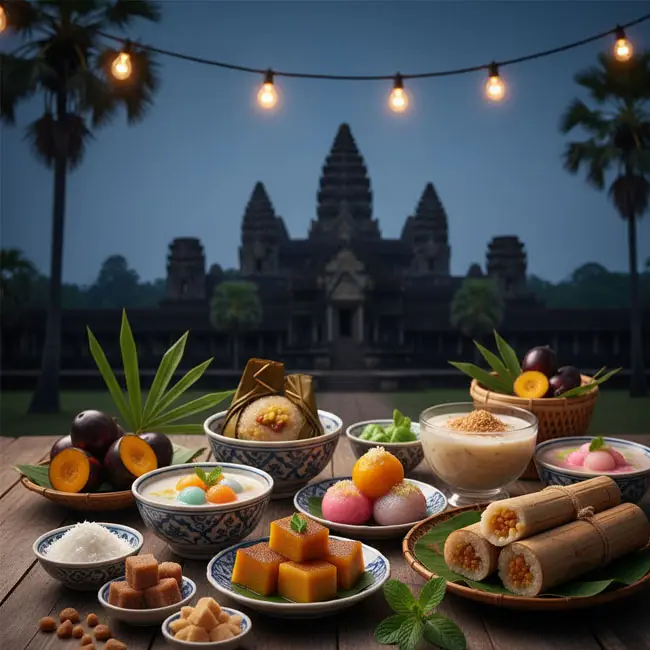
🌴🥥 Cambodia Desserts Overview: A Refreshing Hug from the Tropics
Hey sweet tooth adventurers! Are you ready to wrap up your Khmer culinary journey with something totally refreshing and comforting? We’re diving into the delightful world of Cambodian desserts, known locally as Nom Chhaep or simply Bon (for sweet soups/puddings). Trust me, these aren’t your heavy, butter-laden European treats. Khmer sweet treats are all about celebrating the tropical climate with lightness, natural sweetness, and a wonderful play on textures.
Imagine taking a spoonful of something creamy, chillingly cold, and bursting with the aroma of fresh pandan and rich coconut milk. That’s the feeling of a Cambodian dessert! They are an essential part of the Cambodian food culture, enjoyed not just after a meal, but often as a delightful afternoon snack or a quick treat from a street vendor. Let's explore why these sweets are the perfect, gentle ending to any day.
🍚 The Soul of Khmer Sweets: Simplicity and Nature
The uniqueness of Cambodian desserts lies in their simplicity and their close relationship with the country's agriculture. Everything is sourced locally and seasonally. You won't find many complex baking techniques here; instead, the focus is on steaming, chilling, and combining ingredients in harmony.
🥥 Key Ingredients That Define Khmer Sweetness
What makes a Khmer dessert taste so distinct? It comes down to a few superstar ingredients that are always fresh and abundant:
• Coconut Milk (Tuk Daeum Doung): The absolute foundation of almost every popular dessert. It provides a creamy, rich texture and a subtle sweetness that ties all the flavors together. It’s often used in its freshest, thickest form (ktih) for maximum richness.
• Palm Sugar (Skor T’not): Forget refined white sugar! Palm sugar is the preferred sweetener. Tapped from the flower of the palm tree, it has a beautiful, complex caramel note and a deep, earthy sweetness that is far more nuanced than standard sugar. It’s a flavor signature you'll taste across many authentic Khmer sweet treats.
• Sticky Rice (Bay Damnaeb): This versatile grain is used in countless ways—steamed, pounded, or cooked into creamy porridges. It provides a satisfying, chewy base that absorbs the coconut milk beautifully, making desserts hearty yet still light.
• Pandan (Sleuk Touy): This is the tropical vanilla of Southeast Asia! The extract from the pandan leaf imparts a captivating, almost grassy vanilla aroma and a beautiful natural green color to desserts like Nom Lort and various sweet rice cakes.
🥭 Tropical Fruits: Nature's Candy
When it comes to fruit, Cambodia truly shines. Desserts often incorporate whatever is in season, providing a refreshing, natural sweetness:
• Mangoes (Svay): Whether eaten fresh or paired with sticky rice (Bay Damnaeb Svay), the ripe mango is a quintessential tropical treat.
• Durian (Durain): The "King of Fruits" is often incorporated into creamy, rich puddings or custards for a bold, pungent flavor.
• Jackfruit (Khnaor): Its naturally sweet, crunchy pods are frequently added to sweet soups or enjoyed on their own.
⭐️ Must-Try Cambodian Desserts That Delight
If you’re walking through a Cambodian market, these are the legendary desserts you’ll see piled high and ready to enjoy.
🟢 Nom Lort (Pandan Chendol Dessert)
The ultimate refresher! When the tropical heat is on, this is what you grab.
Why we love it: It’s a textural masterpiece! The star is the short, green jelly noodles (Nom Lort), which have a delightful chewiness thanks to the rice flour and a vibrant green from the pandan. These strands are submerged in a liquid heaven: a perfectly balanced sauce of sweet, rich coconut milk and melted palm sugar. Served over a huge mound of crushed ice, it’s cold, creamy, aromatic, and totally addictive. It’s the perfect example of a simple but perfectly executed Khmer dessert.
🍌 Chek Chien (Crispy Fried Banana)
A warm, satisfying street-side snack that hits the spot every time.
Why we love it: This is the simplicity of great street food. Ripe bananas are slightly flattened, dipped in a simple, thin batter made of rice flour and sometimes a hint of sesame seeds, then quickly deep-fried until gloriously golden and shatteringly crisp. You get that wonderful hot-and-cold contrast—the crispy, light exterior protecting the sweet, warm, gooey banana inside. It’s a perfect handheld Cambodian sweet treat for an afternoon pick-up.
🎃 Num Sang Khya L'Peou (Pumpkin Custard)
This dessert showcases the art and patience of traditional Khmer cooking.
Why we love it: It's beautiful, creamy, and complex without being heavy. The whole pumpkin acts as a natural, edible serving bowl! The pumpkin is carefully hollowed out and filled with a rich, silky custard made from coconut milk, palm sugar, and egg. It’s then steamed until the custard is set and the pumpkin is tender. The final dish is a beautiful contrast of the mild, earthy sweetness of the cooked pumpkin skin and the dense, aromatic creaminess of the filling. This is a true celebratory dessert, often reserved for special days.
🍮 Num Chak Kachan (Layered Sticky Rice Cake)
A classic market treat that is both colorful and satisfyingly chewy.
Why we love it: Known for its vibrant, sometimes multi-layered appearance (often green pandan and white coconut), this cake is made primarily from rice flour and tapioca flour, giving it an incredibly smooth and springy texture. It's steamed and typically sliced into small diamond shapes. It has a mild sweetness, making it a great pairing with a strong cup of tea or coffee, and its chewiness is highly satisfying.
🏘️ The Khmer Culture of Sweetness: Eating and Sharing
In Cambodia, food is deeply communal, and desserts are no exception. They are often enjoyed casually, fostering interaction and relaxation.
🍽️ Dining Habits: Sweets Anytime
Unlike many Western cultures where dessert is strictly reserved for the end of a meal, Khmer sweet treats are often eaten throughout the day.
• The Afternoon Break: You'll frequently see friends or colleagues gathering in the mid-afternoon for a bowl of Nom Lort or a few pieces of Chek Chien from a passing vendor. It's a refreshing pause in the heat.
• Shared Bowls: When served at home, puddings and sweet soups (Bon) are often brought out in a large, shared bowl or pot, from which everyone scoops their own serving. This emphasizes the spirit of sharing and hospitality.
• Simple Presentation: The focus is on the taste and texture. Presentation is often humble, served in simple plastic cups, small bowls, or wrapped in banana leaves, highlighting the practical, down-to-earth nature of the Cambodian food culture.
👩🍳 Made by Hand: The Importance of Tradition
Many of the best Khmer sweets are still made by hand using traditional, time-honored methods. The preparation of sticky rice and the extraction of fresh coconut milk are skills passed down through generations.
Fun Fact: The beautiful green color in Nom Lort is achieved by hand-mashing pandan leaves and squeezing out the juice—a process that is all-natural and results in a far superior aroma than any artificial flavoring! This dedication to fresh, natural preparation is a cornerstone of authentic Khmer cuisine.
📈 Long-Term Love for Cambodian Desserts
The rise in popularity of Southeast Asian cuisine has brought these wonderful Cambodian sweet treats into the global spotlight. Their light nature and use of plant-based ingredients (coconut, rice, fruit) make them appealing to modern health-conscious diners.
• Naturally Gluten-Free: Since most Khmer desserts rely on rice and rice flours (and not wheat), they are naturally gluten-free, making them accessible to a wider audience.
• Vegan-Friendly Foundation: The core ingredients—coconut milk, palm sugar, and fruit—mean that a vast majority of the classic Khmer desserts are naturally vegan, requiring no major substitutions.
This authentic, simple, and naturally wholesome approach is why these delightful sweets are winning hearts around the world, proving that sometimes, the simplest flavors are the best. They are the perfect, refreshing symbol of Cambodia's generous and vibrant spirit.
❓ FAQ: Your Quick Cambodian Dessert Questions Answered
Q1: What is the main flavor profile of most Cambodian desserts?
The primary flavors are a balanced blend of creamy coconut, sweet palm sugar, and the aromatic freshness of pandan and tropical fruits. The taste is generally less sugary and more naturally flavorful than many Western counterparts.
Q2: Are Khmer desserts generally served hot or cold?
The most popular ones (Bon and Nom Lort) are typically served chilled or over crushed ice to provide a cooling contrast to the tropical heat. However, street snacks like Chek Chien (Fried Banana) are always served hot.
Q3: Which dessert is considered a celebratory dish?
Num Sang Khya L'Peou (Pumpkin Custard) is often reserved for special holidays, ceremonies, and family celebrations due to the time and effort required for its preparation and its impressive presentation.
Q4: Is it common to eat desserts right after the main meal?
While you certainly can, it's perhaps more common in Cambodia to enjoy these sweet treats as an afternoon snack or a refreshing bite between meals, rather than strictly as a final course.
🍨 Sweet Secrets of the Kingdom: 3 Classic Cambodian Dessert Recipes You Can Master at Home
| 🌐 🍨 < Back | 🇰🇭 🍝 < Previous | Next > 🍷 🇰🇭 |