
🏠 Home > 🗺️ Recipes > 🍨 Desserts > 🇰🇭 Cambodia Desserts > 🍨 Num Chak Kachan (Layered Rice Cake) , Sangkia Lapov (Khmer Pumpkin Custard) , Chek Chien (Banana Fritters)
🍨 Sweet Secrets of the Kingdom: 3 Classic Cambodian Dessert Recipes You Can Master at Home
Published by Supakorn | Updated: February 2026
A World Beyond Spice: An Introduction to Khmer Sweets
Hey, dessert lover! If you've been on a culinary adventure through Southeast Asia, you probably know that the region is a powerhouse of rich, vibrant, and incredibly fresh desserts. While Cambodian main dishes are famous for their herbaceous complexity, Khmer desserts offer a gentle, soothing counterpoint—a world dominated by the creamy richness of coconut milk, the caramel sweetness of palm sugar, and the unique aroma of pandan leaf.
Cambodian sweets, or Num (meaning "cake" or "dessert"), are often deeply connected to cultural traditions. They’re not just after-dinner treats; they are integral parts of festivals like Khmer New Year, essential offerings at the temples, and everyday snacks sold by vibrant street vendors. Unlike Western desserts that rely on heavy butter and wheat flour, Khmer desserts lean on rice flour and tapioca flour, giving them a signature chewy, jelly-like texture and a satisfyingly subtle sweetness.
Ready to bake, steam, and fry your way to a deeper understanding of Cambodian culinary heritage? Forget complicated pastry techniques! These recipes are rooted in simple, time-honored methods passed down through Khmer grandmothers.
In this long-form guide, we’re going to master three essential, authentic Khmer dessert classics:
1.Num Chak Kachan (Layered Rice Cake): The colorful, chewy cake of celebrations.
2.Sangkia Lapov (Khmer Pumpkin Custard): The majestic, show-stopping dessert steamed inside a whole pumpkin.
3.Chek Chien (Banana Fritters): The irresistibly crispy street food snack.
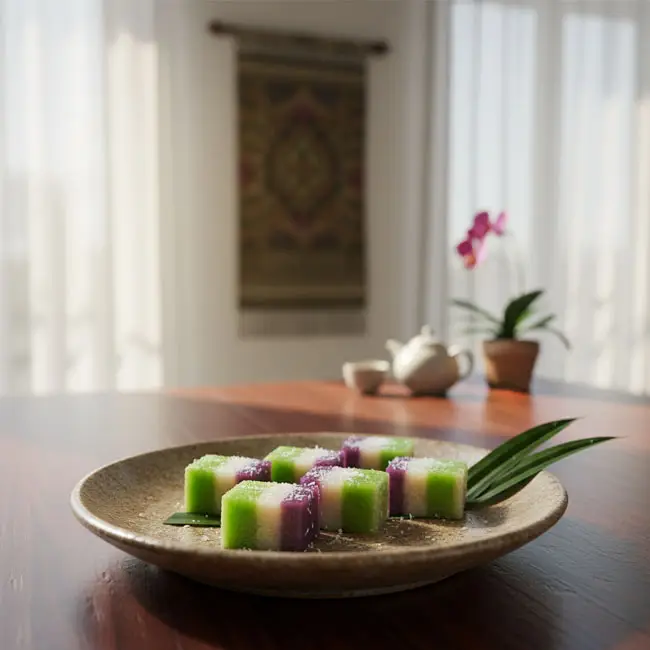
🔹 Recipe 1: Num Chak Kachan (Khmer Layered Rice Cake)
Num Chak Kachan (sometimes spelled Num Chak Chan) is Cambodia’s celebratory centerpiece. This dessert is immediately recognizable by its distinct, vibrant layers—usually alternating white (coconut) and green (pandan)—and its wonderfully chewy, gelatinous texture. It’s a favorite for holidays and temple offerings because of its visual beauty and satisfying mouthfeel.
About this Recipe: Colorful, Chewy, and Coconut-Rich
This dessert is a steamed cake made primarily from rice flour and tapioca flour, sweetened with palm sugar, and enriched with coconut cream. The layers are created by steaming one thin layer at a time, which requires patience but rewards you with a beautiful, pliable cake. The traditional vibrant green comes from pandan juice (or extract), which imparts a delicate, vanilla-like aroma that complements the sweet coconut perfectly.
Ingredients & Measurements
(Yields 1 small 6-inch cake, approx. 9 layers | Prep Time: 25 minutes | Cook Time: 50 minutes)
Part I: The Batter
- 1 cup Tapioca Flour
- 1/2 cup Rice Flour (Jasmine or plain)
- 1 cup Palm Sugar (finely chopped or substituted with granulated sugar)
- 1 cup Thick Coconut Milk (full fat)
- 1/2 cup Water
- 1/2 teaspoon Salt
Part II: Color and Flavor
- 1-2 teaspoons Pandan Extract or green food coloring (for the green layers)
Equipment:
- 6-inch or 7-inch round cake pan or square pan (metal or silicone)
- Steamer (a large pot with a steamer basket and lid)
- Towel or cheesecloth (to wrap the steamer lid)
Step-by-Step Instructions
1.Prepare the Pan and Steamer: Lightly grease your cake pan with a neutral oil. Set up your steamer and bring the water to a rolling boil. Tip: Wrap the steamer lid with a towel to prevent condensation from dripping onto the cake. Place the empty cake pan inside the steamer and cover to pre-heat for 5 minutes.
2.Mix the Batter: In a large bowl, combine the tapioca flour, rice flour, palm sugar, and salt. Mix well. Gradually whisk in the coconut milk and water until the batter is completely smooth with no lumps. Strain the batter through a fine-mesh sieve for the smoothest possible texture.
3.Divide and Color: Divide the smooth batter evenly into two separate bowls. Keep one bowl as the white (coconut) layer. To the second bowl, add the pandan extract (or green coloring) and mix until the color is uniform.
4.Steam the First Layer: Once the pan is hot, give the white batter a quick stir (the flour settles quickly). Ladle a thin, even layer (about 1/4 cup) of the white batter into the hot pan. Cover and steam for exactly 5 minutes.
5.Build the Layers: After 5 minutes, lift the lid, quickly wipe off any condensation, and pour a thin, even layer of the green batter over the white layer. Cover and steam for 5 minutes.
6.Repeat: Continue alternating layers (white, then green, then white, etc.) until you have used all the batter. The last layer should be a green layer. The total number of layers is typically 9-11.
7.Final Steam: Once the last layer is added, steam the entire cake for a final 15-20 minutes to ensure the entire cake is cooked through. A toothpick inserted should come out clean and the cake should be firm to the touch.
8.Cool and Cut: Carefully remove the cake pan from the steamer and let it cool completely to room temperature (this can take 2-3 hours). Do not cut the cake when it's warm, or it will stick to your knife and lose its shape. Once cooled, use a lightly oiled knife to slice it into diamond or square pieces.
Tips & Mistakes to Avoid
- Patience is a Virtue: The most common mistake is not letting the layers steam long enough (making them run together) or cutting the cake while it's still warm (making it gooey). Give each layer its full 5 minutes and let the finished cake cool entirely.
- Stir the Batter: The flours in the batter settle very quickly. Stir the batter thoroughly every time before you ladle a new layer into the pan to ensure a consistent texture.
- Wipe the Lid: Always wipe the condensation from the inside of the steamer lid between layers to prevent water droplets from pockmarking the cake's surface.
FAQ
Q: Can I use different colors/flavors?
A: Absolutely! Num Chak Kachan is all about color. Try using purple sweet potato powder, red beetroot juice, or butterfly pea flower extract for different, natural hues.
Q: How do I store leftovers?
A: Store the cake, tightly covered, at room temperature for up to one day or in the refrigerator for up to three days. Bring it back to room temperature before serving for the best chewy texture.
Summary
Num Chak Kachan is a simple yet impressive dessert that celebrates the Khmer love for texture. Its subtle sweetness, combined with the heady perfume of pandan and coconut, makes every chewy bite a delight. It’s a true labor of love, but the result is a beautiful, traditional sweet you'll be proud to serve.
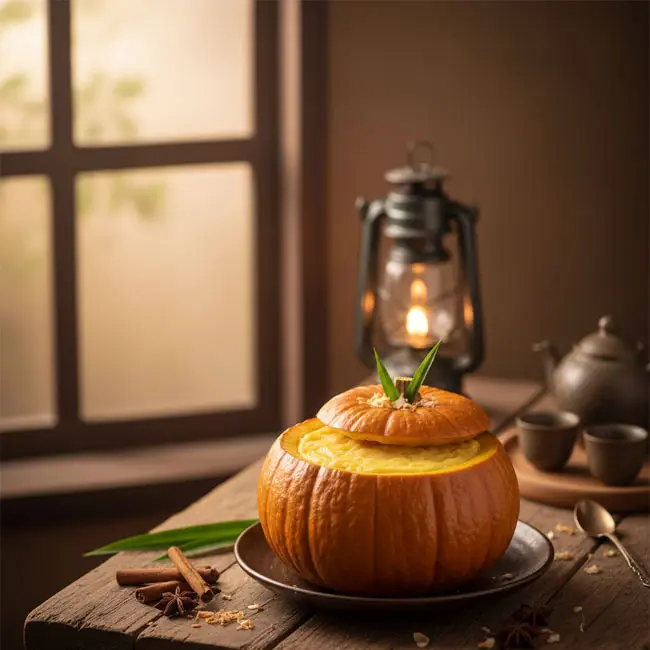
🔹 Recipe 2: Sangkia Lapov (Khmer Pumpkin Custard)
Sangkia Lapov is perhaps the most unique and visually stunning of all Cambodian sweets. This dessert isn't baked; it’s a creamy, decadent coconut custard that is steamed inside a whole pumpkin. Once sliced, you get a beautiful wedge of tender pumpkin flesh cradling a set, golden layer of custard.
About this Recipe: Velvety, Earthy, and Regal
This recipe has a special place in Khmer culture, often served during major festivals and celebrations. The custard is made with a rich blend of eggs, coconut cream, and palm sugar, sometimes flavored with pandan or vanilla. The key is using a small, dense pumpkin—like a Kabocha or Japanese pumpkin—which steams perfectly, its own natural sweetness mingling with the custard as it cooks. It is a harmonious pairing of earthy vegetable and creamy tropical sweetness.
Ingredients & Measurements
(Serves 6-8 | Prep Time: 20 minutes | Cook Time: 1.5 - 2 hours)
Part I: The Pumpkin
- 1 medium-sized Kabocha or Japanese Pumpkin (around 2-3 lbs), washed and dried
Part II: The Custard Filling
- 4 large Eggs
- 4 large Egg Yolks (for extra richness)
- 1 cup Thick Coconut Cream (full fat)
- 1/2 cup Palm Sugar (finely chopped or packed brown sugar)
- 1/2 teaspoon Salt
- 1 teaspoon Vanilla Extract or Pandan Extract
Equipment:
- Large Steamer (needs to be deep enough to hold the entire pumpkin)
- Large mixing bowl and whisk
- Fine-mesh sieve
Step-by-Step Instructions
1.Prepare the Pumpkin: Using a sharp knife, carefully cut a circle around the stem of the pumpkin to create a lid. Lift the lid and use a spoon to thoroughly scoop out all the seeds and fibrous stringy parts from the inside. Do not pierce the flesh or the bottom. Rinse and pat the inside dry. Set the lid aside.
2.Make the Custard: In a large mixing bowl, whisk together the whole eggs and egg yolks.
3.Warm the Sweetener: In a separate pot, gently warm the coconut cream, palm sugar, and salt over low heat until the sugar is fully dissolved. Do not boil! Remove from heat and stir in the vanilla or pandan extract.
4.Temper and Combine: Slowly pour the warm coconut-sugar mixture into the beaten eggs, whisking continuously. This prevents the eggs from scrambling.
5.Strain the Custard: For a silky-smooth texture, strain the custard mixture through a fine-mesh sieve into a clean bowl or measuring cup with a spout.
6.Fill the Pumpkin: Place the hollowed pumpkin inside your steamer basket. Carefully pour the custard mixture into the pumpkin cavity, filling it almost to the top. The mixture will expand slightly during cooking.
7.Steam: Place the pumpkin lid gently on top (or next to it, to allow steam to escape slightly). Steam the pumpkin over medium-low heat for 1.5 to 2 hours.
8.Check for Doneness: The custard is set when you insert a thin skewer or toothpick into the center, and it comes out clean. The pumpkin flesh should be soft and tender when pierced.
9.Cool and Chill: Carefully remove the entire pumpkin from the steamer. Let it cool completely to room temperature, then cover the pumpkin and refrigerate for at least 6 hours (or overnight). Chilling is essential for the custard to firm up properly for slicing.
10.Serve: Slice the chilled pumpkin custard into beautiful, even wedges (like a pie). Serve cold.
Tips & Mistakes to Avoid
- Choose the Right Pumpkin: A small Kabocha pumpkin is ideal because of its dense, sweet flesh and smaller size, which cooks more quickly and evenly.
- The Power of Slow Steam: Use medium-low heat. Steaming too vigorously can make the custard rise too much and get a porous, spongy texture (like scrambled eggs). Low and slow is the way to a velvety custard.
- Chill Time is Mandatory: Do not skip the chilling step! The custard is delicate when warm and needs time in the fridge to set into that firm, slicable wedge.
FAQ
Q: Can I use canned pumpkin?
A: No, this dessert requires the fresh, sweet flavor and structure of a whole pumpkin or squash to serve as its edible "vessel."
Q: What if my steamer isn't big enough?
A: You can cut the pumpkin in half before filling it, or steam the custard separately in small, individual ramekins. However, the whole pumpkin presentation is part of the tradition!
Summary
Sangkia Lapov is a majestic dessert that combines the tropical richness of custard with the comforting earthiness of pumpkin. It’s a wonderful example of Khmer ingenuity—using a simple, natural ingredient to create a sophisticated and unforgettable sweet.

🔹 Recipe 3: Chek Chien (Crispy Banana Fritters)
From the bustling streets of Phnom Penh to the rural market towns, Chek Chien is the ultimate Cambodian street food dessert. These are simple, flattened banana fritters with a delightfully crispy, golden crust, a must-try for anyone visiting the Kingdom of Wonder.
About this Recipe: Crunchy, Sweet, and Addictive
The secret to a perfect Chek Chien lies in the batter. It's often a blend of rice flour for crispness, sugar for caramelization, and a hint of sesame seeds for a nutty crunch. Importantly, the bananas used should be slightly firm—not overly ripe—which allows them to hold their shape after being lightly smashed flat. This smashing process is key, as it increases the surface area for the crispy batter and ensures the banana heats through quickly. The result is a hot, sweet, crispy shell giving way to a warm, soft banana center.
Ingredients & Measurements
(Serves 4 | Prep Time: 15 minutes | Cook Time: 15 minutes)
Part I: The Bananas
- 6-8 slightly firm, just-ripe Baby Bananas (Pisang Awak or similar, or small plantains)
Part II: The Batter
- 1 cup Rice Flour
- 1/4 cup Tapioca Flour or Cornstarch (for extra crunch)
- 2 tablespoons Granulated Sugar
- 1/2 teaspoon Salt
- 1/2 teaspoon Baking Powder
- 1/4 cup White Sesame Seeds
- 1 cup Water or Coconut Milk (adjust for thickness)
Part III: Frying
- 3 cups Vegetable Oil (or more, for deep frying)
Serving Suggestion:
- A scoop of Vanilla Ice Cream or a drizzle of Honey
Step-by-Step Instructions
1.Prepare the Batter: In a medium mixing bowl, whisk together the rice flour, tapioca/cornstarch, sugar, salt, baking powder, and sesame seeds. Gradually whisk in the water or coconut milk until you have a smooth consistency, similar to a thick pancake batter (it should coat the back of a spoon). Let the batter rest for 10-15 minutes to allow the flours to hydrate.
2.Flatten the Bananas: Peel the bananas. Place each banana between two sheets of parchment paper or plastic wrap. Using a heavy plate or a rolling pin, gently but firmly smash each banana until it is about 1/4 inch thick. Be careful not to crush it completely into mush.
3.Heat the Oil: Pour the vegetable oil into a deep pan or wok until it reaches about 1.5 inches deep. Heat the oil over medium-high heat to 350-375°F (175-190°C). The oil is ready when a small drop of batter sizzles immediately.
4.Dip and Fry: Working in batches of 3-4, dip each flattened banana into the batter, ensuring it is fully coated. Carefully lower the coated banana into the hot oil. Do not crowd the pan.
5.Fry to Golden Perfection: Fry for about 2-3 minutes per side, turning until the fritters are a beautiful golden brown and visibly crispy.
6.Drain and Serve: Remove the Chek Chien with a slotted spoon and place them on a wire rack or paper towels to drain excess oil. Serve immediately while they are still hot and perfectly crunchy.
Tips & Mistakes to Avoid
- The Right Banana: Do not use very ripe, mushy dessert bananas (like super-soft Cavendish). The baby bananas or plantains must be slightly firm so they don't disintegrate when smashed and fried.
- The Double-Fry Technique (Optional): For next-level crispiness, you can remove the fritters after 2 minutes (when they are pale golden) and let them rest for 5 minutes. Then, re-fry them for another 1-2 minutes until deeply golden brown.
- Hot Oil Only: If your oil isn't hot enough, the batter will absorb too much oil and become greasy instead of crispy. Maintain a high temperature throughout the frying process.
FAQ
Q: What gives Chek Chien its crunch?
A: The combination of rice flour and a small amount of tapioca flour/cornstarch in the batter, combined with high-heat frying, is what locks in that signature, satisfying crunch.
Q: Can I bake or air-fry these?
A: While you can try, you won't achieve the authentic, shatteringly crispy street-food texture that comes from quick deep-frying. For the best experience, a shallow fry is recommended.
Summary
Chek Chien is a testament to simple ingredients yielding sensational results. It's the perfect sweet snack—crispy, warm, and infused with the tropical goodness of banana and sesame. It’s proof that the most delicious desserts are often the simplest ones.
Final Thoughts
You’ve embarked on a sweet journey through the Kingdom of Wonder! By exploring Num Chak Kachan, Sangkia Lapov, and Chek Chien, you’ve moved beyond the familiar and mastered traditional Khmer sweets that are made with heart, precision, and a deep appreciation for tropical flavors.
These desserts, though using simple ingredients like rice, coconut, and palm sugar, showcase a diversity of textures—from the chewy layers of the cake to the velvety custard inside a pumpkin and the shattering crispness of the fritters. Each recipe is a celebration, proving that authenticity in cooking is often just a matter of technique and high-quality, fresh components.
Now the kitchen is yours! We encourage you to start with the simple Chek Chien to build confidence, then tackle the more rewarding patience required for the Num Chak Kachan layers, and finally, present the majestic Sangkia Lapov at your next gathering.
Which of these three traditional Cambodian sweets will you try first? Share your results and let us know about your favorite flavor discovery!
| 🇰🇭 🍨 < Back |