
🏠 Home > 🗺️ Recipes > 🍱 Snacks > 🇧🇳 Brunei Snacks
🇧🇳 🍱 Brunei Snacks Recipes
Published by Supakorn | Updated: February 2026
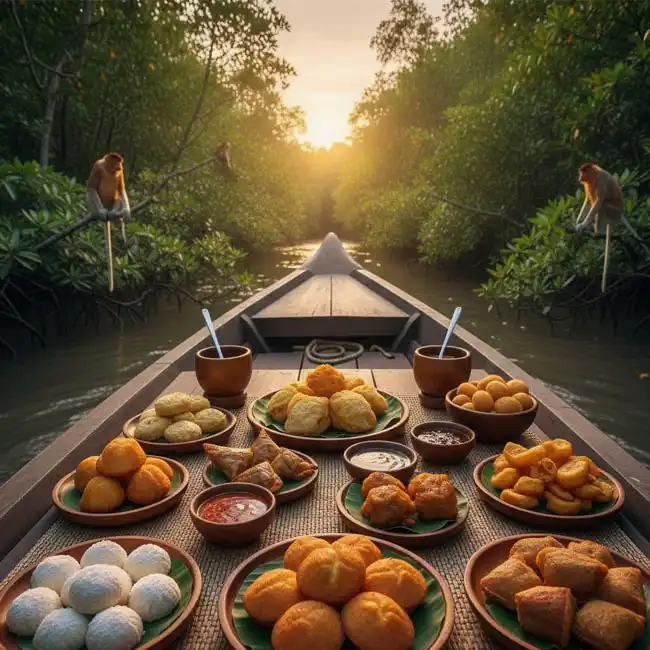
Snacks in Brunei are more than just something to eat between meals—they’re a reflection of tradition, family, and everyday life. In this small yet culturally rich Southeast Asian nation, snacks are deeply connected to Malay heritage, Islamic values, and centuries of regional influence. Whether homemade in family kitchens or sold fresh at local markets, Brunei snacks offer a delicious window into the country’s identity.
Unlike fast snacks in many parts of the world, Brunei’s traditional bites are often handmade, carefully prepared, and shared with others. They’re colorful, aromatic, and often made from simple ingredients like rice flour, coconut, palm sugar, and pandan leaves. These ingredients are easy to find locally and have been used for generations.
Walking through neighborhoods, markets, or visiting homes—especially during celebrations—you’ll see plates filled with small cakes, fried treats, and steamed delicacies. These snacks are not only tasty but also carry stories, memories, and cultural meaning.
🏡 🇧🇳 The Cultural Importance of Snacks in Brunei Life
In Brunei, snacks—often called kuih—are part of everyday routines. They’re not reserved only for special occasions. Instead, they appear throughout the day, especially in the morning and afternoon.
Many locals enjoy snacks during:
• Morning breakfast alongside light meals
• Afternoon tea time with family
• Religious gatherings
• Community events
• Festivals like Hari Raya
Snacks are closely tied to hospitality. When guests visit a Bruneian home, it’s common to offer a variety of small snacks as a sign of respect and welcome. The act of sharing food is considered an important social value.
Snacks also reflect patience and craftsmanship. Many traditional snacks require careful preparation, including steaming, wrapping, or shaping by hand. This process connects modern Bruneians to their ancestors.
🌾 Common Ingredients Used in Traditional Brunei Snacks
One of the most interesting things about Brunei snacks is how simple ingredients can create complex flavors and textures.
🌴 Coconut – The Heart of Many Snacks
Coconut appears in many forms:
• Fresh grated coconut
• Coconut milk
• Coconut cream
It adds richness, softness, and natural sweetness.
Coconut is used in steamed cakes, fillings, and coatings. It also gives snacks their signature tropical aroma.
🍃 Pandan Leaves – Natural Flavor and Color
Pandan leaves provide:
• Natural green color
• Sweet, fragrant aroma
They’re often blended with water and mixed into batter or dough.
Pandan gives snacks a fresh and unique scent that instantly reminds locals of home cooking.
🍚 Rice Flour – The Foundation of Many Kuih
Rice flour creates soft and chewy textures. It’s used to make:
• Steamed cakes
• Dumplings
• Pancake-like snacks
Rice has always been a staple in Brunei, so it naturally became the base for many snacks.
🍯 Palm Sugar – Natural Sweetness
Palm sugar adds deep, caramel-like sweetness. It’s less sharp than refined sugar and has a more natural taste.
It’s often melted and used as filling or mixed into batters.
🛍️ Popular Traditional Brunei Snacks You Should Know
Brunei offers a wide variety of snacks, each with its own flavor, texture, and cultural meaning.
🟢 Kuih Cincin – The Famous Ring Snack
Kuih Cincin is one of the most iconic snacks in Brunei.
It’s shaped like a ring and made from:
• Rice flour
• Palm sugar
• Coconut milk
The snack is deep-fried, giving it a slightly crispy outside and chewy inside.
Locals love it because it’s simple, portable, and satisfying.
It’s often sold at markets and roadside stalls.
🥥 Kuih Kelupis – Rice Wrapped in Leaves
Kuih Kelupis is made from glutinous rice and coconut milk.
The rice is wrapped in leaves and steamed slowly.
This snack has a soft, sticky texture and rich coconut flavor.
It’s especially popular during festivals and family gatherings.
Many families prepare it together, making it a bonding activity.
🟡 Kuih Seri Muka – Beautiful Two-Layer Cake
Kuih Seri Muka is visually stunning.
It has two layers:
• Bottom layer: sticky rice
• Top layer: green pandan custard
The contrast between creamy and firm textures makes it unique.
It’s one of the most loved traditional snacks in Brunei.
🟤 Kuih Penyaram – Sweet Fried Cake
Kuih Penyaram looks like a small pancake.
It has:
• Crispy edges
• Soft center
Made with rice flour and palm sugar, it offers balanced sweetness.
It’s commonly eaten in the morning or afternoon.
⚪ Kuih Sapit – Crispy Folded Snack
Kuih Sapit is thin and crispy.
It’s cooked using a special mold and then folded while hot.
The texture is light and crunchy.
This snack is often prepared during major celebrations.
🏪 Street Markets and Local Snack Culture
To truly experience Brunei snacks, local markets are the best place to visit.
Markets offer freshly made snacks daily. Vendors prepare them early in the morning.
You’ll often see:
• Steaming trays
• Freshly fried kuih
• Colorful displays
The smell alone is enough to attract visitors.
Markets are not just places to buy food—they’re social spaces where people meet, talk, and connect.
In the capital, Bandar Seri Begawan, markets are full of life and tradition.
👨👩👧👦 Homemade Snacks and Family Traditions
Many Bruneian families still make snacks at home.
Recipes are passed down from parents to children.
Making snacks together teaches:
• Cooking skills
• Cultural values
• Family bonding
Children grow up watching and learning these techniques.
This keeps traditions alive.
Homemade snacks often taste better because they’re made with care.
🕌 Snacks During Religious and Cultural Celebrations
Snacks play an important role during Islamic celebrations such as Hari Raya.
Homes prepare large quantities of kuih to serve visitors.
Tables are filled with colorful treats.
Guests move from house to house, enjoying snacks and socializing.
This tradition strengthens community relationships.
🎨 Colors, Textures, and Visual Beauty
Brunei snacks are known for their visual appeal.
Common colors include:
• Green from pandan
• Brown from palm sugar
• White from coconut
• Yellow from natural ingredients
Textures vary widely:
• Soft
• Chewy
• Crispy
• Creamy
This variety makes snack-eating exciting.
🌏 Influences from Neighboring Regions
Brunei’s snacks share similarities with Malaysian and Indonesian cuisine.
This is due to shared history and geography.
However, Brunei maintains its own unique style.
Local recipes often have subtle differences in texture, sweetness, and preparation.
This makes Brunei snacks special.
🍽️ When and How Locals Enjoy Snacks
Snacks fit naturally into daily life.
People enjoy them:
• Between meals
• While relaxing
• During conversations
• With family gatherings
Snacks are not rushed.
They’re meant to be enjoyed slowly.
This reflects Brunei’s calm lifestyle.
🧺 Traditional Preparation Methods Still Used Today
Many snacks are still made using traditional methods such as:
• Steaming in metal trays
• Wrapping in natural leaves
• Hand-mixing ingredients
• Using charcoal or gas heat
These methods preserve authentic flavors.
Modern machines exist, but many prefer traditional preparation.
❤️ Why Brunei Snacks Are So Special
Brunei snacks stand out because they combine:
• Tradition
• Simplicity
• Natural ingredients
• Cultural meaning
They’re not mass-produced fast food.
They represent heritage.
Each bite connects people to their roots.
🌟 The Future of Brunei Snacks
Even as Brunei modernizes, traditional snacks remain popular.
Young people continue to enjoy them.
Some businesses are introducing modern variations while preserving original recipes.
This ensures traditions continue.
Brunei snacks will remain part of daily life for future generations.
❓ FAQ About Brunei Snacks
❓ Q1.What are the most popular traditional snacks in Brunei?
Some of the most popular snacks include Kuih Cincin, Kuih Seri Muka, Kuih Penyaram, and Kuih Kelupis. These snacks are widely available in markets and homes.
❓ Q2.Are Brunei snacks mostly sweet or savory?
Many traditional snacks are sweet, using coconut and palm sugar. However, some snacks are savory, especially those made with rice and coconut milk.
❓ Q3.Where can visitors find authentic Brunei snacks?
Visitors can find authentic snacks at local markets, street stalls, and traditional bakeries. Homemade snacks in local homes are also very common.
🍱 Crispy & Guilt-Free: Healthy Bruneian-Inspired Keto Snacks You’ll Love
| 🌐 🍱 < Back | 🇧🇳 🍞 < Previous | Next > 🥘 🇧🇳 |