
🏠 Home > 🗺️ Recipes > 🥘 Sauces > 🇧🇳 Brunei Sauces
🇧🇳 🥘 Brunei Sauces Recipes
Published by Supakorn | Updated: February 2026
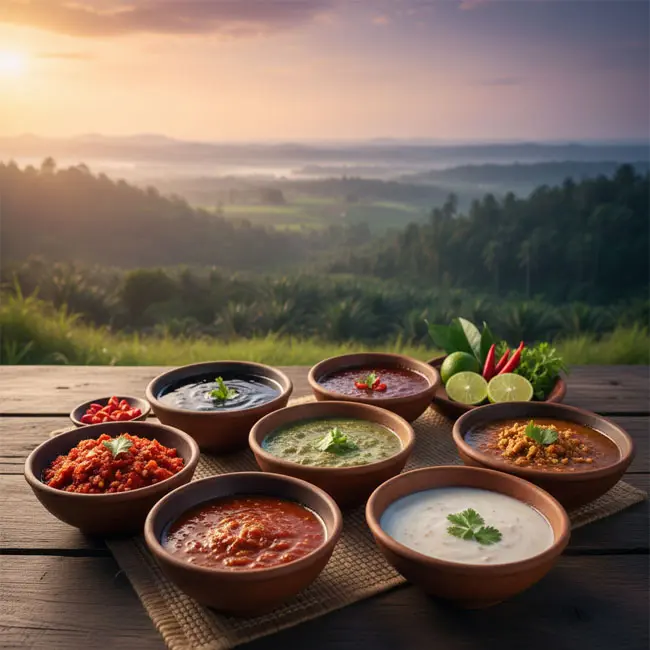
If you’ve ever sat down at a table in Bandar Seri Begawan and thought, "This chicken is great, but this sauce is life-changing," then you already know the secret. In Brunei, the main dish is just the opening act. The real stars? The sauces, the dips, and the fiery condiments that sit in little bowls scattered across the tablecloth.
Brunei's food culture is built on the philosophy that nothing should ever be bland. Whether it’s a piece of grilled fish, a bowl of starchy Ambuyat, or a simple plate of steamed rice, there is always a sauce designed to elevate it. These sauces aren't just extras; they are the "soul" of the meal, representing a history of spice trading, jungle foraging, and a deep-seated love for umami.
🌶️ The "Cacah" Culture: Why Dips Rule Brunei 🇧🇳 🥘
To understand Bruneian sauces, you first have to learn the word Cacah. While "sauce" is a general term, Cacah specifically refers to a dipping sauce. It’s a word you’ll hear constantly at family gatherings and night markets.
🍃 A Heritage of Fermentation
Brunei’s flavor profile is heavily influenced by its geography. Being nestled on the coast of Borneo, the locals have mastered the art of preserving seafood. This led to the creation of potent ingredients like Belacan (fermented shrimp paste). It’s pungent, it’s salty, and it’s the backbone of almost every significant sauce in the country. To a Bruneian, the smell of toasting Belacan is the scent of home.
🍋 Balancing the Four Pillars
A perfect Brunei sauce isn't just spicy. It’s a delicate dance between four pillars:
1.Heat: From bird's eye chilies (Cili Padi).
2.Acidity: From local limes (Limau Kasturi) or sour jungle fruits.
3.Salt: From sea salt or shrimp paste.
4.Sweetness: Often from palm sugar or the natural sugars of fruits.
🔥 The Hall of Fame: Iconic Brunei Sauces
Let’s talk about the heavy hitters. These are the sauces you will encounter in every household from Tutong to Temburong.
🦐 Sambal Belacan: The Eternal Legend
You can't have a Bruneian meal without Sambal Belacan. It is the absolute king. It’s made by pounding fresh red chilies and toasted shrimp paste together. What makes the Brunei version special is the freshness of the Limau Kasturi. The juice and the zest of the lime are folded in at the end, creating a sauce that is vibrantly red, incredibly spicy, and deeply savory. It’s served with everything—fried fish, fresh vegetables (Ulam), and even just plain rice.
🥭 Cacah Binjai: The Seasonal Superstar
This is perhaps the most "uniquely Brunei" sauce you’ll ever find. The Binjai is a local fruit related to the mango, but it has a much sharper, more pungent aroma and a sour profile. When the Binjai is in season, locals mash it into a paste with chilies and salt.
The result? A creamy, tangy, and slightly funky sauce that is the traditional accompaniment for Ambuyat. It cuts through the starchiness of the sago and creates a flavor explosion that is unlike anything else in the world.
🥜 Satay Sauce: Thick, Sweet, and Nutty
While Satay is a regional favorite, Brunei’s peanut sauce is known for its richness. It’s a thick, slow-cooked concoction of roasted peanuts, lemongrass, galangal, and dried chilies. It’s slightly sweeter than its neighbors' versions, designed to complement the smoky, savory char of the meat skewers.
🥣 The Ambuyat Accompaniments
Since Ambuyat (the national dish) is relatively tasteless on its own, the sauces served alongside it are designed to be "loud."
🐟 Cacah Tempoyak: The Bold Choice
If you want to eat like a true local, you have to try Tempoyak. This is fermented durian. Yes, you read that right! The durian is salted and fermented until it becomes a creamy, sour paste. When mixed with pounded chilies and sometimes dried anchovies (Ikan Bilis), it becomes a dipping sauce that is creamy, spicy, and carries that unmistakable durian "funk." It’s an acquired taste, but once you love it, there’s no going back.
🦐 Cacah Udang (Prawn Dip)
For those who prefer something a bit more approachable, a savory prawn-based sauce is often served. It’s made by simmering fresh local prawns with aromatics and chilies until the sauce becomes thick and infused with the essence of the sea. It’s rich, orange-hued, and perfect for swirling your chandas (bamboo sticks) into.
🏡 The "Eating & Living" Rituals
In Brunei, the way a sauce is prepared is just as important as how it tastes.
🔨 The Power of the Mortar and Pestle
In a world of blenders and food processors, the traditional Batu Lesung (stone mortar and pestle) is still a kitchen essential in Brunei. Locals believe that blending chilies changes the flavor by aerating it too much. Pounding them, however, releases the natural oils and creates a much more intense, "bruised" flavor that a machine simply cannot replicate.
🥬 Ulam-Ulaman: The Healthy Sidekick
Sauces in Brunei are almost always served with Ulam—a platter of fresh, raw jungle ferns, cucumbers, long beans, and herbs. The sauce isn't just a dip; it’s a way to make eating your greens an exciting experience. A dip of Sambal Belacan with a crunch of raw wing bean is the quintessential Bruneian healthy snack.
🕌 Hospitality and the "Extra Bowl"
If you are a guest in a Brunei home, you’ll notice that the host will often ask if the sauce is "pedas enough" (spicy enough). Providing a variety of sauces is a sign of respect. It shows that the host cares about your personal palate, allowing you to customize your meal to your liking.
🛶 From the Water Village to the Modern Table
Even in the floating houses of Kampong Ayer, the tradition of sauce-making remains strong. Fishermen would traditionally bring back small shrimp (Bubok) to be dried and fermented right on the decks of their homes. This hyper-local production ensures that the base of many Brunei sauces is as fresh as it gets.
Today, while you can find bottled sauces in supermarkets, the "homemade" culture is still thriving. Every family has their own secret "ratio" for their Sambal. Some add more lime, some prefer a hint of sugar, and some like it so spicy it makes your eyes water!
🌟 Why Brunei Sauces Are a Global Hidden Gem
What makes these condiments stand out in the crowded world of Southeast Asian cuisine is their purity. Brunei has strict Halal regulations and a commitment to high-quality ingredients. There are no shortcuts here. The sauces rely on the natural potency of the ingredients—the fermented depth of the shrimp, the zing of the jungle fruits, and the raw heat of the chilies.
❓ FAQ: Getting to Know Brunei’s Spicy Side
Q1. Is every sauce in Brunei spicy?
Most savory sauces have at least a little bit of heat! However, sauces like the peanut-based Satay sauce or certain sweet soy-based dips (Kicap Manis blends) are much milder. If you’re sensitive to heat, always try a tiny drop first!
Q2. What is "Belacan" exactly, and does it smell strong?
Belacan is a paste made from tiny shrimp that have been salted and fermented. Yes, it has a very strong, pungent aroma when raw or being toasted! But once it’s mixed into a sauce with lime and chilies, the smell transforms into a deep, savory "umami" flavor that makes the dish irresistible.
Q3. Can I find these sauces in restaurants, or are they only for home cooking?
You will find them everywhere! From the humblest roadside stall to the most luxurious hotels in the capital, a bowl of Sambal or Cacah is a standard fixture on the table. At the Gadong Night Market, you can even see vendors pounding fresh sauces right in front of you.
🥘 Level Up Your Meals: Quick Sugar-Free Bruneian Dips and Condiments
👉 Master 3 Sugar-Free Brunei Sauces
| 🌐 🥘 < Back | 🇧🇳 🍱 < Previous |