
🏠 Home > 🗺️ Recipes > 🍞 Breads > 🇧🇦 Bosnia Breads > 🍞 1.The Iconic Sarajevo Somun (Healthy Glow-Up) , 2.Rustic Whole Wheat Lepinja , 3.Healthy Sunday Pogača
🍞 From Balkan Ovens to Your Kitchen: The Ultimate Healthy Bosnian Bread Guide
Published by Supakorn | Updated: April 2026
🇧🇦 🌾Introduction: Why Bosnian Breads are Taking the World by Storm🌐📚
Hey there! If you’ve ever wandered through the cobblestone streets of Sarajevo, you know that the smell of fresh bread is basically the heartbeat of the city. Recently, Bosnian baking has been blowing up globally, and for a good reason! These aren't just your standard supermarket loaves; we’re talking about textures that are pillowy soft yet perfectly chewy, traditionally paired with hearty stews or grilled meats.
In this guide, I’m bringing that authentic Balkan soul right to your kitchen. But here’s the twist: we’re keeping it healthy. We’ll be looking at how to swap in some wholesome grains without losing that legendary "bounce." I’ve curated three of the most iconic recipes that you can easily bake any day of the week. Whether you're a seasoned pro or a total "flour-on-the-face" beginner, these steps are designed for you.
Here’s what we’re diving into today:
💃🕺 • Recipe 1: The Classic Somun: The airy, "pocket" flatbread that’s a staple of Balkan street food.
💃🕺 • Recipe 2: Lepinja (Whole Wheat Edition): The rugged, rustic cousin of Somun, made better for your gut.
💃🕺 • Recipe 3: Pogača: A decorative, soft-crumbed round bread that’s perfect for sharing with family.
Ready to make your house smell like a Bosnian bakery? Let’s get our hands floury!
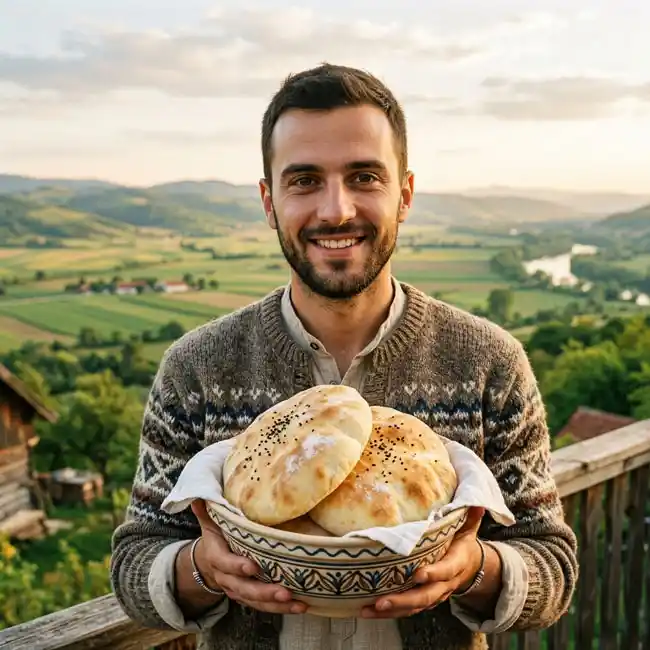
🥙 Recipe 1: The Iconic Sarajevo Somun (Healthy Glow-Up)
🥖 About this Recipe
If Bosnian bread had a king, it would be the Somun. Traditionally associated with the holy month of Ramadan but enjoyed year-round, this bread is famous for its "griddle marks" and hollow center. My version uses a blend of high-protein flour and a touch of rye to keep the glycemic index lower while maintaining that signature lightness. It’s perfect for stuffing with grilled veggies or dipping into hummus.
🧂 Ingredients & Measurements
• Bread Flour (High Protein): 400 grams
• Fine Whole Wheat Flour: 100 grams
• Warm Water (approx. 99 degrees Fahrenheit / 37 degrees Celsius): 380 milliliters
• Active Dry Yeast: 7 grams (one sachet)
• Sea Salt: 10 grams
• Raw Honey (to feed the yeast): 5 grams
• Black Seed (Nigella Sativa) for topping: 1 tablespoon
🥣 Step-by-Step Instructions
1.Activate the Yeast: In a small bowl, mix the warm water, honey, and yeast. Let it sit for 10 minutes until it looks frothy.
2.The Mix: In a large bowl, combine both flours and salt. Pour in the yeast mixture. This dough will be very wet and sticky—don’t panic! That’s the secret to the bubbles.
3.The Fold: Instead of heavy kneading, use a wet hand to fold the dough over itself every 30 minutes for 2 hours. This builds strength while keeping it airy.
4.First Rise: Cover and let it sit in a warm spot for about 90 minutes until doubled in size.
5.Shaping: Gently tip the dough onto a heavily floured surface. Divide into 5 balls. Don't press the air out! Flatten them slightly into circles.
6.The Signature Pattern: Use the back of a knife or a wooden skewer to press a "checkerboard" pattern into the top. Sprinkle with black seeds.
7.The Blast: Preheat your oven to its highest setting (usually 250°C or 480°F) with a baking stone or tray inside. Slide the somuns in and bake for only 5–7 minutes. They should puff up like balloons!
💡 Tips & Mistakes to Avoid
• Don't over-flour the dough: It’s tempting to add more flour because it’s sticky, but a dry dough means a dense Somun. Use water on your hands to handle it instead.
• The Oven must be Scorching: If the oven isn't hot enough, the bread won't "pop" and create the hollow center.
• Steam is your friend: Toss a few ice cubes at the bottom of the oven when you put the bread in to keep the crust soft.
• Mistake: Letting the dough rise in a cold draft. This kills the yeast activity; find a cozy corner!
❓ FAQ
Q1.Can I freeze Somun?
Yes! Wrap them tightly in foil once cooled. To reheat, just pop them in the toaster.
Q2.Why did mine stay flat?
Likely your yeast was old or the oven wasn't preheated for at least 30 minutes.
📝 Summary
This Somun recipe brings the authentic texture of Sarajevo to your home with a boost of whole-grain fiber. It’s fast, hot, and incredibly satisfying to watch inflate in the oven.
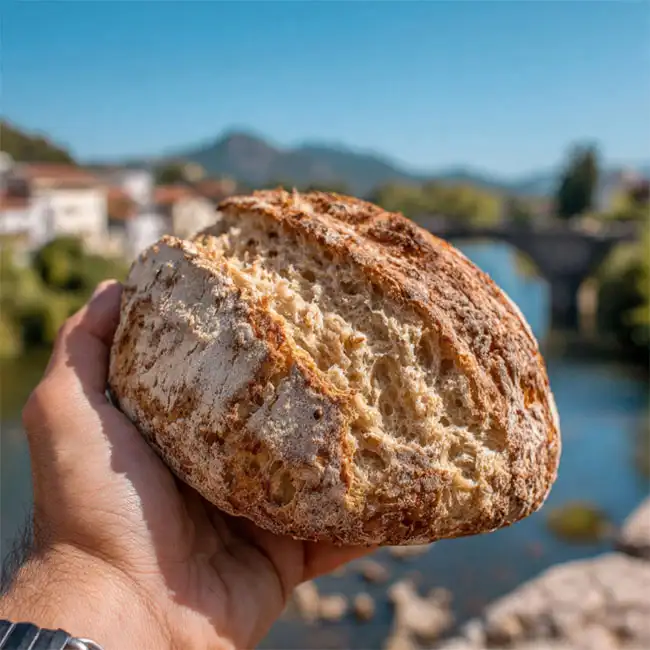
🥙 Recipe 2: Rustic Whole Wheat Lepinja
🥖 About this Recipe
While often confused with Somun, Lepinja is usually a bit thicker and more substantial. It’s the ultimate "mop" for soups. Our healthy version leans heavily into the rustic side, using stone-ground wheat and a longer fermentation time. This longer "cold ferment" helps break down gluten, making it much easier on your digestion.
🧂 Ingredients & Measurements
• Stone-ground Whole Wheat Flour: 300 grams
• All-Purpose Unbleached Flour: 200 grams
• Warm Water: 350 milliliters
• Extra Virgin Olive Oil: 20 milliliters
• Active Dry Yeast: 5 grams
• Pink Himalayan Salt: 12 grams
• Plain Greek Yogurt (for softness): 1 tablespoon
🥣 Step-by-Step Instructions
1.Preparation: Mix the yeast and water with the yogurt until dissolved.
2.Combine: Mix the flours and salt in a bowl, then add the liquids and olive oil. Mix until a shaggy mass forms.
3.Knead: Knead the dough for about 8 minutes. It should be smoother and more elastic than the Somun dough.
4.Cold Ferment: Place the dough in an oiled bowl, cover, and put it in the fridge for at least 12 hours (up to 24). This develops a deep, nutty flavor.
5.Bench Rest: Take the dough out and let it reach room temperature (about 1 hour).
6.Forming: Divide into 4 large rounds. Flatten them to about 1-inch thickness.
7.Final Proof: Let the rounds rise on a baking sheet for 45 minutes.
8.Baking: Bake at 220°C (425°F) for about 12–15 minutes until the crust sounds hollow when tapped on the bottom.
💡 Tips & Mistakes to Avoid
• Patience pays off: The cold ferment in the fridge is what gives this bread its "healthy" edge and superior flavor. Don't skip it!
• The Tap Test: Always tap the bottom of the bread. If it sounds like a drum, it’s done. If it’s a thud, give it 3 more minutes.
• Mistake: Using boiling water. If the water is too hot, it will scald and kill the yeast. Stick to "baby bath" temperature.
❓ FAQ
Q1.Is this vegan?
Almost! Just swap the Greek yogurt for a plant-based unsweetened yogurt or omit it entirely.
Q2.Does it work with gluten-free flour?
This specific recipe relies on gluten structure, so a direct swap might result in a very dense loaf.
📝 Summary
Rustic Lepinja is for the bread lover who wants something hearty. It’s a fiber-packed powerhouse that feels like a warm hug in food form.

🥙 Recipe 3: Healthy Sunday Pogača
🥖 About this Recipe
Pogača is the "celebration" bread. It’s usually round, beautifully decorated, and served in the center of the table for everyone to tear pieces off. While traditional versions use white flour and butter, we are using olive oil and a mix of spelt flour for a modern, heart-healthy twist. It’s soft, slightly nutty, and looks like a piece of art.
🧂 Ingredients & Measurements
• Spelt Flour: 250 grams
• Bread Flour: 250 grams
• Warm Low-Fat Milk (or Almond Milk): 200 milliliters
• Warm Water: 100 milliliters
• Extra Virgin Olive Oil: 50 milliliters
• Egg (1 for dough, 1 for wash): 2 large eggs
• Active Dry Yeast: 10 grams
• Salt: 8 grams
• Sesame Seeds and Poppy Seeds: 1 tablespoon each for decoration
🥣 Step-by-Step Instructions
1.The Yeast Mix: Combine warm milk, water, yeast, and a pinch of flour. Let it foam.
2.Dough Assembly: In a large bowl, whisk 1 egg with olive oil. Add the yeast mixture and the flours gradually.
3.Knead to Perfection: Knead for 10 minutes until you have a soft, silky dough. If it feels too stiff, add a teaspoon of water.
4.First Proof: Let it rise in a warm place for 1 hour.
5.Creative Shaping: This is the fun part! You can braid the dough, make small rolls and arrange them in a circle, or keep it as one large rustic loaf.
6.Second Proof: Once shaped in your baking pan, let it rise again for 30 minutes.
7.The Finishing Touch: Brush the top with the second beaten egg and sprinkle generously with seeds.
8.Bake: Bake at 190°C (375°F) for 25–30 minutes until deep golden brown.
💡 Tips & Mistakes to Avoid
• Don't rush the second rise: The second proofing after shaping ensures the "crumb" is light and fluffy rather than gummy.
• Egg Wash for Shine: If you want that bakery-style shine, don't skip the egg wash! For a vegan option, use a bit of maple syrup mixed with soy milk.
• Mistake: Cutting the bread while it's steaming hot. I know it’s hard, but wait 20 minutes! Cutting too early lets the steam escape and makes the bread dry out faster.
❓ FAQ
Q1.Why use Spelt flour?
Spelt is an ancient grain that’s higher in protein and minerals than modern wheat, and it gives the bread a lovely honey-like aroma.
Q2.Can I make this savory?
Absolutely! Fold in some fresh rosemary or crushed garlic into the dough during the kneading phase.
📝 Summary
Pogača is the ultimate bread for sharing. By using spelt and olive oil, we’ve turned a heavy classic into a nutritious centerpiece that’s as good for your body as it is for your Instagram feed.
🥙 Final Thoughts: Your Journey to the Balkan Table
And there you have it! Three authentic, healthy Bosnian breads that prove you don't need to sacrifice flavor for nutrition. Baking bread is a bit like a meditation—it takes a little time, a bit of feel, and a lot of love.
Don't be discouraged if your first Somun doesn't puff up into a perfect balloon or if your Pogača looks a little "abstract." The beauty of Bosnian baking is in its rustic, homemade charm. Each loaf tells a story of tradition and health.
My advice? Start with the Somun—it’s the quickest win. Once you’ve mastered that high-heat magic, move on to the slow-fermented Lepinja, and finally, treat your family to a beautiful Pogača on the weekend.
I’d love to hear how yours turned out! Did you try a different seed topping? Did you pair it with a healthy soup? Drop a comment or share your baking photos—seeing your kitchen creations is the best part of my day. Happy baking, my friend!
| 🇧🇦 🍞 < Back |