
🏠 Home > 🗺️ Recipes > 🍝 Main Dishes > 🇦🇹 Austria Main Dishes
🇦🇹 🍝 Austria Main Dishes Recipes
Published by Supakorn | Updated: February 2026
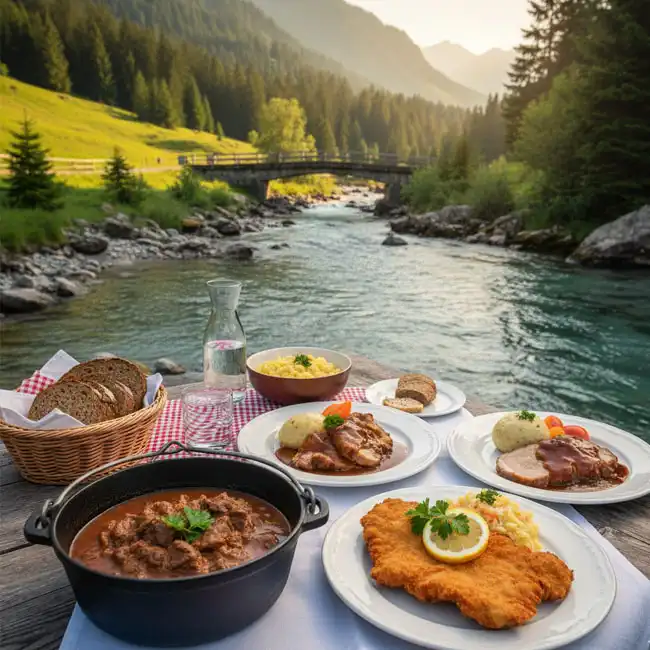
When it comes to Austria, most people picture snow-covered Alps, cozy coffee houses, and classical music echoing through Vienna’s streets. But there’s another masterpiece worth celebrating — Austrian cuisine. 🍽️ It’s hearty, comforting, and packed with centuries of tradition that mix the influences of Central Europe: German, Hungarian, Czech, and Italian flavors all melting into one delicious identity.
Austrian main dishes aren’t just meals — they’re a story of empire, family, and flavor. From the crispy golden Wiener Schnitzel to the juicy boiled Tafelspitz, each dish tells something about Austrian life, its geography, and even its history.
So, let’s dive fork-first into Austria’s flavorful main courses — the dishes that warm both heart and soul. 💖
🍖 The Soul of Austrian Cuisine: Comfort, Craft, and Culture
Austrian cuisine has always been about balance and heartiness. Whether it’s a creamy stew simmering slowly on a winter day or a delicate pastry paired with Sunday lunch, food here means togetherness.
Austria’s cooking reflects its landscapes: hearty dishes in the alpine west, where winters are long and cold, and lighter meals in the plains regions of the east. You’ll find that Austrians truly value quality — local meat, seasonal vegetables, and traditional cooking methods passed down through generations.
There’s something wonderfully slow about it all — a patience that allows flavors to bloom naturally. 🍲
🥩 The Icon: Wiener Schnitzel
No conversation about Austrian food can begin without the country’s most famous dish — the Wiener Schnitzel. It’s not just a meal; it’s an emotion.
A thin slice of veal (or sometimes pork) is gently pounded, coated in flour, egg, and breadcrumbs, then fried until it’s gloriously golden and crispy. The moment you cut into it, that satisfying crunch gives way to tender meat underneath.
It’s typically served with a slice of lemon, potato salad, or parsley potatoes, and maybe a spoon of lingonberry jam for a touch of sweetness. Simple, elegant, and unforgettable.
The secret? It’s all in the frying — light, airy, never greasy. The best ones seem to float off the plate like edible golden clouds. ☁️
🥣 Boiled Elegance: Tafelspitz
If Wiener Schnitzel is Austria’s most popular export, then Tafelspitz is the national pride — often said to be Emperor Franz Joseph’s favorite dish.
Tafelspitz literally means “tip of the table,” referring to the cut of beef used. The meat is boiled gently in broth with vegetables like carrots, onions, and leeks until it becomes melt-in-the-mouth tender.
It’s then served with horseradish, chive sauce, and sometimes apple puree — an extraordinary balance of savory and fresh. What’s amazing is how something so simple can feel so royal. 👑
Eating Tafelspitz in a Viennese restaurant feels like stepping back in time to the Austro-Hungarian Empire.
🥘 Beyond the Classics: Hearty Regional Dishes
Austria’s diverse landscapes mean that food traditions differ from one region to another — but everywhere, the emphasis is on hearty satisfaction.
🏔️ Tiroler Gröstl — The Alpine Comfort
A rustic dish from Tyrol, Tiroler Gröstl is a pan-fried mix of potatoes, onions, and leftover beef or pork, often topped with a fried egg. It’s the kind of dish that says, “you’ve earned this meal,” especially after a long hike in the Alps. 🥾
🍲 Gulasch — Spicy Echoes from Hungary
Austria’s version of goulash is thicker and milder than the Hungarian one, but equally rich. It’s slow-cooked beef stewed with onions, paprika, and a hint of caraway. Often served with dumplings or bread rolls, this dish captures the spirit of Central Europe in one hearty bowl.
🍛 Backhendl — The Viennese Fried Chicken
Dating back to the 18th century, Backhendl is Austria’s own take on fried chicken. It’s seasoned, breaded, and fried until perfectly crispy — typically served with lemon wedges and potato salad. Unlike American fried chicken, it feels lighter, more refined, yet just as satisfying.
🥬 Vegetable and Seasonal Balance
While Austrian food is often associated with meats and rich sauces, there’s also a tradition of fresh seasonal eating.
In spring, asparagus (Spargel) takes center stage — often served with melted butter and potatoes. During summer, you’ll find salads with pumpkin seed oil, a Styrian specialty known for its nutty aroma. 🌻
Vegetables may not always be the star of Austrian plates, but they’re always chosen thoughtfully — meant to complement the main protein rather than compete with it.
🍞 Bread, Dumplings & Sidekicks that Steal the Show
Every Austrian main dish has its loyal sidekick — sometimes so good it nearly steals the spotlight.
- Semmelknödel (Bread Dumplings): Soft yet firm dumplings made from old bread, milk, and eggs. They’re perfect for soaking up gravy.
- Kartoffelsalat (Potato Salad): Tangy and light, made with vinegar and oil — not mayo — to balance out rich meats.
- Sauerkraut: Fermented cabbage that adds acidity and crunch.
- Spätzle: Soft egg noodles, buttery and filling — the ultimate comfort food.
These sides aren’t “extras.” In Austria, they’re an integral part of the dining experience, meant to create harmony on the plate. 🎶
🍷 Dining Culture: More Than Just Eating
Austrian dining is as much about the atmosphere as the food itself.
Lunch, the main meal of the day, is often a three-course event — soup, main dish, and dessert. Dinner is lighter, maybe just cold cuts and bread. And coffee? It’s practically sacred. ☕
In every city or small town, you’ll find Gasthäuser — traditional inns where families gather for Sunday lunch, friends meet , and locals debate politics over goulash. It’s casual, warm, and welcoming.
Meals in Austria are slow moments, not rushed experiences. Sharing food means sharing stories, laughter, and tradition.
🏡 Home Cooking: The Taste of Family
Ask any Austrian about their favorite meal, and they’ll probably say something like, “the way my grandmother used to make it.” 💕
Home cooking is deeply respected — recipes are handed down, often not written but remembered by heart. Measuring spoons? Rare. Cooking here is done by intuition, taste, and memory.
There’s something charmingly old-fashioned about this — a reminder that good food doesn’t come from precision alone, but from love and patience.
🎭 Influences from the Empire
Austria’s main dishes reflect its imperial past. The Austro-Hungarian Empire once spanned from Italy to Ukraine — and its kitchens borrowed freely from every corner.
- From Hungary: Paprika and goulash-style stews.
- From Bohemia (Czech lands): Dumplings and pastries.
- From Italy: Pasta and risotto influences, especially in the south.
- From the Balkans: Spices and grilled meats.
This blend of cultures turned Vienna into a culinary melting pot long before “fusion cuisine” was even a thing. 🌍
🍰 Sweet Endings to a Savory Meal
Even though we’re talking about main dishes, no Austrian meal feels complete without a sweet finale. Dessert here isn’t just an afterthought — it’s part of the ritual.
Famous examples include:
- Apfelstrudel (Apple Strudel) — paper-thin dough rolled with spiced apples.
- Kaiserschmarrn — fluffy shredded pancakes dusted with sugar.
- Sachertorte — the legendary chocolate cake from Vienna. 🍫
These sweets reflect the same care and craftsmanship seen in savory dishes — layers of tradition folded into every bite.
🌍 Modern Austria: Old Traditions, New Twists
Today’s Austrian chefs are giving traditional dishes a modern makeover. You’ll find organic schnitzels, vegan dumplings, and locally sourced goulash in restaurants that still honor the classics.
What’s beautiful is that modernization hasn’t erased tradition — it’s refined it. Austrian cuisine remains grounded in authenticity while embracing innovation.
Farm-to-table movements, sustainable dining, and regional pride are shaping the country’s new culinary chapter.
💬 FAQ: Austrian Main Dishes
1. What is Austria’s most famous main dish?
Without a doubt, it’s the Wiener Schnitzel — thinly breaded veal or pork fried to perfection, a national symbol loved worldwide.
2. Are Austrian dishes similar to German food?
They share similarities, especially in sausages, meats, and dumplings, but Austrian food tends to be lighter and more refined, with distinct regional flavors and Imperial influences.
3. What makes Austrian cuisine unique?
Its blend of Central European traditions — a mix of German, Hungarian, Czech, and Italian culinary elements — gives Austrian food its rich and diverse identity.
🍝 Authentic Austrian Main Dishes to Cook at Home
| 🌐 🍝 < Back | 🇦🇹 🥪 < Previous | Next > 🍨 🇦🇹 |