
🏠 Home > 🗺️ Recipes > 🍨 Desserts > 🇦🇹 Austria Desserts
🇦🇹 🍨 Austria Desserts Recipes
Published by Supakorn | Updated: February 2026
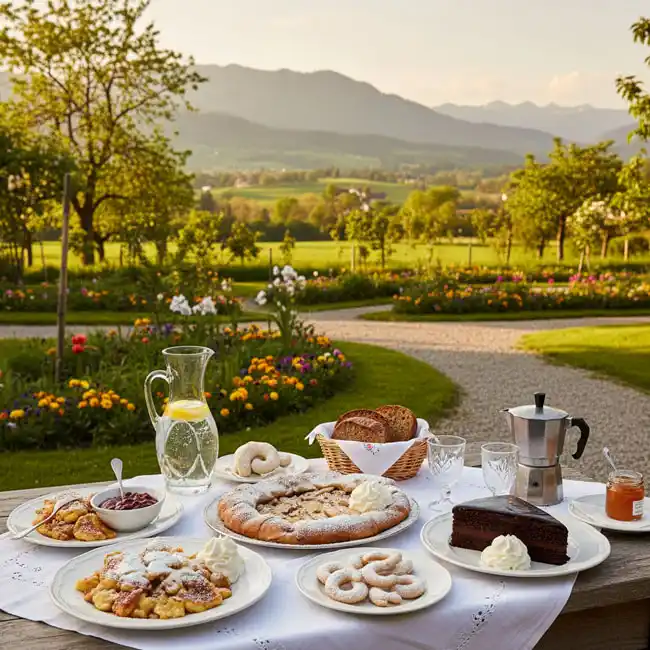
Unpacking the Sweet Legacy of Vienna and the Alps
Hey there, fellow sweet tooth! If you're looking for a culture that truly elevates the art of dessert, look no further than Austria. This isn’t just about having a sweet bite after dinner; in Austria, particularly in Vienna, dessert is a culinary institution, a daily ritual, and a centerpiece of social life.
Forget the idea of a simple post-meal treat. Austrian desserts—or Mehlspeisen (dishes primarily made from flour) and Imperial cakes—are steeped in history, born in royal kitchens, and perfected over centuries in the elegant Viennese Coffee Houses. This is where culinary comfort meets regal refinement.
Let’s take a journey through the culture, the classics, and the very specific way Austrians incorporate these magnificent sweets into their everyday life.
🍰 Imperial Grandeur: The Culture of Viennese Desserts
To understand Austrian desserts, you must first understand the city of Vienna, the former capital of the vast Austro-Hungarian Empire. This history is the very foundation of its sweet traditions.
The Habsburg Heritage
Many of Austria's most iconic sweets were literally created to impress emperors, princes, and diplomats. The kitchens of the Imperial Court (k.u.k. Hofküche) were testing grounds for ambitious pastry chefs (Konditoren) who vied for the honor of pleasing royalty. This pressure cooker of creativity led to cakes that weren't just delicious, but structurally complex, visually stunning, and endlessly refined. The results—dishes like the Sachertorte or the layered Esterházy Torte—set the standard for European baking.
The UNESCO-Recognized Kaffeehaus Life
The single most important place for Austrian desserts is the Viennese Coffee House (Kaffeehaus). This isn’t a quick-stop café; it's a UNESCO-recognized intangible cultural heritage, a second living room, and a sanctuary of Gemütlichkeit (cozy charm).
- The Daily Ritual: The Kaffeehaus is where the sweet magic happens. Locals spend hours here, reading newspapers, debating politics, or simply watching the world go by, all over a perfectly prepared coffee (like a Melange or Einspänner) and a magnificent slice of cake.
- The Show: The display case is the altar. Desserts are presented with a pride that rivals any museum exhibit. Choosing your sweet treat is a serious and delightful moment of the Kaffeehaus experience, often involving the Konditor (pastry chef) giving a personal explanation of the day's fresh offerings.
The Mehlspeisen Tradition
Beyond the fancy Imperial cakes, there is the hearty, comforting tradition of Mehlspeisen. Historically, these were simple, filling dishes made from flour and other available staples, often served as main courses on meatless fasting days. Today, Mehlspeisen still serve as both a sweet dessert and, occasionally, a light main meal—a testament to their substantial, soul-satisfying nature. Think of them as the working-class heroes of Austrian sweets.
👑 The Dessert Pantheon: Iconic Austrian Classics
Every country has its star dishes, but Austrian sweets have global fame. These are the showstoppers you’ll encounter everywhere from a high-end Vienna hotel to a cozy Alpine hut.
🍫 The Emperor of Cakes: Sachertorte
You simply cannot talk about Austrian desserts without bowing to the Sachertorte. It’s more than a cake; it’s a cultural icon and the subject of one of the longest culinary legal battles in history (the "Cake War" between Hotel Sacher and Demel).
- What it is: A dense, rich chocolate sponge cake, thinly coated with apricot jam and topped with a glossy, dark chocolate icing.
- The Signature Serve: It is traditionally served with a cloud of unsweetened, lightly whipped cream (Schlagobers) on the side. The unsweetened cream is crucial—it cuts through the richness of the chocolate and the sweetness of the apricot. It’s a perfect textural and flavor balance.
🍎 The Delicate Layer: Apfelstrudel
If the Sachertorte is the refined city cake, the Apfelstrudel (Apple Strudel) is the comforting favorite enjoyed across the country. It’s a masterpiece of delicate pastry and warm, spiced filling.
- The Essential Dough: The secret lies in the paper-thin, elastic dough. Legend says the dough must be stretched so thin you can read a newspaper through it!
- The Filling: It's a warmly spiced mix of grated or sliced apples, cinnamon, sugar, and raisins, often mixed with toasted breadcrumbs to absorb the juices and keep the pastry crisp.
- The Serving Ritual: Like its chocolate counterpart, it is often served warm, dusted with powdered sugar, and sometimes accompanied by vanilla sauce (Vanillesauce) or vanilla ice cream.
🍳 The Scrambled Pancake: Kaiserschmarrn
This is one of the most famous Mehlspeisen and another royal treat. The name literally means "Emperor's Mess," and the dish is often served either as a hearty dessert or a substantial main course.
- The Story: According to one popular legend, Emperor Franz Joseph I (husband of Empress Sisi) was served a thin pancake that the cook accidentally tore. To cover the mistake, the cook scrambled it, topped it with butter, sugar, and raisins, and served it with fruit compote, calling it the "Emperor's Mess." The Emperor loved it!
- The Texture: It’s a thick, fluffy, caramelized pancake, broken into bite-sized pieces during cooking, dusted with powdered sugar, and traditionally served with a sweet plum compote called Zwetschkenröster.
🇦🇹 Beyond Vienna: Regional and Hidden Sweet Delights
Austrian sweets aren't limited to Vienna's grand boulevards. Travel to the provinces, and you’ll find regional specialties that are just as magnificent.
The Comfort of the Knödel (Dumpling)
While many associate Knödel with savory side dishes, the sweet versions are beloved desserts, particularly popular in the Alpine regions and the countryside.
- Marillenknödel (Apricot Dumplings): A summertime highlight, especially using the famous apricots from the Wachau Valley. Fresh apricots are encased in a light, soft Topfen (quark/curd cheese) dough, boiled, and rolled in butter-fried breadcrumbs and powdered sugar. The result is a burst of sweet-tart fruit inside a fluffy dumpling shell.
- Germknödel (Yeast Dumpling): A giant, fluffy yeast dumpling, often filled with sweet plum jam (Powidl), steamed, and generously covered in melted butter, poppy seeds, and sugar. It’s a classic mountain hut dessert, incredibly filling and warming.
The Nutty, Fruity Cakes
The regions outside Vienna showcase incredible cakes and tarts, often using nuts and local fruit jams.
- Linzer Torte: Hailing from the city of Linz, this is one of the oldest cakes in the world, with a recipe dating back to the 17th century. It’s a rich, crumbly shortcrust pastry made with ground nuts (hazelnuts or almonds), filled with redcurrant or raspberry jam, and topped with a beautiful, unmistakable lattice crust. It's rustic, nutty, and perfect with coffee.
- Salzburger Nockerl: A true dessert from the city of Salzburg. This is a light, sweet, meringue-like soufflé, traditionally molded into three large peaks to represent the three famous mountains surrounding the city. It’s baked until golden on the outside and wonderfully soft on the inside, often served with a raspberry sauce.
The Street Food Treat
Even on the go, Austrians have their sweet spots. Krapfen (a jam-filled doughnut) is a classic street-food sweet, especially prevalent during the Fasching (Carnival) season. It’s proof that sometimes, the simplest fried dough filled with apricot jam is all you need.
Austrian desserts are a journey through Imperial history, a celebration of regional ingredients, and a daily invitation to sit down, slow down, and savor the moment with a cup of excellent coffee. Enjoying one of these masterpieces is truly participating in a centuries-old tradition!
❓ Quick Bites: Austrian Dessert FAQs
Q: What is the most common time of day to eat an Austrian dessert?
A: While desserts are enjoyed after a formal meal, the most common ritual is the mid-afternoon Jause or Kaffee und Kuchen (Coffee and Cake) break, typically between 3:00 PM and 5:00 PM, enjoyed in a Kaffeehaus or at home.
Q: What is Schlagobers and why is it served with almost everything?
A: Schlagobers is simply whipped cream. It’s essential because traditional Austrian desserts are often rich and dense (like the Sachertorte or Gugelhupf). The light, unsweetened, or very lightly sweetened Schlagobers provides a crucial contrast in both temperature and texture, acting as a palate cleanser and a creamy counterpoint.
Q: Are Palatschinken a dessert?
A: Yes! Palatschinken are the Austrian version of thin crêpes. They are often served as a sweet dessert, rolled up and filled with apricot jam, chocolate-hazelnut spread, or Topfen (curd cheese), making them a slightly lighter alternative to the heavier cakes and dumplings.
Would you like me to create the next piece of content, perhaps focusing on the main course specialties or the regional variations in Austrian cuisine?
🍨 Three Iconic Austrian Dessert Recipes to Bring Vienna to Your Kitchen
👉 Taste 3 World’s Best Austria Desserts
| 🌐 🍨 < Back | 🇦🇹 🍝 < Previous | Next > 🍷 🇦🇹 |