
🏠 Home > 🗺️ Recipes > 🥘 Sauces > 🇻🇺 Vanuatu Sauces
🇻🇺 🥘 Vanuatu Sauces Recipes
Published by Supakorn | Updated: February 2026
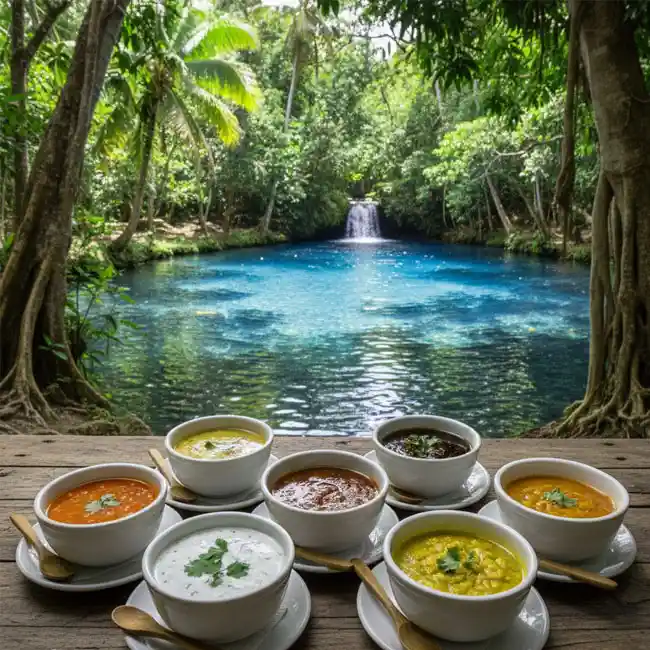
👑⛰️ The Liquid Gold of the South Pacific 🇻🇺 🌊
If you thought island food was just about grilled fish and plain roots, you’re in for a serious flavor wake-up call! When we talk about the culinary soul of Vanuatu, we aren't just talking about what’s on the plate—we’re talking about what’s drizzled, dipped, and simmered all over it.
In this tropical paradise, sauces aren't just an afterthought or something you squeeze out of a plastic bottle. They are the lifeblood of the meal. They turn a simple piece of roasted taro into a creamy masterpiece and transform fresh-caught seafood into a zesty explosion of flavor. Today, we’re going on a deep dive into the world of Vanuatu Sauces, where the ingredients are always fresh, the methods are ancient, and the taste is nothing short of legendary.
🥥 The Foundation: Why Sauces Matter in Vanuatu Culture
To understand the sauces of Vanuatu, you have to understand the "Kastom" (custom) kitchen. Most traditional ni-Vanuatu cooking relies on earth ovens (hot stones underground) or open fires. While these methods give food a beautiful smokiness, the ingredients themselves—like yam, cassava, and plantains—can be quite dry.
This is where the magic of the sauce comes in. In Vanuatu, a sauce is used to:
1.Hydrate: Adding moisture to starchy root crops.
2.Flavor-Boost: Bringing acidity or heat to mild ingredients.
3.Preserve: Using citrus and salt to keep seafood fresh in the tropical heat.
4.Connect: Making a communal bowl of dip that everyone shares, symbolizing unity.
Food in Vanuatu is "Aelan Kaikai" (Island Food). It’s 100% organic, usually harvested the same morning it’s eaten, and the sauces reflect that purity. You won’t find heavy cornstarch thickeners or artificial colors here; it’s all about the raw power of nature.
🌴 The "Mother Sauce": Fresh Coconut Cream (Lolo)
In French cooking, they have the five mother sauces. In Vanuatu, they have one: Coconut Cream, or as the locals call it, Lolo.
🥥 Freshness You Can Taste
This isn't the canned stuff you buy at the grocery store. In a Vanuatu home, making the sauce starts with the sound of scraping. Using a traditional serrated tool, the white flesh of a mature coconut is grated into fine snowflakes. This is then squeezed through coconut fiber or a cloth to extract a thick, pearly-white liquid.
🥘 How It’s Used
Lolo is the base for almost everything. It’s drizzled over Laplap, used as a poaching liquid for fish, and even fermented slightly to create a tangy condiment. It is creamy, slightly sweet, and incredibly rich. When you see a dish in Vanuatu that looks like it’s swimming in white silk, you’re looking at the ultimate island sauce.
🌶️ Bringing the Heat: Vanuatu’s Spicy Condiments
While Melanesian food isn't traditionally "blow-your-head-off" spicy like some Southeast Asian cuisines, the people of Vanuatu definitely have a love affair with the Bird’s Eye Chili.
🌋 1. Island Chili Paste (Sili)
Walk into any local "snack bar" or "kaikai house" in Port Vila, and you’ll see a jar of bright red or green paste on the table. This is the local chili sauce. It’s usually a rough-chopped blend of small, fiery chilies, garlic, a bit of oil, and sometimes a splash of lime juice. It’s punchy, raw, and designed to wake up your palate.
🍋 2. Pamplemousse & Chili Relish
Vanuatu is famous for its Pamplemousse (giant pomelos). These are sweet, juicy, and massive. Locals often create a "sauce-relish" by mixing the segments of the fruit with finely sliced chilies and a pinch of sea salt. It’s the perfect companion for fatty pork or grilled oily fish, providing a citrusy "cut" through the richness.
🍋 Zesty & Raw: The Role of Citrus and Salt
Because Vanuatu is surrounded by the Pacific Ocean, seafood is a staple. The "sauces" used for seafood are often light, acidic, and incredibly refreshing.
🐟 1. The "Kokoda" Style Marinade
Similar to a ceviche or a Tahitian Poisson Cru, Vanuatu has its own way of "cooking" fish with sauce. The sauce is a blend of fresh lime juice, seawater (for natural salinity), and a tiny bit of coconut milk. The acid in the lime "cooks" the raw fish, while the salt and cream create a light, broth-like sauce that you’ll want to drink straight from the bowl.
🌿 2. Green Ginger & Garlic Drizzle
With a strong influence from the Chinese community that has been part of Vanuatu for generations, you’ll often find a sauce made of pounded ginger, garlic, and scallions mixed with a neutral oil. It’s drizzled over steamed fish or green vegetables, adding a sharp, aromatic layer that balances the earthy flavors of the local tubers.
🍃 The Green Goddess: Leaf-Based Sauces
In the islands, "greens" are a way of life. Island Cabbage (Abelmoschus manihot) is the most common leafy green, and it actually creates its own sauce!
🥬 Slimy Yet Satisfying
When Island Cabbage is simmered in coconut cream, it releases a natural mucilage (similar to okra) that thickens the coconut milk into a rich, velvety green sauce. It’s not "slimy" in a bad way—it’s silky! This "green sauce" is packed with vitamins and is often used to coat pieces of boiled taro or yam, making them slide right down.
🏺 The Art of the "Dipping Bowl": Social Eating in Vanuatu
If you’re invited to a meal in a village, you’ll notice that sauces are often served in communal bowls. This isn't just about convenience; it’s about the way of life.
🤝 Sharing the Flavor
A bowl of Lolo or a spicy chili vinegar will be placed in the center of the mat. Everyone breaks off a piece of their root crop or breadfruit and dips it into the same bowl. It’s a sign of trust and community. To have your own individual dipping bowl would feel a bit lonely in Vanuatu culture!
🐚 Shells as Spoons
In more traditional settings, you might see half-coconut shells (bilas) used to hold sauces. There’s something incredibly grounded about dipping a piece of wood-fired yam into a coconut shell filled with freshly squeezed cream while sitting on a hand-woven pandanus mat.
🥗 Modern Vanuatu Sauces: The Fusion Movement
Vanuatu’s food scene is evolving. In the capital, Port Vila, world-class chefs are taking these traditional sauce bases and giving them a modern, gourmet twist.
• Nangai Nut Pesto: Using the local Nangai nut instead of pine nuts to create a creamy, buttery sauce for pasta or grilled chicken.
• Vanilla Bean Reductions: Since Vanuatu produces some of the world’s best vanilla, you’ll find sweet and savory sauces using vanilla to accompany roasted meats.
• Turmeric Infusions: Fresh turmeric (locally called yellow ginger) is being grated into coconut sauces to create vibrant, golden curries that are anti-inflammatory and delicious.
🥥 Why You’ll Fall in Love with Vanuatu Sauces
There is something honest about the way sauces are made here. In a world of highly processed condiments filled with high-fructose corn syrup, Vanuatu offers a return to basics.
When you taste a sauce in Vanuatu, you are tasting the volcanic soil, the tropical rain, and the salty sea air. There are no "secret ingredients" hidden behind chemical names—just the skill of the person who grated the coconut or pounded the chilies.
It’s food that makes you feel good. It’s food that has a "clean" finish. And most importantly, it’s food made with love and meant to be shared with friends.
❓ FAQ: Everything You Wanted to Know About Vanuatu Sauces
❓ Q1. Are Vanuatu sauces very spicy?
Generally, no. Most traditional sauces are creamy and mild (coconut-based). However, the locals love their chili, so there is almost always a very hot chili paste available on the side for those who want to add some fire to their plate.
❓ Q2. Can I find these sauces if I’m vegan?
Absolutely! The majority of Vanuatu’s "Mother Sauces" are based on coconut milk and fresh vegetables. As long as you skip the fish-based marinades, you’ll find a huge variety of plant-based, creamy, and spicy sauces to enjoy.
❓ Q3. What is the most unique ingredient in Vanuatu sauces?
Probably the Nangai Nut. It’s a local nut with a high oil content and a flavor somewhere between a macadamia and a walnut. When crushed, it creates a rich, buttery sauce that is unique to the islands.
❓ Q4. How is the coconut cream in Vanuatu different from the canned version?
The difference is huge! Freshly squeezed coconut cream is lighter, more fragrant, and has a natural sweetness. Canned versions often contain thickeners and stabilizers that change the texture and dull the flavor.
❓ Q5. Is the "Island Cabbage" sauce safe to eat?
Yes, and it’s delicious! While the texture is slightly viscous (like okra), it is incredibly healthy and is considered a staple "superfood" in Melanesia. It’s the ultimate sauce for anyone looking for a boost of iron and vitamins.
🥘 Tangy Tastes of the Tropics: Mastering Vanuatu’s Savory & Tart Sauces
👉 Try 3 Flavorful Vanuatu Sauces
| 🌐 🥘 < Back | 🇻🇺 🍱 < Previous |