
🏠 Home > 🗺️ Recipes > 🥪 Appetizers > 🇻🇺 Vanuatu Appetizers > 🥪 1.Authentic Savory Tuluk — (The famous cassava meat parcel) , 2.Island Lime & Coconut Fish Ceviche — (The freshest starter on earth) , 3.Golden Taro Fries with Smoked Coconut Dip — (The ultimate island finger food)
🥪 Discovering the Bold Flavors of Vanuatu’s Best Starters
Published by Supakorn | Updated: February 2026
Hey there, fellow food explorer! If you’ve been looking for a way to shake up your dinner party game or just want to transport your taste buds to a sun-drenched island in the South Pacific, you’ve come to the right place. Today, we aren't just looking at food; we are looking at the "soul" of an archipelago.
Vanuatu’s cuisine is gaining massive popularity internationally because it’s the ultimate "clean eating" experience. People in Europe and North America are starting to crave these flavors because they are organic, gluten-free (mostly), and incredibly vibrant. In this guide, we are going to dive into three iconic appetizers that define the Vanuatu experience. We're talking about the handheld comfort of Tuluk, the refreshing zest of Island-Style Fish Ceviche, and the addictive crunch of Crispy Taro Fries with Coconut Dip. Let's get cooking!
🇻🇺 🌴 Introduction: Bringing Melanesian Magic to Your Table
Vanuatu’s food culture is a beautiful paradox—it’s incredibly simple yet deeply complex in flavor. The secret lies in the freshness of the ingredients. In the islands, "farm-to-table" isn't a trend; it's the only way of life. While these dishes were once hidden gems of the Pacific, they are now popping up in fusion restaurants from Sydney to London.
The beauty of these appetizers is that they work for almost any occasion. Whether you’re hosting a summer BBQ or just want a healthy, high-energy snack, these recipes bring a tropical "pop" that most people haven't experienced before. In this article, we’ll walk through:
🏺 • Recipe 1: Authentic Savory Tuluk — (The famous cassava meat parcel)
🏺 • Recipe 2: Island Lime & Coconut Fish Ceviche — (The freshest starter on earth)
🏺 • Recipe 3: Golden Taro Fries with Smoked Coconut Dip — (The ultimate island finger food)

🥟 Recipe 1: Authentic Savory Tuluk — (The famous cassava meat parcel)
🥥 About this Recipe
Tuluk is often called the "Vanuatu Meat Pie," but it’s so much more than that. Traditionally, it’s a cylinder of finely grated cassava filled with seasoned minced meat, wrapped in banana leaves, and steamed to perfection. It has a unique, chewy texture on the outside and a juicy, savory center. It’s the ultimate handheld appetizer that tells a story of village feasts and communal cooking.
📝 Ingredients & Measurements
• 2 kilograms of fresh cassava (peeled and finely grated)
• 500 grams of minced beef or pork (finely ground)
• 2 cups of thick, fresh coconut cream
• 3 cloves of garlic (minced)
• 1 medium onion (finely diced)
• 2 spring onions (chopped)
• 1 teaspoon of sea salt
• 1/2 teaspoon of cracked black pepper
• Banana leaves (for wrapping) or aluminum foil if leaves are unavailable
• Kitchen string for tying
👩🍳 Step-by-Step Instructions
1.Prepare the Cassava: Once you’ve grated the cassava, place it in a clean muslin cloth and squeeze out about 50% of the moisture. You want it damp but not dripping.
2.Season the Dough: Mix the grated cassava with 1 cup of coconut cream and a pinch of salt. Work it with your hands until it forms a soft, pliable dough.
3.Cook the Filling: In a pan, sauté the onions and garlic until soft. Add the minced meat, salt, pepper, and spring onions. Cook until the meat is browned and the moisture has evaporated. Let it cool slightly.
4.Assemble the Parcels: Lay a piece of softened banana leaf on a flat surface. Take a handful of cassava dough and flatten it into a rectangle.
5.Add the Center: Place two tablespoons of the meat mixture in the center of the cassava. Carefully roll the cassava over the meat to create a cylinder, ensuring the meat is completely sealed inside.
6.Wrap it Up: Roll the banana leaf tightly around the cassava cylinder and tie the ends with string.
7.Steam: Place the parcels in a steamer over boiling water for about 45 to 60 minutes. The cassava should turn from white to a slightly translucent, yellowish color.
8.The Finish: Allow them to rest for 10 minutes before unwrapping. Drizzle with the remaining coconut cream before serving.
💡 Tips & Mistakes to Avoid
• The Squeeze Factor: If you don't squeeze the liquid out of the cassava, the Tuluk will be too mushy and won't hold its shape.
• Leaf Prep: If using banana leaves, pass them quickly over an open flame first. This makes them soft and prevents them from cracking when you roll them.
• Seal it Tight: Make sure no meat is peeking out of the cassava dough, or the juices will leak out during steaming, leaving you with dry Tuluk.
• Cooling Time: Don't eat them immediately! Letting them rest helps the starch set so you get that perfect "bite."
❓ FAQ
Q1.Can I use frozen cassava?
Yes, just make sure to thaw it completely and squeeze out the excess water.
Q2.Is Tuluk gluten-free?
Absolutely! Cassava is a naturally gluten-free root vegetable.
Q3.How do I store leftovers?
Keep them wrapped in the fridge for up to 3 days. Re-steam them for 5 minutes to bring back the texture.
📝 Summary
Tuluk is a labor of love. It’s hearty, savory, and carries the smoky essence of the islands. It’s the kind of appetizer that guests will talk about for weeks because the texture is so unlike anything in Western cooking.
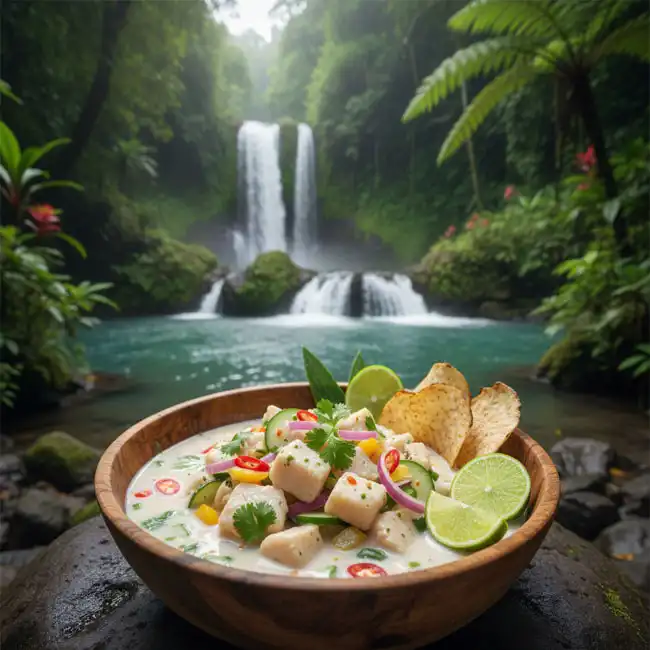
🐟 Recipe 2: Island Lime & Coconut Fish Ceviche — (The freshest starter on earth)
🥥 About this Recipe
In Vanuatu, this is often called "Raw Fish," but don't let the name fool you. The fish is "cooked" by the acidity of fresh lime juice. This appetizer is the epitome of tropical freshness—light, zingy, and incredibly creamy thanks to the addition of fresh coconut milk. It’s the perfect way to start a heavy meal because it cleanses the palate and wakes up the senses.
📝 Ingredients & Measurements
• 500 grams of fresh, sushi-grade white fish (Snapper, Sea Bass, or Mahi-Mahi)
• 1/2 cup of fresh lime juice (about 4–5 limes)
• 1 cup of thick coconut cream (chilled)
• 1 small red onion (very thinly sliced)
• 1/2 red bell pepper (finely diced)
• 1 cucumber (peeled, deseeded, and diced)
• 1-2 Bird’s Eye chilies (finely minced, optional)
• 1/2 cup of fresh cilantro or parsley (chopped)
• 1 teaspoon of sea salt
👩🍳 Step-by-Step Instructions
1.Prep the Fish: Cut the fish into 1-centimeter cubes. Ensure all bones and skin are removed.
2.The Citrus Bath: Place the fish cubes in a glass bowl and pour the lime juice over them. Toss gently. Let it sit in the fridge for about 15–20 minutes. You’ll notice the fish turning opaque (white).
3.Drain: Once the fish is "cooked" to your liking, drain off about half of the excess lime juice to prevent it from being too sour.
4.Add the Veggies: Fold in the red onion, bell pepper, cucumber, and chilies.
5.The Creamy Finish: Pour in the chilled coconut cream and add the sea salt. Stir gently so you don't break the fish cubes.
6.Garnish: Top with fresh cilantro or parsley.
7.Serve: Serve immediately in chilled bowls or even in half-coconut shells for that authentic island vibe.
💡 Tips & Mistakes to Avoid
• Quality is King: Since the fish isn't cooked with heat, you must use the freshest fish possible.
• Don't Over-marinate: If you leave the fish in lime juice for hours, it will become tough and rubbery. 20 minutes is the "sweet spot."
• Chill Everything: This dish is 10 times better when served ice-cold. Chill your bowls and your coconut cream beforehand.
• Salt Balance: The coconut cream is sweet, so don't be afraid of the salt—it’s what brings the flavors of the fish and lime together.
❓ FAQ
Q1.What if I don't like chili?
You can leave it out entirely! The dish is still delicious with just the lime and coconut.
Q2.Can I use shrimp instead of fish?
Yes, but make sure the shrimp are cleaned and deveined. They may need an extra 10 minutes in the lime juice.
Q3.Is it safe for kids?
As long as the fish is high-quality and fresh, yes! Most kids actually love the creamy coconut flavor.
📝 Summary
This ceviche is like a tropical breeze in a bowl. It’s elegant, healthy, and visually stunning. It’s the ultimate "no-cook" appetizer for hot summer days.
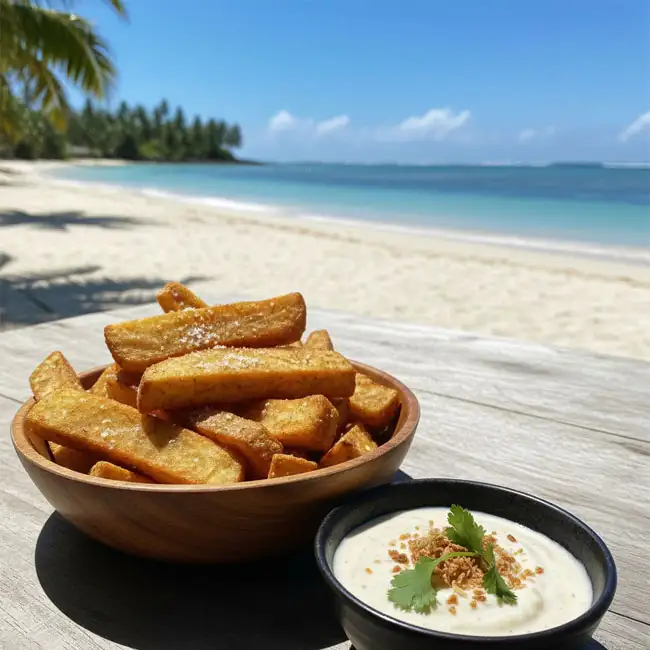
🍟 Recipe 3: Golden Taro Fries with Smoked Coconut Dip — (The ultimate island finger food)
🥥 About this Recipe
Move over, potato fries! Taro is the king of roots in Vanuatu. When fried, taro becomes incredibly crispy on the outside while remaining nutty and fluffy on the inside. To make this a true Vanuatu appetizer, we pair it with a dip made from "burnt" or smoked coconut cream, which adds a layer of depth that will make you forget ketchup ever existed.
📝 Ingredients & Measurements
• 1 kilogram of taro root (peeled and cut into batons/fries)
• Vegetable oil (for deep frying)
• 1 tablespoon of sea salt
• 1 teaspoon of smoked paprika (to mimic the wood-fire flavor)
For the Dip:
• 1 cup of thick coconut cream
• 1 clove of garlic (crushed)
• 1 tablespoon of lime juice
• 1/2 teaspoon of salt
• A pinch of chili flakes
👩🍳 Step-by-Step Instructions
1.Prep the Taro: Peel the taro (be careful, some people's skin can itch when touching raw taro—use gloves if sensitive!). Cut them into even-sized fries.
2.The First Boil: Parboil the taro batons in salted water for about 5 minutes. They should be slightly soft but not falling apart. Drain and pat them bone-dry.
3.The Dip: In a small saucepan, simmer the coconut cream with garlic and salt. Cook it on low heat until it reduces and thickens. For a "smoked" effect, you can stir in the smoked paprika. Let it cool.
4.Fry Time: Heat the oil to 356∘F or 180∘C. Fry the taro batons in batches until they are deep golden brown and crispy.
5.Season: Toss the hot fries in a bowl with sea salt and a little extra smoked paprika.
6.Serve: Arrange the hot fries on a platter with the thickened coconut dip on the side.
💡 Tips & Mistakes to Avoid
• Dry them Well: If the taro is wet when it hits the oil, it will be soggy instead of crunchy.
• Don't Crowd the Pan: Fry in small batches to keep the oil temperature high.
• Taro Handling: Raw taro contains calcium oxalate crystals which can cause a tingly itch on the skin. Washing the peeled taro in vinegar water can help neutralize this.
• Parboiling is Key: Don't skip the boil! Frying raw taro from scratch often leads to a burnt outside and a raw, hard inside.
❓ FAQ
Q1.Can I bake these instead of frying?
You can, but they won't be as crispy. If baking, toss them in plenty of oil and bake at 392 degrees Fahrenheit ( 200 degrees Celsius ) for 25 minutes.
Q2.Where do I find taro?
Most Asian or Caribbean grocery stores carry taro root year-round.
Q3.Is the dip spicy?
Only if you add the chili flakes! Otherwise, it’s a savory, creamy dream.
📝 Summary
Taro fries are the ultimate crowd-pleaser. They are familiar enough for picky eaters but unique enough to stand out. The smoked coconut dip is the "secret sauce" that brings the whole dish together.
🌈 Final Thoughts
And there you have it! Three incredible Vanuatu-inspired appetizers that bring the heat, the cream, and the crunch of the South Pacific right into your home. The best thing about ni-Vanuatu cooking is that it’s not about perfection; it’s about the freshness of the ingredients and the joy of sharing.
I highly recommend starting with the Island Ceviche if you want something quick, or the Taro Fries if you’re looking for a guaranteed hit with kids. The Tuluk is a bit more of a project, but trust me, that first bite of savory cassava and meat is worth every second of effort.
| 🇻🇺 🥪 < Back |