
🏠 Home > 🗺️ Recipes > 🥘 Sauces > 🇹🇻 Tuvalu Sauces
🇹🇻 🥘 Tuvalu Sauces Recipes
Published by Supakorn | Updated: June 2026
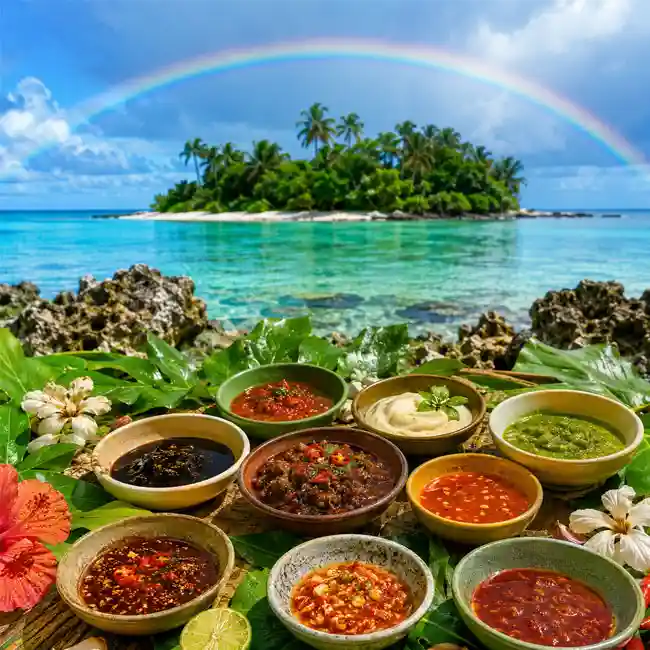
🇹🇻 🥘🌊 The Heart of Tuvaluan Food Culture
Imagine a place where the ocean isn’t just scenery — it’s the pantry, the highway, and the soul of every meal. That’s Tuvalu for you. This tiny Polynesian nation, spread across nine coral atolls in the middle of the Pacific, has a food culture that’s all about simplicity, community, and making magic with what the land and sea provide.
Here, food isn’t rushed. Meals are events where aunties, uncles, and neighbors gather under coconut palms, sharing laughs and stories while the scent of smoke and coconut fills the air. And at the center of every Tuvaluan table? Sauces. Not the bottled, shelf-stable kind you grab at the store. We’re talking fresh, vibrant, hand-pounded blends that tie everything together — from just-caught fish to steaming taro.
Tuvaluan sauces are the unsung heroes of island dining. They add punch to plain staples, celebrate seasonal harvests, and carry generations of know-how in every spoonful. If you really want to understand Tuvalu, you start with the sauces. They tell you what grows here, what the ocean gives, and how people have thrived on these atolls for centuries.
🥥🌴 What Makes Tuvalu Sauces So Irresistible?
🌞💧 Ingredients Born from Atoll Life
Tuvalu’s atolls are thin strips of coral with not a lot of soil to spare. So farming is creative. The stars of the pantry are coconut, breadfruit, pandanus, taro, and the bounty of the Pacific Ocean. Because refrigeration was rare until recently, preservation and flavor-boosting became an art form — and that’s where sauces shine.
Coconut is king. You’ll find it as lolo, or coconut cream, freshly squeezed from grated meat. It’s rich, silky, and goes into almost every sauce to mellow heat, add body, and carry flavor. Then there’s kaleve, fresh coconut sap, used for a subtle sweetness.
From the sea come tiny reef fish, crab, and sometimes sea cucumber, all of which can be pounded into savory pastes. On land, pandanus fruit gives a sweet, tropical tang, while fermented breadfruit adds a deep, earthy funk that locals love. Chili, lime, and sea salt round things out. Nothing is wasted, and everything has a purpose.
🔥👨👩👧👦 Eating the Tuvaluan Way: Community, Hands, and Banana Leaves
Forget forks and white tablecloths. In Tuvalu, you eat with your hands, sitting cross-legged on woven mats. Food is served on banana leaves or polished wooden platters called kumete. The main starch — taro, pulaka, breadfruit, or rice — sits in the middle. Around it: grilled fish, boiled crab, maybe some palusami. And always, always, a few small bowls of sauce for dipping, drizzling, and mixing.
Sharing is non-negotiable. You take a piece of taro, dip it in miti, a coconut-chili sauce, then pass the bowl to your cousin. Meals stretch for hours because it’s not just about eating — it’s about talanoa, or talking story. The sauces keep things interesting bite after bite, so no one leaves the mat until they’re full and happy.
🐟🥥 Iconic Tuvalu Sauces You Have to Know
🌶️🥥 Miti: The Ultimate Coconut-Chili Dipping Sauce
If Tuvalu had a national condiment, miti would be it. Think of it as the island’s answer to salsa, but creamier and with a kick that sneaks up on you. Fresh coconut cream is mixed with finely diced chili, a squeeze of local lime, slivers of onion, and a pinch of sea salt. Some families add crushed reef fish or crab for umami.
Miti is everywhere. Drizzle it over grilled flying fish straight from the umu earth oven. Spoon it onto boiled breadfruit. Use it to liven up plain rice on a Sunday after church. The beauty is in the balance — the coconut cools the chili heat, the lime keeps it bright, and the salt makes the ocean flavors pop. No two family recipes are exactly the same, and that’s part of the charm.
🍈🌿 Vaisalo: Sweet Pandanus Coconut Sauce for Celebrations
Vaisalo is what shows up when there’s something to celebrate. It’s a dessert sauce, but Tuvaluans will happily eat it any time of day. Ripe pandanus fruit is boiled, strained, and mixed with thick coconut cream and a touch of fresh coconut sap for sweetness. The result is golden, fragrant, and tastes like a tropical sunset.
Traditionally, vaisalo is poured over baked taro or pulaka during fakafalaoa feasts. The sweetness honors guests, and the pandanus is a nod to the trees that provide food, weaving materials, and medicine. Kids love it, elders request it, and visitors remember it long after they leave the atoll.
🐚🍋 Tai Lolo: Seafood Coconut Sauce with Island Tang
Tai lolo means “sea in coconut” and that’s exactly what it is. Tiny reef fish, sea cucumber, or crab meat is lightly cooked, then pounded with coconut cream, lime juice, and sometimes green papaya for texture. It’s savory, briny, and deeply satisfying.
This sauce is all about honoring the catch. If the men come back with a good haul, tai lolo turns it into a feast. It’s served warm over taro or spooned into a half coconut shell for dipping. The lime cuts the richness, so you can keep going back for more without feeling heavy. For coastal communities, this sauce is pure home.
🍞🌰 Fekei: Fermented Breadfruit Sauce with Ancestral Roots
Fekei isn’t for the faint of heart, but it’s a must-try for adventurous eaters. Breadfruit is fermented in a leaf-lined pit for weeks, developing a tangy, cheese-like depth. When ready, it’s mixed with coconut cream and sometimes mashed banana. The taste is sour, creamy, and completely unique to the Pacific.
This sauce connects modern Tuvaluans to their ancestors who mastered fermentation to survive long voyages and lean seasons. You’ll find fekei at important gatherings, served with baked fish or pork. It’s a flavor that tells you: people have been thriving here for a very, very long time.
✈️🌺 Sauces and Island Travel: A Taste of Tuvalu’s Atolls
🛶🍍 From Funafuti to Nanumea: How Place Shapes the Sauce
Each of Tuvalu’s nine atolls has its own spin on sauce. In Funafuti, the capital, you’ll find more variety because of trade and outside influence — miti might include imported onions or a dash of soy-style seasoning. Head north to Nanumea or Nanumaga and things get more traditional. Vaisalo there uses wild pandanus only found on those islands, and fekei is fermented longer for extra punch.
Traveling between atolls by boat is still common, and so is bringing food gifts. A visitor might arrive with a bottle of their island’s miti as a thank-you. In that way, sauces are edible postcards. They map the journey, the climate, and the family recipes of each coral speck in the ocean.
🎉🍃 Feasts, Falekaupule, and the Role of Sauce in Ceremony
The falekaupule is the traditional meeting hall, and it’s where big decisions and bigger feasts happen. For weddings, chief installations, or church celebrations, the umu earth oven is fired up at dawn. Layers of food are steamed under banana leaves for hours. When the leaves are lifted, the air smells like coconut, smoke, and sea.
Sauces are prepared by the women of the community, each bringing their specialty. There’s pride in having the best tai lolo or the smoothest vaisalo. During the feast, young people serve elders first, placing a piece of fish and a spoonful of sauce on their leaf. It’s respect, tradition, and flavor all at once. For travelers lucky enough to be invited, it’s the ultimate Tuvalu experience.
💡🌮 How Tuvaluans Use Sauces Beyond the Dinner Mat
🥥🍚 Everyday Staples Made Exciting
Life on an atoll means you eat a lot of taro, pulaka, breadfruit, and rice. They’re filling, they grow well, but let’s be real — they can get bland. Sauces are the fix. A plain boiled taro becomes a crave-worthy snack with a side of miti. Leftover rice from last night? Fry it up and pour tai lolo over it for breakfast.
Kids take sauce to school in reused jars. Fishermen keep a small container in the boat. It’s the Tuvaluan equivalent of meal prep: cook the staple in bulk, then change the sauce to keep it new all week. Smart, sustainable, and seriously tasty.
🎁🌐 Gifting and Sharing: Sauce as Social Glue
If someone builds you a new canoe, helps repair your roof, or watches your kids, you don’t pay them — you feed them. And you bring your best sauce. A jar of homemade vaisalo is a thank-you, an apology, and a “congrats” all in one.
Even Tuvaluans living in New Zealand or Fiji get care packages of dried fekei or vacuum-sealed miti. It’s a taste of home that survives the long trip. In a place where community is everything, sauce isn’t just food. It’s currency, it’s love, and it’s identity in liquid form.
🌱👣 Keeping the Sauce Tradition Alive for the Next Generation
👵📖 Passing Down the “Pound and Taste” Method
There are no measuring cups in a traditional Tuvaluan kitchen. Recipes live in hands and memories. Kids learn by watching their grandmothers grate coconut on a taunga stool, pound chilies with a coral mortar, and taste constantly. “Add more lime,” aunty will say. “Not enough salt.” It’s cooking by feel, by story, and by season.
Youth groups now run workshops to make sure these skills don’t fade. During school holidays, you’ll see teens competing to make the best miti. The prize? Bragging rights and an empty bowl at the end of lunch. It’s how Tuvalu keeps its food culture strong even as the world changes fast.
🌏🔄 Modern Twists Without Losing the Soul
Younger Tuvaluan cooks are playing with tradition, and it’s exciting. Some add mango to vaisalo when it’s in season. Others use a blender for miti when they’re short on time, though purists swear hand-pounding tastes better. In Funafuti’s small cafes, you might find tai lolo served with fried noodles, a nod to visiting influences.
The core doesn’t change though: coconut, local produce, and the idea that food should bring people together. As climate change and rising seas threaten atoll life, these sauces are more than flavor. They’re resilience. They’re a reminder of what makes Tuvalu, Tuvalu.
❓🙋 Frequently Asked Questions About Tuvalu Sauces
Q1.What is the most popular sauce in Tuvalu?
Miti is hands-down the most common sauce you’ll find. It’s a coconut cream base mixed with chili, lime, onion, and salt. Tuvaluans use it on everything from grilled fish to boiled taro. Every family tweaks it, but the creamy-spicy-tangy combo is always there.
Q2.Do Tuvaluan sauces work with non-Pacific foods?
Absolutely! Think of miti as a tropical drizzle for grilled chicken, roasted veggies, or even tacos. Vaisalo is amazing over pancakes or plain yogurt. Tai lolo can level up a bowl of steamed rice or noodles. The flavors are bold but flexible, so feel free to experiment.
Q3.How long do traditional Tuvalu sauces last without refrigeration?
Fresh coconut-based sauces like miti and tai lolo are best eaten the same day in the island heat. That’s why they’re made fresh for each meal. Fermented sauces like fekei can last weeks because the fermentation acts as a natural preservative. If you’re making them at home with a fridge, 2–3 days is safe for coconut sauces.
Q4.Can I try authentic Tuvalu sauces if I visit Tuvalu?
Yes, and you should! The best way is to join a community feast or fakafalaoa, often held after church on Sundays or for celebrations. Local guesthouses and families in Funafuti sometimes host traditional meals for visitors. Just remember: you’ll eat with your hands, you’ll share from communal bowls, and you’ll leave with a full belly and great stories.
🥘 Keto Meets the Pacific: 3 All-Natural Tuvaluan Sauces You’ll Actually Crave
👉 Must-Try 3 Delicious Keto Tuvaluan Sauces!
| 🌐 🥘 < Back | 🇹🇻 🍱 < Previous |