
🏠 Home > 🗺️ Recipes > 🍨 Desserts > 🇹🇻 Tuvalu Desserts
🇹🇻 🍨 Tuvalu Desserts Recipes
Published by Supakorn | Updated: June 2026
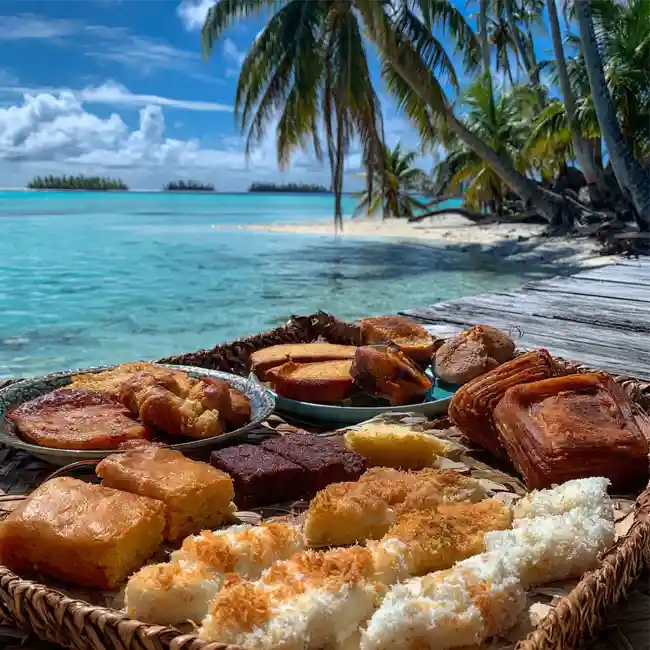
🇹🇻 🍨🏝️ Sweet Secrets of Tuvalu: Where Coconut Meets Culture
Let’s be real — when you think of Tuvalu, you probably picture tiny atolls, crystal blue water, and not a Starbucks in sight. But here’s the thing most travel blogs skip: Tuvalu’s dessert game is quietly iconic. We’re talking simple, heartfelt, coconut-everything sweets that tell the story of island life better than any postcard.
In Tuvalu, dessert isn’t a fancy plated affair. It’s what happens after the fish is grilled, when aunties gather under the pandanus trees, and someone pulls out a bundle of taro or a freshly cracked coconut. Every bite is tied to the land, the sea, and thousands of years of making the most of what nine tiny islands give you. So if you’re craving authentic Pacific island desserts that are as real as it gets, you’re in the right place.
🥥 Island Food Culture: Why Tuvalu Desserts Hit Different
Tuvalu’s food culture is built on “what we have, we share.” With limited land and no mountains or rivers, traditional meals lean heavily on coconut, breadfruit, taro, pandanus fruit, and fresh-caught seafood. And desserts? They follow the same rule: nothing wasted, everything cherished.
Here’s what makes Tuvalu’s sweet culture unique:
• Coconut is king: You’ll find it in almost every dessert — grated, creamed, milked, or fermented into toddy syrup. It’s not just an ingredient. It’s survival, flavor, and celebration rolled into one.
• Cooking is community: Desserts are often made for falekaupule meetings, church gatherings, or fatele dance nights. One person starts grating coconut, another heats the stones for the umu earth oven, and suddenly you’ve got 20 hands making one dish.
• No ovens, no problem: Most traditional sweets are steamed in banana leaves, baked in an umu, or left to set in the sea breeze. That smoky, earthy flavor? You can’t fake it.
• Seasonal and sacred: Pandanus fruit ripens around October to March. Breadfruit has its season too. So certain desserts only show up when the islands say it’s time. That makes them extra special.
• Preserving for the long haul: With cyclones and supply ships that don’t always arrive on time, Tuvaluans mastered natural preservation. Many desserts are designed to last days without refrigeration.
Eating dessert in Tuvalu isn’t about sugar highs. It’s about connection — to family, to ancestors, and to the ocean that surrounds everything.
🌴 Must-Try Iconic Tuvalu Desserts That Define Island Life
You won’t find these in a hotel buffet. These are the real-deal, homemade, “my grandmother taught me” kind of sweets. If you’re lucky enough to visit Funafuti or one of the outer islands, these are the names to remember.
🍰 1. Vaitai — The Ultimate Tuvaluan Coconut Pudding
If Tuvalu had a national dessert, vaitai would be it. Imagine the richest, silkiest coconut pudding you’ve ever had, but with zero dairy. It’s just fresh coconut cream, a touch of starch from taro or arrowroot, and kaleve — a syrup made from boiled-down coconut toddy.
The magic happens when it’s wrapped in banana leaves and steamed for hours. The result? A caramel-scented, melt-in-your-mouth slice that’s smoky, sweet, and deeply comforting. Locals serve it during Te Aso o te Tala — Tuvalu’s Gospel Day — and at weddings. Pro tip: Eat it slightly warm with your fingers. That’s the authentic way.
🌺 2. Lakovi — Sweet Taro Bundles of Joy
Lakovi proves Tuvaluans are geniuses with taro. Grated taro is mixed with thick coconut cream and a drizzle of kaleve, then wrapped like little presents in banana leaves. After steaming in the umu, the taro turns fudgy and the coconut caramelizes at the edges.
It’s not cake. It’s not mochi. It’s its own thing — dense, fragrant, and surprisingly filling. You’ll see lakovi at birthdays and homecomings because it travels well between islands. One bite and you get why it’s a must-try Tuvalu treat.
🍍 3. Te Fala — Pandanus Fruit Pancakes
When pandanus trees are fruiting, te fala season begins. The ripe, bright-orange fruit is pulped, strained, and mixed with coconut cream and a bit of starch to form a thick batter. It’s then spooned onto hot stones or a flat pan and cooked until golden.
The flavor is wild — like tropical pumpkin crossed with mango, with a honeyed finish. Because pandanus is so fibrous, making te fala is labor-intensive. That’s why it’s considered a secret island sweet, usually made by elders who know how to work the fruit. If someone offers you te fala, say yes immediately.
🥮 4. Fakakao — Breadfruit Donuts Without the Fryer
No, not chocolate. Fakakakao comes from “kaka” meaning to stir or mash. Ripe breadfruit is boiled, mashed, and mixed with coconut cream and kaleve until it’s like a thick dough. Scoops of it are wrapped in leaves and steamed until set.
The texture is like a dense, sweet dumpling with smoky notes from the umu. It’s one of the oldest Tuvalu desserts, born from the need to use breadfruit before it spoils. Simple, rustic, and totally irresistible.
🍮 5. Vai Fakalei — The Island’s “Fancy Water” Sweet Soup
Don’t let the name fool you. Vai fakalei translates to “fancy water,” but it’s actually a sweet, warm dessert drink. Young coconut water is simmered with strips of young coconut flesh, mashed banana or breadfruit, and a generous splash of kaleve.
It’s served in a coconut shell cup, especially for guests or after church. Think of it as Tuvalu’s answer to comfort food — soothing, lightly sweet, and perfect after a day in the sun.
🍬 6. Sapo Talo — Taro Balls in Coconut Cream
This one’s for texture lovers. Boiled taro is pounded until smooth, rolled into balls, and gently poached in sweet coconut cream. The taro balls are soft but hold their shape, and they soak up all that rich, vanilla-less coconut goodness.
Sapo talo shows up at big feasts because it can be made in huge pots to feed a village. It’s humble, homey, and a top authentic Tuvalu dessert you’ll dream about later.
✈️ Desserts & Destination: Tasting Tuvalu Through Its Sweets
Tuvalu isn’t a mass-tourism spot — and that’s exactly why its food experiences feel so personal. There are no dessert cafes with Wi-Fi. Instead, the “dessert tour” happens when you’re invited to a family home, a village fatele night, or a Sunday umu lunch after church.
Here’s how desserts tie into Tuvalu travel:
• Funafuti’s Community Halls: If you’re in the capital, check if there’s a community event at the falekaupule. Visitors are often welcomed and fed. That’s your best chance to try vaitai or lakovi made by the island’s best home cooks.
• Outer Island Homestays: Islands like Nanumea, Nui, or Vaitupu are where food traditions are strongest. Staying with a family means you’ll see dessert prep from scratch — grating coconut by hand, weaving food baskets, firing up the umu. It’s the ultimate Tuvalu food travel experience.
• Church & Celebrations: Sundays are huge in Tuvalu. After service, families do a massive umu cook-up. Desserts are always part of it. If you’re respectful and friendly, you might get an invite. Just remember: bring fruit or help prep as a thank-you.
• Seasonal Timing Matters: Visit between November and March for pandanus-based sweets like te fala. Breadfruit season around May to August means more fakakakao. Planning your trip around harvests = better dessert luck.
• What You Won’t Find: No gelato stands. No bakeries. No sugar-loaded cakes. And that’s the beauty. Tuvalu desserts are about natural sweetness and tradition, not imported trends.
Bottom line: If you want to taste Tuvalu, you have to live Tuvalu — even just for a meal. The desserts are your sweetest entry point into the culture.
🙌 How Tuvaluans Eat Sweets: It’s Not Just About Taste
Forget courses and dessert forks. Here’s how sweet-eating really goes down in Tuvalu:
• With your hands: Most desserts are wrapped in leaves or meant to be broken apart and shared. Spoons are optional. Fingers are faster.
• After the umu, not before: A big earth-oven meal comes first — fish, pulaka taro, breadfruit. Dessert is the signal that you should sit longer, talk more, and let the sea breeze cool you down.
• As take-home gifts: Leaving an event? Expect an aunty to press a leaf-wrapped lakovi into your hand. It’s good manners to accept.
• For kids and elders first: In true Polynesian fashion, children and grandparents get served before anyone else. Desserts are love made edible.
• With tea, not coffee: If there’s a drink, it’s usually black tea or fresh coconut water. Simple, warm, and it lets the dessert shine.
💡 Why Tuvalu Desserts Deserve a Spot on Your Food Bucket List
Look, Tuvalu desserts won’t win on Instagram sparkle. They’re beige, wrapped in leaves, and look kinda rustic. But that’s the point.
These are climate-conscious, zero-waste, deeply cultural sweets born from 3,000 years of living on 26 square kilometers of land. No artificial anything. No imported sugar rush. Just coconut, root crops, and human ingenuity.
In a world of over-the-top dessert trends, Tuvalu reminds us that the most iconic flavors are often the simplest. They’re the taste of resilience, of community, and of islands that refuse to be forgotten.
So if you ever get to Tuvalu, skip the resort snacks. Find the aunty with the umu. That’s where the real irresistible Tuvalu desserts live.
⛔❓ FAQ: Tuvalu Desserts Edition
Q1.What makes Tuvalu desserts different from other Pacific island sweets?
Tuvalu desserts stand out because of their total reliance on local ingredients — especially coconut and kaleve toddy syrup. Unlike Fiji or Samoa where sugar and flour are common now, Tuvalu’s traditional sweets still use taro, breadfruit, and pandanus as the base. Plus, most are steamed in an umu earth oven, which gives them a unique smoky flavor you won’t find in baked desserts.
Q2.Are Tuvalu desserts very sweet?
Not by Western standards. The sweetness comes from kaleve — boiled coconut toddy — and ripe fruits like pandanus or banana. There’s no refined sugar in traditional recipes. So expect a gentle, caramel-like sweetness that’s rich but not cloying. It’s more about aroma and texture than a sugar hit.
Q3.Can tourists try authentic Tuvalu desserts easily?
Yes, but you won’t find them in restaurants. The best way is through homestays, village events, or Sunday umu gatherings in Funafuti. Tuvaluans are incredibly hospitable, and sharing food is part of the culture. Be respectful, show interest, and you’ll likely be offered top Tuvalu desserts like vaitai or lakovi.
Q4.Are Tuvalu desserts vegan or dairy-free?
Almost all traditional Tuvalu desserts are naturally dairy-free and vegan. They use coconut cream instead of milk, and starches from taro or breadfruit instead of eggs. Just double-check if you’re at a modern gathering — some families might add condensed milk now — but the authentic versions are plant-based by default.
🍨 You Won’t Believe These Tuvaluan Desserts Have Zero Sugar
👉 Grab 3 Tasty Sugar-Free Tuvaluan Desserts
| 🌐 🍨 < Back | 🇹🇻 🍝 < Previous | Next > 🍷 🇹🇻 |