
🏠 Home > 🗺️ Recipes > 🍞 Breads > 🇹🇴 Tonga Breads
🇹🇴 🍞 Tonga Breads Recipes
Published by Supakorn | Updated: June 2026
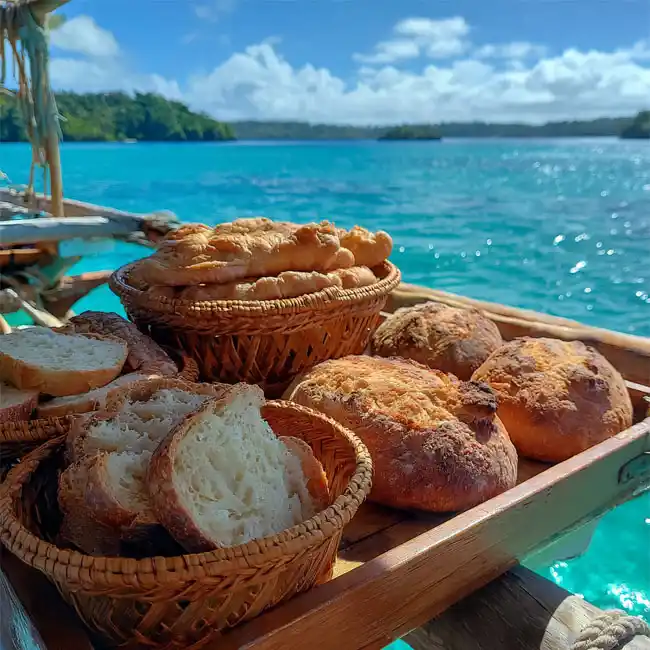
🇹🇴 🍪 Why Tonga Breads Are the Heartbeat of Polynesian Food Culture
Let’s be real — when you think of Tonga, you probably picture turquoise water, coconut trees swaying, and slow island life. But here’s the secret locals already know: the soul of Tonga lives in its bread.
Tonga Breads aren’t just food. They’re family, celebration, and survival all rolled into one golden, steamy bundle. From Sunday feasts after church to roadside stalls in Nukuʻalofa, bread shows up everywhere. It’s how Tongans say “welcome,” “I love you,” and “let’s eat together.”
What makes Tonga Breads so irresistible? They’re simple, humble ingredients transformed by island ingenuity. Think coconut milk instead of water, banana leaves instead of pans, and umu — earth ovens — instead of your kitchen oven. The result? Bread that’s soft, slightly sweet, smoky, and packed with stories.
If you’re hunting for authentic South Pacific flavors or planning a foodie trip to Tonga, understanding these breads is your must-try starting point. This isn’t about fancy bakery loaves. This is real island bread, baked the way it’s been done for generations. Ready to unlock the best of Tonga’s carb culture? Let’s go.
🏝️ The Culture Behind Every Loaf: Bread in Tongan Daily Life
👨👩👧👦 Bread Means Family and ‘Faikava’ Time
In Tonga, food is community. And bread is usually at the center of it. A typical Tongan meal isn’t plated individually — it’s shared. Big platters of root crops, fish, and breads get passed around while everyone sits on mats, talking and laughing.
Sunday is the big one. After morning church, families come home to a ‘to’onaʻi’ — the traditional Tongan Sunday feast. You’ll always find some form of bread there. It soaks up coconut cream from the lu pulu, balances the richness of roasted pork, and keeps everyone full through hours of storytelling.
Even during ‘faikava’ — the evening kava drinking circle — you’ll see bread passed around. It’s not about being gourmet. It’s about keeping the vibe going and making sure no one’s hungry while the talanoa, or chat, flows.
🔥 The Umu: Tonga’s Ultimate Secret to Flavor
You can’t talk Tonga Breads without talking umu. This is the iconic earth oven used across Polynesia, and it’s a game changer for bread.
Here’s how it works: hot volcanic rocks are buried in a pit, covered with banana leaves, then loaded with food parcels. The steam and smoke from the rocks and leaves give Tongan bread a flavor you just can’t fake in a regular oven. It’s slightly smoky, super moist, and has that “cooked by the earth” taste.
Lots of villages still do umu every Sunday. It’s work — men usually prep the fire at dawn — but it’s also pride. When you eat umu bread, you’re tasting teamwork, tradition, and a technique that’s thousands of years old.
🥥 Coconut Is King: The Ingredient That Defines Tonga Breads
If wheat flour is the base, coconut milk is the soul. Almost every authentic Tonga Bread uses fresh coconut cream, or ‘lolo niu’, in the dough or as a topping.
Why? Coconuts are everywhere in Tonga. They’re free, nutritious, and add a natural sweetness and richness that turns plain dough into something unforgettable. Some breads are literally boiled in coconut milk until they’re dumpling-soft. Others get brushed with it fresh out of the umu so they glisten.
This is the difference between “bread” and “Tonga Bread.” Skip the coconut and you’re missing the point.
🍍 Iconic Tonga Breads You Absolutely Must-Try
Tonga doesn’t have 100 types of bread. It has a handful of iconic ones, and each one tells you something about island life. Here are the top legends:
🥥 Topai – The Ultimate Tongan Doughnut Dumpling
• What it is: Topai is Tonga’s answer to comfort food. These are soft, fluffy dough balls boiled in sweetened coconut milk until they’re pillowy and soaked with flavor.
• When you eat it: Sunday to’onaʻi, birthdays, funerals, any big gathering. If there’s a feast, there’s topai.
• Vibe: Imagine a doughnut and a dumpling had a tropical baby. It’s sweet but not dessert-sweet, and it’s meant to be eaten warm with a spoon.
• Local tip: The best topai are slightly chewy in the middle. If it’s too cakey, it got boiled too long.
• Why it’s iconic: Because it uses the most basic ingredients — flour, sugar, coconut — to create something that feels like a hug.
🍌 Feke Bread – Banana Leaf Wrapped Treasures
• What it is: “Feke” means octopus, but don’t panic — Feke Bread isn’t always seafood. It refers to small parcels of bread dough mixed with mashed banana or sometimes octopus, wrapped in banana leaves, and baked in the umu.
• When you eat it: Special occasions and village fundraisers. You’ll see women selling them at the Talamahu Market in Nukuʻalofa.
• Vibe: Smoky, dense, and slightly sweet from the banana. The leaf keeps it crazy moist.
• Local tip: Peel the leaf back slowly — the steam is hot and smells like heaven.
• Why it’s iconic: It’s eco-packaging before that was cool. Plus, the banana leaf infuses the bread with a subtle grassy aroma you’ll never forget.
🍞 Sipi – Tonga’s Classic Island Loaf
• What it is: Sipi is the closest thing Tonga has to a “normal” bread loaf. It’s a simple yeast bread, but baked in big tins and often enriched with coconut milk instead of water.
• When you eat it: Everyday breakfast. Toast it and spread with butter and jam, or eat it with corned beef.
• Vibe: Soft, slightly sweet, with a tight crumb. It’s the workhorse of Tongan kitchens.
• Local tip: Fresh sipi from a local bakery at 6am is an unreal experience. The whole street smells like it.
• Why it’s iconic: Because it proves Tonga took colonial bread and made it their own. It’s familiar but still 100% island.
🥥 Faikakai – The Sticky Caramel Coconut Delight
• What it is: Technically a dumpling, but it lives in the bread family. Faikakai are dough balls steamed in a thick caramel made from coconut milk and brown sugar.
• When you eat it: Dessert, but also just because it’s Tuesday.
• Vibe: Sticky, sweet, and rich. The sauce is the star — it’s like coconut caramel you’ll want to drink.
• Local tip: Eat it fresh. Leftovers get gummy.
• Why it’s iconic: It shows how Tongans turn simple pantry staples into something that feels like a celebration.
🌿 Manioke Bread – The Gluten-Free Root Crop Classic
• What it is: Bread made from manioke, or cassava. It’s grated, squeezed, mixed with coconut, and baked into a dense, chewy cake.
• When you eat it: For people avoiding wheat, or during big feasts as a heavier side.
• Vibe: Earthy, dense, and super filling. One slice and you’re good for hours.
• Local tip: Best eaten warm with a drizzle of fresh lolo niu.
• Why it’s iconic: Because it’s pre-colonial. This is what Tongans ate before flour ever arrived by ship.
✈️ Eating Your Way Through Tonga: Bread and Travel
🗺️ Where to Find the Best Tonga Breads as a Traveler
If you’re heading to Tonga, chasing bread is honestly one of the best ways to see the real country. Here’s the playbook:
• Nukuʻalofa Talamahu Market: Go early Saturday morning. You’ll find women selling fresh topai, faikakai, and feke bread wrapped in leaves. It’s cheap, authentic, and the best people-watching spot.
• Village Sunday Feasts: Make a friend, get invited to to’onaʻi. This is the ultimate way to try umu-baked bread. Just remember: bring a small gift, dress modestly, and say ‘malo’ — thank you — a lot.
• Local Bakeries: Places like Friends Cafe or local Chinese-Tongan bakeries do amazing sipi. Grab a loaf for a beach picnic.
• Island of ‘Eua or Vava’u: Smaller islands still do umu the old-school way. The bread tastes smokier because they use more native wood.
Pro tip: Tongans are insanely hospitable. If you show genuine interest in their food, you’ll probably get fed within 10 minutes.
🌊 Food, Place, and ‘Anga Fakatonga’ – The Tongan Way
You can’t separate Tonga Breads from ‘anga fakatonga’ — the Tongan way. This is the cultural code of respect, love, and reciprocity. Bread plays into it big time.
• Gifting bread: Showing up empty-handed is bad form. Bringing a loaf of sipi or a bag of topai says you respect the household.
• Hierarchy at the table: Chiefs and elders eat first. Bread gets torn, not cut, and passed with two hands to show respect.
• No waste: Leftover bread gets fried for breakfast or fed to pigs. Wasting food is ‘fakamā’ — shameful.
So when you eat bread in Tonga, you’re not just snacking. You’re stepping into a whole social system. Pretty cool for something made of flour and coconut, right?
🧑🍳 Modern Twists: How Tonga Breads Are Evolving Today
🌐 Tongan Diaspora Keeping Bread Culture Alive
There are more Tongans living overseas — in New Zealand, Australia, and the US — than in Tonga itself. And guess what they miss most? The bread.
So aunties in Salt Lake City and Auckland are firing up backyard umus or hacking electric ovens to recreate that smoky taste. You’ll find topai at Tongan church fundraisers in Sydney and faikakai sold on Facebook groups in California.
The recipes adapt — canned coconut milk instead of fresh, banana leaves from the Asian market — but the heart stays the same. For the diaspora, making Tonga Bread is how you keep home alive when home is 5,000 miles away.
💡 Young Bakers and the New Wave of Island Baking
The new generation of Tongan bakers is doing wild stuff too. Think:
• Ube Topai: Adding Filipino purple yam for color and flavor.
• Vegan Faikakai: Using coconut sugar and plant-based butter.
• Sourdough Sipi: Fermenting with wild island yeast for a tangy twist.
It’s not traditional, but it’s 100% Tongan innovation. The core idea stays: take what you have, make it delicious, and share it.
If you visit Nukuʻalofa now, you’ll even find hip cafes serving topai with a side of espresso. The old and new are mixing, and it’s delicious.
🥥 The Secret Ingredients That Make Tonga Breads Irresistible
Want to know why you can’t stop at one piece? It’s not just nostalgia. The science is on Tonga’s side:
• Coconut fat: Lolo niu keeps bread moist for days in humid weather. No dry, crumbly loaves here.
• Steam baking: Umu and banana leaves trap moisture, so the starch gelatinizes perfectly. That’s why it’s chewy, not bready.
• Low gluten flour: Many Tongan recipes use all-purpose flour with minimal kneading. Less gluten = more tender crumb.
• Caramelization: Boiling in coconut + sugar gives faikakai and topai that deep, toasty, almost butterscotch note.
Basically, Tongan grandmas figured out food science before it was cool.
🙏 Bread as Respect: The Do’s and Don’ts for Visitors
If you get to try Tonga Breads in someone’s home, here’s how to not mess up:
• Do say ‘malo ‘aupito’ — thank you very much — when offered food.
• Do try everything at least once. Refusing can seem rude.
• Do eat with your right hand if you’re using hands. Left is considered unclean.
• Don’t start eating before the prayer is said. Sunday feasts always start with grace.
• Don’t take the last piece without offering it to others first. Sharing is everything.
Nail these and you’ll be invited back, promise.
🧐 FAQ: Your Tonga Breads Questions Answered
Q1.Are Tonga Breads super sweet like desserts?
Not really. Most Tonga Breads like topai and faikakai are sweet, but it’s a gentle coconut sweetness. Think “breakfast sweet,” not “cake sweet.” Sipi and manioke bread aren’t sweet at all — they’re meant for savory meals. So you get both sides depending on what you pick.
Q2.Can I find Tonga Breads outside of Tonga?
Yes! Check Polynesian communities in Auckland, Sydney, Salt Lake City, and Los Angeles. Tongan churches often sell them after Sunday service as fundraisers. Some Polynesian markets and restaurants also make topai and sipi. If not, the ingredients are so simple you can make the ultimate version at home.
Q3.Do I need an umu to make authentic Tonga Bread?
Nope. The umu gives it that secret smoky flavor, but Tongans abroad adapt all the time. You can steam topai on the stove, bake feke bread in foil in your oven, and sipi works in any loaf pan. It won’t be 100% identical, but it’ll still be must-try and delicious. The coconut milk is the real non-negotiable.
Q4.Is Tongan bread healthy?
It depends on your definition. Traditional Tonga Breads use coconut, which has healthy fats, and cassava, which is gluten-free and full of fiber. But topai and faikakai also have sugar, because they’re feast foods. Tongans don’t eat them every day. Balance it with fresh fish, taro leaves, and fruit — the way locals do — and you’re eating like an islander.
That’s the full scoop on Tonga Breads — no recipe steps yet, just the stories, culture, and flavors that make them iconic. From umu pits to modern cafes, these breads are Tonga’s edible history. If you ever get the chance to tear into warm topai with your hands while sitting on a pandanus mat, take it. It’s the best of Tonga in one bite. 🇹🇴
🍞 Bake These 3 Protein-Packed Tongan Breads Your Whole Family Will Ask For
👉 Get 3 Authentic High-Protein Tongan Breads
| 🌐 🍞 < Back | 🇹🇴 🥗 < Previous | Next > 🍱 🇹🇴 |