
🏠 Home > 🗺️ Recipes > 🍱 Snacks > 🇹🇭 Thailand Snacks
🇹🇭 🍱 Thailand Snacks Recipes
Published by Supakorn | Updated: February 2026
🛵 Why Thai Snacks Are So Popular
🍯 Sweet Treats Loved Across Thailand
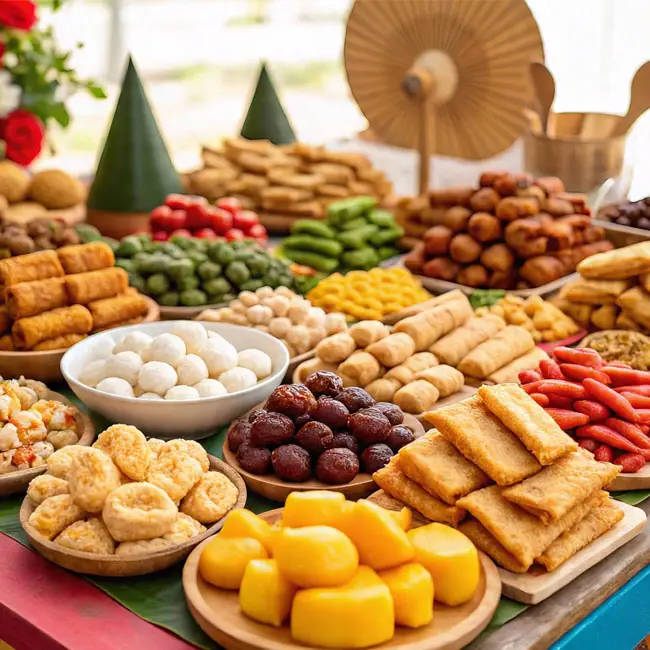
Snacks in Thailand go beyond simple bites — they represent a culture of sharing, convenience, and flavor packed into every small portion. Thai snacks can be found at bustling street markets, local shops, and even in family kitchens. They are affordable, diverse, and perfect for satisfying cravings between meals. Both locals and tourists enjoy them as part of everyday life or as special treats during festivals.
On the sweet side, snacks like crispy coconut pancakes (Khanom Krok), sticky rice with mango, and fried bananas are beloved by all ages. These treats often highlight natural ingredients like coconut, rice flour, tropical fruits, and palm sugar, offering flavors that are both comforting and uniquely Thai. They are commonly sold in small portions, making them ideal for casual snacking. The sweet snacks, or Khanom Wan, are often designed to be portable and eaten quickly. They showcase the ingenuity of Thai cooks in transforming humble ingredients, especially rice and coconut, into delicate, irresistible desserts.
🍢 Savory Bites from Streets and Markets
Savory Thai snacks are just as diverse, ranging from grilled meat skewers and fried fish cakes to crunchy spring rolls. Street vendors often prepare them fresh, ensuring bold aromas and textures. Many savory snacks are served with dipping sauces that balance sweet, sour, and spicy elements, reflecting the Thai culinary philosophy of flavor harmony.
The savory snacks are essentially miniature versions of main dishes, making them perfect for on-the-go consumption. Think of them as fuel stops throughout the day. From the smoky charcoal flavor of grilled pork (Moo Ping) to the intense, fresh aroma of fried basil in a fish cake (Tod Man Pla), these snacks are often seasoned aggressively and prepared right in front of you, guaranteeing the freshest and most authentic taste experience possible. They are the true definition of Thai street food culture—fast, flavorful, and incredibly accessible.
Ultimately, Thai snacks reflect Thailand’s creativity in blending flavors, textures, and traditions. Whether sweet or savory, these little bites deliver a big taste of Thai culture, making them favorites among food lovers worldwide.
⏰ The Culture of Snacking: When and Where Thais Eat
☀️ All-Day Grazing: The Thai Eating Rhythm
Unlike cultures with strict meal times, Thai life revolves around all-day grazing. Because the climate is warm and food is readily available and affordable, people frequently eat smaller portions throughout the day rather than three large meals. Snacks are not just an interruption between meals; they are integral to the daily eating routine.
This rhythm is supported by the countless street vendors who appear at different times. Some specialize in breakfast snacks (like grilled savory pancakes), others cater to the mid-afternoon slump (offering iced drinks and sweet treats), and a third group dominates the evening with skewers, noodles, and fried appetizers. This availability means you're never more than a few steps away from a delicious, freshly made bite.
🧺 The Comfort of Khanom: Tradition and Family
The word for Thai dessert or sweet snack is Khanom. Many Khanom recipes are centuries old and were traditionally made at home using labor-intensive techniques like meticulously grating coconut or wrapping delicate parcels in banana leaves.
These snacks often hold a special place in Thai family life and celebrations. They are prepared for religious holidays, given as gifts during visits, or simply made on the weekends to bring the family together. The process of making the Khanom is often a communal activity, emphasizing the role of food in maintaining familial and social bonds. Even when bought from the market, these snacks carry a sense of tradition, comfort, and nostalgia.
🚶 The Street Food Economy
Thai snacks are the backbone of the vibrant street food economy. They represent entrepreneurship, low start-up costs, and quick turnover. The street vendor system provides affordable food for everyone, from busy office workers to students, and is a vital social and economic anchor in Thai cities. This ecosystem ensures that the recipes stay authentic and the ingredients remain fresh, as vendors need to maintain high quality to attract daily customers. When you buy a snack from a street vendor, you are tasting a direct, unfiltered piece of Thai culinary tradition.
🍡 Savory Street Favorites
🍢 Smoky and Simple: Grilled Skewers
The quintessential Thai savory snack is anything served on a stick. Grilling over charcoal is highly prized, as it imparts a smoky flavor (Wok Hei equivalent) that is irresistible.
• Moo Ping (Grilled Pork Skewers): Perhaps the most popular grilled snack, these pork slices are marinated overnight in a mix of coconut milk, garlic, pepper, and soy sauce, resulting in a sweet, savory, and incredibly tender bite. They are often eaten for breakfast or as a mid-day energy boost.
• Kai Ping (Grilled Chicken Skewers): Similar to Moo Ping but with chicken, often marinated with turmeric and lemongrass, giving it a bright yellow color and earthy aroma.
• Sauce is Key: These skewers are typically served with a sticky, savory dipping sauce, sometimes a tamarind-based sauce, that provides an extra layer of sweet-sour tang.
🐟 Crispy and Flavorful: Fried Seafood and Meats
Thai street vendors excel at frying, turning simple ingredients into crunchy, golden treasures.
• Tod Man Pla (Thai Fish Cakes): Made from a paste of white fish mixed with red curry paste, kaffir lime leaves, long beans, and herbs, these cakes are fried to a golden crisp. They are served with a sweet and tangy cucumber and peanut dipping sauce, offering a perfect textural contrast—soft on the inside, crispy on the outside.
• Por Pia Tod (Fried Spring Rolls): Unlike Vietnamese rolls, Thai spring rolls are wrapped tightly and fried until crunchy. They are usually filled with clear noodles, cabbage, carrots, and mushrooms, and are a satisfyingly hearty vegetarian option, dipped in a sweet chili sauce.
• Sataw Pad Prik Gaeng (Southern Stir-Fry Snack): While sometimes a main dish, smaller portions of stir-fried meats or shrimp with the notorious stinky bean (Sataw) and Southern curry paste are also sold as quick, fiery savory bites, proving that even snacks can pack a punch.
🥥 Delightful Sweet Treats (Khanom Wan)
🥭 The King of Thai Desserts: Sticky Rice with Mango
While technically a dessert, Khao Niao Mamuang (Mango Sticky Rice) is frequently enjoyed as an afternoon snack when mangoes are in season (roughly March to May). It is the perfect marriage of sweet, creamy coconut milk-soaked sticky rice and slices of ripe, sweet mango. The dish is often finished with a sprinkle of crispy roasted mung beans for a subtle textural contrast. Its flavor profile is iconic, representing the best of Thai tropical produce.
🥞 Tiny Coconut Wonders: Khanom Krok
Khanom Krok (Coconut Pancakes) are an absolute must-try. These small, cup-shaped treats are cooked on a special indented iron griddle, similar to a Danish Aebleskiver pan. The batter is made from rice flour and coconut milk. They are poured in two layers: a slightly crispy outer shell and a creamy, molten center.
They often come in different varieties: plain (pure creamy coconut flavor), or topped with ingredients like corn, taro, or spring onions (for a subtle savory contrast). The beauty of Khanom Krok is the temperature—they are served warm and soft, offering a comforting hit of sweet coconut goodness.
🍌 Simple and Sweet: Fruit-Based Snacks
Thai cooks know how to elevate tropical fruits with simple techniques:
• Kluay Tod (Fried Bananas): Slices of ripe banana are dipped in a crispy batter made from rice flour, coconut, and sesame seeds, then deep-fried until golden. The frying caramelizes the banana, making it wonderfully sweet and tender inside the crunchy shell.
• Wai Khiao (Water Chestnuts in Coconut Milk): Often called "Red Rubies" because the water chestnuts are dyed red before being boiled and coated in tapioca flour. These chewy, crunchy "rubies" are served cold in a sweet, fragrant coconut milk soup with crushed ice. It’s the ultimate refreshing sweet snack on a hot day.
🍚 Rice Flour Creativity
Rice is the foundation of the Thai diet, and Thai sweet snacks use rice flour in countless creative ways:
• Khanom Tuay (Thai Coconut Milk Custard): A delicate, two-layered custard steamed in a small ceramic cup. The bottom layer is sweet, often pandan-infused, and the top layer is pure, salty coconut cream—a perfect blend of sweet and savory in one bite.
• Khao Tom Mat: Sticky rice, banana, and sometimes black beans wrapped and steamed in a banana leaf packet. This makes a hearty, chewy, and naturally sweet snack that is easy to carry.
💡 Tips for Finding and Enjoying Thai Snacks
🧐 Follow the Locals (and the Aroma)
The best Thai snacks are usually found at the stalls with the longest lines of local people. Thai food safety standards are generally high due to the constant fresh preparation, but high turnover means the ingredients are always fresh. Look for the vendor whose wok is sizzling the loudest or whose charcoal is glowing the brightest—that's where the magic (and the flavor) happens!
💰 Always Carry Small Bills
Thai snacks are incredibly affordable, often priced between 10 to 30 Thai Baht. Vendors prefer small bills (Bank Roi - 100 Baht) and coins, as they often don't keep much change on hand. Having smaller denominations makes your snack run quick and easy!
⚖️ The Balance of Flavor and Texture
When trying a new Thai snack, pay attention to the famous Thai balance. If it’s savory, is there a little sweetness in the sauce? If it’s sweet, is there a pinch of salt (like the salty layer on Khanom Tuay) or a sharp citrus note to balance the richness? This constant pursuit of balance is what elevates a simple Thai snack into a culinary experience.
❓ FAQ
Q1: What are the most popular Thai snacks?
A1: Favorites include Khanom Krok (coconut pancakes), Kluay Tod (fried bananas), Moo Ping (grilled pork skewers), and Tod Man Pla (fish cakes). Khao Niao Mamuang (Mango Sticky Rice) is the seasonal superstar.
Q2: Are Thai snacks usually sweet or savory?
A2: Both—Thailand offers an incredible variety of sweet treats (Khanom Wan) and savory street bites, ensuring there is a snack for every craving at any time of day.
Q3: Can I make Thai snacks at home easily?
A3: Yes, many recipes use simple, accessible ingredients like rice flour, coconut milk, and fresh herbs. While some, like Khanom Krok, require specialized equipment, others, like Moo Ping or Kluay Tod, are very easy to recreate with standard kitchen tools.
🍱 Authentic Thai Snacks Recipes You’ll Want to Make Again and Again
| 🌐 🍱 < Back | 🇹🇭 🍞 < Previous | Next > 🥘 🇹🇭 |