
🏠 Home > 🗺️ Recipes > 🍨 Desserts > 🇹🇭 Thailand Desserts
🇹🇭 🍨 Thailand Desserts Recipes
Published by Supakorn | Updated: February 2026
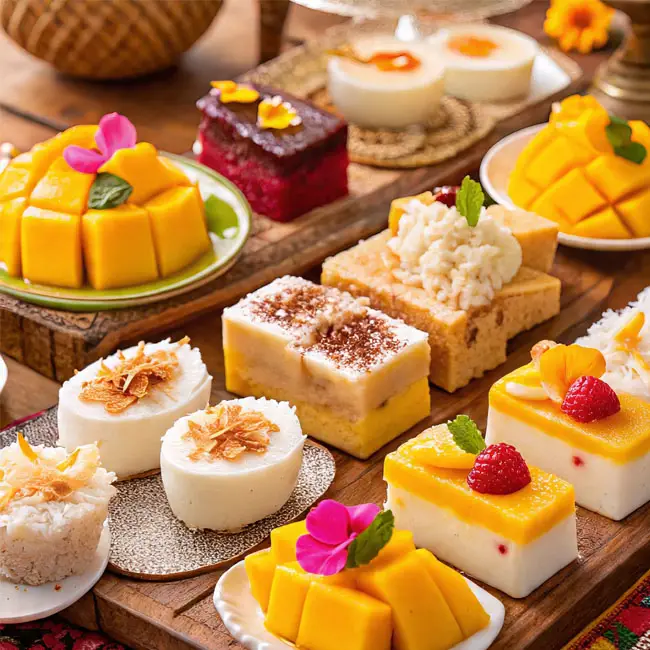
🍯 What Makes Thai Desserts Special?
Thai desserts aren’t just sugary treats—they’re a harmonious blend of culture, nature, and craftsmanship. These sweets weave together Thailand’s tropical climate, agricultural abundance, and deep culinary traditions. They’re colorful, aromatic, and shaped with such care that they often feel like edible art.
Whether you’re wandering through a bustling Bangkok market or attending a local festival in the countryside, Thai desserts greet you with inviting scents of coconut, pandan, and warm palm sugar. They can be steamed, wrapped, layered, shaped, or even hand-folded with delicate precision. That’s the charm: each dessert is simple at heart but beautifully presented.
🍃 The Balance of Sweetness and Texture
One unique aspect of Thai desserts is their subtle sweetness. Unlike heavy cakes or buttery pastries, Thai sweets emphasize light, natural flavors. The sweetness often comes from palm sugar or coconut sugar, giving each bite a warm caramel-like depth without being overwhelming.
Texture also plays a huge role. You’ll find soft and chewy desserts like Khanom Chan, crisp and airy ones like Khanom Buang, creamy coconut-based puddings, and sticky rice treats infused with floral aromas. The variety is astonishing, and yet everything shares a balanced, pleasant sweetness that feels refreshing rather than rich or overpowering.
It’s this interplay of textures—soft, chewy, crunchy, bouncy, silky—that makes Thai desserts a memorable experience for anyone who tries them.
🥥 Key Ingredients in Thai Sweets
If you take a closer look at Thailand’s signature desserts, you’ll notice many rely on ingredients sourced directly from nature. Coconuts, pandan leaves, jasmine flowers, tropical fruits, sticky rice, and palm sugar form the backbone of most recipes.
Some well-loved sweets include:
• Mango Sticky Rice — a classic combination of sweet fragrant mango and creamy coconut-infused rice
• Khanom Buang — Thai crispy pancakes filled with meringue and sweet shredded coconut
• Khanom Chan — a stunning nine-layered dessert scented with pandan
• Tub Tim Krob — chilled water chestnut rubies floating in coconut milk
These desserts are visually stunning and represent the essence of Thai culinary identity. Different regions also highlight different ingredients; the north leans toward rice-based treats, while the south incorporates more coconut due to abundant plantations.
🌾 A Sweet Reflection of Thai Culture
🎉 Desserts in Festivals and Ceremonies
Thai desserts are deeply woven into traditional celebrations, both religious and cultural. During weddings, housewarming ceremonies, or festivals like Loy Krathong and Songkran, beautifully arranged trays of sweets symbolize prosperity, harmony, and good luck.
Many Thai desserts carry symbolic meanings:
• Khanom Chan (layered dessert) represents growth and progress
• Thong Yip / Thong Yod / Foi Thong (desserts with “gold” in the name) symbolize wealth and good fortune
• Med Kanoon indicates support and encouragement in life
This connection makes desserts more than food—they’re meaningful gifts.
🛕 Offerings and Spiritual Traditions
In temples, Thai sweets often accompany other offerings to honor monks and express gratitude. Delicate, soft-textured desserts wrapped in banana leaves or served in small bowls reflect humility and hospitality. The preparation process itself, intended as a mindful and generous act, mirrors the values found in Thai culture: respect, harmony, and appreciation for community.
🥭 Thailand’s Tropical Bounty
🌴 Coconut – The Heart of Thai Desserts
Coconut milk, coconut cream, grated coconut, and coconut sugar form the base of countless desserts. Coconut brings natural richness and creaminess, tying everything together in a fragrant, comforting way. From sticky rice to puddings to crispy pancakes, coconut transforms simple ingredients into delightful sweets enjoyed across the country.
🍃 Pandan’s Sweet Aroma
Pandan leaves, known for their vibrant green hue and floral scent, appear in many Thai desserts. They give dishes their signature aroma and natural color. Whether blended into coconut milk or infused in sticky rice, pandan adds a soothing, nostalgic flavor that instantly reminds Thais of home and childhood treats.
🥭 Seasonal Fruits in Thai Desserts
Thailand’s tropical climate produces fruits that naturally complement sweet treats. Mangoes, durian, jackfruit, lychee, pomelo, and bananas often play starring roles in desserts. The sweetness, juiciness, and fragrance of these fruits elevate even simple recipes into refreshing, memorable creations.
Think of Mango Sticky Rice: it’s a dessert that perfectly symbolizes Thailand’s tropical lifestyle and agricultural richness.
🧭 Regional Diversity in Thai Desserts
🏞️ Northern Thai Desserts
The northern region often incorporates sticky rice, beans, and milder flavors. Desserts here tend to be less sweet, with a focus on natural aromas. Banana leaf–wrapped sweets are common, as well as sticky rice cooked in bamboo.
🌊 Southern Thai Desserts
Rich coconut, palm sugar, and intense flavors dominate southern desserts due to the abundance of coconut farms. Many sweets here are creamier and more aromatic. Fresh coconut milk is the star ingredient in countless treats.
🐘 Central Thailand & Street Food Culture
Bangkok and central Thailand are home to vibrant dessert markets. Colorful sweets like Luk Chup (mung bean candy shaped like fruit), Khanom Krok (coconut pudding cups), and crispy Thai pancakes are iconic here. The creativity and variety in central Thailand make it a paradise for dessert lovers exploring street food stalls.
🍽️ How Thai Desserts Fit Into Daily Life
☕ Everyday Enjoyment and Snacking Culture
Thai people enjoy sweets not just as desserts but as snacks throughout the day. It’s common to grab a small coconut pancake or a banana leaf-wrapped sweet from a street vendor on the way to work. Many of these treats are small, portable, and comforting—perfect for a quick bite without feeling heavy.
👜 Homemade Sweets and Family Traditions
In many households, especially in rural areas, traditional desserts are still made at home for family gatherings or neighborhood events. Recipes are passed down through generations, each with small variations that give the dessert a personal touch. This sense of heritage keeps Thai desserts alive and evolving.
🌈 Colors, Shapes, and Presentation
🍡 The Art of Dessert Making
Thai sweets often look as good as they taste. Many desserts use natural colorings from butterfly pea flowers, pandan, pumpkin, or taro. Shapes are carefully crafted—some look like delicate flowers or miniature fruits. The emphasis on beauty is part of what makes Thai desserts uniquely charming.
🍃 Banana Leaf Wrapping
Banana leaves act as natural packaging for many desserts, providing aroma and an eco-friendly wrapping that reflects Thailand’s traditional lifestyle. They also give sweets a rustic, comforting feel that elevates the experience beyond just taste.
❓ FAQ
Q1: What are the most popular Thai desserts?
A1: Mango Sticky Rice, Khanom Buang, Tub Tim Krob, and Khanom Chan are some of Thailand’s most beloved desserts enjoyed both locally and internationally.
Q2: Are Thai desserts hard to make at home?
A2: Not really. Most recipes use simple methods and everyday ingredients like coconut milk, pandan, and rice flour. With clear steps, they’re easy even for beginners.
Q3: Are Thai desserts suitable for vegans?
A3: Yes. Since most Thai sweets use coconut milk instead of dairy and rice flour instead of wheat flour, many are naturally vegan and gluten-free.
🍨 Authentic Thai Desserts Recipes You’ll Love
| 🌐 🍨 < Back | 🇹🇭 🍝 < Previous | Next > 🍷 🇹🇭 |