
🏠 Home > 🗺️ Recipes > 🥪 Appetizers > 🇸🇷 Suriname Appetizers > 🥪 1.Golden Surinamese Phulauri (Spiced Split-Pea Fritters) , 2.Traditional Surinamese Pastei (Festive Chicken Pot Pie) , 3.Authentic Surinamese Bara (Spiced Savory Donuts)
🥪 3 Show-Stopping Surinamese Party Snacks for the Festive Season
Published by Supakorn | Updated: May 2026
🇸🇷 🍕 Welcome to Your Ultimate Surinamese Holiday Feast!
Hey there, food lover! If you are tired of serving the exact same pigs-in-a-blanket, frozen meatballs, or basic cheese boards every single holiday season, you have come to the absolute right place. Today, we are taking a culinary trip to Suriname, a beautiful hidden gem on the northeastern coast of South America. If you have ever been lucky enough to travel there, or if you have scrolled through breathtaking photos of places like Fort Nieuw Amsterdam or the bustling markets of Paramaribo, you already know that Suriname is a massive melting pot of cultures.
Because of its unique history, Surinamese cuisine is a vibrant, mind-blowing fusion of Indian, Javanese, African, Chinese, and Dutch culinary traditions. This incredible cultural mix means the food is packed with deep, complex flavors, aromatic spices, and comforting textures that you cannot find anywhere else in the world. Around the globe, foodies are totally falling in love with Surinamese cuisine because it brings a completely fresh energy to the dining table.
In this ultimate festive guide, we are diving deep into three of the most popular, deeply loved, and completely addictive finger foods from Suriname. Here is a quick look at the delicious lineup we will be making today:
🍕 • Recipe 1: Surinamese Phulauri: Light, airy, and deeply savory split-pea fritters infused with fragrant garlic, cumin, and a kick of chili.
🌮 • Recipe 2: Surinamese Pastei: A stunning, golden-brown holiday chicken pot pie loaded with a rich, savory, and slightly sweet vegetable filling.
🍩 • Recipe 3: Bara: A legendary, fluffy, and spiced savory donut made with fresh leafy greens that is practically mandatory at any major Surinamese celebration.
Whether you are hosting a massive end-of-the-year holiday party, a cozy family gathering, or you just want to shake up your weekend cooking routine, these recipes are guaranteed to turn heads and keep everyone running back to the snack table. Don’t worry if you have never tried cooking South American or Caribbean food before—we are going to walk through every single step like we are hanging out together in the kitchen. Grab your apron, turn up some festive music, and let’s get cooking!
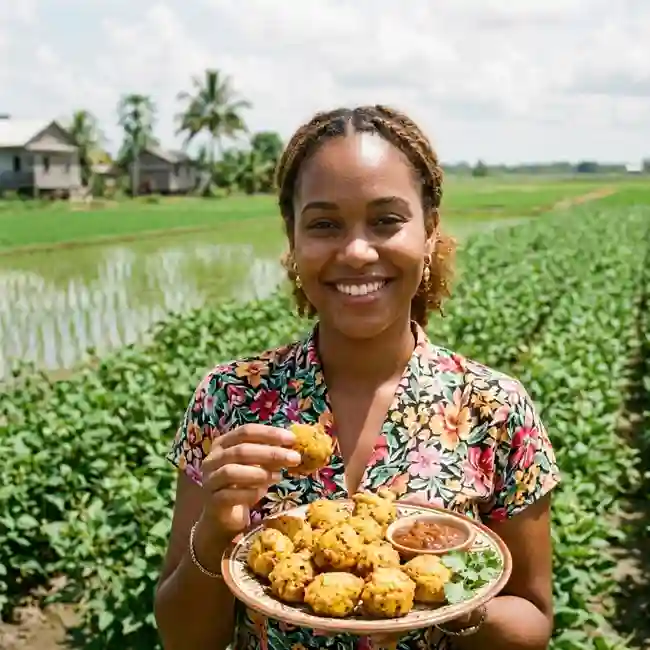
🍘 Recipe 1: Golden Surinamese Phulauri (Spiced Split-Pea Fritters)
📋 About this Recipe
Let’s kick things off with a true crowd-pleaser. Phulauri (sometimes spelled Phulourie) is a phenomenal street food snack that made its way to Suriname via East Indian immigrants, and it has since become an absolute staple at every single casual get-together, birthday party, and holiday festival.
Essentially, these are bite-sized, golden-brown fritters made from a batter of ground yellow split peas or chickpea flour, heavily seasoned with aromatic spices like cumin, turmeric, and fresh garlic. They are fried until the outside gets incredibly crispy, while the inside stays wonderfully fluffy, light, and airy. They are completely plant-based, making them fantastic for guests with dietary restrictions, and they pair perfectly with a sweet and spicy mango chutney or a tangy tamarind sauce.
🥄 Ingredients & Measurements
• Yellow split peas (dried): 250 grams (soaked overnight)
• All-purpose flour: 50 grams
• Fresh garlic: 4 cloves (finely minced)
• Madame Jeanette chili (or habanero): half a pepper (seeded and minced)
• Ground cumin (jeera): 1 teaspoon
• Ground turmeric: 1 teaspoon
• Baking powder: 1 teaspoon
• Salt: 1 teaspoon
• Warm water: 100 milliliters (adjust as needed for batter consistency)
• Vegetable oil: 500 milliliters (for deep frying)
🍳 Step-by-Step Instructions
1.Prep the Peas: Start by thoroughly rinsing your dried yellow split peas under cold running water. Place them in a large bowl, cover them with plenty of water, and let them soak overnight for at least 8 to 12 hours. They will absorb a lot of water and double in size.
2.Blend to a Paste: Drain the soaked split peas completely. Toss them into a high-powered food processor or blender along with the minced garlic, the half pepper of Madame Jeanette chili, ground cumin, and ground turmeric. Blend everything together until it forms a thick, relatively smooth paste. You might need to add a splash of water to help your blender run, but keep it to a minimum!
3.Mix the Batter: Transfer the pea paste into a large mixing bowl. Stir in the all-purpose flour, baking powder, and salt. Use a sturdy spoon to whip the batter vigorously for about 3 to 5 minutes. This introduces air into the batter, which is the big secret to getting that perfect, pillow-like fluffiness inside the fritters. Let the batter rest for 15 minutes.
4.Heat the Oil: Pour your vegetable oil into a deep pan or a heavy-bottomed Dutch oven. Heat the oil over medium-high heat until it reaches roughly 347 degrees Fahrenheit / 175 degrees Celsius. If you don't have a thermometer, drop a tiny bit of batter into the oil—if it sizzles and pops right up to the top, your oil is ready.
5.Fry the Phulauri: Dip your fingers or a small metal spoon into some water to prevent sticking. Scoop up a small, walnut-sized portion of the batter and gently drop it into the hot oil. Repeat this for several fritters, making sure not to overcrowd the pan.
6.Drain and Serve: Fry the phulauri for about 3 to 4 minutes, rolling them around gently in the oil so they brown evenly on all sides. Once they are a gorgeous, uniform golden-brown, use a slotted spoon to scoop them out. Drain them on a plate lined with paper towels, and serve them while they are screaming hot!
⚠️ Tips & Mistakes to Avoid
• Do not skip the overnight soak: Trying to use unsoaked or quickly boiled split peas will result in a gritty, hard texture that completely ruins the fritter.
• Watch the water content: Adding too much water during the blending phase will make your batter runny, causing the phulauri to flatten out and absorb way too much oil instead of forming beautiful, round balls.
• Control your oil temperature: If the oil is too hot, the outsides of your phulauri will burn before the inside cooks through. If the oil is too cold, the fritters will sit in the grease, becoming heavy and incredibly oily.
❓ FAQ
Q1.Can I use pre-made chickpea flour (besan) instead of dried split peas?
Yes, you absolutely can! While using fresh, soaked split peas gives the most authentic, rustic texture, you can substitute it with chickpea flour mixed with water to create a thick pancake-like batter.
Q2.Are these snacks incredibly spicy?
The Madame Jeanette chili packs a serious punch, but since we are only using half a pepper with the seeds removed, it adds a lovely warmth and a distinct tropical aroma rather than a burning heat. Feel free to adjust to your taste!
Q3.How do I store and reheat leftovers?
Keep them in an airtight container in the fridge for up to 3 days. To get that amazing crispiness back, pop them into an air fryer or an oven at 356°F / 180°C for about 5 minutes. Avoid using the microwave, as it makes them soggy.
📝 Summary
Surinamese Phulauri is the quintessential party snack—it is affordable, yielding a huge batch from just a single bag of peas, and it is absolutely packed with comforting garlic and cumin flavors. Serving these crispy little clouds alongside a bright chutney will instantly set a fun, festive tone for your holiday gathering!

🥧 Recipe 2: Traditional Surinamese Pastei (Festive Chicken Pot Pie)
📋 About this Recipe
If there is one single dish that screams "holiday celebration" in a Surinamese household, it is hands-down the Pastei. Derived from Dutch colonial influences but completely reinvented with local tropical ingredients, this is a spectacular, savory chicken pie that makes a regular appearance at Christmas, New Year's Eve, and upscale family reunions.
Unlike a standard Western chicken pot pie which relies heavily on a thick, creamy, dairy-based gravy, a Surinamese Pastei features a vibrant, complex filling. It combines shredded seasoned chicken with a colorful mix of vegetables like carrots, peas, and sweet corn, punctuated by salty capers, briny green olives, pickled cocktail onions, and hard-boiled eggs. All of this goodness is encased in a rich, buttery, flaky puff pastry shell. It is the perfect balance of savory, tangy, and slightly sweet flavors that will leave your holiday guests absolutely speechless.
🥄 Ingredients & Measurements
• Puff pastry sheets (pre-rolled): 2 large sheets
• Chicken breast or thighs (boneless): 500 grams
• Chicken stock: 250 milliliters
• Butter: 50 grams
• Yellow onion: 1 large (finely chopped)
• Garlic: 3 cloves (minced)
• Celery stalks: 2 stalks (finely diced)
• Carrots: 150 grams (cut into tiny cubes)
• Canned sweet corn: 100 grams
• Canned green peas: 100 grams
• Green olives (pitted and sliced): 50 grams
• Cocktail pickled onions: 50 grams (halved)
• Capers: 1 tablespoon
• Tomato paste: 2 tablespoons
• Soy sauce (sweet or dark): 1 tablespoon
• Hard-boiled eggs: 3 eggs (sliced into rounds)
• Fresh nutmeg: a pinch
• Salt and black pepper: to taste
• Egg wash: 1 egg beaten with 1 tablespoon of water (for brushing the crust)
🍳 Step-by-Step Instructions
1.Cook the Chicken: Place your chicken breasts or thighs into a medium pot, pour in the chicken stock, and bring it to a gentle simmer. Cook for about 15 to 20 minutes until the chicken is completely tender and cooked through. Remove the chicken from the pot, let it cool slightly, and use two forks to shred it into fine pieces. Save that flavorful cooking broth for later!
2.Sauté the Aromatics: Melt the butter in a large skillet over medium heat. Toss in your chopped yellow onion, minced garlic, and diced celery. Sauté these for about 5 minutes until they become beautifully soft, fragrant, and translucent.
3.Build the Filling: Add the shredded chicken, tiny carrot cubes, sweet corn, and green peas to the skillet. Stir everything together thoroughly. Next, mix in the tomato paste, soy sauce, a pinch of freshly grated nutmeg, salt, and black pepper.
4.Simmer and Reduce: Pour in the reserved chicken stock from earlier. Lower the heat to medium-low and let the mixture simmer gently for about 10 minutes until the carrots are tender and the liquid has mostly reduced into a thick, concentrated savory glaze.
5.Add the Tangy Twists: Turn off the heat. Stir in the sliced green olives, cocktail onions, and capers. This gives the Pastei its signature festive, tangy pop. Let the filling cool down completely before assembling the pie—this prevents the pastry from melting!
6.Assemble the Pastei: Preheat your oven to 392°F ( 200°C ). Grease a pie dish or a baking casserole pan. Line the bottom of the dish with your first sheet of puff pastry. Pour the cooled chicken and vegetable filling evenly into the shell. Arrange the hard-boiled egg slices in a beautiful pattern across the top of the filling.
7.Bake to Perfection: Place the second sheet of puff pastry over the top. Press the edges together firmly and crimp them with a fork to seal the pie completely. Cut a few small slits in the top crust to allow steam to escape. Brush the entire top generously with your egg wash for that ultimate glossy look. Bake in the preheated oven for 30 to 35 minutes, or until the pastry has puffed up beautifully and turned an incredible, deep golden-brown color. Allow it to rest for 10 minutes before slicing.
⚠️ Tips & Mistakes to Avoid
• Cool the filling entirely: Putting hot or even warm filling directly onto puff pastry will melt the butter layers within the dough instantly, resulting in a sad, heavy, soggy crust instead of light, crispy layers.
• Do not skip the tangy elements: The capers, olives, and pickled onions might sound unusual if you are used to American-style chicken pies, but they are absolutely essential to creating the distinct, high-end Surinamese flavor profile.
• Finely dice your vegetables: Keep your carrot and celery cuts very small so that every single bite of the pie has a perfectly balanced distribution of ingredients.
❓ FAQ
Q1.Can I make this holiday appetizer ahead of time?
Absolutely! You can easily prepare the savory chicken filling a full day in advance and store it in your refrigerator. When you are ready to serve, just assemble the pastry sheets, fill it, and bake it fresh for your party.
Q2.Can I turn these into individual bite-sized appetizers?
Yes, and it is highly recommended for larger cocktail parties! You can use a muffin tin to line mini pastry circles, fill them with a spoonful of the chicken mixture, top with a tiny piece of egg, seal with another pastry circle, and bake.
Q3.What can I use as a substitute for Madame Jeanette flavor notes here?
Pastei is generally mild, focusing more on savory, sweet, and tangy notes rather than heat, so you do not need to worry about adding hot chilis to this specific recipe!
📝 Summary
Surinamese Pastei is a magnificent, show-stopping centerpieces for any holiday snack spread. Its incredible combination of flaky, buttery pastry crust paired with a sweet, savory, and wonderfully briny chicken filling offers a luxurious taste experience that your guests will talk about for weeks.
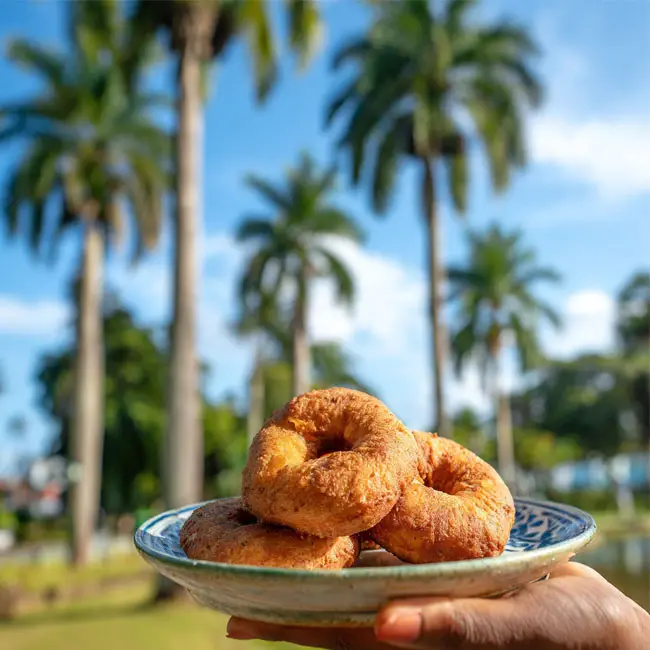
🧆 Recipe 3: Authentic Surinamese Bara (Spiced Savory Donuts)
📋 About this Recipe
Our final culinary masterpiece is the mighty Bara. This is arguably the king of all Surinamese party foods. Brought over by Javanese and East Indian communities, Bara has evolved into a deeply beloved national treasure.
At its core, a Bara is a savory, deeply spiced fried donut made from a yeast-risen flour batter that is mixed with ground split peas and packed with finely shredded green leafy vegetables—most traditionally tajerblad (taro leaves), though fresh spinach or Swiss chard works beautifully as a modern alternative. Infused with a heavy dose of garlic, cumin, and aromatic spices, the dough is hand-shaped into flat discs with a signature hole in the middle, then fried to crispy perfection. It is incredibly soft and fluffy on the inside, wonderfully crunchy on the outside, and is traditionally sliced open and stuffed with spicy mango chutney or savory fillings.
🥄 Ingredients & Measurements
• All-purpose flour: 400 grams
• Yellow split-pea flour (besan/chickpea flour): 100 grams
• Instant yeast: 1 packet (7 grams)
• Fresh spinach or Swiss chard: 150 grams (washed and very finely shredded)
• Fresh garlic: 5 cloves (mashed into a smooth paste)
• Ground cumin (jeera): 2 teaspoons
• Ground turmeric: 1 teaspoon
• Thai bird's eye chili (or chili paste): 1 teaspoon (optional, for a kick)
• Salt: 1.5 teaspoons
• Warm water: 300 to 350 milliliters
• Sunflower or vegetable oil: for deep frying and shaping
🍳 Step-by-Step Instructions
1.Combine Dry Ingredients: In an extra-large mixing bowl, whisk together the all-purpose flour, split-pea flour, instant yeast, ground cumin, ground turmeric, and salt until everything is uniformly distributed.
2.Add Aromatics and Greens: Toss your finely shredded fresh spinach, mashed garlic paste, and chili paste directly into the flour mixture. Use your hands to toss the greens through the flour, ensuring the leaves are well coated and separated.
3.Knead the Sticky Dough: Gradually pour in the warm water while mixing with your hand. The dough for Bara is famously sticky, wet, and quite loose—much softer than normal bread dough. Knead and slap the dough against the side of the bowl for about 5 minutes to develop the gluten.
4.The Big Proof: Coat the top of the sticky dough with a thin layer of vegetable oil to keep it moist. Cover the mixing bowl with a damp, warm kitchen towel or plastic wrap. Place it in a warm, draft-free spot in your kitchen and let it rise for at least 1 to 2 hours. The dough should double in size and become full of beautiful air bubbles.
5.Set Up the Frying Station: Pour a generous amount of oil into your deep fryer or heavy pot, heating it to medium-high heat (around 356 degrees Fahrenheit or 180 degrees Celsius). Prepare a small bowl filled with vegetable oil next to your stove to oil your hands.
6.Shape the Bara: Rub a good amount of oil all over your hands and fingers. Pull off a golf-ball-sized portion of the puffy, sticky dough. Flatten it out on your oiled palm into a round disc about 1 centimeter thick. Use your thumb to poke a clean hole right through the center of the dough.
7.Fry Until Fluffy: Carefully slide the shaped dough disc off your hand and directly into the hot frying oil. The Bara will sink for a second, then immediately puff up dramatically and float to the surface.
8.Drain and Flip: Fry for about 2 to 3 minutes on the first side until it is a gorgeous golden-brown, then flip it over using tongs or a fork to fry the other side for another 2 minutes. Remove the hot Bara, let it drain on paper towels, and repeat with the remaining dough.
⚠️ Tips & Mistakes to Avoid
• Do not add too much flour: It is incredibly tempting to add more flour because the dough feels too wet and sticky to handle easily. Resist the urge! A dry dough will result in a dense, heavy, rock-hard Bara instead of a cloud-like, fluffy donut. Keep your hands well-oiled during shaping to manage the stickiness.
• Shred the greens ultra-fine: If your spinach leaves are too large, they will create massive gaps in the dough, causing the Bara to split apart, lose its shape, or absorb excessive oil while frying.
• Keep the oil hot: If your oil drops in temperature, the yeast dough will act like a sponge and soak up the grease, leaving you with a soggy, heavy snack.
❓ FAQ
Q1.Can I make Bara dough the night before?
Yes, you can mix the dough, cover it tightly, and let it undergo a slow, flavor-developing rise overnight in the refrigerator. Just bring it back to room temperature for about 30 minutes before shaping and frying.
Q2.How is Bara typically eaten at holiday parties?
While they are incredible on their own, the absolute best way to enjoy them is to slice them halfway open while warm, create a pocket, and drizzle a generous spoonful of homemade spicy Surinamese chutney or hot sauce right inside.
Q3.Can I substitute the spinach with something else?
Definitely! Curly kale, Swiss chard, or traditional mustard greens work wonderfully as long as they are stemmed and chopped incredibly fine.
📝 Summary
The Surinamese Bara is a glorious celebration of texture and spice. Serving a basket of these warm, savory, aromatic green-speckled donuts at your next holiday gathering is a brilliant, guaranteed way to introduce your loved ones to the unforgettable authentic flavors of Suriname.
🍽️ Final Thoughts
There you have it—three absolutely sensational, deeply authentic, and completely unforgettable Surinamese holiday appetizers that are guaranteed to bring some serious excitement to your festive celebrations this year!
As we have seen, taking on these recipes isn't difficult at all. They mostly rely on simple, wholesome pantry staples like flour, split peas, fresh garden greens, and aromatic kitchen spices that you can easily find at your local supermarket. What makes them truly magical is the creative, historical way the Surinamese culture blends these ingredients together to build textures and flavors that are bold, comforting, and thoroughly unique.
If you are planning your upcoming holiday menu, my best advice is to take it one step at a time. Try making just one of these incredible recipes for a weekend family dinner first to get a feel for handling the dough or perfecting your oil temperatures. Once you see how incredibly fast they disappear from the plate, you will have all the confidence you need to whip up a massive batch for your big holiday party!
Cooking is all about sharing love, exploring new cultures, and creating wonderful memories around the dinner table. So go ahead, give these spectacular dishes a try, and let these beautiful South American flavors light up your home. When you do make them, be sure to snap a picture, share your culinary masterpieces with your friends, and spread the joy of Surinamese cooking. Happy holidays, and happy cooking!
| 🇸🇷 🥪 < Back |