
🏠 Home > 🗺️ Recipes > 🍞 Breads > 🇵🇦 Panama Breads
🇵🇦 🍞 Panama Breads Recipes
Published by Supakorn | Updated: February 2026
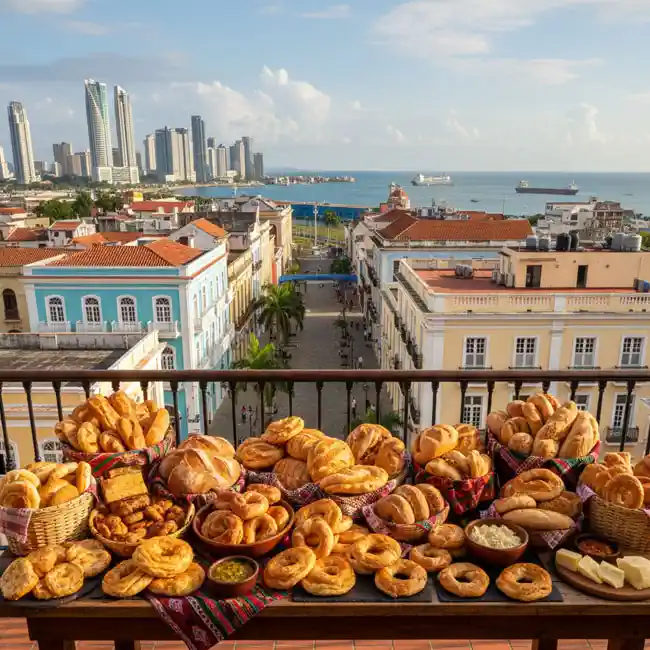
🥖 The Foundation of Flavor: Panamanian Bread and Starch Culture
Hey there, carb enthusiast! We've talked about Panama's spicy appetizers, comforting soups, and sweet desserts, but let's be honest: what holds all that deliciousness together? The answer is simple, yet incredibly rich: breads and starchy staples. In Panama, the term "bread" goes way beyond the simple wheat loaf; it encompasses a whole range of baked goods, fried doughs, and cooked starchy corn products that are absolutely central to daily life.
Panama’s baking tradition is a beautiful reflection of its history. The Spanish brought wheat and traditional baking techniques, while indigenous groups and Afro-Caribbean communities contributed their mastery of corn (maíz) and root vegetables (like yuca), turning them into satisfying, comforting doughs. This fusion means you get the best of all worlds: light, European-style loaves next to hearty, uniquely tropical corn products.
For Panamanians, bread and starches aren't just an accompaniment; they are the essential foundation of every meal. They are the vehicle for soaking up savory sauces, the perfect partner to a hot cup of coffee, and the indispensable core of the national breakfast. The culture is built around freshness—visiting the local panadería (bakery) early in the morning for a loaf that is still warm is a daily ritual for many families.
So, get ready to explore the doughy, delicious side of Panama. We’re moving beyond simple toast and diving into the incredible variety and cultural significance of these beloved baked and cooked staples!
🍞 Menu Highlights: The Must-Try Panamanian Bread Staples
While many countries have simple loaves, Panama elevates its starches with unique preparations and local ingredients. These are the main players you will find on every breakfast table, in every fonda, and on every street corner.
☀️ Hojaldras: The Golden Breakfast Star
We briefly mentioned the Hojaldra as an appetizer, but let’s be clear: this fried delight is a breakfast powerhouse and a true Panamanian staple. Hojaldras are a type of fried flatbread made from a simple wheat flour dough. They are rolled out thin, quickly fried until they puff up beautifully, and emerge golden, crispy, and slightly chewy.
They are the cornerstone of a traditional Panamanian breakfast, often served alongside fried eggs, sausages, or a slice of local cheese. Their slightly sweet flavor also means they can be dusted with sugar, but they are most commonly enjoyed in a savory context. If you want to eat breakfast like a local, you must start with a piping hot hojaldra.
🌽 Bollo: The Versatile Corn Dream
This is where the indigenous and corn-based traditions really shine. A Bollo is essentially a cooked corn product that serves as a bread-like staple. The corn is processed into a masa (dough), wrapped in corn husks or plantain leaves, and then boiled or steamed until it is firm and dense.
There are two main types:
1.Bollo de Maíz Nuevo: Made from tender, fresh corn, giving it a slightly sweet, creamy flavor.
2.Bollo de Maíz Seco: Made from dried, processed corn, which results in a firmer, more neutral product, perfect for soaking up savory sauces.
A bollo is generally served sliced, often topped with a piece of fresh, salty queso blanco (white cheese) or paired with stewed meat. It is a hearty, filling, and utterly traditional starch that speaks volumes about the land.
🇵🇦 Pan Flauta: The Essential Loaf
While the hojaldra dominates breakfast, when Panamanians talk about $Pan$, they are often referring to simple, European-style bread, and the Pan Flauta (Flute Bread) is a beloved classic. It’s similar to a French baguette but often slightly softer and wider.
The pan flauta is the essential bread for everything else—for making simple sandwiches (sandwiches de pan flauta), dipping into soup broth, or simply tearing off chunks to eat with cheese and butter. It's the daily go-to loaf, and the smell of it baking in a local panadería is one of the most comforting aromas in Panama.
🕰️ Eating and Living: The Role of Bread in Panamanian Meals
Breads and starches are not just passive additions to a Panamanian meal; they dictate the rhythm and structure of the day's eating habits.
🌅 The Breakfast Trio: Coffee, Starch, and Protein
As mentioned, breakfast (desayuno) is often centered around a hot, satisfying starch. The combination of a fried element (like hojaldras or sometimes torrejitas de maíz—small fried corn fritters), a cooked starch (bollo or yuca frita), and a protein (eggs, smoked sausage, or beef liver) is the standard formula. The goal is to start the day with something substantial, comforting, and packed with energy.
🍚 Rice as the Ubiquitous Starch
While we are focusing on "breads," it’s crucial to mention the ultimate starchy staple: rice (arroz). In Panama, rice is consumed at almost every lunch and dinner. It acts as the neutral canvas, much like bread, for the intensely flavorful savory dishes like stews, beans, and meats. If a dish doesn't come with bread, it absolutely comes with a generous serving of rice. In this sense, rice functions culturally like a bread/starch staple, a foundation for the main course.
🥖 The Afternoon Merienda
In the late afternoon, a sweet or simple bread is often the focus of the merienda (snack time). This is the perfect moment for a slice of Pan de Miga (a soft, fluffy sandwich bread), a sweet roll, or a piece of Panadería-style baked goods, often enjoyed with a hot cup of coffee or chocolate. It’s a moment of respite, fueled by something simple and satisfyingly bready.
🥐 More Starches to Explore: Beyond the Loaf
The world of Panamanian "breads" expands into other delicious baked and fried corn and vegetable products that are indispensable to the local diet.
🍠 Arepas: The Corn Cake Import
While the arepa is most famous in Venezuela and Colombia, it is also enjoyed in Panama, particularly in areas influenced by these neighboring cultures. The Panamanian arepa is a thick, round flatbread made from cooked ground corn. It's cooked on a griddle or sometimes lightly fried.
In Panama, arepas are often split open and filled with cheese, butter, or even scrambled eggs. They offer a delightful, slightly chewy texture and are another fantastic corn-based bread alternative often found at breakfast or as a light meal.
🥥 Pan de Coco: The Caribbean Sweetness
Head to the Caribbean coast (like Colón or Bocas del Toro), and you’ll find a distinct baking tradition. Pan de Coco (Coconut Bread) is a wonderfully soft, slightly sweet bread enriched with grated coconut and coconut milk.
This bread is moist, fragrant, and perfect eaten on its own or used for sandwiches. It’s a direct influence of Afro-Caribbean cuisine and offers a delightful tropical twist on the standard pan. The natural sweetness of the coconut means it works great as a light dessert or afternoon treat.
🧅 Torrejitas de Maíz: The Savory Fritter
The Torrejitas de Maíz (Corn Fritters) are the ultimate savory comfort food. They are small, thick fritters made from a batter of fresh or canned corn kernels blended with flour, sometimes cheese, and seasoned with salt and pepper.
They are fried until golden brown and offer a crispy exterior and a soft, chewy, corn-studded interior. Torrejitas are frequently served alongside breakfast plates or as a savory side dish to stews, offering a delightful contrast of texture and a burst of sweet corn flavor.
❓ Friendly Foodie FAQs
Ready for a quick chat about these essential staples?
1. What is the biggest difference between hojaldra and bollo?
The biggest difference is the primary ingredient and preparation. Hojaldra is made from wheat flour and is always fried. Bollo is made from corn (maíz) and is always boiled or steamed in a husk or leaf, giving it a dense, compact texture, making it a much heartier, indigenous-style starch.
2. Is there a traditional Panamanian sweet bread or pastry?
Yes! Aside from Pan de Coco, you'll find Pan Dulce (Sweet Bread), which is a general term for various sweet rolls often containing raisins, candied fruits, or sometimes a slight cheese filling. Also, look out for Rosquitas, which are sweet, dense, ring-shaped cookies or biscuits, often flavored with anise or vanilla and perfect for dipping in coffee.
3. Are patacones considered a type of bread or a staple starch in Panama?
While not technically a bread, Patacones (twice-fried green plantains) function as a staple starch in Panamanian cuisine, similar to rice or bollo. They are often served as the primary carbohydrate alongside savory dishes like fried fish, stews, or meat. They are an absolutely essential, non-negotiable part of the Panamanian diet and serve the same role as a bread/starch accompaniment.
That wraps up our friendly exploration of the delicious breads and starches that form the backbone of Panamanian meals!
🍞 Mastering Panamanian Baking: Recipes for Pan de Coco, Flauta, and Elote
👉 Indulge 3 Dinner Panama Breads
| 🌐 🍞 < Back | 🇵🇦 🥗 < Previous | Next > 🍱 🇵🇦 |